

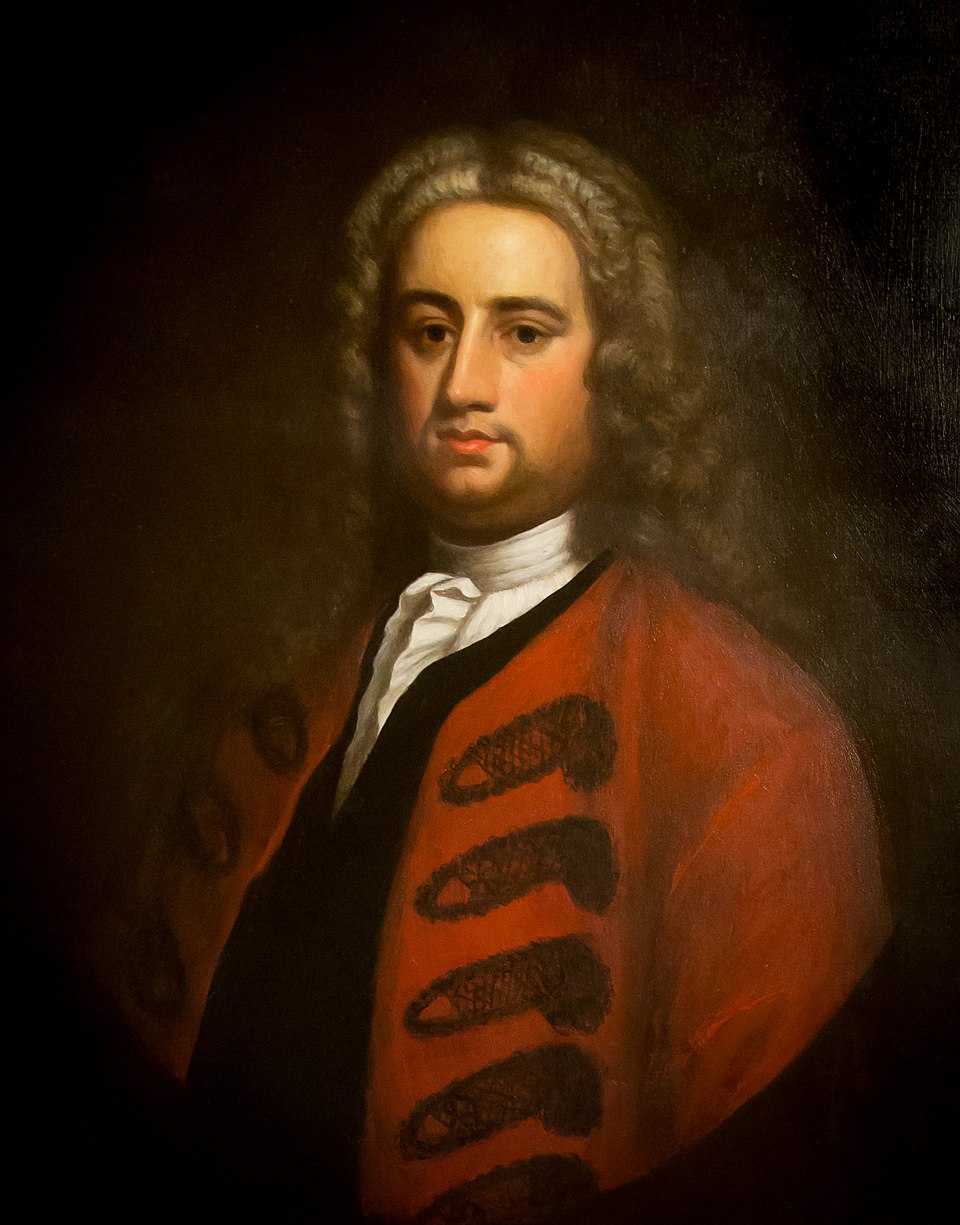
James Wallace of the Royal Navy commanded the twenty-gun Rose and arrived in Narragansett Bay on November 5, 1774. Over the next six months, it served as a base to maintain his ship and operate in the waters off Connecticut and Rhode Island to enforce the Coercive Acts passed earlier that year and prevent the colonies from importing guns, gunpowder, or other armaments. The Rhode Island Assembly took advantage of Wallace’s brief absence in December to remove most of the armaments from Fort George, which protected Newport, and take them to Providence, ostensibly to defend the colony from Canadians and Native Americans. Of course, they were also farther from British reach. The governor was explicit with Captain Wallace about the motivation: “they had done it to prevent their falling into the hands of the King, or any of his servants; and that they meant to make use of them, to defend themselves against any power that shall offer to molest them.”[i] Wallace sensed rebellion in the air and promptly asked the governor, Joseph Wanton, whether he [Wallace] might expect assistance in carrying out the king’s policies in Rhode Island. The answer was a swift “no.”
Nevertheless, Wallace remained ashore, as officers and seamen did when a ship was in port. As if to confirm local sensibilities, Wallace heard that a mob threatened to seize, tar, and feather him while he dined ashore. He quickly ordered his pinnace and cutter—boats from the Rose—to be manned and summoned men to his temporary quarters. He waited six hours, but no mob appeared. Not wanting to over-react to rumors, he again wrote the governor to ask about the rumored mob and determine whether Wanton would use his powers in Wallace’s defense. Wanton declined to respond in writing, but assured Wallace’s messenger that “they,” meaning the men assembled on the streets, did not intend to insult Wallace. Instead, Wanton himself feared local rebels might assault him and the town. He gave the messenger, and by extension Wallace, the impression that Newport was not safe for the King’s subjects, including the ships, officers, and crew of the Royal Navy.[ii] It was unwelcome news for the naval officer, as Vice Admiral Samuel Graves, commanding the North American Station, expected Wallace and Rose to winter over in the bay.

Wallace remained in Narragansett Bay, determined to enforce the Coercive Acts and the ban on importing gunpowder and arms by searching vessels arriving and departing the local waters. That winter, Wallace received reinforcements: the fourteen gun sloop Swan, a small schooner originally assigned to the larger Hope, and eventually the Hope herself, which had been delayed by a storm that drove her to Bermuda.[iii] With Wallace wintering Rose over in the bay, the captain quickly became an object of rebellious patriot enmity. He successfully identified and captured several smugglers, but captured no vessels carrying arms.[iv] His mere presence was a visible demonstration of British power and an affront to those aligning themselves with the miscreants in Boston and the First Continental Congress. But, by and large the townspeople left him unmolested in the execution of his orders and the collection of intelligence. Wallace believed his mere presence in the bay emboldened local loyalists to resist rebellious agitators.[v]
Things began to change after Lexington and Concord. But, they did not change all at once; not everyone immediately recognized an incipient state of war. To be sure, people around Narragansett Bay recognized a crisis when learning of the battle. Reverend Ezra Stiles noted that “Upon Receipt of this News the Town was thrown into Alarm, and all went into preparation.” Word went out for Rhode Island to mobilize the units organized in 1774 and await orders. Loyalists spread throughout Newport, insisting Captain Wallace was prepared to bombard Newport should any military units depart the town to assist Massachusetts.[vi] Thus, whether sought or unsought, the mere presence of Royal Navy vessels in Narragansett Bay played the role of heightening tensions in Rhode Island and escalating the threat of violence.
Instead, on April 26 Wallace seized the local merchant, John Brown, and two packet vessels, Diana and Abigail, bearing flour from Newport to Providence.[vii] The ultimate destination for the flour was the growing American army outside Boston.[viii] Wallace had been tipped by a local Tory, but told the locals that Brown had been seized due to his role in burning the schooner Gaspee back in 1772.[ix] The captain shipped Brown off to Boston for Gage to decide the man’s fate.
Wallace’s seizure of Brown caused an uproar in the colony. Rhode Islanders followed several approaches to secure Brown’s release. Stephen Hopkins, a former governor, delegate to the First Continental Congress, and leading opponent of British policies, wrote the President of the Massachusetts Provincial Congress to encourage the colony to detain all of the King’s officers it held as insurance against Brown’s treatment and fate and pledged that Rhode Island would do the same. He also reported, “We are sorry to inform you that the first Struggle, which hath happened in our Colony, hath been unfavorable; an Event which could not have come to pass, but by the Faithlessness of some of the Members of our Assembly.”[x] For his part, Governor Wanton promptly wrote Gage to plead Brown’s case and gave Brown’s brothers a letter he hoped would assist them as they traveled to Boston to secure the merchant’s release.[xi] His letter to Gage arrived before Brown! The merchant arrived on May 2 and was promptly released on May 3.[xii]
Wallace’s action may have emboldened loyalists in Newport to assert themselves more forcibly. While Brown was still on his way to Boston, a group wrote Wallace that they were “deeply impressed with the grateful Sense of the Support You have on all occasions given to His Majesty’s faithful subject residing in this Town, and fully convinced that our Peace and Security has for some time past been owing in a great measure to your Attention to His Majesty’s Service and spirited Conduct in the Execution of it; return You our unfeign’d Thanks.” They then proceeded to inform him of plans made in the General Assembly to raise a body of soldiers to cooperate with those in neighboring colonies.[xiii] By contacting Captain Wallace, they highlighted his role in exerting British political authority in the colony, meaning his presence had more than military implications.
Indeed, his aggressiveness in stopping ships and his activity throughout the bay encouraged some loyalists to stand up to the leaders fomenting rebellion. He, and they, may have felt themselves in a stronger position after May 6, when the sloop Falcon arrived to support Royal navy operations in the bay.[xiv]
Loyalists were not shy about threatening the cudgel of British naval power. Reverend Ezra Stiles noted just a few days after Brown’s release that “An Association has been preparing for several days, & great pains taken by the Friends of Govt to prepare the principal people in Town for signing it—purporting their Adherence to the King & Parl, that they put themselves under the Protection of the Men o’War and Gen. Gage or the Kings Troops….This is enforced by an Intimidation of Confiscation of Estates on being declared Rebels…The Tories say the Men o’War will send their Cutters & oblige others to bring us these Things.” Thus, Wallace and his little flotilla constitute the principal means of preserving British authority in the colony. Except, as Stiles noted, “the pple know it is out of the Navy’s power…A Neutrality & Stilness is the most they can effect by all Arts of Intimidation.”[xv] Vice Admiral Gaves saw it much the same way, although he was perhaps unduly optimistic in his perspective. He wrote Philip Stephens, the Secretary of the Admiralty, “Captain Wallace informs me that some friends of Government have been very industrious to bring the town of Newport over to the King, and were they sure of constant support they flatter themselves with succeeding; but what reliance! at present they are in terror of the Kings Ships.”[xvi] In short, the Royal Navy’s presence in Narragansett Bay was contributing to a political stalemate in Rhode Island in the first few weeks after Lexington and Concord. It was deceptive and brief, as events in June would reveal.
[i] “Captain Jams Wallace, R.N. to Vice Admiral Samuel Graves, 12th December 1774,” William Bell Clark, ed., Naval Documents of the American Revolution, Volume I (Washington, DC: Government Printing Office, 1964), 15. Hereafter NDAR, Volume, Page.
[ii] “Captain James Wallace, R.N., to Vice Admiral Samuel Graves, 15th December 1774,” NDAR, I, 25-26.
[iii] Clarkson A. Collins, 3rd, “The Patrol of Narragansett Bay (1774-1776) by H.M.S. Rose, Captain James Wallace, Rhode Island History, Vol. VII, No. I, January 1948, 18-19. Hope was damaged when arriving at Bermuda, but eventually made her way back to Boston and then was dispatched to the Narragansett Bay to support Wallace and deliver arms to local loyalists, arriving in March. See: “Vice Admiral Samuel Graves to Philip Stephens, 4th March 1775” NDAR, I, 124 and “Remarks &C on Board his Majesty’s Ship Rose,” NDAR, I, 132.
[iv] “Vice Admiral Samuel Graves to Philip Stephens, 4th March 1775” NDAR, I, 124.
[v] Clarkson A. Collins, 3rd, “The Patrol of Narragansett Bay (1774-1776) by H.M.S. Rose, Captain James Wallace, Rhode Island History, Vol. VII, No. 3, July 1948.
[vi] Era Stiles, The Literary Diary of Ezra Stiles, D.D., L.L.D., Volume I, Franklin Bowditch Dexter, ed. (New York: Charles Scribner’s Sons, 1901), 536-537.
[vii] “Remarks &c on Board his Majesty’s Ship Rose, April 26 1775,” NDAR, I, 227; William Greene Roelker, “The Patrol of Narragansett Bay (1774-1776): Seizure of John Brown,” Rhode Island History, Vol. 8, No. 2, April 1949.
[viii] “Stephen Hopkins to President of the Provincial Congress of Massachusetts, April 27. 1775,” NDAR, I, 231.
[ix] Roelker, “The Patrol of Narragansett Bay (1774-1776): Seizure of John Brown,” Rhode Island History, Vol. 8, No. 2, April 1949, 45; “Remarks &c on Board his Majesty’s Sloop Rose,” NDAR, I, 227; Stiles, Literary Diary, I, 540.
[x] “Stephen Hopkins to President of Provincial Congress of Massachusetts, April 27. 1775,” NDAR, I, 231. The Massachusetts Provincial Congress responded to Hopkins in the affirmative, but pointed out that it had its own citizens to worry about when it came to treatment of prisoners. It resolved to send Samuel Murray to Hopkins at Providence. “Massachusetts Provincial Congress to Stephen Hopkins, April 28th 1775,” NDAR, I, 237; Journal of Massachusetts Provincial Congress, 28th April 1775,” NDAR, I, 237.
[xi] “Joseph Wanton, Governor of Rhode Island, to General Thomas Gage, April 27th, 1775,” NDAR, I, 232; Roelker, “The Patrol of Narragansett Bay (1774-1776): Seizure of John Brown,” Rhode Island History, Vol. 8, No. 2, April 1949, 50-51.
[xii] Roelker, “The Patrol of Narragansett Bay (1774-1776): Seizure of John Brown,” Rhode Island History, Vol. 8, No. 2, April 1949, 50-51.
[xiii] “Some of the Principal Inhabitants of Newport to Captain James Wallace, R.N., 1st May 1775,” NDAR, I, 255.
[xiv] “Diary of Ezra Stiles, May 6 1775,” NDAR, I, 291, note 2. Falcon would spend much of its deployment operating outside the bay and in Massachusetts, so its value to Wallace was limited.
[xv] Stiles, Diary of Ezra Stiles, 546.
[xvi] “Vice Admiral Samuel Graves to Philip Stephens, Secretary of the British Admiralty 13 May 1775,” NDAR, I 324.
 Emerging Revolutionary War Era