

Emerging Revolutionary War welcomes guest author Jim Bish as he describes the important events that happened in Williamsburg in May of 1774:
News of the Boston Tea Party reached London in January 1774 and Parliament reacted decisively passing the Boston Port Act on March 31, 1774, calling for the closing the port of Boston on June 1, 1774. News of the Boston Port Act reached Virginia before May 19th severely disrupting Virginia’s House of Burgesses planned business. After hearing the news about Boston, the Burgesses primary focus and action was a response to the Boston Port Act. Virginia Burgess Richard Henry Lee described his response to the news of the Port Bill to his brother, Arthur Lee, who resided in London, “We had been sitting in Assembly near three weeks, when a quick arrival from London brought us the Tyrannic Boston Port Bill, no shock of Electricity could more suddenly and universally move— Astonishment, indignation, and concern seized on all. The shallow Ministerial device was seen thro instantly, and every one declared it the commencement of a most wicked System for destroying the liberty of America, and that it demanded a firm and determined union of all the Colonies to repel the common danger.”

By May 24th the burgesses had drafted their response. According to Thomas Jefferson, “We were under conviction of the necessity of arousing our people from the lethargy into which they had fallen as to passing events; and thought that the appointment of a day of general fasting and prayer would be most likely to call up and alarm their attention . . . we cooked up a resolution, somewhat modernizing their phrases, for appointing the 1st day of June, on which the Port bill was to commence, for a day of fasting, humiliation and prayer, to implore heaven to avert from us the evils of civil war, to inspire us with firmness in support of our rights, and to turn the hearts of the King and parliament to moderation and justice.”
On May 26th, Purdie and Dixon’s Virginia Gazette published the House of Burgesses resolution and as ordered. Broadsides of the resolution were also published and probably preceded the newspapers printing. Governor Dunmore referred to the broadside printing when, on 26 May, he summoned the burgesses to the council room and thus addressed them: “I have in my hand a Paper published by Order of your House, conceived in such Terms as reflect highly upon his Majesty and the Parliament of Great Britain; which makes it necessary for me to dissolve you; and you are dissolved accordingly.”

Having been dissolved by the royal governor had certainly occurred before when there were grievances by Virginia’s House of Burgesses to either Parliament or the Crown. In 1765, Governor Fauquier dissolved the House of Burgesses when it passed a resolution against the Stamp Act. In May 1769 the Virginia House of Burgesses passed several resolutions condemning Britain’s stationing troops in Boston following the Massachusetts Circular Letter of the previous year. As a result, Governor Botetourt abruptly dissolved the General Assembly after the House of Burgesses adopted those measures. This time, the dissolution of the House seemed more worrisome. When the House of Burgesses were dissolved in 1769 much of the disagreement was about sending royal troops to Massachusetts. By 1774, troops had been in the Boston area for five years and now there was the deeper threat of using those troops to cease the livelihood of all Bostonians by closing down their means of trade, the harbor. It became clearly evident to the Virginia burgesses that if the Crown could take actions like this against Bostonians, they could also be used against Virginians.
To many of the burgesses, the dissolution of the House was surprising. This sentiment is revealed in a letter by George Washington to George William Fairfax on June 10, 1774 in which Washington states, “this Dissolution was as sudden as unexpected for there were other resolves of a much more spirited nature ready to be offered to the House wch. would have been unanimously adopted respecting the Boston Port Bill as it is calld but were withheld till the Important business of the Country could be gone through” Like earlier burgesses had done after being dissolved, most of the then, former-burgesses, agreed to meet at Raleigh Tavern. At least 89 of the previously assembled 120 Burgesses reconvened their extra-legal session in the Apollo Room at Raleigh Tavern a few blocks away as it was the largest facility to hold such a group.

On the following day of May 27, those “former burgesses” agreed to an association. They condemned Great Britain in that it had taken away their just, antient, and constitutional rights stating that the Boston Harbor bill is a most dangerous attempt to destroy the constitutional liberty and rights of all North Americans. The former burgesses charged that parliament was at fault for the purpose of raising a revenue, without the consent of the people and particular blamed the East India Company of attempting to ruin of America, by setting a precedent in favor of arbitrary taxation and as a result Virginia called for a boycott of the East India Company. They concluded by instructing the committee of correspondence to propose to the corresponding committees of the other colonies to appoint deputies to meet in Congress at such place, annually, as should be convenient to direct, from time to time, the measures required by the general interest. They declared that an attack on one colony should be considered as an attack on the whole. This “Former Burgesses Association” document was signed by the 89 former burgesses and printed in Williamsburg for all Virginians to read. There was rarely a more unified effort by deprived lawmakers in colonial Virginia. Before heading home to their respective counties, Virginia’s former burgesses were moving in a singular direction ignited by the Boston Port Act and now brought to a strong flame by the actions of Governor Dunmore.
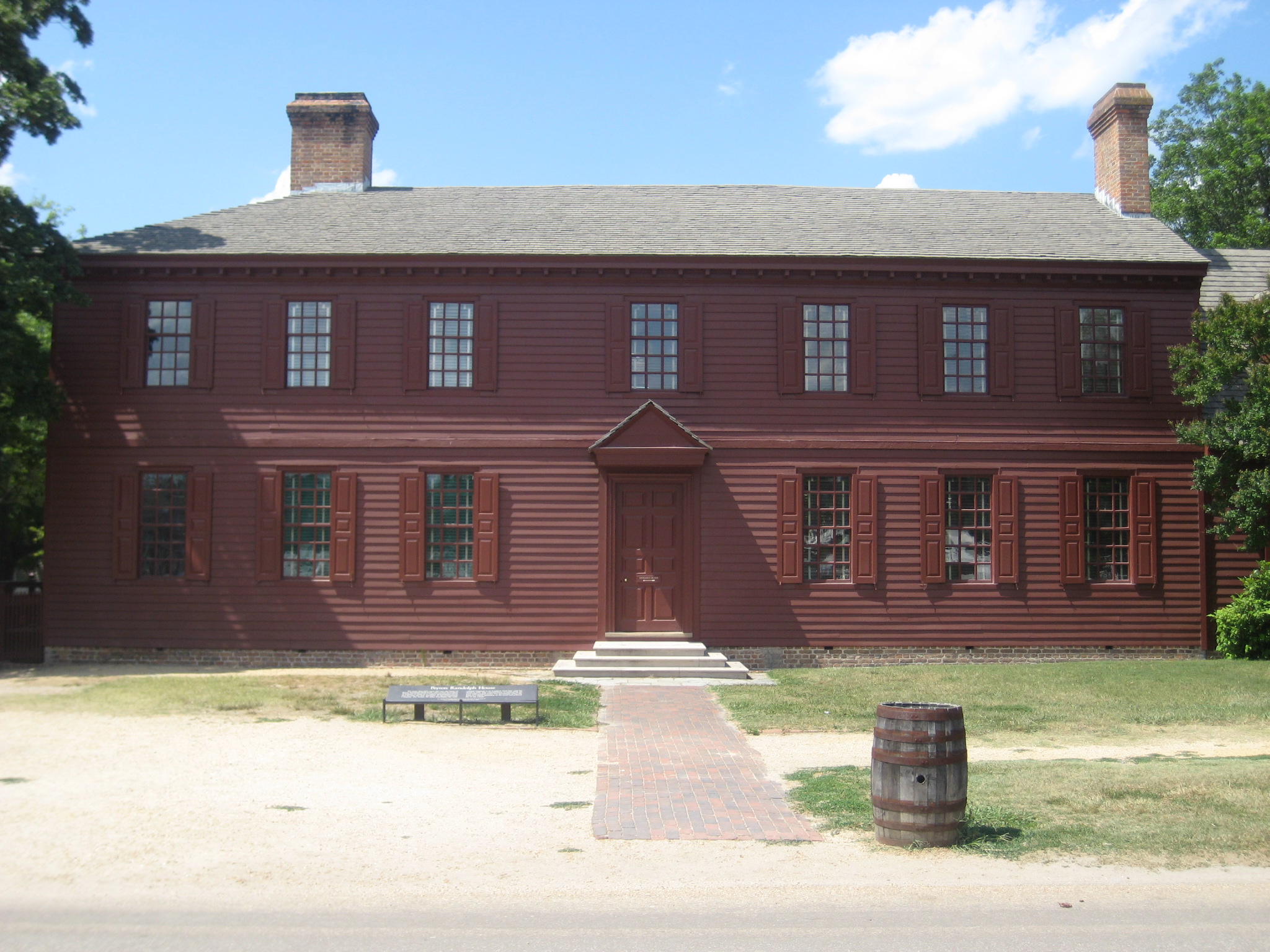
On May 30th, three days after issuing the Association document, Peyton Randolph received correspondence from three different committees, Boston, New York, and Annapolis concerning their request for action. Randolph decided to locate former Burgess members who had not yet returned to their home counties and he located twenty-five. Out of necessity, those twenty-five former burgesses served as members of the Committee of Correspondence for Virginia.
The following day, those 25 former burgesses were much more detailed and stronger in their messaging from that which appeared in the 89 former-burgesses association document. After hearing the sentiments from Boston, Philadelphia, and Maryland the 25 former burgesses thought that “we ought to adopt the scheme of Nonimportation to a very large extent.” They also defined a date and place, August 1, 1774 in Williamsburg, for the former burgesses to meet as a legislative body. They stated, “We fixed this distant Day in Hopes of accommodating the Meeting to every Gentleman’s private Affairs, and that they might, in the mean Time, have an Opportunity of collecting the Sense of their respective Counties.”
Virginia was headed quickly towards Revolution . . .
Follow our Facebook page this Sunday and Monday as Emerging Revolutionary War historians and guests will be in Colonial Williamsburg on the 250th anniversary of the dissolution of the House of Burgesses and the gathering of the former Burgesses at the Apollo Room in the Raleigh Tavern.
 Emerging Revolutionary War Era