

I spent last weekend working at the Moores Creek National Battlefield 250th Event. The small National Park near Wilmington, NC had called on other rangers to assist, as parks often do for big events.
In February, 1776, a group of Loyalists, mostly Scottish Highlanders, organized in Cumberland County, NC. They had been summoned by Royal Governor Josiah Martin, and were to march to the coast, where British troops would meet them. Together they would retake the colony for the British. This Loyalist force was met and defeated by local militia at Moores Creek, paving the way for North Carolina to support independence.
One my duties with the Park Service is a Historic Weapons Safety Officer, inspecting the weapons that re-enactors use and overseeing firing demonstrations. Anytime that you see a weapons program in a National Park, those reenactors and their weapons have been inspected to ensure safety. In order to blend in with the reenactors I dress in historic clothing. During the public demonstrations, I was right alongside the troops. I was embedded with them, and it gave me a unique viewpoint of the event, and the battle demonstration.

I’ve worked this event many times in the past (and used to be stationed at this park). This weekend there were several other National Park Historic Weapons Safety Officers as we had over 200 reenactors.
At the start of each day we inspected the muskets and rifles of the living historians, ensuring they were unloaded, functioned properly, were clean, and in good condition. Prior to the battle demonstrations, we did a walk through, going over the scenario and ensuring that everyone knew their role. The re-enactors were to fire at an angle, so as not be shooting directly at each other (prohibited by National Park Policy). To the viewers in the audience, it would look realistic.

During the battle demonstrations, I was amid the troops, ensuring that there were no accidents and any incidents were handled safely. For example, one soldier needed a new flint, and I had several in my haversack to give out. Another had a ‘flash in the pan,’ meaning his musket priming powder went off but not the main charge. I offered my vent pick so he could clean the weapon’s touchhole and continue firing. There were several ‘misfires’ each time: either the weapon failed to spark or there was a flash in the pan. I oversaw each of those in my group of soldiers.
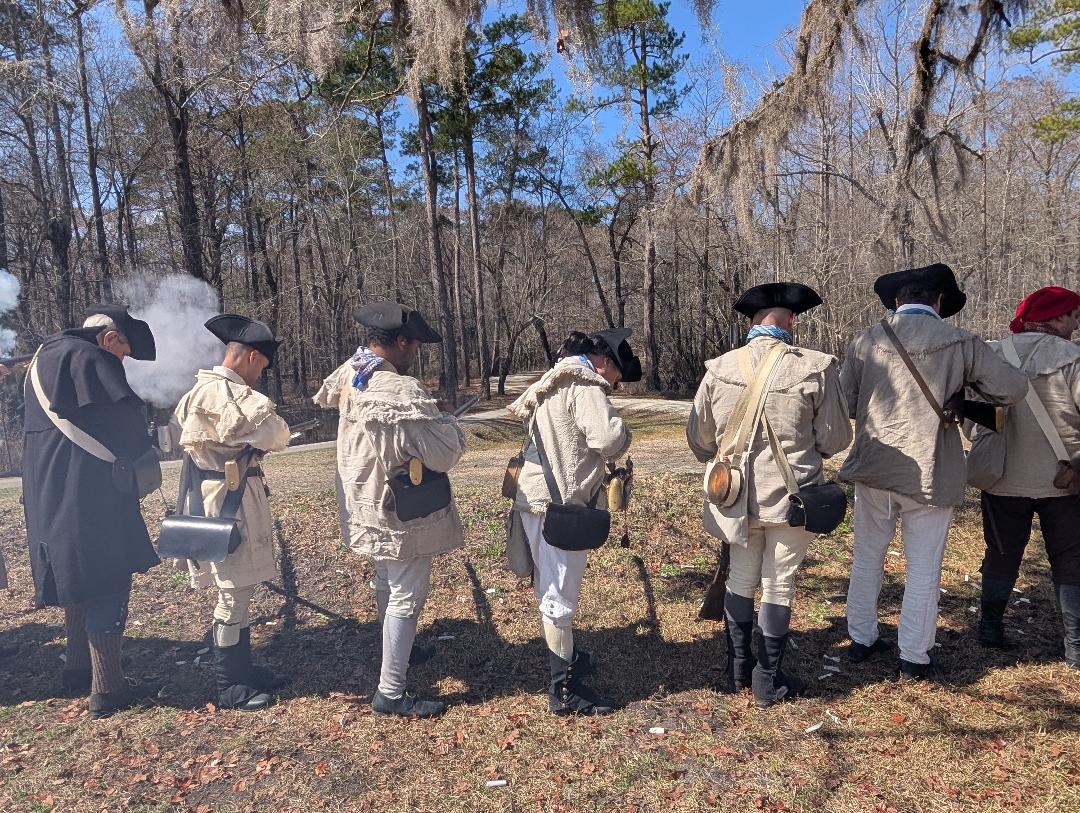
Being embedded with the troops, on the firing lines, allowed me to see the ‘battle’ as the participants would have done. I got a new perspectives about the view that each side had and what they could see or not see. For the public, they could see how the battle unfolded and understand the various movements that occurred.
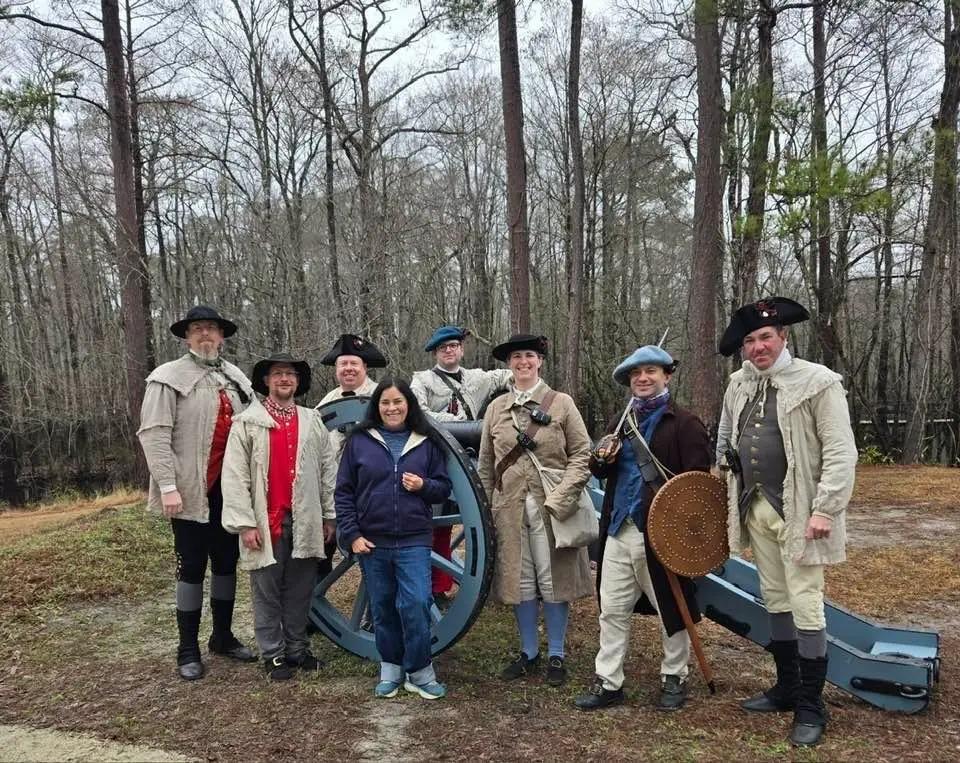
A highlight of the weekend was a special tour by Diana Gabaldon, author of the Outlander Series. She even posed for a photo with the rangers.
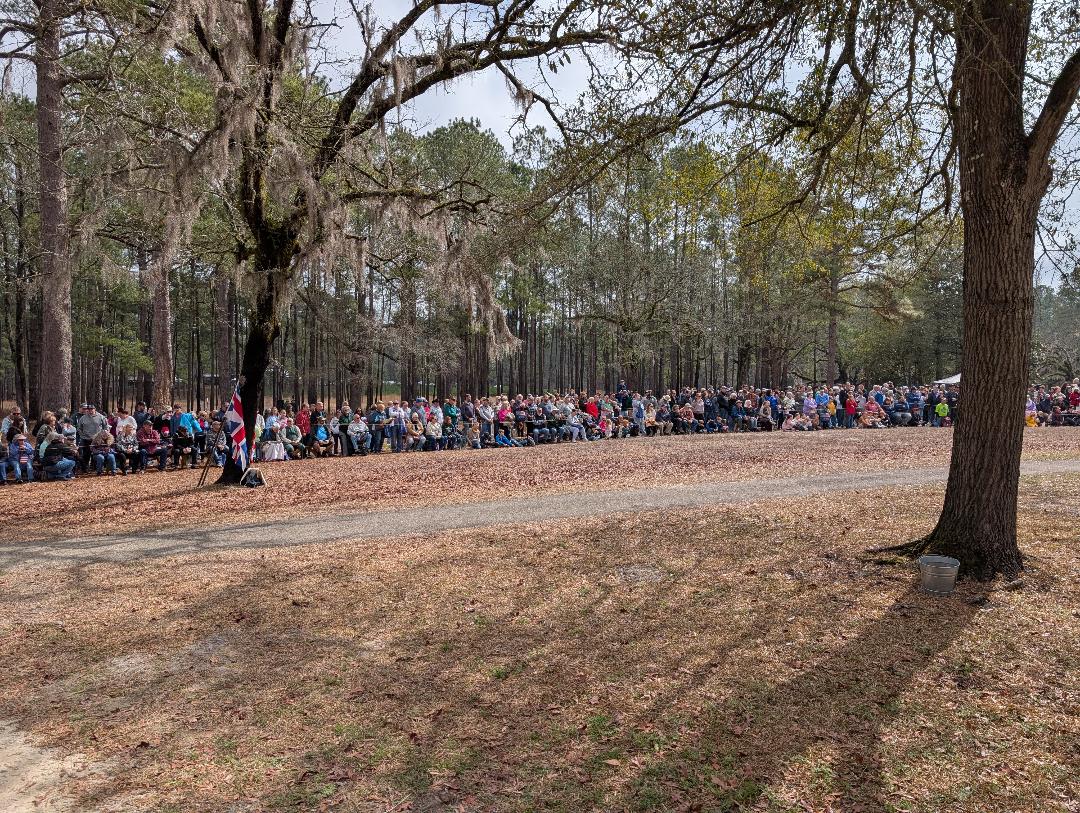
The event was a huge success, despite a rainy day on Friday. An estimated 12,000 visitors were on site for the demonstrations on Saturday. I look forward to working at more 250th events going forward.
 Emerging Revolutionary War Era