The Patriot Martyrs of April 19, 1775

Yesterday marked the 250th anniversary of the first battles of the American Revolution.  The Battles of Lexington and Concord were brutal and vicious.  More than 40 American colonists were killed in the fighting.  These were the first martyrs in the cause for American liberty.  Here are the stories of some of those men who shed their blood on that fateful day for our freedom.

Jonathan Harrington was one of the few dozen men in the Lexington militia who stood on the Lexington Green when the first British troops arrived at sunrise on April 19, 1775.  He lived with his wife and child in a home that was located on the Green.  After a shot was fired, the British soldiers opened fire on the American militiamen.  As they were dispersing, Harrington was shot through the chest.  He crawled towards his house and died within sight of his home.  Local legend says he crawled to his own doorstep and died at the feet of his wife and child.

Sign on the Harrington house which still stands in Lexington, MA today.

Isaac Davis was the captain of the Acton minutemen. The Acton minutemen marched more than 5 miles to Concord in the early morning hours of April 19.  After seeing smoke from the town, the minutemen marched down towards the North Bridge and the British soldiers guarding the opposite side fired a volley at the minutemen.  This volley was high and may have been a warning shot.  The next volley was fired into the minutemen.  Private Abner Hosmer was shot through the head and killed.  Davis was shot through the chest, his blood splattering the men around him.  Seconds later the American colonists were given the command to fire on British soldiers for the very first time.

The Acton Monument stands over the graves of Isaac Davis, Abner Hosmer, and James Hayward.

James Hayward was part of the Acton company that joined in the running battle back towards Boston.  During the battle soldiers from both sides stopped to get water at local wells.  At one point a British soldier went to the well by the Fiske house to get a drink of water.  At the same time, Hayward was heading there too.  The two saw each other and raised their muskets.  The British soldier said, “You are a dead man!” Hayward replied, “So are you.” They both fired at the same time. The British soldier was killed instantly.  Hayward was hit, with splinters of his powder horn going into his side.  He died not long after.

The site of the Fiske well, where James Hayward and a British soldier died.

Jason Russell was a 58-year-old man living in the village of Metonomy (present day Arlington, Massachusetts) and was preparing to defend his home on the road back to Boston. People were telling him to leave the area, but Russell refused and exclaimed “An Englishman’s home is his castle!” As the British column came down the road, Russell and a dozen militiamen began to fire into redcoats.  Unfortunately for Russell and the other militiamen, the British had deployed flankers to clear out many of the houses along the road.  The colonists were taken by surprise and retreated into the house.  Russell was unable to run and was bayonetted to death by the British troops on his front doorstep.  The British entered the house and hand to hand fighting occurred inside the house.  Two British soldiers and eleven militiamen were killed.

A painting depicting the death of Jason Russell at the Jason Russell House (Arlington Historical Society)

Jason Winship and Jabez Wyman decided to sit in the Cooper Tavern and have a drink.  The fighting in Metonomy became extremely brutal.  Even unarmed civilians got caught up in the carnage.  As British arrived at the Cooper Tavern, the tavern owners fled into a cellar.  Winship and Wyman did not stand a chance. The owners noted that: “the King’s regular troops under the command of General Gage, upon their return from blood and slaughter, which they had made at Lexington and Concord, fired more than one hundred bullets into the house where we dwell, through doors, and windows,…The two aged gentlemen [Winship and Wyman] were immediately most barbarously and inhumanly murdered by them, being stabbed through in many places, their heads mangled, skulls broke, and their brains out on the floor and walls of the house.”

Samuel Whittemore was a 78-year-old man who lived in Menotomy.  He prepared to fight the British troops marching along the road.  He carried a musket, two pistols and a sword.  As some British soldiers moved to get Whittemore, he shot one with his musket, then killed two with his pistols and then drew his sword to fight them.  The British soldiers shot off part of his face off, clubbed him and bayoneted him fourteen times, leaving him for dead. Amazingly, he survived and live for another eighteen years, dying at the ripe age of 96.

A monument for Smauel Whittemore in Arlington, MA.

One of the last people to die that day was 65-year-old militiaman James Miller.  As the British were making it back to Charlestown, James Miller and some men fired into the retreating soldiers.  British soldiers ran towards the militia.  Miller’s compatriots fled and entreated him to do the same.  Miller replied, “I am too old to run.”  The British opened fire and killed Miller.

These stories are only a few of the dozens who died that day.  You can find these and many other stories (and where they happened!) in “A Single Blow” by Robert Orrison and Phill Greenwalt, one of seven books that are part of the Emerging Revolutionary War book series published by Savas Beatie.

Today the remains of the men who were killed on Lexington Green now lie there under a monument that was erected in 1799, not long after the successful conclusion of the Revolutionary War.  The epitaph on that monument still speaks to the heroism and valor of these first Americans to fall in the Revolutionary War:

“The Blood of these Martyrs,
In the cause of God & their Country,
Was the Cement of the Union of these States, then
Colonies; & gave the spring to the spirit. Firmness
And resolution of their Fellow Citizens.
They rose as one man to revenge their brethren’s
Blood and at the point of the sword to assert &
Defend their native Rights.
They nobly dar’d to be free!!”

William Washington, Hero of the Revolution

Stafford County, Virginia was the boyhood home to the most famous person in the Revolutionary War, George Washington. However, it was also the boyhood home for another, often overlooked, Washington.  This was George Washington’s second cousin once removed, William Washington.  William Washington was born and spent his early life in northern Stafford County and went on to become a war hero.  He fought in many of the most important battles of the Revolutionary War and was wounded multiple times.  For his valor in combat, he received a medal from the Continental Congress.  After the war, he married and settled in Charleston, South Carolina where he became a planter and prominent state politician.

William Washington by Rembrandt Peale. He is wearing the uniform of a Lieutenant Colonel in the 3rd Continental Light Dragoons.

William Washington was born on February 28, 1752 at Windsor Forest plantation in Stafford County, Virginia.  The 1200-acre plantation, no longer extant, is now part of the US Marine Corps Quantico Base, about a mile and a half north of present day Garrisonville Road.  He was the second son of Bailey and Catherine Washington. The Washingtons were very active in the church and young William initially attended services at St. Paul’s in King George County and later attended services at Aquia Church in Stafford County.  He was tutored by Rev. Dr. William Stuart and was preparing to enter the ministry. When not studying, Washington played, hunted, and rode horses throughout Stafford County. He was described by Henry Lee III as “possessed [of] a stout frame, being six feet high, broad, strong and corpulent.”

In the spring of 1775, William Washington left his studies to join in the Revolutionary War.  He initially joined the Stafford minutemen and became the captain of that unit.  In February 1776, William Washington was commissioned as one of ten company captains in the 3rd Virginia Regiment of the Continental Line.  He was 23 years old.  For the first part of 1776 the 3rd Virginia was stationed mostly around Williamsburg.  By the end of July, they were ordered to march north and join George Washington’s main Continental Army outside of New York City.  They marched north through Stafford County and stopped at the nearby James Hunter’s Iron Works to resupply.

Continue reading “William Washington, Hero of the Revolution”

Call to Arms: The Soldier and the Revolutionary War Exhibit at the National Museum of the US Army

Join us this Washington’s Birthday (Observed) weekend on Sunday, February 16 at 7 p.m. EST on our Facebook page as we sit down with the curatorial staff of the National Museum of the United States Army to discuss the upcoming new special exhibition to commemorate the U.S. Army’s 250th birthday in 2025, and our nation’s declaration of independence in 2026. This new landmark exhibit will include a rare collection of Revolutionary War artifacts from the original colonies, England, France and Canada, accompanied by Soldier stories of our nation’s first veterans. Check out this preview: https://www.youtube.com/watch?v=4vNXR3XWw9I

Can’t join us on Sunday? Check out the discussion later on our YouTube page or listen to the audio on our podcast! Emerging Revolutionary War is your home for America’s 250th!

Rev War Revelry: George Washington’s Momentous Year

Join us on Sunday evening as we welcome historian and author Gary Ecelbarger to discuss his new two volume study of George Washington between July 4, 1777 and July 4, 1778. During this momentous year, Washington faced the British army at major engagements at Brandywine, Germantown, and Monmouth. He also spent the winter at Valley Forge. Ecelbarger breaks down this year into two volumes. The first volume, which covers the July to December of 1777 is available now.

This will be pre-recorded and posted to the Emerging Revolutionary War Facebook page: https://www.facebook.com/emergingrevwar at 7 p.m. on Sunday, December 22.

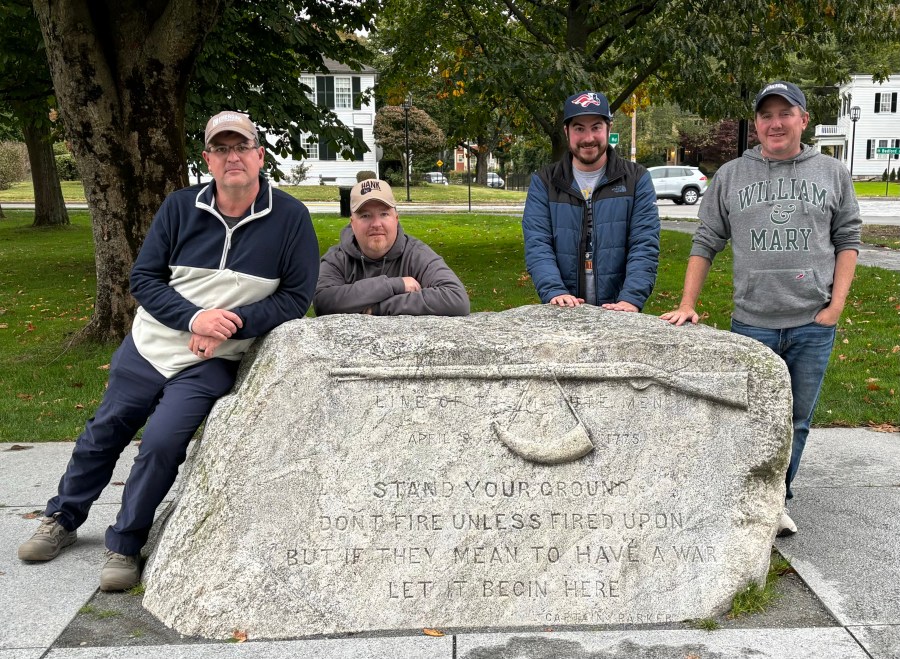
Touring the Sites of Lexington and Concord

Last weekend, Emerging Revolutionary War wrapped up our fourth annual bus tour. Our previous tours covered Trenton, Princeton, Monmouth, Valley Forge, and Charleston. This year we went to where the whole war started: Lexington and Concord on the eve of the 250th anniversary of the battles. We had a jam-packed weekend with a fully sold out 56 passenger bus. As most places close down in November in Massachusetts, we chose to move this year’s tour from our usual Veterans Day weekend, to Columbus Day weekend. Here is a brief overview of how the weekend went:

Continue reading “Touring the Sites of Lexington and Concord”

“God be with you gentlemen”: To Philadelphia!

On August 30, 1774, two Virginians arrived by carriage at George Washington’s home, Mount Vernon.  It was Patrick Henry and Edmund Pendleton.  Henry and Pendleton planned to spend the night at Mount Vernon and on the morning of August 31, 1774 they would depart with Washington to go to Philadelphia and attend the First Continental Congress.  These three Virginians would be joined in Philadelphia by Richard Henry Lee, Peyton Randolph, Benjamin Harrison, and Richard Bland to form the Virginia delegation at the congress.  This was the first time delegates from twelve of the American colonies met in the lead up to the Revolutionary War.

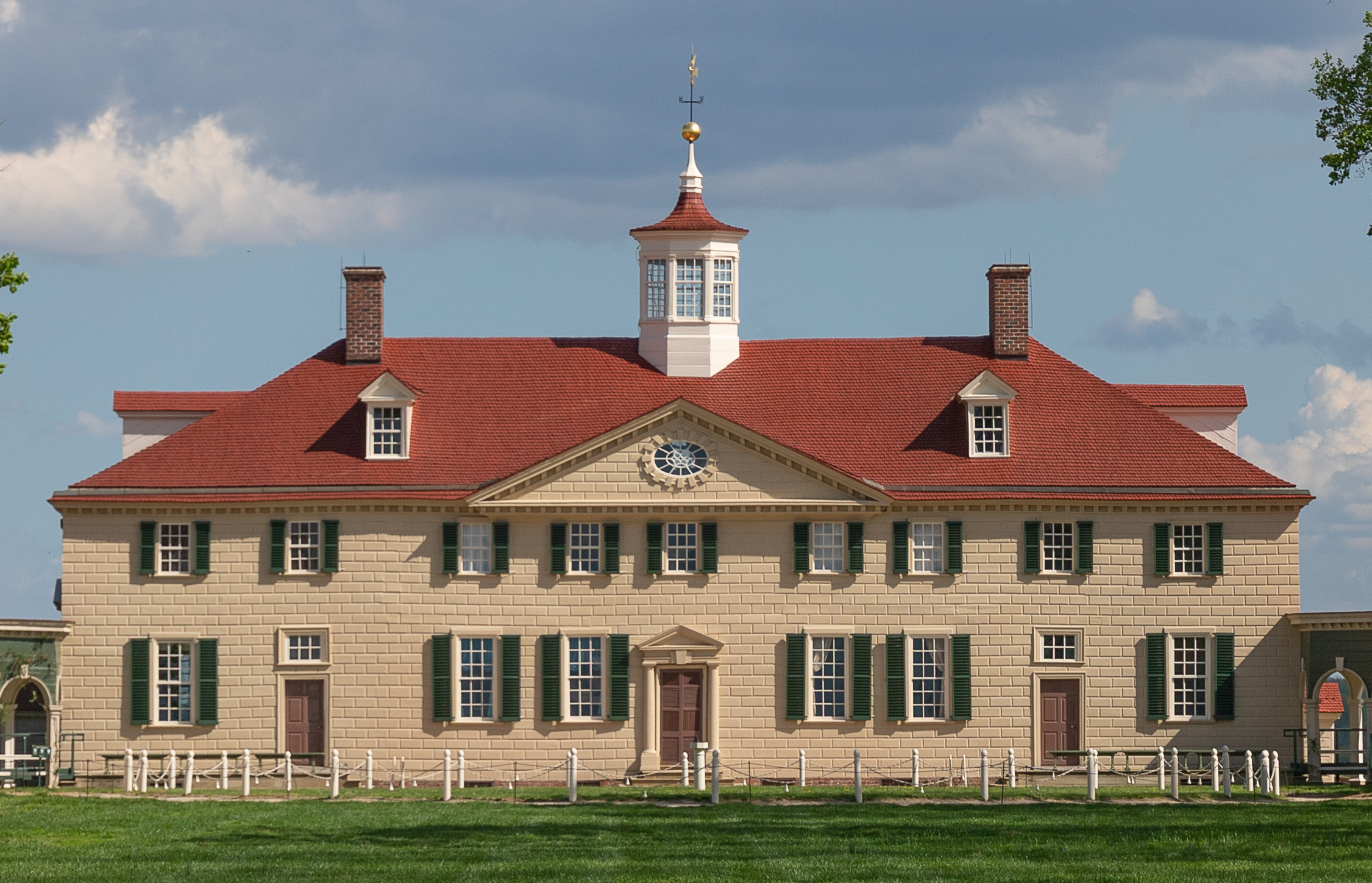
The west front of the mansion at Mount Vernon. From the doorway here, Martha Washington bid farewell to her husband on August 31, 1774. (Wikimedia)

They had no idea what this congress would lead to.  For the first time, men from colonies as far north as New Hampshire and far south as South Carolina would be meeting.  The disparate colonies were coming together in response to the British Parliament’s harsh measures levied earlier that year.

As the three Virginians left Mount Vernon on August 31, Edmund Pendleton remembered how Martha Washington bid them goodbye.  She had no idea that the events that would follow would result in her husband being gone from Mount Vernon for nearly eight years.

Pendleton wrote: “I was most pleased with Mrs. Washington and her spirit. She seemed ready to make any sacrifice and was cheerful though I knew she felt anxious. She talked like a Spartan mother to her son going to battle. ‘I hope you will stand firm – I know George will,’ she said. The dear little woman was busy from morning to night in domestic duties, but she gave us much time in conversation and affording us entertainment. When we set off in the morning, she stood in the door and cheered us with the good words, ‘God be with you gentlemen.’”

Make sure to follow Emerging Revolutionary War on Facebook as we attend events to mark the 250th anniversary of the First Continental Congress next weekend in Philadelphia.  We will be doing videos throughout the weekend and will post them later to our YouTube channel.

Honor and Victory: The Battle of Sullivan’s Island, June 28, 1776

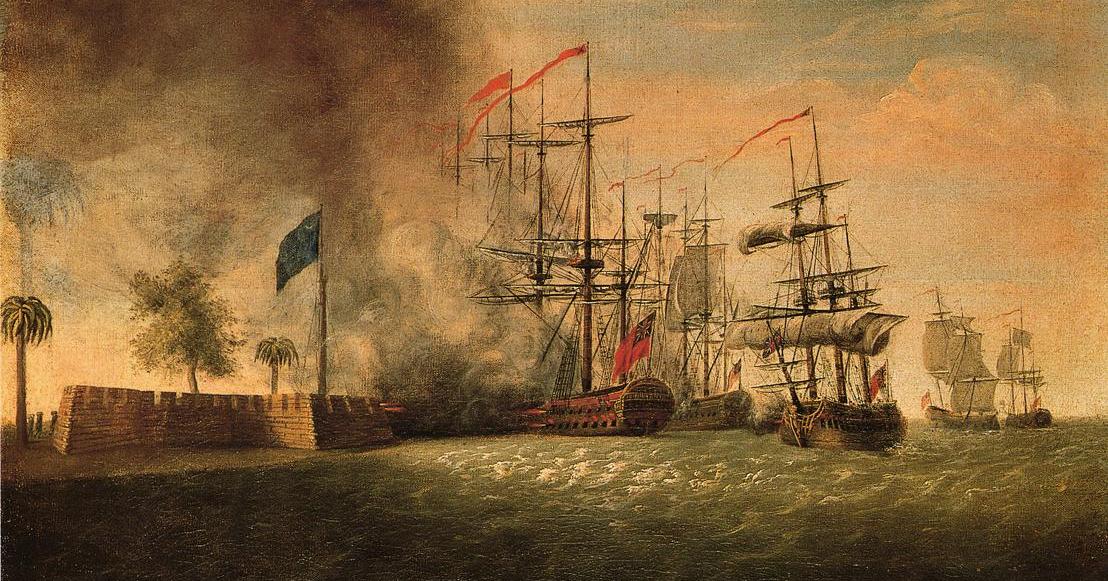
On June 28, 1776, nine British warships under the command of Sir Peter Parker weighed anchor and began moving toward Sullivan’s Island outside of Charleston, South Carolina. Col. William Moultrie, commanding the 2nd South Carolina Regiment in an unfinished palmetto log fort, ordered his men to their posts to prepare for a defense. The first four British ships moved into position and anchored 400 yards from the fort. In an amazing display of British firepower, the British ships began to fire broadsides, simultaneously firing all the cannon from one side of the ship. The broadsides were deafening as hundreds of British cannonballs screeched through the air and slammed into the palmetto walls of the fort. Local newspapers later described the cannonade as “one of the most heavy and incessant cannonades perhaps ever known.”

As the walls of the fort shook violently, Moultrie’s men coolly manned their cannon and returned the fire as best they could. A continuous roar of cannon fire from hundreds of artillery pieces belched forth, quickly filling the harbor with the sight of white smoke and the smell of burning sulfur. The crash of the cannonballs mixed with the screams of wounded men filled the air.

As the British cannon boomed away, their solid shot hit the walls of the palmetto fort. But the soft, spongy wood of the palmetto (and the 16 feet of sand behind them) absorbed the shock and the balls either buried themselves into the wall or bounced off and fell harmlessly to the ground. Meanwhile, the British ships endured terrible damage from the American shore batteries. American cannonballs smashed into the oak of the British ships, causing havoc and bloodshed.

Continue reading “Honor and Victory: The Battle of Sullivan’s Island, June 28, 1776”

Rev War Revelry: “Witness to Revolution” with the Ceceres

Join Emerging Revolutionary War this Sunday evening at 7 p.m. ET on our Facebook page as we sit down for a pre-recorded discussion with historian and author Mike Cecere and his daughter, Jennifer Cecere to discuss their new historical fiction books centered on the Revolutionary War. “Witness to Revolution” focuses on the lives of children growing up in Williamsburg, Virginia during the beginning part of the Revolution. Their recently released second book, “Witness to War” follows the characters through the tumultuous war.

We discuss the importance of historical fiction, the differences between writing non fiction and historical fiction, and the challenges and opportunities getting the next generation interested in the Revolutionary War. Grab a drink and join us for a great discussion!

St. Patrick’s Day Rev War Revelry

Join Emerging Revolutionary War historians Mark Maloy, Rob Orrison, and Mark Wilcox on this Sunday, March 17 at 7 p.m. on our Facebook page for a pre-recorded revelry as we discuss the Irish in the American Revolution. We’ll talk about the Irish who fought with Washington’s army (such as Colonel John Fitzgerald), those who fought with the British, and how the events in American ultimately spilled over into Ireland (the Irish Rebellion of 1798) and how we have come to remember the role of the Irish in the Revolution. Happy St. Patrick’s Day (and Evacuation Day)!

Can’t make it on St. Patrick’s Day because you’ll be celebrating? No problem, the episode will be up on our YouTube page later this week and available on our audio podcast. While there, check out our hundreds of Rev War Revelries and other videos!

Happy Washington’s Birthday!

Today we celebrate George Washington’s Birthday.  You read that correctly.  While most people refer to this Monday holiday as ‘Presidents Day’, the federal holiday (and many state holidays) only celebrates one President of the United States: George Washington.

Washington’s birthday celebrations go back to the time when Washington was living.  Washington was born on February 11, 1731, but with the changing from the Julian calendar to the Gregorian calendar, it was shifted to February 22, 1732 in 1752.  (Check out a video of us visiting the site of Washington’s birth!) While there are no records of how he and his family celebrated the day privately, the first real public celebration of his birthday occurred at Valley Forge in 1778.  A fife and drum corps serenaded the commanding general outside his headquarters building at the Potts House during that dreadful winter.  Historically, the colonists had celebrated annually the birthday of the King, so it was symbolic for the Continentals to celebrate Washington’s birthday instead during the war.

After becoming President of the United States, large public celebrations of Washington’s birthday occurred across the country including large ones in Philadelphia and New York.  These celebrations included the ringing of church bells, feasts, toasts, artillery firings, and fireworks.

Continue reading “Happy Washington’s Birthday!”