

“Our clocks are slow” L’Hermione, Lafayette and the Franco-American Alliance

RevWarWednesdays-header

unnamed
Marquis de Lafayette

With the visit of the L’Hermione to the east coast of the United States this summer, there has been a heightened interest in the Franco-American alliance that won the American Revolution.  The French rebuilt the L’Hermione not only for its beauty but also its historical significance.  Most importantly, its mission and the passenger it contained when it arrived in Boston in the fall of 1780.

The spring of 1780 was a low point in the American cause of independence.  Stagnation in the north between Washington and British commander General Sir Henry Clinton combined with devastating defeats in the Southern Theater caused low morale among the patriots.  Cornwallis had complete control over the Southern colonies and no standing American force seemed to be able to stop his movements.  Continue reading ““Our clocks are slow” L’Hermione, Lafayette and the Franco-American Alliance”
Fashion in the Historic Triangle

RevWarWednesdays-headerWhen one heads to the Historic Triangle of Jamestown-Williamsburg-Yorktown, Virginia becoming immersed in early American History is almost a given.

At the same time, when one is looking for fashion in the area, the Premium Outlets in Williamsburg would usually be the direction one would head.

However, thanks to Jamestown Settlement and Yorktown Victory Center, fashion and American history come together. But, the clothing styles does not end with just Colonial American history, as fashion from British military uniforms to Native American and West African cultures will also be on display. Continue reading “Fashion in the Historic Triangle”

The Return of L’Hermoine

RevWarWednesdays-header

It will be hard to describe in modern terms the celebrity of Marie-Joseph Paul Yves Roch Gilbert du Motier de Lafayette, Marquis de Lafayette (aka LaFayette) in 18th century America.

The young Marquis was fascinated with the American ideal of revolution and against the wishes of the French monarchy, in 1776 he cast his lot with the American patriots.  His relationship with George Washington and other American leaders played a major role in the American-French alliance that brought about American independence. Continue reading “The Return of L’Hermoine”

James Monroe at War

RevWarWednesdays-header


Part Two

With an excess of officers in the Continental Army and little prospect of getting a field command, James Monroe resigned his commission in 1779.  He became a Lieutenant-Colonel of Virginia forces, but was unable to recruit enough men to form a new regiment.  In 1780 he went to North Carolina as a military observer for Governor Thomas Jefferson, with whom he had begun the study of law. Continue reading “James Monroe at War”

James Monroe at War

RevWarWednesdays-header


Part One

Emerging Revolutionary War is honored to welcome guest historian Scott H. Harris, Director of the James Monroe Museum.

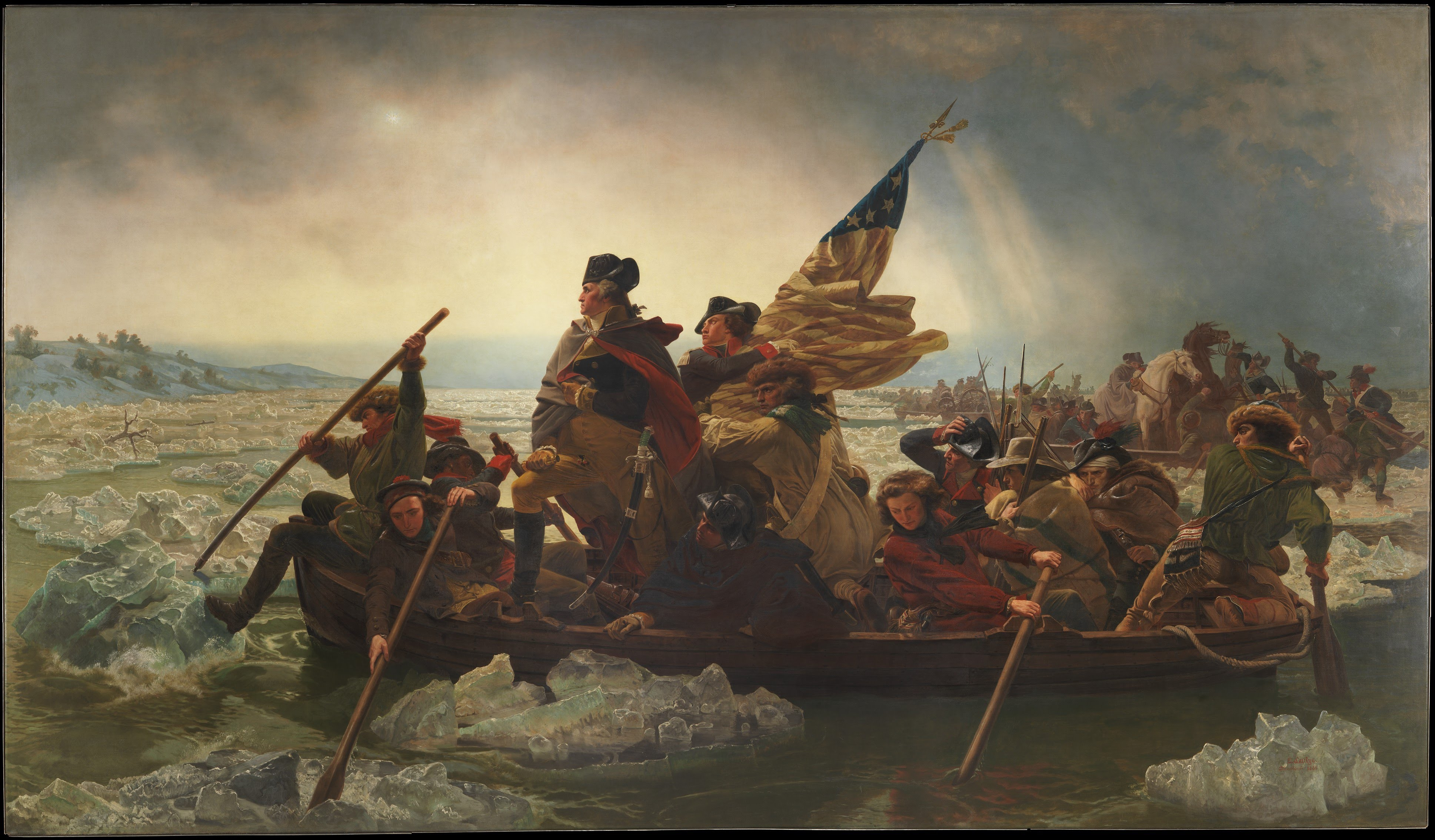
It is one of the great exploits of the American Revolution.  On the night of December 25, 1776, General George Washington led the Continental Army across the icy Delaware River to attack a Hessian garrison at Trenton, New Jersey.  Young Lieutenant James Monroe held the flag behind Washington as they were rowed across the freezing river (standing up).

Emanuel Gottlieb Leutze, Washington Crossing the Delaware.  Oil on canvas, 1851.  Only two figures in this fictitious image are identified—General George Washington and Lieutenant James Monroe (holding flag).
Emanuel Gottlieb Leutze, Washington Crossing the Delaware. Oil on canvas, 1851. Only two figures in this fictitious image are identified—General George Washington and Lieutenant James Monroe (holding flag).


Except, that’s not what happened.

Continue reading “James Monroe at War”

Inspired By the Americans

RevWarWednesdays-header

On December 16, 1773, in Boston, Massachusetts harbor, American colonists belonging to the Sons of Liberty stole aboard trade vessels anchored in the water. In protest to recently passed British legislation, the Native American dressed Sons of Liberty dumped 342 chests of tea into the water.

The Boston Tea Party became a prominent and well-known defiant act by the Americans on the road to the American Revolution.

Unbeknownst to the Adams, Warrens, and Hancock’s of the American Revolution, this particular form of protest–attacking the purse strings of the governing power–would resonate 75 years later, 3,284 miles, and one continent away. Continue reading “Inspired By the Americans”

Battle of Blandford

RevWarWednesdays-header

On April 25,  approximately 2,500 smartly dressed but campaign worn uniformed invaders  attacked Virginians defending their homes and hearths around Petersburg, Virginia.

One would suspect that the next few sentences would talk about the latest Union excursion against their Southern counterparts in the nine month siege that broke the back of the Confederacy.

However, one would be wrong. Continue reading “Battle of Blandford”

“A Negro Man”: Prince Estabrook of Lexington

RevWarWednesdays-header

As the British under Lt. Col. Francis Smith marched out of Lexington on the morning of April 19th, they left behind them 18 American casualties. One of these men who suffered wounds that morning was Prince Estabrook. Estabrook was unlike the others who lined up that morning on the Lexington Green, Estabrook was an enslaved African American.

Prince Estabrook Service Record for June 1775

Born in the 1740’s and owned by Benjamin Estabrook there is little information on Prince’s life and family. Benjamin Estabrook operated a grist mill near Lexington and maintained a decent sized farm. Benjamin served in various positions in Lexington including coroner, justice of the peace and Selectman. He inherited Prince from his father and both men were near the same age. Prince enlisted in the Lexington militia in 1773 and his owner had to grant him the ability to do so. Continue reading ““A Negro Man”: Prince Estabrook of Lexington”

Another Anniversary to Commemorate Next Week

RevWarWednesdays-header

As we observe the beginning of the end of the American Civil War this week at Appomattox Court House, Virginia, another anniversary is just around the corner.

240 years and 10 days ago and approximately 630 miles the first shots of the American War of Independence was fired on Lexington Green on April 19, 1775.

Two events, two weeks in April. One commemorating the end of what some combatants at the time referred to as the Second American Revolution, whereas the other anniversary began the First American Revolution (if one sticks with that same theme).

So, as you finish your time tracing the last steps of the Confederate Army of Northern Virginia at Appomattox Court House head north and traverse the Battle Road between Boston, Lexington, and Concord.

Our friends at the national park, Minuteman National Historical Park have multiple events going on leading up to, through, and after the 19th of April.

Check out their events here; http://www.nps.gov/mima/planyourvisit/calendar.htm


The Most Fateful Decision of April 19, 1775

RevWarWednesdays-header


Lord Hugh Percy, the 2nd Duke of Northumberland and holding the rank of brigadier general commanded the relief brigade that was ordered out from Boston by Sir Thomas Gage after Lieutenant Colonel Francis Smith had sent back a messenger asking for reinforcements.

Little did Lord Percy realize at the time that by the late afternoon of April 19th, one quick decision saved the lives of countless British Redcoats and hundreds of American militia and minutemen. Continue reading “The Most Fateful Decision of April 19, 1775”