


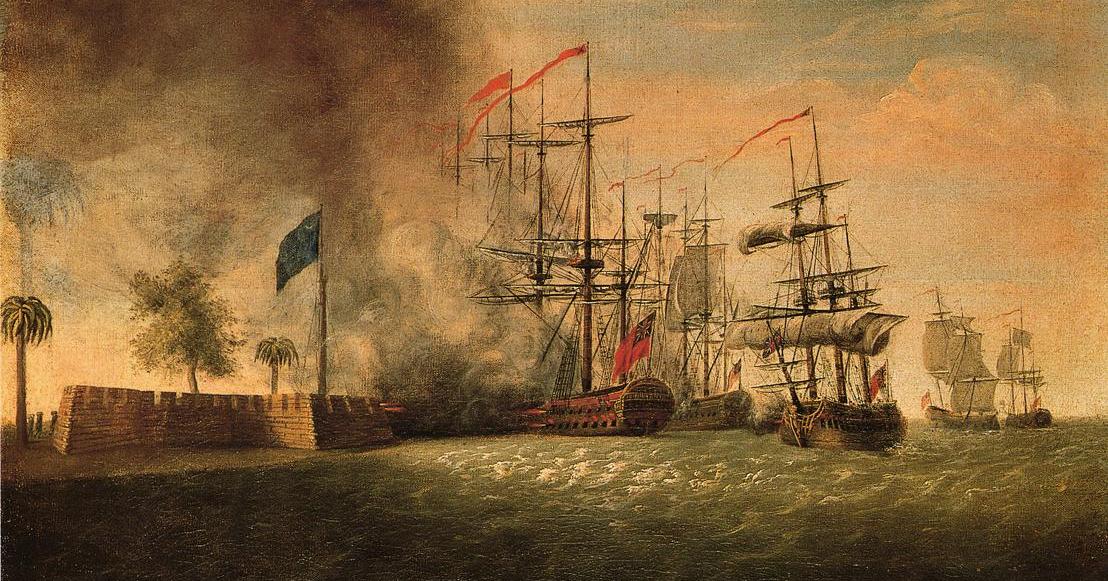
On June 28, 1776, nine British warships under the command of Sir Peter Parker weighed anchor and began moving toward Sullivan’s Island outside of Charleston, South Carolina. Col. William Moultrie, commanding the 2nd South Carolina Regiment in an unfinished palmetto log fort, ordered his men to their posts to prepare for a defense. The first four British ships moved into position and anchored 400 yards from the fort. In an amazing display of British firepower, the British ships began to fire broadsides, simultaneously firing all the cannon from one side of the ship. The broadsides were deafening as hundreds of British cannonballs screeched through the air and slammed into the palmetto walls of the fort. Local newspapers later described the cannonade as “one of the most heavy and incessant cannonades perhaps ever known.”
As the walls of the fort shook violently, Moultrie’s men coolly manned their cannon and returned the fire as best they could. A continuous roar of cannon fire from hundreds of artillery pieces belched forth, quickly filling the harbor with the sight of white smoke and the smell of burning sulfur. The crash of the cannonballs mixed with the screams of wounded men filled the air.
As the British cannon boomed away, their solid shot hit the walls of the palmetto fort. But the soft, spongy wood of the palmetto (and the 16 feet of sand behind them) absorbed the shock and the balls either buried themselves into the wall or bounced off and fell harmlessly to the ground. Meanwhile, the British ships endured terrible damage from the American shore batteries. American cannonballs smashed into the oak of the British ships, causing havoc and bloodshed.
Continue reading “Honor and Victory: The Battle of Sullivan’s Island, June 28, 1776” Emerging Revolutionary War Era