

Emerging Revolutionary War welcomes guest historian, Nathaniel Parry, a brief bio follows this post.
The American Revolution was a victory of liberty over tyranny made possible by a mixture of courage, grit, and virtue. It was also, however, a morally ambiguous affair with some of the main participants motivated as much by ambition as they were by idealism. While many of the founding generation prided themselves on their virtue, vice also played an important role in their rebellion against the British, and to fully appreciate this reality, it is useful to examine the role of alcohol, which turns up at many of the revolution’s key moments.
In ways sometimes subtle and often quite important, alcohol provided the impetus for the nation’s founding, belying the pristine image of an honorable rebellion of virtuous patriots against liberty-hating tyrants. From John Hancock celebrating the repeal of the Stamp Act in 1766 by “treat[ing] the Populace with a Pipe of Madeira Wine,” as one newspaper reported,[i] to militiamen wetting their whistles at Buckman Tavern before the Battle of Lexington and Concord,[ii] to General George Washington ordering “an extra ration of liquor to be issued to every man”[iii] in celebration of Britain’s recognition of America’s independence in 1783, alcohol pops up again and again during the revolutionary era. This was a reflection of the fact that drinking was an integral part of daily life in early America.
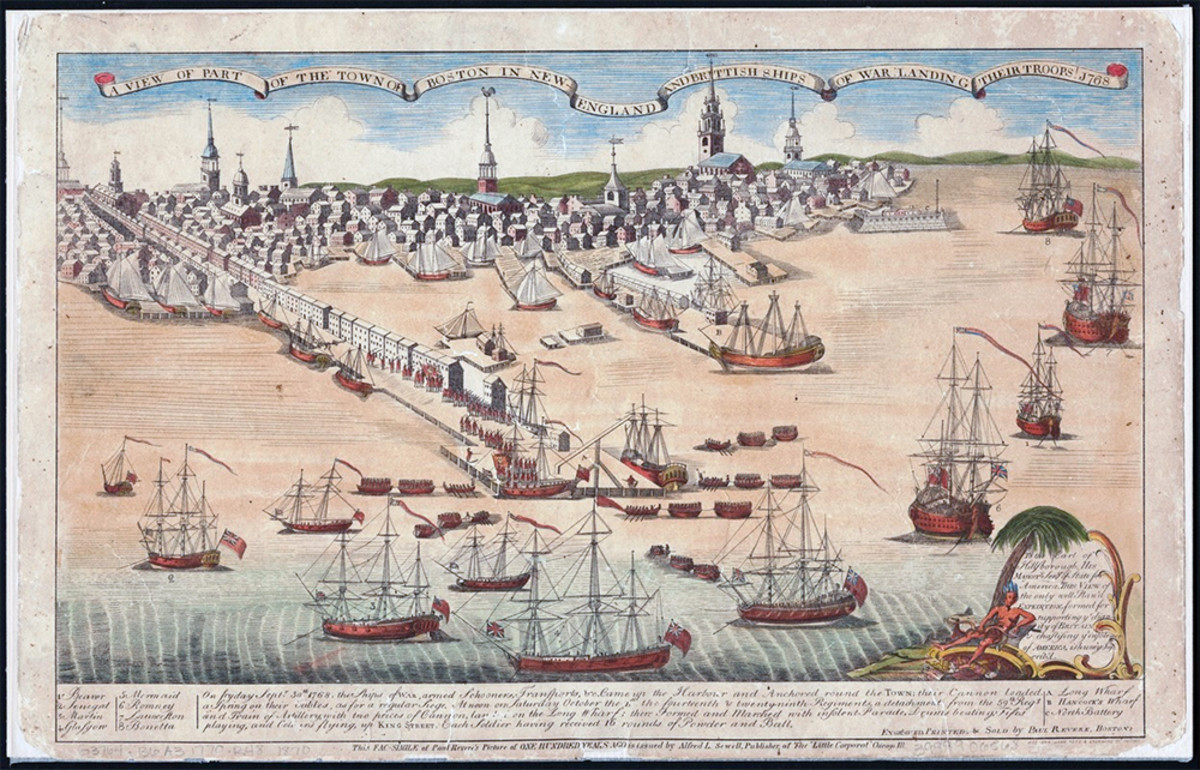
With heavy drinking habits widespread among all classes and regions, the rum distillery industry flourished in the colonies, made possible by cheap imports of molasses from the West Indies. By one count, there were more than 150 rum distilleries in New England before the revolution, and throughout the colonies some five million gallons of rum were being produced.[iv] In order to ensure access to the cheapest molasses available and to bypass restrictive English regulations such as the Navigation Acts and 1733 Molasses Act, smuggling became rampant in the colonies, a problem that Parliament sought to address with the adoption of the Sugar Act in 1764. An attempt to crack down on smuggling and increase revenue, the Sugar Act had the effect of increasing the price of manufacturing rum and negatively affected the exporting capacity of New England distillers, leading to consternation among merchants. It also heavily taxed the formerly duty-free wine from Madeira, Portugal, which was popular throughout the colonies. This angered both merchants and consumers.[v]
Continue reading “Alcohol in the American Revolution” Emerging Revolutionary War Era