In November 1775, as the American colonies were deep in rebellion against Britain, General George Washington faced not only the British army but also the task of shaping a new American identity. One revealing moment came on November 5, 1775, when Washington, then commander-in-chief of the Continental Army, issued an order forbidding his soldiers from celebrating Guy Fawkes Day, also known as Pope’s Day in colonial New England. This event—often overlooked in histories of the Revolution—offers insight into Washington’s leadership, his moral sensibilities, and his vision for the cause of American independence.
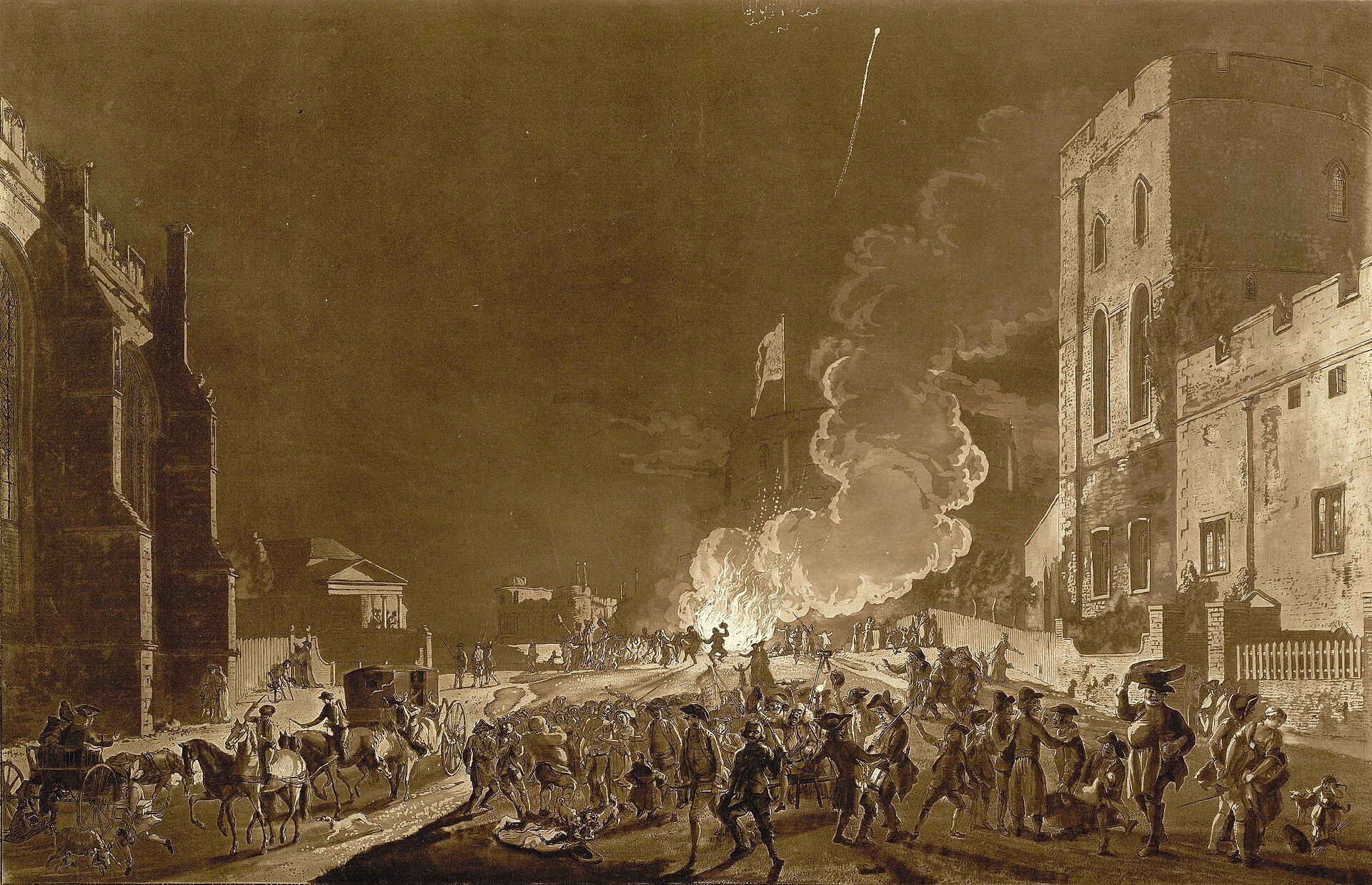
Guy Fawkes Night at Windsor Castle, 1775
Guy Fawkes Day had long been an English and colonial holiday commemorating the failed Gunpowder Plot of 1605, when Catholic conspirator Guy Fawkes attempted to blow up Parliament and assassinate King James I. In Protestant England and its colonies, November 5 became a day of noisy anti-Catholic demonstrations, bonfires, and the burning of effigies of the Pope and Fawkes. In Boston and other colonial towns, rival street gangs—often from the North and South Ends—would parade effigies, fight, and engage in destructive celebrations. It was, in short, a day of raucous Protestant triumphalism and sectarian hatred.
By 1775, however, the American Revolution had changed the stakes. The Continental Army, drawn from thirteen diverse colonies, was fighting not merely as British subjects in revolt but as Americans united against tyranny. Washington recognized that this unity could not rest on religious prejudice. Moreover, the colonies were seeking crucial support from Catholic France and from Catholic Canadians in Quebec. Anti-Catholic displays risked alienating potential allies. Thus, on November 5, 1775, Washington issued a General Order that firmly condemned the planned festivities.
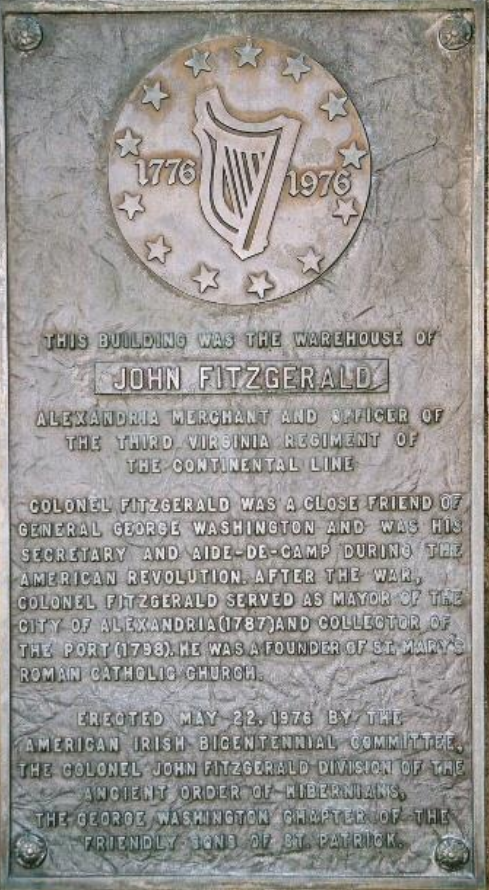
John Fitzgerald, an Irish Catholic immigrated to Alexandria in 1773. He became good friends with Washington and like many other Catholics, provided great service to Washington. For a time he served as an aide-de-camp to Washington.
Washington’s order read, in part, that “at such a juncture, and in such circumstances, to be insulting their religion is so monstrous, as not to be suffered or excused.” He called on his troops to remember that “we are contending for the rights of mankind” and that the cause required dignity and respect for all faiths. The general’s tone combined moral rebuke with strategic foresight. By discouraging Pope’s Day, he sought to replace narrow sectarian loyalties with a broader, inclusive patriotism.
This moment also reflects Washington’s character and leadership style. He understood the importance of discipline and order in an army composed largely of volunteers. The elimination of destructive, drunken celebrations helped reinforce his insistence on professionalism. But more importantly, Washington saw the American cause as grounded in universal principles of liberty and justice—principles incompatible with the kind of bigotry Pope’s Day embodied.
In retrospect, Washington’s handling of Guy Fawkes Day in 1775 stands as an early statement of religious tolerance in American political life. His decision to forbid anti-Catholic celebrations prefigured later American commitments to freedom of conscience and the separation of church and state. What might have seemed a minor disciplinary order was, in fact, a symbolic act of leadership: it transformed an old English custom of division into an American lesson in unity. Through it, Washington began to shape not just an army, but a nation.
Emerging Revolutionary War welcomes guest historian Avellina Balestri
My American Revolution historical fiction trilogy, “All Ye That Pass By,” is thematically centered upon the pros and cons of oath-taking. Although the topic has been very much on my mind during the researching and writing process, I think many people who engage with the American Revolution on a popular level forget about the profound moral quandary of making and breaking solemn declarations before God and Man.
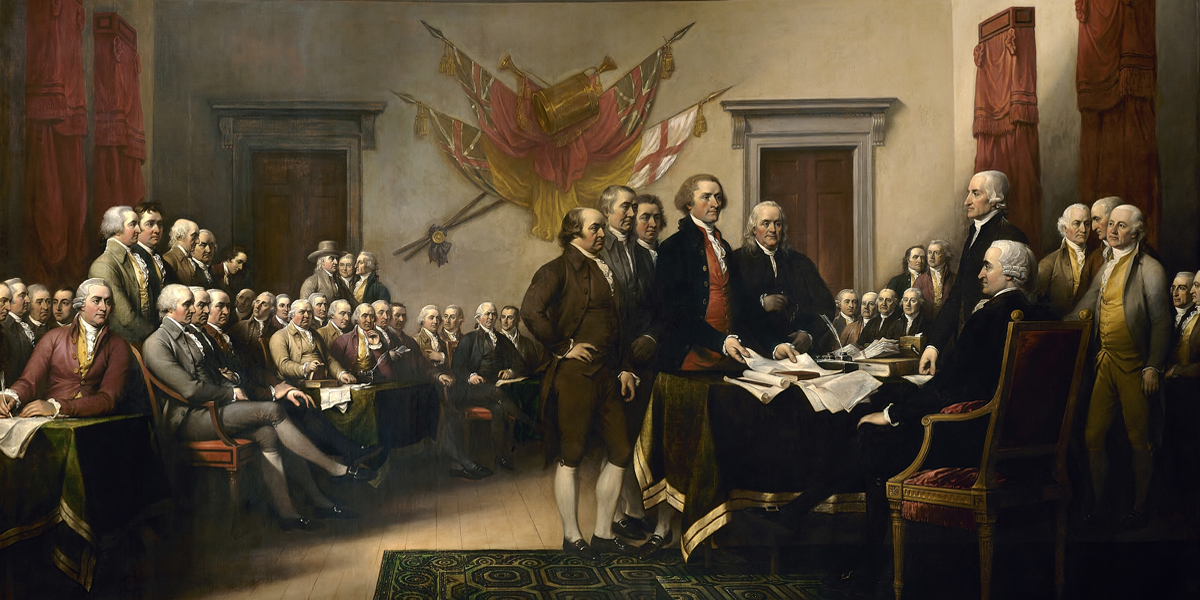
When the signers of the Declaration of Independence pledged their “lives, fortunes, and sacred honor” to the cause of rebellion, there could not help but be an element of contradiction, for they were committing an act of treason against the King to whom they had previously sworn fealty. Too often we reduce this decision to a test of courage, necessary to take the risks and face the consequences that accompany defying one’s sovereign. We get a certain thrill from the idea of defiance because it fits a certain popularized narrative framework. But perhaps this is partly because we have forgotten the rubrics of more religious ages in which hierarchies represented divine realities that dignified mankind.
Swearing oaths to kings and queens was a grave matter in both a spiritual and interpersonal sense. Most oath-taking rituals involved placing one’s hand (and often lips) upon the Cross on the Holy Bible, the symbol of salvation, and in the old rendering of such vows, wishing that one’s heart be cut out if proven false to the liege lord or lady, who would henceforth be held higher than family ties or even one’s own life. Calling down the heart-cutting curse was both a literal reference to execution and a symbolic statement of self-destruction, for what was a man’s heart if his word was worthless to the one you had sworn to defend by your life or death?
By contrast, unwavering zeal for one’s royal master may lead to one’s early demise, but that is not merely tolerable, but glorious, indeed, the most glorious hour of one’s life (as Major John Andre declared before minutes before his own life was taken), because it proved the depths of one’s ability to be a good and faithful servant, and what is a man without a lord to serve? What liberty can a knight enjoy if he will not swear his sword and be chained? These perennial questions hearken back to the Anglo-Saxon epic of the Men of Maldon, who preferred death to abandoning their lord, even as he lay slain by Norsemen upon the field. It is no small irony that one of Maldon’s other famous sons was General Horatio Gates, whose trajectory runs in quite a different direction.
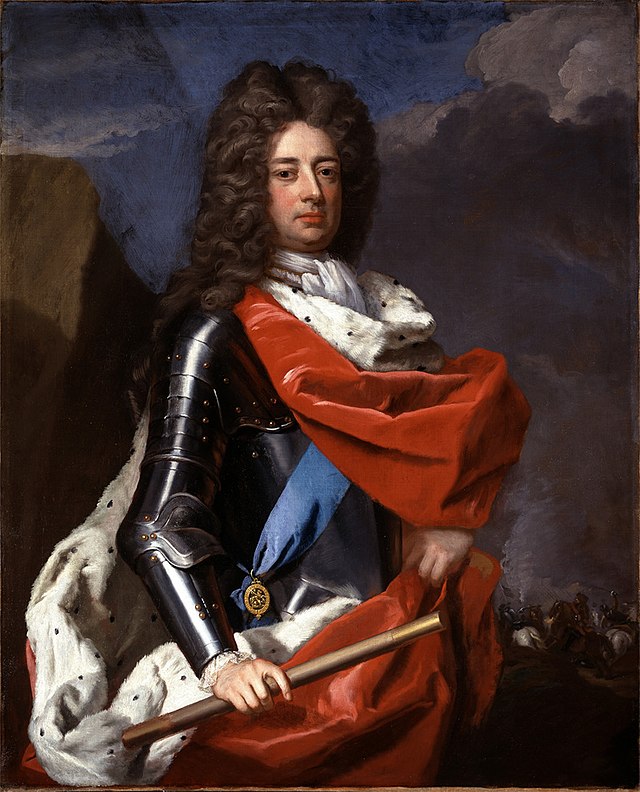
Duke of Marlborough
On that note, it is worth turning to the various figures in the long history of the British Isles and her overflowing empire who chose to break their oaths to reigning sovereigns by way of rebellion, from Lord Brooke (who fought in The English Civil War against Charles I), to the Duke of Marlborough (who took part in The Glorious Revolution against James II), to Lord Murray (who fought in The Second Jacobite Rebellion against George II). To justify themselves under God and before Man, they usually appealed exception clauses based on a higher religious obligation or a superior royal claim. For Brooke and Marlborough, it was because the kings were leaning too Catholic for their Protestant convictions; for Murray, it was because the Stuarts were the rightful rulers, unlawfully sent into exile.
Even in these cases, however, there is a sense that the participants never fully managed to escape the shadow over their broken oaths. Yes, they might appeal to those “rare cases” brought forward by philosophers and theologians from Thomas Aquinas to Samuel Rutherford, but they had still committed what Dante deemed the most mortal of sins in the depths of his inferno. Bearing that weight is exhausting for any mortal man, doomed to make constant self-defenses while knowing the world will never truly trust them again. It is, in effect, to be branded by the mark of Caine, for one who breaks his oaths has murdered the worth of his own word, a nearer thing than even his own brother.
Jumping forward in time, the American Revolution is a unique case in that it was not fundamentally grounded in either a doctrinal nor a dynastic dispute. One would have to squint incredibly hard to make the arguments of either Aquinas or Rutherford translate neatly into a stamp of approval for the American Revolution. This is not to say the revolutionaries did not borrow from the rhetoric of past uprisings, especially regarding the curbing of royal prerogative (albeit colonial complaints were more directed at Parliament than at the King, even though the King upheld his Parliament). But humanistic philosophies that flourished during the Enlightenment introduced rubrics for revolution based on the will of the people. This, in turn, started the domino effect that established the modern consensus of Democracy being inherently positive, even though General Thomas Gage’s warning about the effects of “democratic despotism” is perhaps more relevant than we wish to admit.
Coming back to my own literary exploration, I strive to cast a particular light upon the experiences of Catholic recusants in the British Isles and North America from the 16th-18th centuries, who found themselves between a rock and a hard place in terms of oath-taking. This was especially the case for English Catholics of prominent lineage, who were forced to pay taxes and tithes for refusing to conform to the Anglican Church, leaving their resources drained and their status diminished. By the latter part of the 18th century, following multiple failed Jacobite risings in favor of Catholic claimants, most were eager to dispel accusations of cowardice at best and treason at worst for the old faith they keep against the odds. Even the pope acknowledged the House of Hanover by 1766. But in order to participate fully in British society, it was mandatory to take the Test Act, an oath acknowledging the King as Governor of the Church in England, a claim inherently repugnant to Catholic consciences.
Some resisted this temptation; others yielded to it. One of the most famous cases of apostasy in the period pertains to General Gage’s father and his father’s cousin, both coming from a staunchly Catholic lineage, who took the Test Act ostensibly to save their racing horses from being confiscated. That was the tip of the iceberg, of course; Catholics were not only forbidden from owning horses, but also bearing arms, voting, holding most offices, attending universities, serving in the military, and much more.
The decision to conform to the religion of the state often haunted those who made it. Oaths were understood religiously by society as whole, but for noble families there was a particular weight involved, since the Test Act was a successor of ancient chivalric vows taken by their ancestors. By taking it, Catholics would have sworn their souls to something which they believed put them in a state of mortal sin. Yet…would not breaking that oath be a mortal sin too?
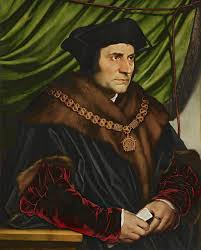
St. Thomas More
In this quandary, whatever they did would be a slap in the face to saints and martyrs most highly praised in their tradition, such as Thomas More and Edmund Campion, who preferred to die rather than sign the Oath of Supremacy. Nevertheless, they met their fates praying for the King and Queen who killed them, embodying fidelity under fire. Another case honored by the oppressed Catholic community was Lord Derwentwater, who rose up in the first Jacobite Rebellion of 1715, and preferred beheading to either recanting his faith or swearing an oath to the House of Hanover which he deemed to be illegitimate. Interestingly, it was said Derwentwater’s heart remained incorrupt, in counteraction to the curse of having it cut out.
Again, we see the crushing effects of previous failed rebellions, and cannot help but compare them to the effects of the American Revolution. The rebellion, predicted to be a flash in the pan by the British establishment, proves more successful than most imagined, shattering old structures in a manner which some will find terrifying and others liberating. In this new world, many hope to enjoy a chance to start over with a clean slate. But for those who have taken the Test Act, going down such a path would require trekking into uncharted territory, calling into question every aspect of loyalty and identity, on earth as it is in heaven. Embracing the revolutionary cause would inherently be a process of unbecoming, shedding one’s understanding of past obligations and hoping the gamble would pay in the end.
For Catholic recusants, the experiences of Charles Carroll of Carrollton served as an example of what might be possible in America. His claim was that King George is a traitor to them rather than them being a traitor to him, and that having been placed under religious suppression, his fellow Catholics had the right to seek alternative options for their own betterment as a community of faith. The outcome of the revolution might have been a risk, but he had proven that it was already disrupting the old order and causing the disabilities placed upon Catholics to crumble. Prejudice might remain, but Carroll has already overcome various civil obstacles against his faith in Maryland, the one-time Catholic colony laid low, and George Washington, commander-in-chief of the Continental Army, who once took the Test Act himself, had demonstrated his willingness to uphold religious toleration in his army.
And yet…the question of an oath’s weight still bore down on those confronted with such a choice, raised with the conviction that even an oath with questionable aspects was considered worthy of adhering to “as far as the law of God allows.” The way in which each man and woman wrestled with their conscience when it came to such heavy matters was as complex and fascinating as the war itself, and my experience of bringing that inner conflict to life as a writer has been one of the most rewarding aspects of the creative process.
Avellina Balestri is a Catholic author and editor based in the historic borderlands of Maryland and Pennsylvania. She represented the state of Maryland at The Sons of the American Revolution National Orations Contest and is the author of the American Revolution historical fiction trilogy “All Ye That Pass By,” the first installment of which, “Gone for a Soldier,” is available on Amazon. Avellina is also the Editor-in-Chief of Fellowship & Fairydust, a magazine inspiring faith & creativity and exploring the arts through a spiritual lens.
For more information about the author and her various projects, please visit the following websites:
In the early days of American independence, few tales are as intriguing—or as controversial—as the story of the Mecklenburg Declaration of Independence. Allegedly signed on May 20, 1775, over a year before the more famous Declaration in Philadelphia, this document claimed that citizens of Mecklenburg County, North Carolina, boldly severed ties with the British crown. It’s a story of early patriotism, defiance, and pride—but also one mired in historical uncertainty.
According to legend, upon hearing news of the battles at Lexington and Concord, local leaders in Mecklenburg County convened an emergency meeting and drafted a declaration proclaiming themselves “free and independent.” The idea that North Carolina may have led the way in declaring independence is a point of pride for many in the state. In fact, May 20, 1775, the supposed date of the declaration, is emblazoned on the North Carolina state flag and seal.
Yet for all its emotional and symbolic power, the Mecklenburg Declaration has a major problem: there’s no evidence it ever existed.
No original copy has survived. In fact, the first known reference to the document didn’t surface until 1819, more than 40 years after the supposed event. That version was reconstructed from memory by elderly men who claimed to have seen or signed it in their youth. These recollections were written down decades after the fact, raising serious doubts about their reliability.
Most historians today believe the Mecklenburg Declaration is a misremembered version of the “Mecklenburg Resolves,” a very real and much better-documented set of statements issued on May 31, 1775. These resolves denounced British authority and called for local governance, but they stopped short of declaring full independence.
Despite the lack of hard evidence, the legend of the Mecklenburg Declaration persisted, particularly in North Carolina. Even Thomas Jefferson, the principal author of the national Declaration of Independence, was drawn into the controversy when some accused him of borrowing from the Mecklenburg document—an accusation he vigorously denied.
Today, the Mecklenburg Declaration stands as a symbol, if not a historical document: a reminder of the spirit of independence, the complexities of memory, and the way legends can shape our understanding of the past. Whether or not it was truly the first declaration of independence, it remains a proud part of North Carolina’s revolutionary heritage.




 Emerging Revolutionary War Era