Fashion in the Historic Triangle

RevWarWednesdays-headerWhen one heads to the Historic Triangle of Jamestown-Williamsburg-Yorktown, Virginia becoming immersed in early American History is almost a given.

At the same time, when one is looking for fashion in the area, the Premium Outlets in Williamsburg would usually be the direction one would head.

However, thanks to Jamestown Settlement and Yorktown Victory Center, fashion and American history come together. But, the clothing styles does not end with just Colonial American history, as fashion from British military uniforms to Native American and West African cultures will also be on display. Continue reading “Fashion in the Historic Triangle”
The Return of L’Hermoine

RevWarWednesdays-header

It will be hard to describe in modern terms the celebrity of Marie-Joseph Paul Yves Roch Gilbert du Motier de Lafayette, Marquis de Lafayette (aka LaFayette) in 18th century America.

The young Marquis was fascinated with the American ideal of revolution and against the wishes of the French monarchy, in 1776 he cast his lot with the American patriots.  His relationship with George Washington and other American leaders played a major role in the American-French alliance that brought about American independence. Continue reading “The Return of L’Hermoine”

Jefferson: The Man Who Moved Mountains

RevWarWednesdays-header

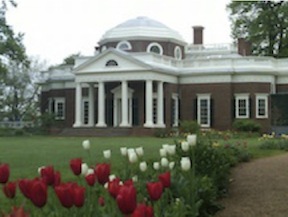
Montecello TulipsThe second in a four-part series

He leveled the top of the mountain with gunpowder.

He began the project in 1768, when he was twenty-five. He had his slaves literally sheer off the tip of the mountaintop, peeling away soil rich in iron and clay, revealing bedrock of a local variety known as Catoctin greenstone.

On the flattened plane, he built his dream home. Over the next fifty-eight years, Thomas Jefferson would significantly remodel the house twice more as his personal tastes evolved. The house has a splash of Cavalier Virginia to it, but it also has touches of the classical and the continental.

Jefferson called it “my essay in architecture.” He named his “essay” Monticello. Continue reading “Jefferson: The Man Who Moved Mountains”

James Monroe at War

RevWarWednesdays-header


Part Two

With an excess of officers in the Continental Army and little prospect of getting a field command, James Monroe resigned his commission in 1779.  He became a Lieutenant-Colonel of Virginia forces, but was unable to recruit enough men to form a new regiment.  In 1780 he went to North Carolina as a military observer for Governor Thomas Jefferson, with whom he had begun the study of law. Continue reading “James Monroe at War”

James Monroe at War

RevWarWednesdays-header


Part One

Emerging Revolutionary War is honored to welcome guest historian Scott H. Harris, Director of the James Monroe Museum.

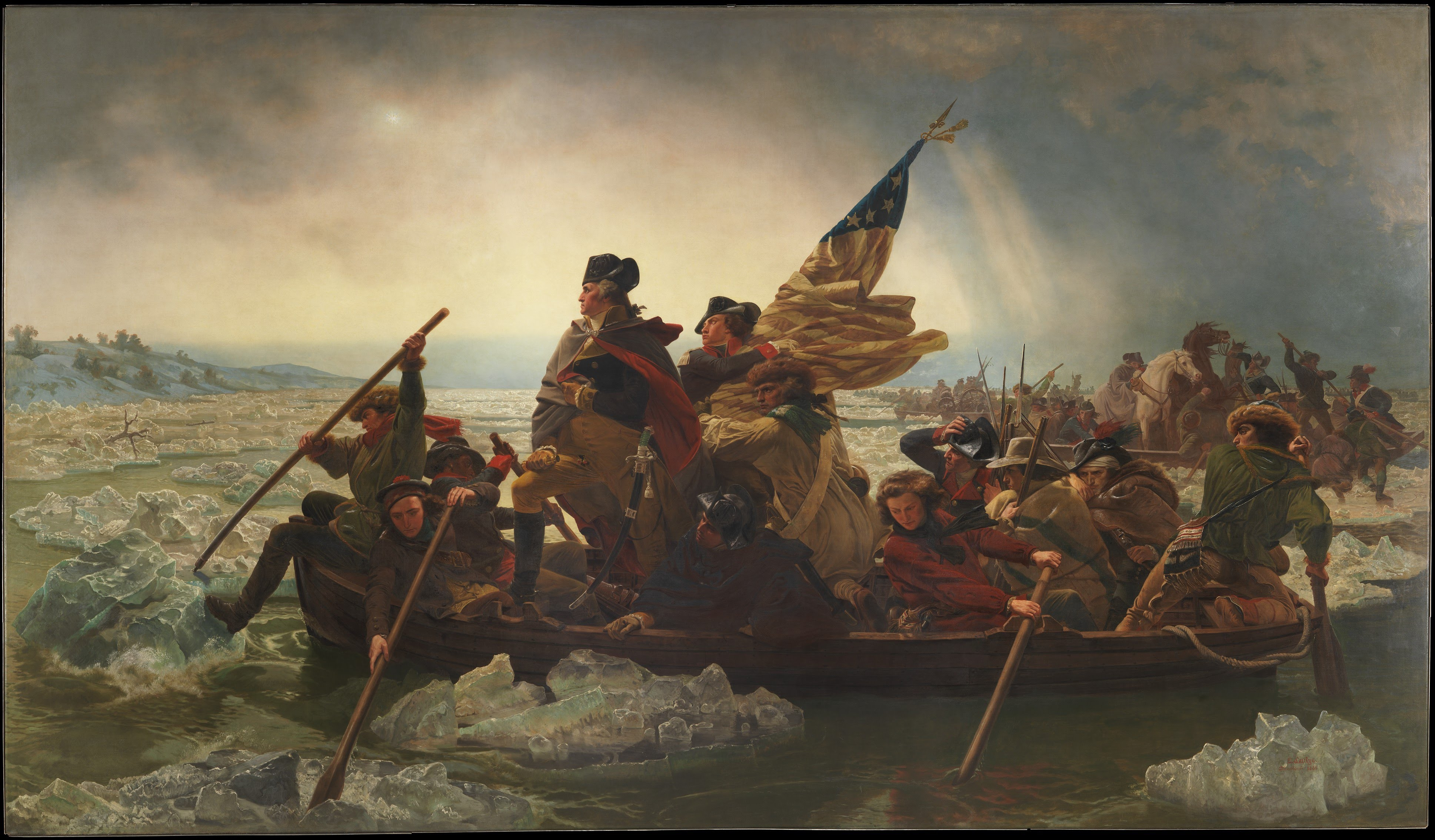
It is one of the great exploits of the American Revolution.  On the night of December 25, 1776, General George Washington led the Continental Army across the icy Delaware River to attack a Hessian garrison at Trenton, New Jersey.  Young Lieutenant James Monroe held the flag behind Washington as they were rowed across the freezing river (standing up).

Emanuel Gottlieb Leutze, Washington Crossing the Delaware.  Oil on canvas, 1851.  Only two figures in this fictitious image are identified—General George Washington and Lieutenant James Monroe (holding flag).
Emanuel Gottlieb Leutze, Washington Crossing the Delaware. Oil on canvas, 1851. Only two figures in this fictitious image are identified—General George Washington and Lieutenant James Monroe (holding flag).


Except, that’s not what happened.

Continue reading “James Monroe at War”

Inspired By the Americans

RevWarWednesdays-header

On December 16, 1773, in Boston, Massachusetts harbor, American colonists belonging to the Sons of Liberty stole aboard trade vessels anchored in the water. In protest to recently passed British legislation, the Native American dressed Sons of Liberty dumped 342 chests of tea into the water.

The Boston Tea Party became a prominent and well-known defiant act by the Americans on the road to the American Revolution.

Unbeknownst to the Adams, Warrens, and Hancock’s of the American Revolution, this particular form of protest–attacking the purse strings of the governing power–would resonate 75 years later, 3,284 miles, and one continent away. Continue reading “Inspired By the Americans”

Jefferson: America’s Great Contradiction

RevWarWednesdays-header

monticellobenchThe first in a four-part series

I sit on a small wooden bench, little more than a plank with legs, really, beneath a tulip poplar whose wide branches umbrella me. The grass around the bench has been worn away by weary travelers come to the bench to rest, revealing the reddish iron-rich soil of Virginia beneath.

A few yards away from me, Thomas Jefferson rests in peace.

A slow stream of visitors comes down the brick walkway from Jefferson’s house to stand outside the black, wrought-iron fence that surrounds his family’s small graveyard, still in use today by descendents. Many visitors have thrown coins onto the president’s grave—not just the Jefferson-faced nickels you’d expect, either, but pennies, dimes, and quarters, too. Considering the rift between Washington and Jefferson in Washington’s last years, I wonder what Jefferson would think about that. Continue reading “Jefferson: America’s Great Contradiction”

Battle of Blandford

RevWarWednesdays-header

On April 25,  approximately 2,500 smartly dressed but campaign worn uniformed invaders  attacked Virginians defending their homes and hearths around Petersburg, Virginia.

One would suspect that the next few sentences would talk about the latest Union excursion against their Southern counterparts in the nine month siege that broke the back of the Confederacy.

However, one would be wrong. Continue reading “Battle of Blandford”

Shots Heard Round the World

RevWarWednesdays-header

A quote from poet Ralph Waldo Emerson at the North Bridge in Concord.
A quote from poet Ralph Waldo Emerson at the North Bridge in Concord: “The thunderbolt falls on an inch of ground; but the light of it fills the horizon.”

This past weekend marked the 240th anniversary of “the Shot Heard ‘Round the World”—the opening engagement, in Concord, Massachusetts, of what became the American Revolution. There at the North Bridge, on April 19, 1775, colonial militiamen fired on British soldiers who’d marched from Boston to seize an arsenal of weapons cached in the town. Earlier in the day, the British soldiers had gunned down colonial militamen in the nearby town of Lexington—but this time, when they opened fire on the colonists (killing two of them), the colonists fired back. Two British soldiers died, and a third was mortally wounded.

Writer Ralph Waldo Emerson called it “The Shot Heard ‘Round the World.”

The last time I visited Concord’s North Bridge was August 6, 2010. As it happened, the date marked the anniversary of another shot heard ’round the world…one certainly as impactful and probably more infamous:
 Continue reading “Shots Heard Round the World”