

Emerging Revolutionary War welcomes back guest historian Ben Powers
If the Medal of Honor had existed during the American Revolution, which American soldiers might have received it? This is the kind of counterfactual question some of my history professors might eschew, but exactly the kind of thing I’ll debate endlessly with my pals over a burger after a day roaming a battlefield. As today is Medal of Honor Day, it’s appropriate that I share why I believe that, had the Medal of Honor existed at the time of the Revolution, there is no finer candidate for the honor than Delaware’s Robert Kirkwood.
Introduction
I recently found myself on a Zoom call with two colleagues, discussing various aspects of the American Revolution, and the conversation turned to a trip one of them planned to take to Delaware to do some research. I immediately responded with “The Blue Hens!”, thinking of the First Delaware Regiment, and followed up by asking if he had heard of Kirkwood. My friend said he had not, thus launching me into a rundown of Captain Kirkwood’s impressive combat record. I concluded with my assessment that Kirkwood was the Continental Army’s answer to World War Two Medal of Honor recipient Audie Murphy.
The Kirkwood/Murphy comparison is the kind of shorthand line that comes up in casual conversations about the War for Independence, a hyperbolic way of saying that a man was an excellent combat leader. But even after our call ended, the comparison stayed with me. Kirkwood had been in the fight from nearly the beginning, starting with the battles around New York City in 1776, and he had fought through to Eutaw Springs, SC, in 1781. Murphy likewise had seen hard campaigning from North Africa to Germany. Murphy had earned nine battle stars on his campaign ribbon. Had a similar honor been available to Kirkwood, he would have received six campaign stars, as the US Army classifies Revolutionary War campaigns, and he deserved at least three more. The more I thought about it, the more convinced I became that Kirkwood deserved a Medal of Honor.
The Medal of Honor
The Medal of Honor is the United States’ highest award for valor, reserved for acts of conspicuous gallantry in armed conflict performed at the risk of life above and beyond the call of duty. In other words, if a recipient had not performed the act, their conduct would not have been considered dereliction of duty. The decoration has been awarded fewer than 3,600 times since its inception in 1861, during the American Civil War. Conservatively, 41 million people have served in the United States military since the American Revolution, making Medal of Honor recipients 0.01% of all American veterans. To say the Medal of Honor is awarded sparingly is an understatement. Approval for the award of the medal requires extensive corroboration from witnesses and multiple levels of review to meet a standard of proof “beyond a reasonable doubt.” Audie Murphy received his Medal of Honor for single-handedly holding off an enemy infantry company in an action near Holtzwihr, France, in 1945. Did Kirkwood meet a similar standard of bravery during the American Revolution?
Historiography
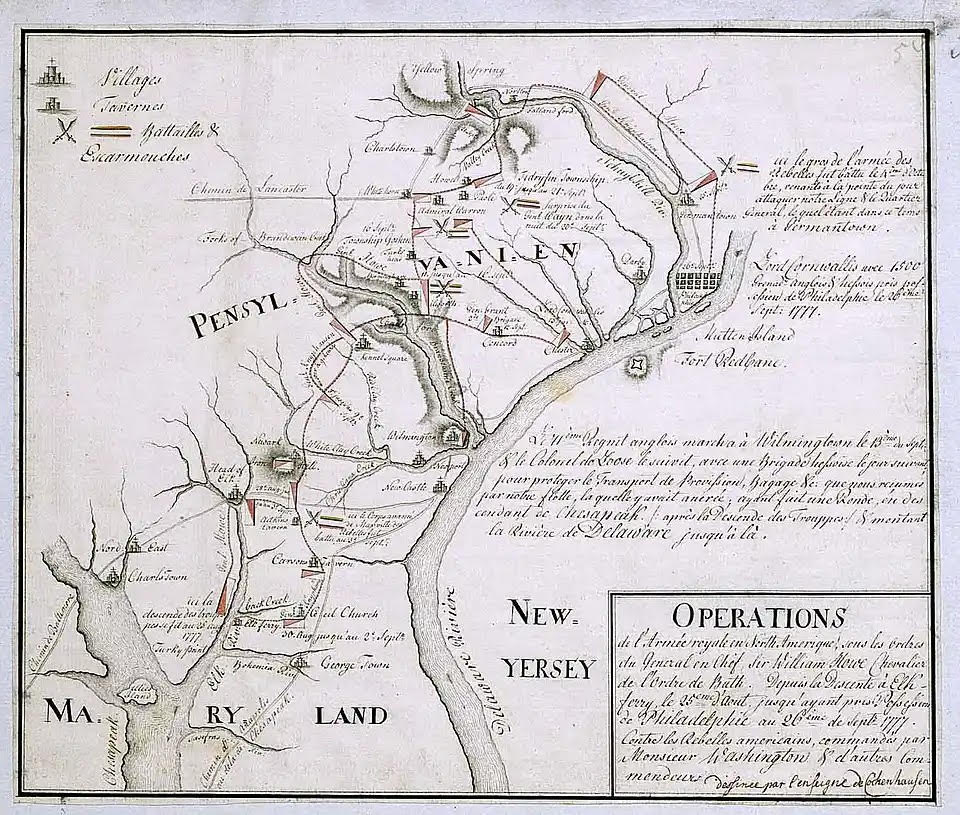
The most distinctive element of Kirkwood’s service is the fact that he was in it for the duration. Name a major engagement, and there is a good chance he was there. Long Island and White Plains in 1776? He’s there. The Philadelphia Campaign in ’77? Check. Likewise with Monmouth in ’78. When the Delaware Continentals moved to the southern theater in 1780, Kirkwood marched with them. From Camden to Eutaw Springs, he is in every major fight in South Carolina from 1780 to 1781. For all that service, Kirkwood was not a self-promoter. He participated in decisive fighting under Daniel Morgan at Cowpens on January 17, 1781, fighting with the Continentals against Banestre Tarleton. His journal entry recording the day’s events simply reads, “Defeated Tarleton”. Descriptions of Kirkwood’s combat exploits are sparse. So, how to go about determining his eligibility for the nation’s highest valor award?
 Emerging Revolutionary War Era