

Young George Washington’s performance in the French and Indian War is largely viewed as one of failure and recklessness. His actions in the Ohio River Valley ignited a conflict in North America that in turn lit the world ablaze. He could boast of no great military laurels, other than that he had emerged unscathed from the bloody battle of the Monongahela, and that he had commanded colonial provincials in Gen. John Forbes’ successful campaign against Fort Duquesne. He left military service following the latter event, with his hopes of receiving a commission in His Majesty’s Army worthy of his merit dashed years before.
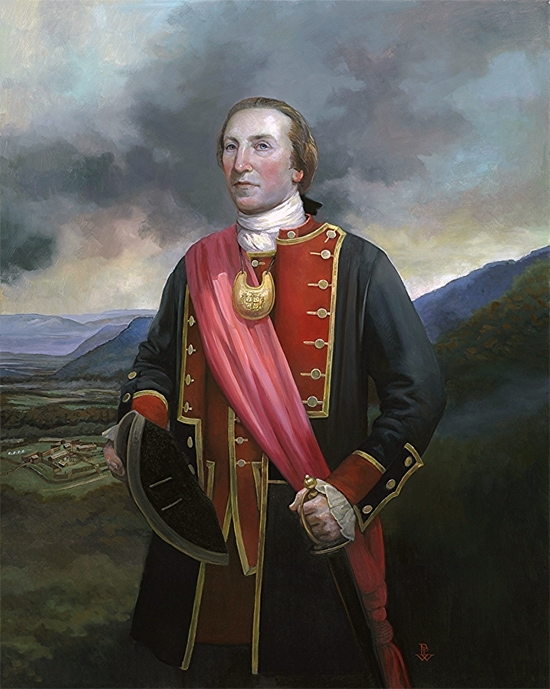
However, one aspect of Washington’s service in the French and Indian War has been widely neglected. The commander of the Virginia Regiment was tasked with defending the western frontier from enemy raiding parties. It was an unenviable position that he tackled with limited resources. It was during this period that Washington began to develop the leadership qualities that would inspire others to follow him into the depths of Hell some twenty years later. On the last day of 1758, as Washington prepared to pursue a life outside of military greatness, the officers of the Virginia Regiment drew-up a heartfelt petition to urge the now 26 year-old colonel they had grown to admire to rescind his resignation. Below is that document:
“To George Washington Esqr. Collo. of the Virginia Regiment & Commander of all the Virginia Forces The humble Address of the Officers of the Virginia Regiment
Fort Loudoun, Dec. 31st 1758
Sir,
We your most obedient and affectionate Officers, beg Leave to express our great Concern, at the disagreeable News we h⟨ave received⟩ of your Determination to resign the Command of that Corps, in which we have under you long ⟨served⟩.
The ⟨happine⟩ss we have enjoy’d and the Honor we have acquir’d, together with the m⟨utua⟩l Regard that has always subsisted between you and your Off⟨icers,⟩ have implanted so sensible an Affection in the Minds of us all, that we cannot be silent at this critical Occasion.
In our earliest Infancy you took us under your Tuition, train’d us up in the Practice of that Discipline which alone can constitute good Troops, from ⟨the⟩ punctual Observance of which you never suffer’d the least Deviation.
Your steady adherance to impartial Justice, your quick Discernment and invarable Regard to Merit, wisely intended to inculcate those genuine Sentiments, of true Honor and Passion for Glory, from which the great military Atcheivements have been deriv’d, first heighten’d our natural Emulation, and our Desire to excel. How much we improv’d by those Regulations, and your own Example, with what Alacrity we have hitherto discharg’d our Duty, with what Chearfulness we have encounter’d the severest Toils, especially while under your particular Directions, we submit to yourself, and flatter ourselves, that we have in a great Measure answer’d your Expectations.
Judge then, how sensibly we must be Affected with the loss of such an excellent Commander, such a sincere Friend, and so affable a Companion. How rare is it to find those amiable Qualifications blended together in one Man? How great the Loss of such a Man? Adieu to that Superiority, which the Enemy have granted us over other Troops, and which even the Regulars and Provincials have done us the Honor publicly to acknowledge! Adieu to that strict Discipline and order, which you have always maintain’d! Adieu to that happy Union and Harmony, which has been our principal Cement!
It gives us an additional Sorrow, when we reflect, to find, our unhappy Country will receive a loss, no less irreparable, than ourselves. Where will it meet a Man so experienc’d in military Affairs? One so renown’d for Patriotism, Courage and Conduct? Who has so great knowledge of the Enemy we have to deal with? Who so well acquainted with their Situation & Strength? Who so much respected by the Soldiery? Who in short so able to support the military Character of Virginia?
Your approv’d Love to your King and Country, and your uncommon Perseverance in promoting the Honor and true Interest of the Service, convince us, that the most cogent Reasons only could induce you to quit it. Yet we with the greatest Deference, presume to entreat you to suspend those Thoughts for another Year, and to lead us on to assist in compleating the Glorious Work of extirpating our Enemies, towards which so considerable Advances have been already made. In you we place the most implicit Confidence. Your Presence only will cause a steady Firmness and Vigor to actuate in every Breast, despising the greatest Dangers, and thinking light of Toils and Hardships, while lead on by the Man we know and Love.
But if we must be so unhappy as to part, if the Exigencies of your Affairs force you to abandon Us, we beg it as our last Request that you will recommend some Person most capable to command, whose Military Knowledge, whose Honor, whose Conduct, and whose disinterested Principles we may depend upon.
Frankness, Sincerity, and a certain Openness of Soul, are the true Characteristics of an Officer, and we flatter ourselves that you do not think us capable of saying anything, contrary to the purest Dictates of our Minds. Fully persuaded of this, we beg Leave to assure you, that as you have hitherto been the actuating Soul of the whole Corps, we shall at all times pay the most invariable regard to your Will and Pleasure, and will always be happy to demonstrate by our Actions, with how much Respect and Esteem we are, Sir, Your most affectionate & most obedt humble Servants.”[i]
[i] “Address from the Officers of the Virginia Regiment, 31 December 1758,” Founders Online, National Archives, https://founders.archives.gov/documents/Washington/02-06-02-0147. [Original source: The Papers of George Washington, Colonial Series, vol. 6, 4 September 1758 – 26 December 1760, ed. W. W. Abbot. Charlottesville: University Press of Virginia, 1988, pp. 178–181.]
 Emerging Revolutionary War Era