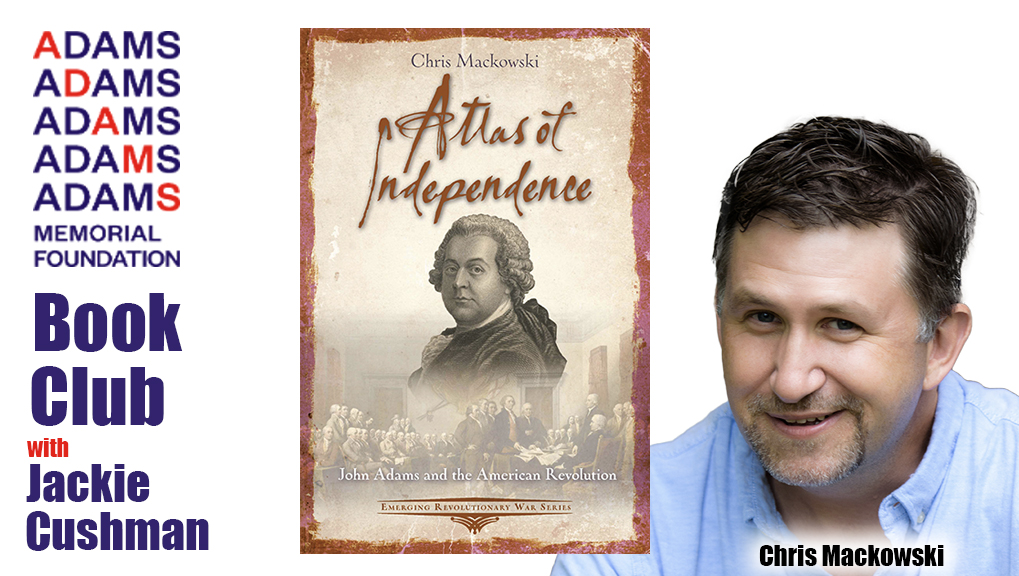
The Adams Book Club: “Atlas of Independence” by Chris Mackowski

Emerging Revolutionary War is pleased to partner with the Adams Memorial Foundation to share some reading about America’s “Founding Family.” The Foundation holds a monthly book club, hosted by Board President Jackie Cushman. In special arrangement with the Adams Memorial Foundation, ERW is sharing links to the first few conversations from that book club.

The next book highlighted in our series is Atlas of Independence: John Adams and the American Revolution by ERW’s own Chris Mackowski.

Continue reading “The Adams Book Club: “Atlas of Independence” by Chris Mackowski”

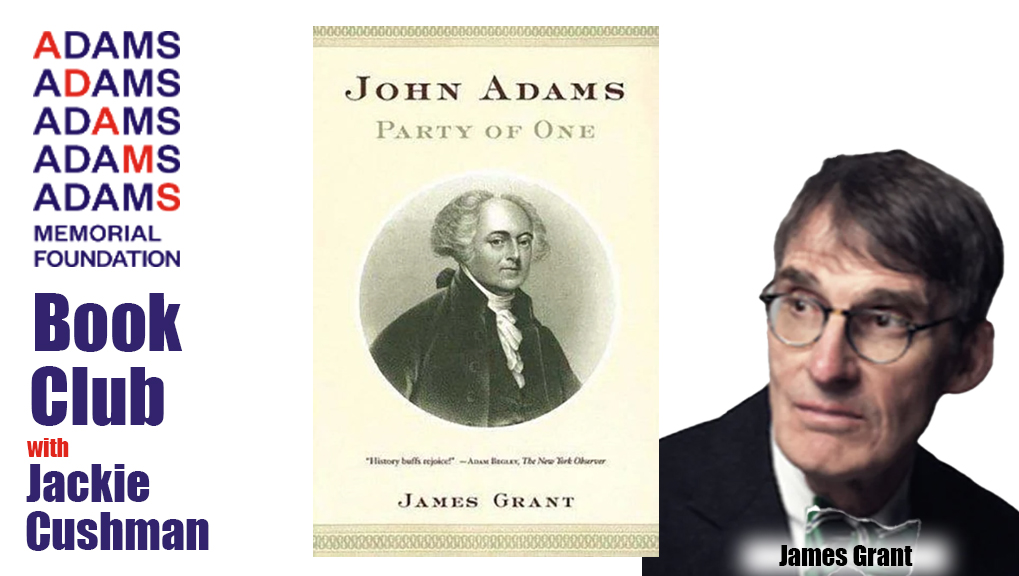
The Adams Book Club: “John Adams: Party of One” by James Grant

Emerging Revolutionary War is pleased to partner with the Adams Memorial Foundation to share some reading about America’s “Founding Family.” The Foundation holds a monthly book club, hosted by Board President Jackie Cushman. In special arrangement with the Adams Memorial Foundation, ERW is sharing links to the first few conversations from that book club.

The next book highlighted in our series is John Adams: Party of One by James Grant (Farrar, Straus and Giroux, 2005).

Continue reading “The Adams Book Club: “John Adams: Party of One” by James Grant”

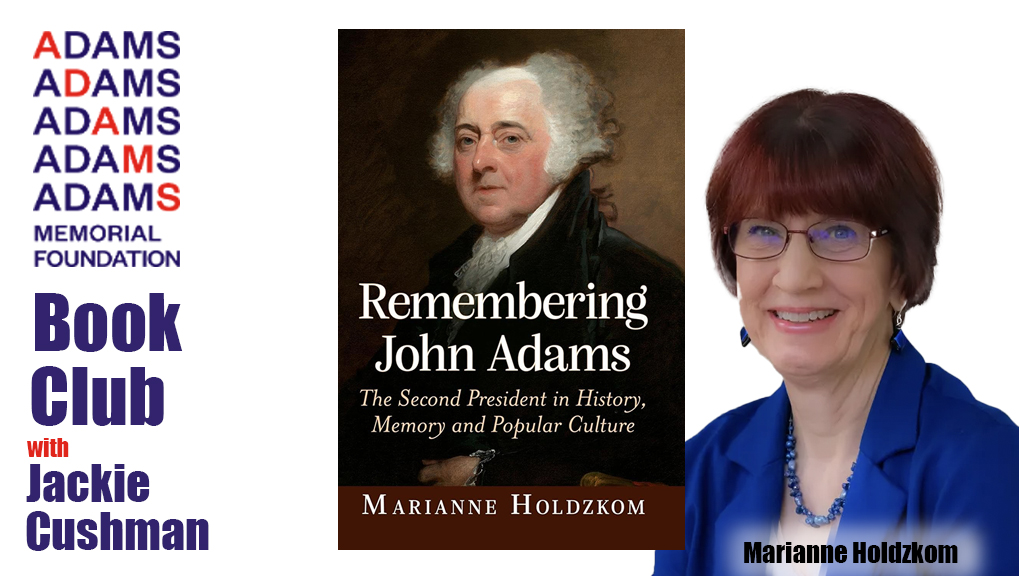
The Adams Book Club: “Remembering John Adams” by Marianne Holdzkom

Emerging Revolutionary War is pleased to partner with the Adams Memorial Foundation to share some reading about America’s “Founding Family.” The Foundation holds a monthly book club, hosted by Board President Jackie Cushman. In special arrangement with the Adams Memorial Foundation, ERW is sharing links to the first few conversations from that book club.

The next book highlighted in our series is Remembering John Adams: The Second President in History, Memory and Popular Culture by Marianne Holdzkom (McFarland, 2023).

Continue reading “The Adams Book Club: “Remembering John Adams” by Marianne Holdzkom”

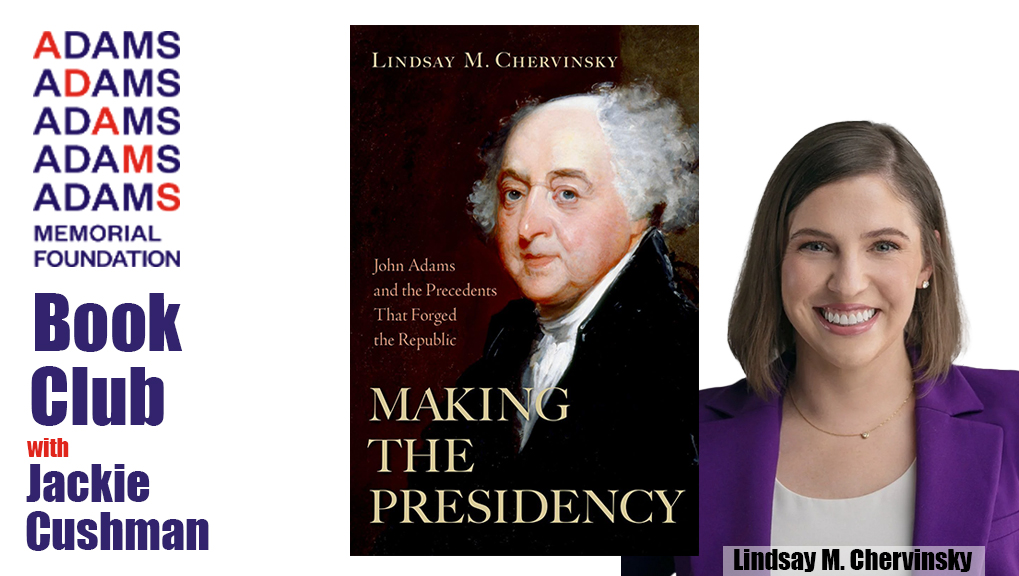
The Adams Book Club: “Making the Presidency” by Lindsay M. Chervinsky

Emerging Revolutionary War is pleased to partner with the Adams Memorial Foundation to share some reading about America’s “Founding Family.” The Foundation holds a monthly book club, hosted by Board President Jackie Cushman. In special arrangement with the Adams Memorial Foundation, ERW is sharing links to the first few conversations from that book club.

The next book highlighted in our series is Making the Presidency: John Adams and the Precedents That Forged the Republic by Dr. Lindsay M. Chervinsky (Oxford, 2024).

Continue reading “The Adams Book Club: “Making the Presidency” by Lindsay M. Chervinsky”

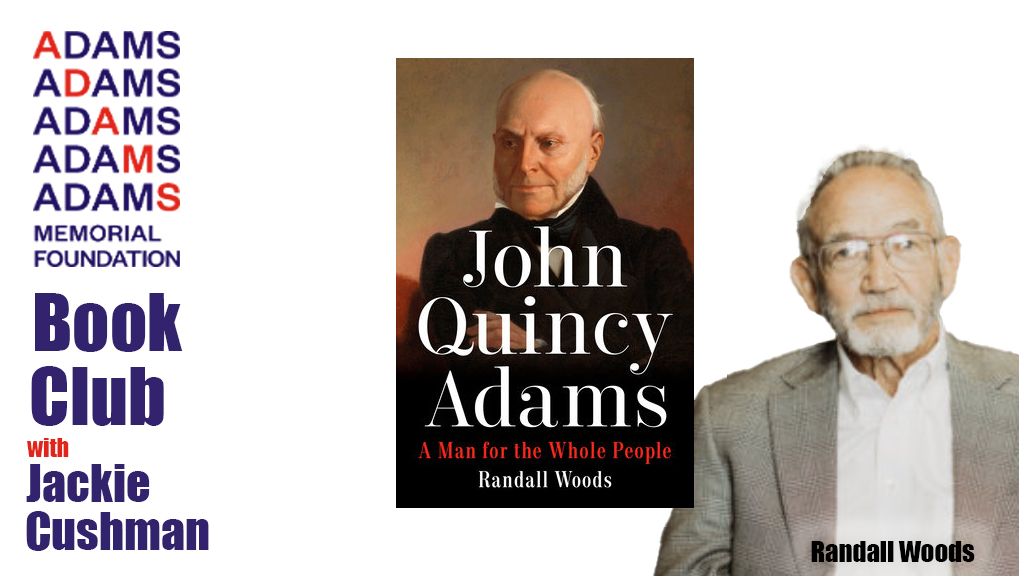
The Adams Book Club: “John Quincy Adams, A Man for the Whole People” by Randall B. Woods

Emerging Revolutionary War is pleased to partner with the Adams Memorial Foundation to share some reading about America’s “Founding Family.” The Foundation holds a monthly book club, hosted by Board President Jackie Cushman. In special arrangement with the Adams Memorial Foundation, ERW is sharing links to the first few conversations from that book club.

The next book highlighted in our series is John Quincy Adams, A Man for the Whole People by Randall Woods (Dutton, 2024).

Continue reading “The Adams Book Club: “John Quincy Adams, A Man for the Whole People” by Randall B. Woods”

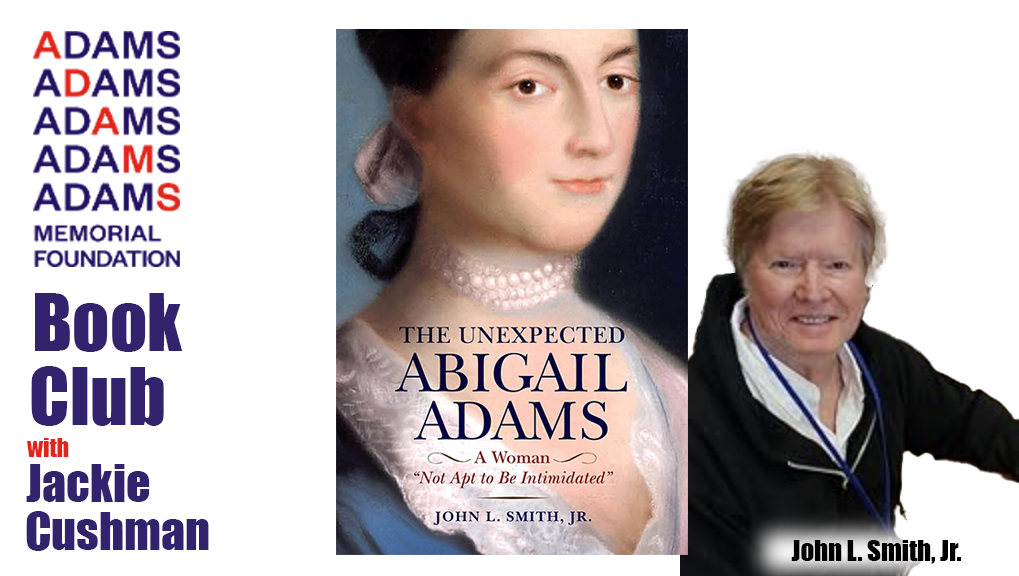
The Adams Book Club: The Unexpected Abigail Adams by John L. Smith, Jr.

Emerging Revolutionary War is pleased to partner with the Adams Memorial Foundation to share some reading about America’s “Founding Family.” The Foundation holds a monthly book club, hosted by Board President Jackie Cushman. Over the next few days, in special arrangement with the Adams Memorial Foundation, ERW will share links to the first few conversations from that book club.

We’ll kick things off with a conversation between Jackie and historian John L. Smith, Jr., about his book The Unexpected Abigail Adams: A Woman ‘Not Apt to be Intimidated’ (Westholme, 2024).

Continue reading “The Adams Book Club: The Unexpected Abigail Adams by John L. Smith, Jr.”

The Adams Book Club: An Introduction

Emerging Revolutionary War is pleased to partner with the Adams Memorial Foundation to share some reading about America’s “Founding Family.”

The Adams Memorial Commission is the Congressionally approved organization tasked with supporting the creation of a memorial in Washington, D.C., to John Adams and his family. The Adams Memorial Foundation is tasked with assisting with the fund-raising and public education aspects of that effort. As part of the Foundation’s work to raise awareness about the project—and about the Adams family—Board President Jackie Cushman hosts a monthly book club.

As we prepare to kick off our book club series with the Foundation, I spent a few minutes chatting with Jackie about the book club and about the Adams Memorial Foundation in general:

Over the next few days, ERW will share links to the first few conversations from Adams Memorial Foundation’s book club. We hope you’ll enjoy the excellent reading as much as we do!

The Attack and Defense of the Chew House: British Professionalism at Germantown

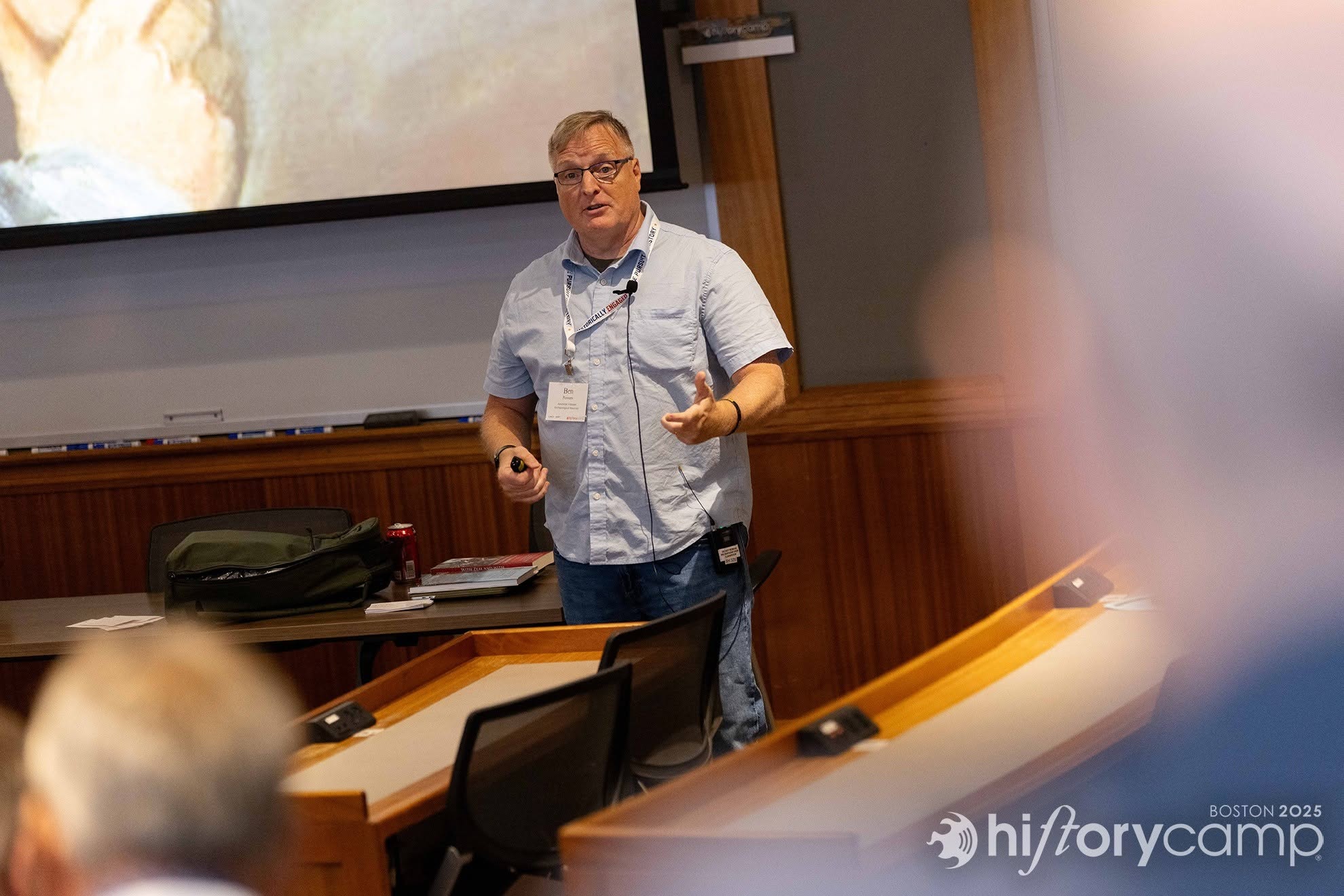
Emerging Revolutionary War welcomes back guest historian Ben Powers. Bio follows the article.

Battle of Germantown
Painted by Xavier della Gatta, 1782
https://www.amrevmuseum.org/collection/battle-of-germantown

     Was the Battle of Germantown an American failure or a British success? Did the Continental Army lose due to an overly complicated plan, environmental factors such as fog, and poorly applied military judgment, or was the British Army’s resistance a decisive factor? The defense of the Chew House demonstrates that the British were professional, tenacious, and courageous, rather than the fortunate recipients of the fruits of an American blunder. Led by Lieutenant Colonel Thomas Musgrave, the men of the 40th Regiment of Foot established a strongpoint that disrupted American momentum and derailed the attack. Musgrave and the 40th Regiment of Foot transformed the Chew House into an obstacle that delayed the American advance long enough for British forces to reform and counterattack. This episode reveals the significance of British leadership and discipline under severe conditions, thereby reframing the context of the Battle of Germantown.¹

     Germantown occurred at a time when the Continental Army was undergoing a transformation from an amateur to a professional military. American officers engaged in self-directed study of “books upon martial science” and were known to carry such texts among their baggage and haversacks when on campaign.² In this manner, Continental officers sought to emulate their European counterparts.³ One officer known to have made a detailed study of the art and science of war was Washington’s Chief of Artillery, Henry Knox.⁴ At the time of Germantown, the officers of the Continental Army had been at war for over two years and had learned many practical lessons; however, many officers, including Washington, continued to hold Knox’s auto-didactic military education in high esteem. The gap between knowing theory and its practical application would become apparent, to the detriment of the Continentals, at Germantown.

     In contrast, the British Army officer corps had been fully engaged in a minor military enlightenment through the latter half of the eighteenth century. While British officers engaged in self-study programs similar to Knox’s, they could more readily share the results of their study within an established army, comparing and contrasting ideas and adopting best practices.⁵ The British Army was able to synthesize the best practices from both theory and combat experience into regulations that informed the training and operational deployment of all its formations.⁶

     Early interpretations of the battle frequently emphasized confusion and poor execution, particularly the American decision to attack the Chew House. Yet the battle was “very much more than a contest… for the possession of a country house.” More recent scholarship describes the plan for the attack on Germantown as a sophisticated maneuvering scheme that nearly succeeded. Its subsequent failure owes more to British action than American incompetence.

Continue reading “The Attack and Defense of the Chew House: British Professionalism at Germantown”

Rev War Revelry: Henry Knox and the Noble Train

In December 1775, Henry Knox wrote to General George Washington, “I hope in 16 or 17 days to be able to present your Excellency a noble train of artillery”. However, the train of artillery would not arrive until the end of January 1776. Still an impressive feat, as Knox with his team moved 60 tons (119,000 pounds) of artillery over 300 miles from upstate New York to the environs of Boston in 70 days in the midst of winter.

This impressive feat enabled Washington to evict the British from Boston, winning the siege and giving the fledgling rebellion a victory to build momentum from.

To discuss this amazing feat and part of American military history, Emerging Revolutionary War welcomes Dr. Phillip Hamilton, a professor of history at Christopher Newport University. A historian of the American Revolutionary and Early Republican periods, he has edited and written “The Revolutionary War Lives and Letters of Lucy and Henry Knox.”

Although the program is pre-recorded, Emerging Revolutionary War hopes you still tune in on Sunday, February 22 at 7 p.m. EDT. We promise the revelry will be enlightening. If you have any questions, please drop them in the chat during the program, and we will ensure Dr. Hamilton receives them.

Morristown’s Individual Furlough Stories – Division of Stark’s Brigade & New York Brigade

Part II – Pennsylvania Line

Emerging Revolutionary War welcomes back guest historian and park ranger Eric Olsen. Ranger Olsen works for the National Park Service at Morristown National Historical Park. Click here to learn more about the park.

     What do poor health, a dead mother, a need to shop for new clothes, a pregnant wife, army business, a wife’s mental illness, family financial problems, and a desire to see family and old friends all have in common?

      They are all reasons officers gave for asking for furloughs during the winter encampment of 1779-1780.

     While the regulations and the various orders issued give us a general idea of the problems related to furloughs, we can get a different viewpoint by looking closer at the different Divisions, Brigades, and individuals who made up the army. The individual soldiers’ correspondence can also give us a more personal take on the furlough story. This paper will be far from comprehensive. It will just cover the furloughs that turn up in the surviving documentation. To make it easier to follow I have grouped the numbers and correspondence regarding furloughs by divisions and brigades.

Continue reading “Morristown’s Individual Furlough Stories – Division of Stark’s Brigade & New York Brigade”