Rev War Revelry: 18th Century Military Strategy on the eve of the New York Campaign of 1776

Although the New York Campaign of 1776 was not General Nathanael Greene’s finest moments during the American Revolutionary War, he did rebound and become one of the premier military strategists by the end of the conflict. His views, learned on the field of battle, the bustle of various headquarters, and the countless miles of riding and marching on campaign was summed up when he wrote the following.

“Don’t be surprised if my movements don’t correspond with your Ideas of military propriety. War is an intricate business, and people are often saved by ways and means they least look for or expect.”

Military strategy, tactics, and the war that unfolded will be the topic of discussion on our Facebook page for Sunday, July 26, and the next “Rev War Revelry.” If you miss it, check out our YouTube and podcast channels as the program will be uploaded there next week. This program will also mark the debut of the newest full-time contributor and historian with Emerging Revolutionary War, Ben Powers. Although this “Revelry” will be taped, we wanted to give a bit more background about Ben, what he has written and projects moving forward. That way you can fill the comment section with questions about both military strategy and our newest blog historian. Ben had the following to say.

“I’m honored to share a few exciting milestones in my work with Emerging Revolutionary War.

Over the past several months, I’ve had the privilege of contributing a growing body of research to ERW, including:

• “Nathaniel Greene: Washington’s Strategist or Pioneering Operational Artist” (November 2025)
• “The Attack and Defense of the Chew House: British Professionalism at Germantown” (March 2026)
• “Brave, Meritorious, Unrewarded Kirkwood”: Unrecognized Valor in the Continental Army (April 2026)
• Review of The Wandering Army: The Campaigns That Transformed the British Way of War by Huw J. Davies (April 2026)
• “Embattled Farmers or Continentals?” (July 19, 2026)

In June, Emerging Revolutionary War welcomed me as a regular contributor. I am grateful to the editors and readers for the opportunity to participate in the outstanding scholarship and public history the organization produces.

I’m also pleased to be working with the ERW team on an upcoming volume to the Emerging Revolutionary War Series that will center on Race to the Dan/Guilford for the 250th. This is a long-term project, but I am looking forward to the journey.

Whether you’re interested in Revolutionary War history, military leadership, or operational art, I hope you’ll join us for the conversation.

Thank you to everyone who has read, shared, commented on, or challenged my work. As we celebrate America’s 250th anniversary, I look forward to continuing to learn, write, and contribute to the field.”


Rev War Revelry: “this was intended by the Northern Colonies from the first…” The Story of Nicholas Cresswell with historian Ken Bancroft

Join us this Sunday at 7pm on our Facebook page to view the American Revolution and the Declaration of Independence through the eyes of an English traveler who visited Virginia from 1774-1777. Nicholas Cresswell’s daily diary is a researchers dream into daily life during the American Revolution and understanding an Englishmen’s point of view. We welcome historian and blogger Ken Bancroft as he talks about Cresswell’s life and his reaction to hearing about the Declaration of Independence. Ken Bancroft manages the website “The Journals of Nicholas Cresswell – Celebrating the 250th Anniversary Every Day” found at: https://nicholascresswell.wordpress.com/ . This Revelry is pre-recorded and will be posted to our Facebook page on Sunday, July 12th at 7pm and then to our You Tube Channel.

Rev War Revelry: 250th Anniversary of Independence!

This Sunday at 7pm on our Facebook page, join ERW historians and guests as we discuss the road to independence on this 250th anniversary of the Declaration of Independence. We will unwind some of the myths and misconceptions of the summer 1776 events in Philadelphia. Why do we celebrate July 4th and not July 2nd? Who really wrote the Declaration and what do we know about the debates around independence. This is a great way to get ready for your July 4th celebrations!

This Rev War Revelry is pre-recorded and will be posted to our Facebook page and You Tube Channel at 7pm on Sunday, June 28th.

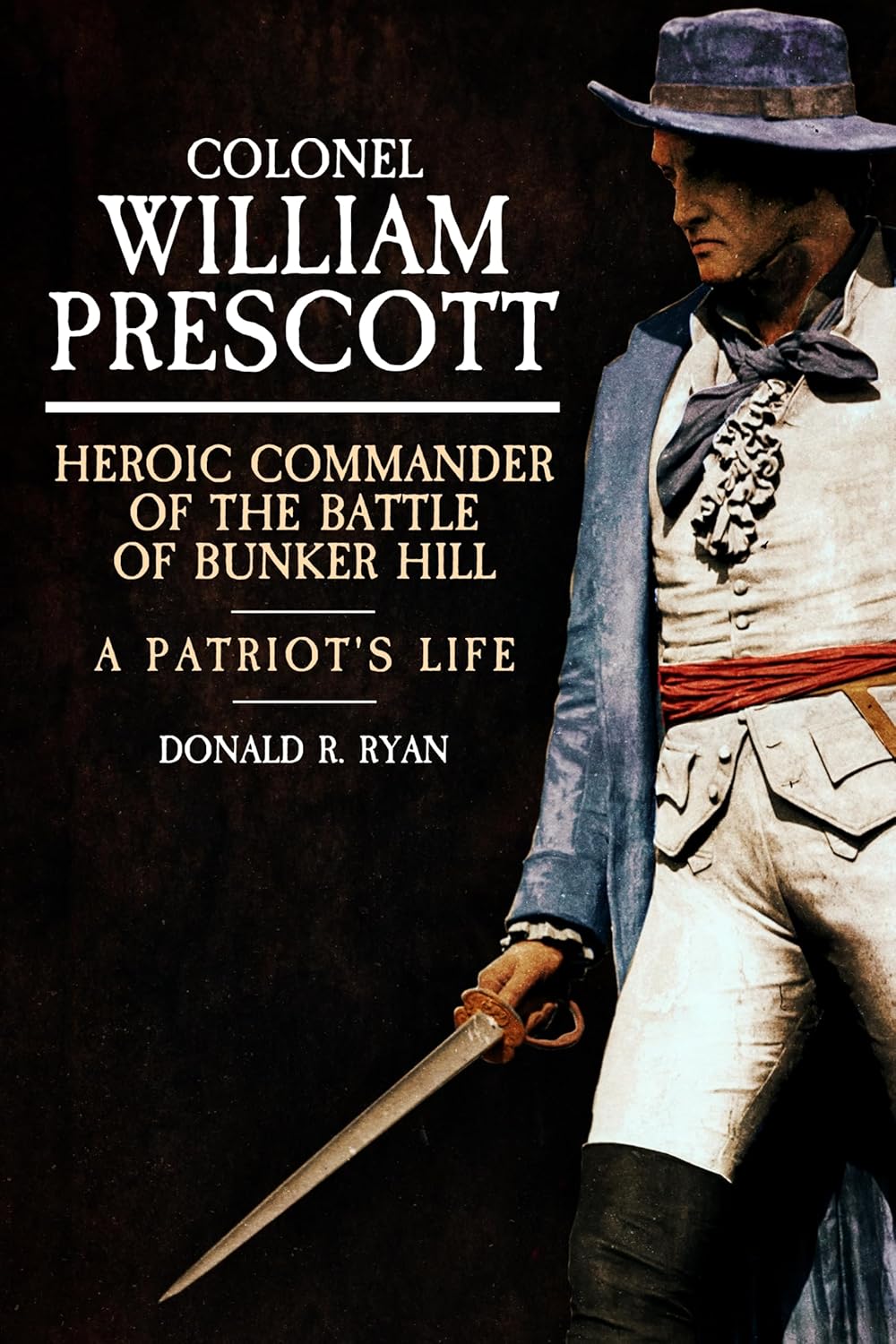
“Rev War Revelry” Colonel William Prescott: Heroic Commander of the Battle of Bunker Hill by Donald R. Ryan

Depicted in various paintings, still standing watch over Breed’s Hill, his name is synonymous with the heroic American defense of the earthen redoubt that graced the aforementioned hill. Although forced to evacuate the work when overwhelmed by the third British advance and out of ammunition, Prescott had shown his value as a competent battlefield leader. Especially of the militia.

Yet, as America approached the 250th anniversary of the country, there had not been a single dedicated biography that covered his entire life. Prescott is mentioned in plenty of great historical works on the battle, the region, and the lives of other patriots who fought that day. But the Massachusetts native deserved more. Entered Donald R. Ryan.

Ryan, a volunteer historian and guide for Boston National Historical Park, took on the task of researching, locating, and even contacting living descendants of Prescott. You can now hold in your hands and read his excellent work on this great military figure, best known for his role in one of the most iconic battles of the American Revolution.

Before you do get your copy and settle in to read, tune in on Sunday evening, as Ryan will appear on our popular “Rev War Revelry” to discuss his book. Emerging Revolutionary War will go live at 7 p.m. EDT. and stream to our Facebook page.

Cannot make the live program on Sunday evening? Don’t fret, the program will be posted to our podcast and YouTube channels in the days after. Either way, hope you tune in to learn about Col. Prescot!

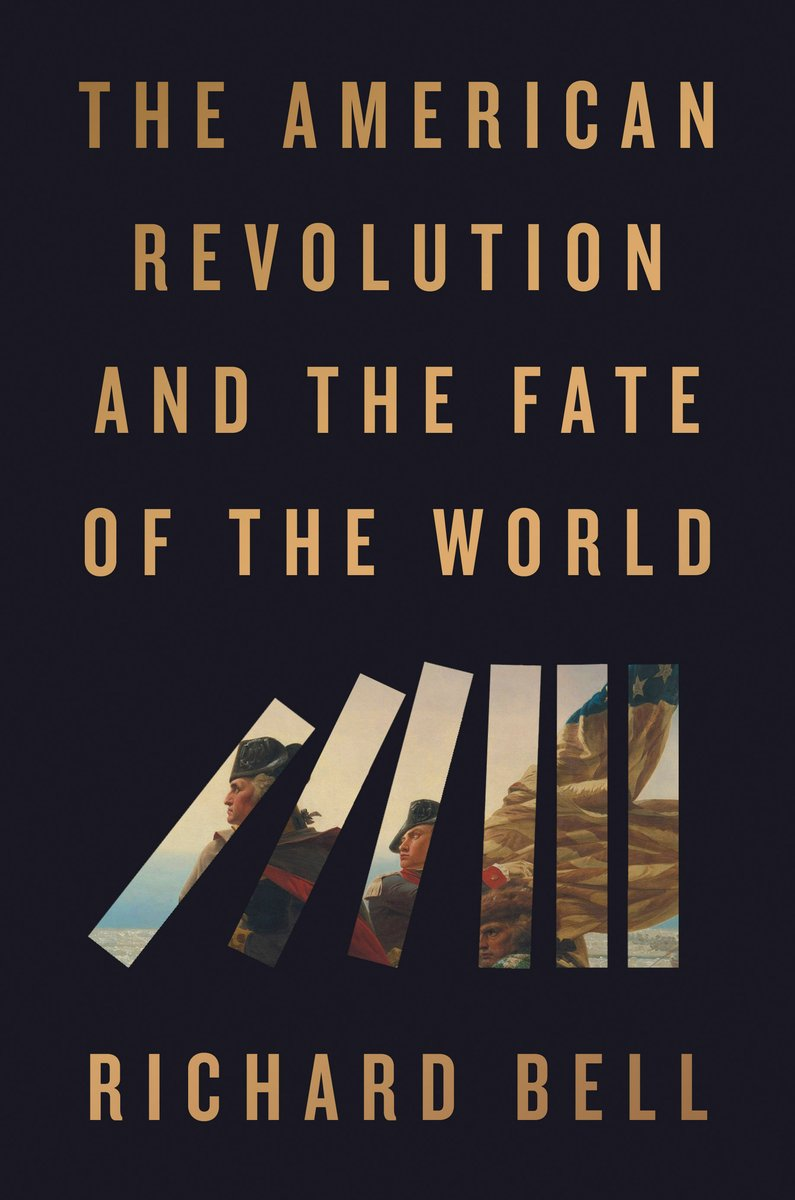
Rev War Revelry: “The American Revolution and the Fate of the World” by Dr. Richard Bell

Dr. Richard Bell, historian and professor of history at the University of Maryland, will discuss his new book, “The American Revolution and the Fate of the World.” Published by Penguin Random House, this “revelatory and enthralling book, award-winning historian Richard Bell reveals the full breadth and depth of America’s founding event. The American Revolution was not only the colonies’ triumphant liberation from the rule of an overbearing England; it was also a cataclysm that pulled in participants from around the globe and threw the entire world order into chaos.”

We look forward to you tuning in to this Sunday evening, 7 pm EDT on our Facebook page for this discussion with Dr. Bell!

Before July 1776, There Was Rhode Island

Emerging Revolutionary War welcomes back guest historian Bjorn Bruckshaw

By the spring of 1776, the people of Rhode Island no longer needed to speculate about their relationship with Great Britain—they were already living in open resistance to it. War had begun the previous year, British naval power remained a constant threat along the coast, and the colony’s long history of defiance toward imperial authority had already brought confrontation to its shores. The destruction of His Majesty’s schooner Gaspee in 1772 had marked a decisive escalation, transforming protest into direct action against the Crown.¹ Now, as members of the Rhode Island General Assembly made their way to Providence in early May 1776, they did so with the reality of war firmly in mind. The question before them was no longer whether they opposed British authority, but whether that authority could continue to exist at all within their government.

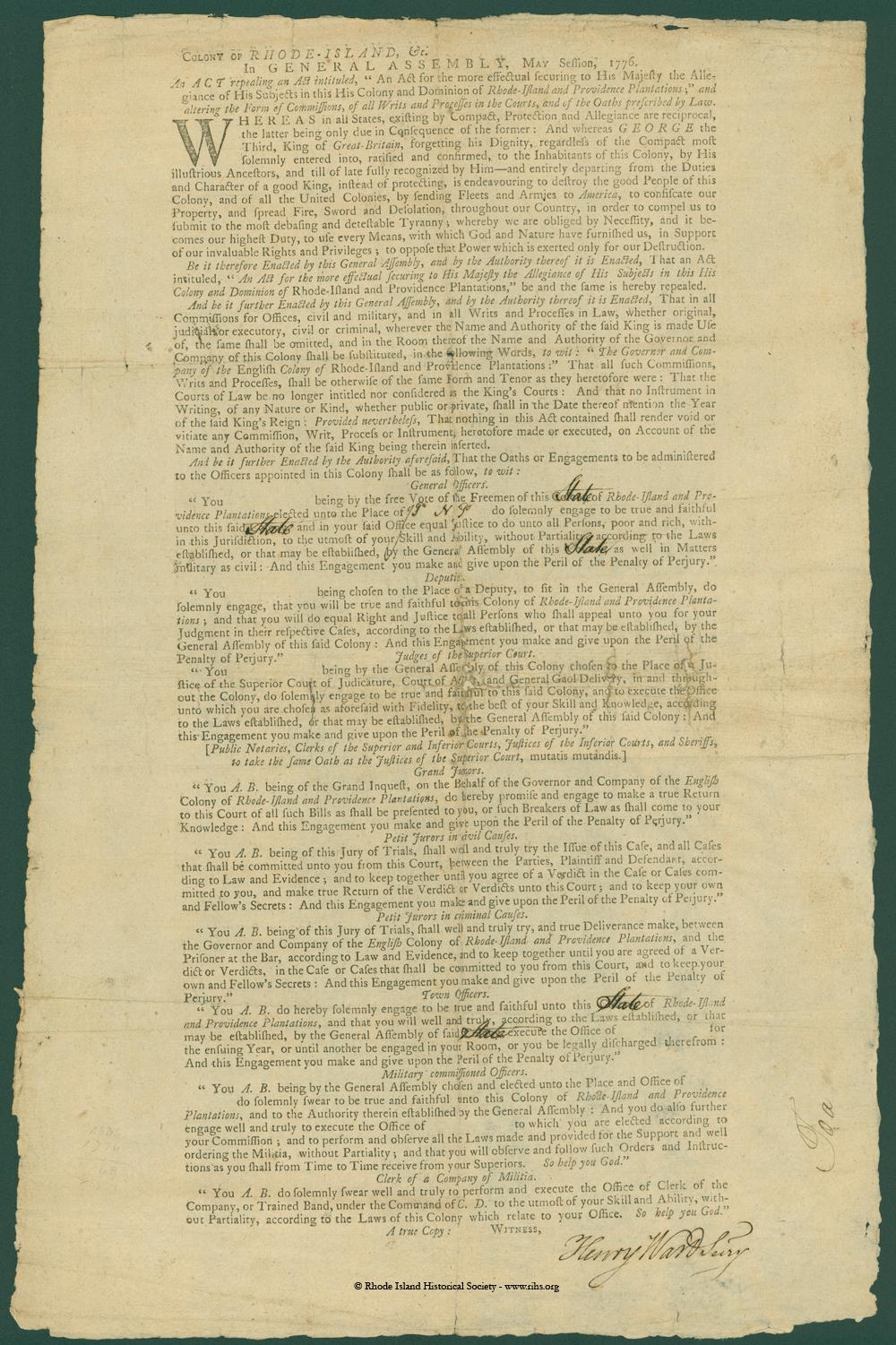
Rhode Island Independence Document

Inside the Assembly chamber on May 4, 1776, that question was answered with clarity and finality. Without issuing a sweeping declaration or engaging in extended philosophical argument, the legislature passed an act that removed King George III from every function of governance within the colony. The law ordered that “in all commissions, writs, and other proceedings in the courts of law,” the name and authority of the king be omitted.² In their place stood the authority of the colony itself. The act further directed that royal authority was to be “totally suppressed.”³ Courts would continue to function, but under a new source of legitimacy. Officials would take new oaths. The government would proceed without reference to the Crown. Rhode Island did not simply declare independence—it enacted it.

This action did not emerge suddenly. For years, Rhode Island had been among the most resistant of the colonies to British imperial control, particularly in matters of trade and enforcement. British officials repeatedly complained of the colony’s defiance, noting the difficulty of imposing authority in a place where regulations were often ignored.⁴ That resistance became unmistakable with the Gaspee affair, and the Crown’s response—threatening to transport suspects to England for trial—provoked widespread alarm. Colonial critics warned that such measures would undermine “that great bulwark of English liberty,” the right to trial by a local jury.⁵ By the time hostilities began in 1775, many Rhode Islanders had already concluded that reconciliation with Britain was increasingly unlikely.

That understanding was reflected not only in legislative action, but in the colonial press. The Providence Gazette soon reported the Assembly’s proceedings, noting that the legislature had taken measures removing the authority of the Crown from government functions, a step consistent with the colony’s wartime posture and political condition.⁶ While not framed in celebratory or rhetorical language, the report treated the change as a matter of governance already in motion. Similarly, the Newport Mercury, writing amid growing military uncertainty, reflected a broader shift in tone, reporting colonial affairs in a way that assumed the imperial relationship was breaking down beyond repair.⁷

These accounts are significant not because they proclaim Rhode Island’s primacy, but because they demonstrate how independence was understood in real time—not as a single dramatic declaration, but as a series of actions already unfolding.

Continue reading “Before July 1776, There Was Rhode Island”

“Rev War Revelry”: The Lees of Stratford and the Cause of Liberty with Dr. Gordon Blaine Steffey

Join us on our Facebook page at 7 pm on Sunday, May 3, for a pre-recorded interview with Dr. Gordon Blaine Steffey, the Vice President of Research & Collections at Stratford Hall, and Director of Research and the Jessie Ball duPont Memorial Library. Dr. Steffey will discuss his research on the Lee family and their role in the cause of independence during the American Revolutionary Era.

The Revelry will be posted to Facebook and our You Tube Channel at 7pm.

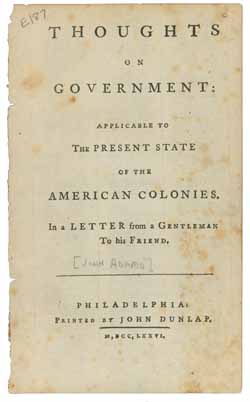
Thoughts on “Thoughts on Government”

For weeks, colleagues in the Continental Congress had been asking John Adams for advice. If the colonies were to break away from Great Britain and established governments of their own, what should those governments look like?

The first request came from North Carolinians William Hooper and John Penn in late March. The duo had been recalled from Philadelphia so they could join in conversations about a new government for their home state. Before departing, they each asked Adams for his thoughts. Adams “wrote with his own Hand, a Sketch,” and gave copies to both delegates.[1] The ensuing discussions in North Carolina led to the April 12, 1776 passage of the Halifax Resolves, which authorized the colony’s Congressional delegation to vote in favor of independence—the first colony to formally grant such authorization. 

Next came a request from George Wythe of Virginia and then one from John Dickinson Sergeant of New Jersey. Finally, Richard Henry Lee of Virginia asked for a copy.

Adams had already given the topic considerable thought. He had touched on it in early 1775 in a series of newspaper articles that he’d signed “Novanglus,” and during a trip home in late 1775, he had addressed it for the Massachusetts colonial assembly. “The Happiness of the People is the sole End of Government, so the Consent of the People is the only Foundation of it,” he had written.[2] “Happiness,” in Adams’s vocabulary, meant “ease, comfort, security.”[3]

As Adams sketched out his ideas for his colleagues, he took the same approach, and each letter allowed him to develop and refine his ideas even further. By the time he wrote out his thoughts for Wythe, those ideas had become so clear and well articulated that the impressed Lee asked if he could have the letter published. Adams agreed. Using Wythe’s letter as the basis, Lee threw it into shape and “put it under the Types.”[4]

Continue reading “Thoughts on “Thoughts on Government””

“Rev War Revelry” A Discussion with Revolutionary Maryland historian Drew Palmer

When you think of Maryland in the American Revolutionary War, what are the first connections that come to mind? Taking a stab at it, probably the Maryland 400 during the Battle of Brooklyn in 1776? Or possibly the 1st Maryland at the Battle of Guilford Court House in 1781? If you are a national park junkie, potentially Thomas Stone National Historic Site, home of one of Maryland’s four Signers of the Declaration of Independence, may come to mind. If you are not familiar with that NPS unit, click here.

To fill in those gaps, Emerging Revolutionary War welcomes historian Drew Palmer. He is the creator of Revolutionary Maryland, which is an online public history blog that is “dedicated to uncovering and sharing all things related to the state’s experience during this transformative period.”

Palmer is a Revolutionary War historian, a U.S. high school history teacher, and the creator of Revolutionary Maryland. Palmer has worked as a public historian at numerous historic sites over the years, including Appomattox Courthouse, Fort Ticonderoga, Adams National Historical Park, and Fort McHenry National Monument and Shrine. Palmer’s research primarily focuses on the Revolutionary War in Maryland and the South. Most recently, he published his research on Fort Whetstone and the Maryland Matrosses during the Revolutionary War. He also worked with Fort McHenry to direct a short documentary on Fort McHenry’s 250 years of history. Palmer earned his B.A. in history from DeSales University in 2023 and his M.A. in applied history from Shippensburg University in 2024. He currently lives outside of Baltimore and is working on multiple research topics involving the Revolutionary War.

Emerging Revolutionary War is proud to welcome a great emerging historian of the Revolutionary War Era to the “Revelry.” We hope you can join us, live, on Sunday, April 19, at 7 p.m. EDT on our Facebook page.

Postal Service Unveils Stamp Honoring Rev War-Era Poet Phillis Wheatley

The United States Postal Service has issued a new postage stamp honoring Phillis Wheatley, a Revolution-era poet who was the first author of African descent in the American Colonies to publish a book.

Unveiled at the Old South Meeting House in Boston on Thursday, Jan. 29, 2026, the Wheatley stamps was the 49th stamp in the Black Heritage series.

For more on Wheatley, I reached out the Boston Tea Party Ships and Museum. Cathryn Philippe is a living historian at the museum who portrays Wheatley—who, as it turned out, had an interesting connection to the Boston Tea Party. Cathryn was kind enough to spend some time chatting with me about Wheatley’s story:

(I first met Cathryn several years ago, while doing a virtual field trip in Boston for the American Battlefield Trust. I had the chance to visit the Boston Tea Party Ships and Museum and see Cathryn’s portrayal for myself. Take a look here.)

For more on the Phillis Wheatley stamp, we quote part of the Postal Service’s press release:

Continue reading “Postal Service Unveils Stamp Honoring Rev War-Era Poet Phillis Wheatley”