

Emerging Revolutionary War welcomes back guest historian Kate Bitely.
In the heart of Fredericksburg, Virginia, you will find a well-preserved, Georgian-style home that once belonged to Betty Washington Lewis, the sister of George Washington. Historic Kenmore, as the home is known today, was constructed in the 1770s and originally sat on 861 acres near downtown Fredericksburg. Today, the historic house museum is open for daily tours where guests can explore the gardens, the main living floor of the home, several historic structures on the priority, and a visitor center filled with riveting artifacts and information.

Nearly 290 years ago, Betty Washington was born at Pope’s Creek in Westmoreland County, Virginia. As a young child, she lived in a few properties owned by the Washington family before relocating to Ferry Farm, located in Stafford County, Virginia, where Betty, George and their siblings grew up. On February 22, 1750, Betty married Fielding Lewis, a widowed distant cousin, and a father of two young children. In 1752, the family purchased 1300 acres in the Fredericksburg area and allocated a portion of the land as the future site for their home Millbrook, which was eventually renamed to Kenmore in the 1800’s. In total, Betty and Fielding welcomed eleven children, but only six survived to adulthood.
Fielding Lewis was a well-known member of his community. He built his wealth initially as a merchant, but was later elected as a member of the House of Burgesses and served as a colonel in the Revolutionary War. During the war, however, Lewis used his finances to personally pay for munitions and supplies for Patriot troops which ultimately drained much of the family’s resources.
The Lewis family were staunch Patriots. In 1775, when the Lewis’s were moving into their home, the spirit of independence was strong throughout the colonies. Given the Washington’s status, heritage and devotion to service, Betty and her family would become one of the biggest supporters for the Patriot cause, willing to risk their home, finances, reputation, and their safety in favor of breaking away from England. The impressive residence served as a visual representation of their wealth, which became significantly more important during the Revolutionary War.
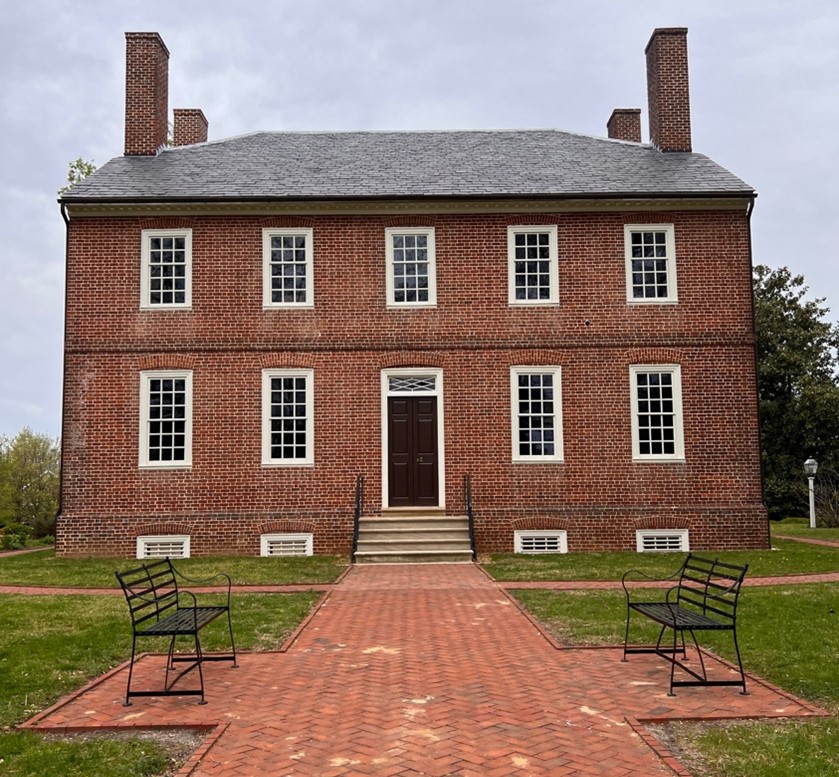
Once finished, Kenmore consisted of eight bedrooms and totaled nearly 4,000 square feet. Perhaps the most impressive architectural details reside in the chamber room’s plaster ceilings which were crafted by someone known only as “The Stucco Man,” who also did similar work at George Washington’s home Mount Vernon. Similar to other southern White planters, Lewis relied on enslaved labor to manage the farm. According to historical records, approximately 80 enslaved people worked at Kenmore.
During the war, Betty worked hard to manage household and family affairs. On more than one occasion, Betty opened her home to Washington’s trusted right hand, Marquis de Lafayette. Even after the war, Washington wrote to Betty to ask for her assistance with managing his teenaged niece, Harriot, whom he had legal guardianship over. In a letter dated October 7, 1792, Washington writes, “Harriot has sense enough, but no disposition to industry nor to be careful of her Cloaths. Your example and admonition may, with proper restraints, overcome the two last—and to that end I wish you would examine her Cloaths and direct her in the use and application of them—for without this they will be (I am told) dabbed about in every hole & corner—& her best things always in use.” Unfortunately, little is known about Harriot’s stay at Kenmore.
Betty Lewis passed away in 1797 following years of declining health. After her death, Betty left Kenmore to her stepson John Lewis, who went on to sell the home days later.
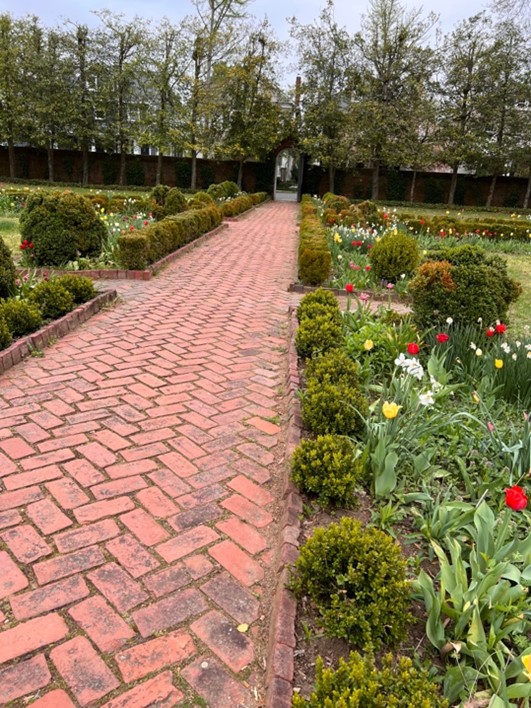
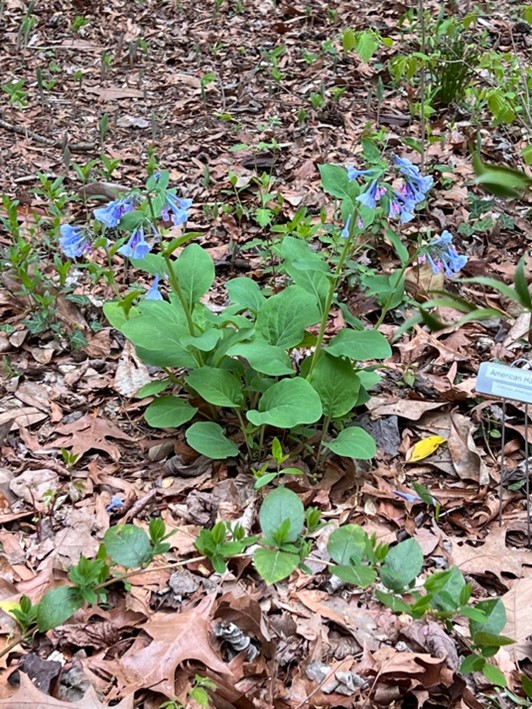
While touring Kenmore, be sure to walk through the gardens and enjoy the beautiful sights of the grounds. There’s a short walking path off the back of the home that is home to vivacious plant life. In the spring, you can enjoy the sight of Virginia Bluebells.
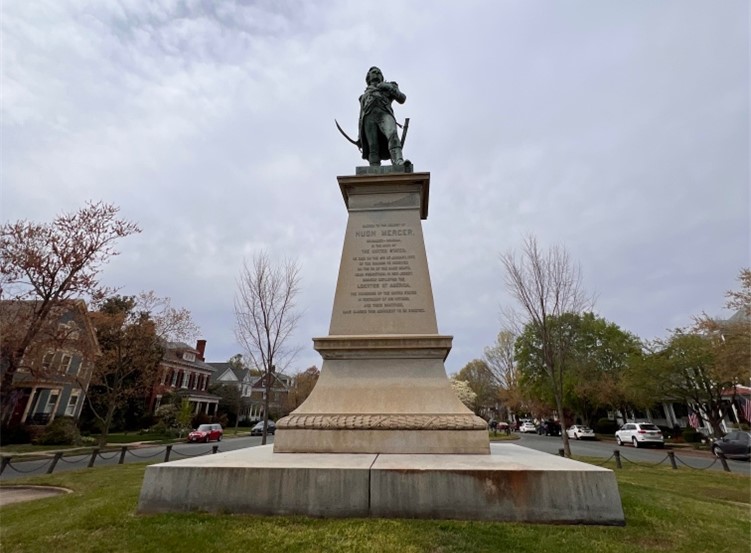
Just off the grounds, beyond the path, you can see a monument dedicated to General Hugh Mercer. A Fredericksburg resident and friend of Washington, Mercer served in the American Revolution and died at the Battle of Princeton in 1777.
Today, Historic Kenmore is owned and operated by the George Washington Foundation who remains committed to preserving the life, legacy, and impacts of George and Betty Washington’s lives. To book your tour or to learn more about the site, please visit https://kenmore.org/.
*All images were taken by Kate Bitely*
 Emerging Revolutionary War Era