

Emerging Revolutionary War welcomes back guest historian Eric Olsen. Eric is a historian with the National Park Service at Morristown National Historical Park. Click here to learn more about this site.
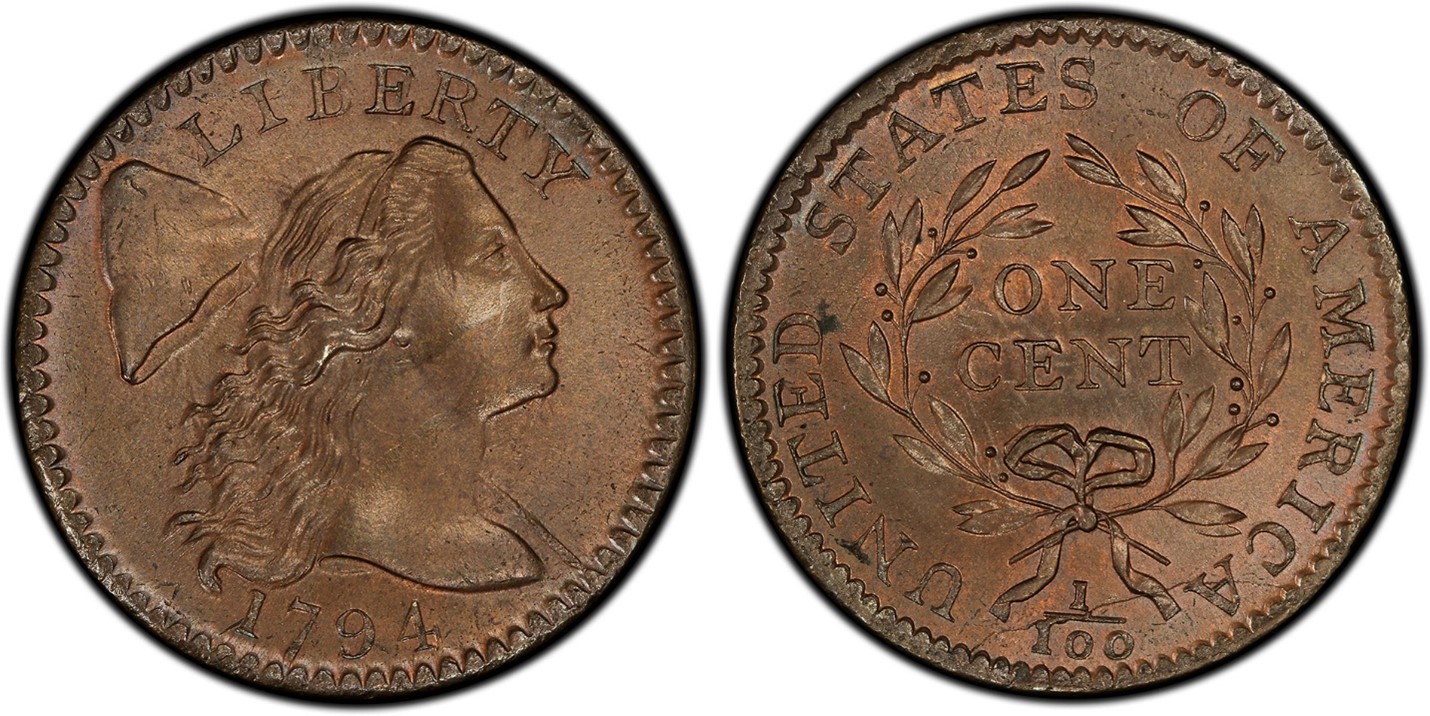
Visitors always want to know, “How much did “that” cost back then?” We used to tell them because of inflation and the conversion from pounds to dollars it was really hard to give a definitive answer. It is even harder to figure during the American Revolution when the value of the dollars changed dramatically just over the course of a few months. There are all sorts of fancy conversion sites on the internet today but since math was not my strong point, I don’t know how accurate they are.
One book tried another approach to explain 18th century vs. modern prices. “A person today, purchasing the same product made the same way out of materials made the same way, will pay roughly the same percentage of their wages for the product as a person of equal economic status in the past would have. For comparison, at the present time [1997 book] an average shop rate runs thirty-five dollars an hour for labor. If you make ten dollars an hour, this costs you three and a half hours of work, and the same ratio applied to a craftsman making thirty pounds a year or two pence per hour.” Makes sense but seems a bit too complicated.
However, I did find one primary source that can give a clue to the relative value of items. It comes from Theophile Cazenove, a Dutchman who traveled through New Jersey and Pennsylvania in 1794 looking for investment opportunities for Dutch bankers. At his various stops in Morris County, Cazenove recorded the prices of farms, livestock, and even labor.
Sometimes the prices were in pounds, other times they were in dollars. When he included both prices for one item, I did some very simple math and found that it took eight shillings to make one dollar, and that $2.50 equaled one pound. According to the online conversion applications, one pound in 1790 equaled 167.58 pounds today. One dollar in 1790 equaled 32.20 dollars in today’s money.
But without doing any math or conversions if we look at the prices Cazenove listed we can see what items were more expense than other ones. From that we can also assume the more expensive items were more highly valued.
Keep in mind, on the local level in 18th century America, it was not a cash driven economy. Specie, Hard Money or coins, made of valuable metals such as silver and gold were in short supply in North America and used infrequently. Paper Money was rarely used, appearing briefly during periods of war when armies needed a large source of money to buy goods and services.

Instead of using money, on the local level, people bartered for goods and services. Local stores sold goods to farmers on credit, collecting payment later, in surplus crops after the harvest. Millers ground your grain into flour but kept a percentage of that flour in payment for the service. The shoemaker made you a pair of new shoes in exchange for meat or flour. Ministers were supplied with a year’s worth of firewood in lieu of a salary. One farmer might allow a neighbor to graze animals in his field in return for seed, firewood or hay. People also traded labor with their neighbors. I help with harvesting your hay, you in turn help with harvesting mine.
Of course, just listing a bunch of items and their prices can be pretty dull reading. So, I’m going to present the information in the form of a game show, like “The Price is Right.” I’ll ask you a bunch of price related questions and we’ll see how close you can get to the correct answer.
We’ll start with a couple questions about labor and wages in late 18th century Morris County. Sometimes the labor of your family and neighbors might not be enough, especially at harvest time. Local farmers often resorted to using paid or unpaid labor.
Some Morris County farmers used enslaved people to provide labor on the farm and in domestic chores. While visiting Chatham in 1794, Theophile Cazenove, noted, “There (as everywhere in Jersey) all the servants are black slaves…” He then listed the costs of a “good dependable negro [man and woman] 18 to 25 years old.”
According to Cazenove, how much did an enslaved man cost? Thirty to Forty Pounds? Eighty to Ninety Pounds? Or 100 to 250 pounds?
Answer: 100 to 250 pounds
Most Morris County farmers did not use enslaved labor. Instead, they depended on family, friends and paid workmen. In Morris County these paid workmen could be free African Americans or poorer white men. These paid workers could be hired by the year, the season, or the day. Demand was highest during harvest time.
Free Black workers were paid less than white workmen. How much was the difference in their daily pay?
Answer: Free Black workmen were paid 3 shillings a day. White workmen were paid 4 to 6 shillings a day depending on the Season.
Were Free Black men paid the same daily wages as Free Black women?
Answer: No Free Black men were paid 3 shillings a day, while Free Black women were paid 4 shillings per week. Free Black men were also hired by the month in the summer for three pounds.
Skilled workmen were paid more than the average farm worker. How many more shillings per day was a carpenter or a mason paid compared to a farm worker?
Answer: Skilled workmen were paid 3 to 4 shillings more per day than a common workman. Farm workmen usually were paid 4 shillings a day. A carpenter was paid 6 to 7 shillings a day. Masons were paid 8 shillings a day.
Which Morris County town had the most expensive farm, based on the price of land per acre, Chatham, Hanover, Morristown?
Answer: Chatham where land sold for 10 pounds or 25 dollars per acre.
Which Morris County town had the cheapest farm based on the price of land per acre, Chatham, Hanover, Morristown?
Answer: Hanover where a farm with medium quality land sold for …”4 pounds to 5 pounds. But in Hanover, good land sells for 7 pounds to 8 pounds an acre. While in Morristown where…… “A farm can be bought for 5 pounds an acre cash”
Based on the price of land per acre, which was cheaper, land in town or land outside of town?
Answer: Land in town was more expensive. In Morristown, “Land in village with 100 feet street frontage sells for 100 pounds an acre.”
Cattle provided meat and dairy products. What cost more, a bull or a cow?
Answer: A Bull. A 4-year-old Bull cost 50 to 60 dollars, while a 4-year-ol cow cost 20 to 30 dollars.
Oxen and Horses were like the tractors and trucks of a modern farm, which cost more?
Answer: Trick question, a pair of oxen [they usually worked in pairs] cost 20 to 30 pounds or 50 to 70 dollars. One horse cost about the same. But if you’re being technical, you got two oxen for the same price as one horse.
Which firewood cost more, oak or walnut?
Answer: Firewood was sold by the cord. A cord which was a pile of split firewood that was 8 feet long, four feet wide and four feet high. A cord of oak cost 10 shillings while a cord of walnut cost 14 to 15 shillings.
What cost more a pound of beef or a chicken?
Answer: Another trick question. A pound of beef, pork or mutton cost about 4 pence a pound or a quarter of a shilling. A chicken cost one shilling. However, you were buying the entire bird which probably weighed more than a pound. Meat like beef or pork could be preserved by salting. Poultry was eaten fresh.
What cost more, a chicken, a duck or a turkey?
Answer: Turkey. Cazenove reported that in Morristown a chicken cost 1 shilling, a duck 1 ½ shillings but a turkey was 4 to 6 shillings. Guess that’s why turkey was big at Thanksgiving, trying to impress the guests.
Did you get all of that? Sort of hard to keep track of it all, so here’s a quick summary. As you know math is not by strong suit, so please forgive any math errors. Here are some simplified costs just in dollars. But remember its 1794 dollars. So, my todays money the figures will sound cheap. You can always look up one of those fancy money conversion sites on the internet to figure it out. According to the website, [https://www.officialdata.org/us/inflation/1794?amount=1] One dollar in 1794 would be equal to 26.94 dollars today. As I always say, “you can do the math!”
In 1794 an average farm of 70 acres would cost about 700 dollars just to buy the land [buildings, livestock, equipment were extra]. A 200-acre farm was at least 2,000 dollars. A pair of oxen or a single farm horse cost 50 to 70 dollars. A Bull would cost about 50 dollars while a cow cost 20 dollars. A cord of oak firewood cost 1.25 dollars, while walnut cost $ 1.87. A chicken cost 12 cents and a turkey cost 50 cents.
But remember the average farm worker in 1794, if he could find work, got paid 50 cents [4 shillings] a day. If you were hired by the year, you could be paid 30 to 40 pounds a year which would be 75 to 100 dollars. A free Black farm worker only was paid about $2.62 a week, while a free Black woman was only paid 50 cents for one week of labor.
Unfortunately, these are all prices from 1794, ten years after the end of the Revolutionary War and fourteen after Washington left Morristown. But the inflation during the war would make it even harder to track prices. But using 1794 prices you can at least get an idea of how the price of a farm compared to the price of a chicken, especially when compared to the wages of a common farm worker.
Sources:
Photograph – 1794 Flowing Hair One Cent Piece –4 Different 1700s U.S. Federal Coins You Can Buy for Less Than $1,000 (pcgs.com)
Cazenove Journal 1794: A Record of the Journey of Theophile Cazenove Through New Jersey and Pennsylvania (Translated From The French), edited by Rayner Wickersham Kelsey, Haverford College Studies, Number 13, Published by Pennsylvania History Press, Haverford, Pennsylvania, 1922
Illustration Farm family & Ox cart – Asset ID: 55bfdfbf0a244cf8bd9e448517cc03c4
Title: Typical 18th century traffic on the Island Ford Road. Scene depicts a family with an oxen drawn cart stopping along the road to chat with a farmer holding a scythe.
NPGallery HFC Archive Asset Detail (nps.gov)
Illustration – Asset ID:e69ab153ea7d4f0cbdde58019ee50d88, Title: Farmer harvesting wheat with a grain cradle or cradle scythe.
NPGallery HFC Archive Asset Detail (nps.gov)
The Writer’s Guide to Everyday Life in Colonial America, by Dale Taylor, Writer’s Digest Books, Cincinnati, Ohio, 1997
Illustration – Carpenter, Library of Congress, carpentry: carpenter, 18th century – Students | Britannica Kids | Homework Help
Map Detail – A map containing part of the Provinces of New York and New Jersey, A map containing part of the Provinces of New York and New Jersey, | Library of Congress (loc.gov)
Asset ID: a04219d6bb964edbac46d57375f659cb, Title: Colonial farmer plowing a field using a team of yoked oxen, NPGallery HFC Archive Asset Detail (nps.gov)
1790 USD to GBP – Convert $1790 US Dollar to British Pound Sterling (currencyconverterx.com)
Value of 1790 dollars today | Inflation Calculator (officialdata.org)
Value of 1790 British pounds today | UK Inflation Calculator (in2013dollars.com)
 Emerging Revolutionary War Era