The Revolutionary Beginnings of the Headless Horseman

October of 1776 was a scary time during the Revolutionary War.  George Washington’s army had suffered major defeats in August and lost the city of New York to the British Army.  By October many of Washington’s men had fallen back towards White Plains, New York where they prepared to defend themselves.  Morale was plummeting among the Continental Army and it seemed the Americans would lose the entire war before the end of the year.

This painting portrays the Headless Horseman, a decapitated Hessian trooper, chasing Ichabod Crane, a scene from Washington Irving's short story, "The Legend of Sleepy Hollow"
This painting, by John Quidor (1858), portrays the Headless Horseman, a decapitated Hessian trooper, chasing Ichabod Crane, a scene from Washington Irving’s short story, “The Legend of Sleepy Hollow.”

It was around this time that some believe the story of the Headless Horseman had its origins.  The Headless Horseman is a legendary ghost who first made his appearance in Washington Irving’s classic “The Legend of Sleepy Hollow,” which was originally published in 1820.  The story is set in the early years of the republic in a small town on the Hudson River.

While this is a fictional story, it has some basis in fact.  The village of Sleepy Hollow is a real place in Westchester County in New York, less than ten miles from White Plains, New York.  The ghost known as the Headless Horseman that haunted this village is referred to by Irving in the story as “the ghost of a Hessian trooper, whose head had been carried away by a cannonball, in some nameless battle during the Revolutionary War.”

This is the cemetery around the Dutch Church in Sleepy Hollow, NY where the grave of the Headless Horseman was supposedly buried.
This is the cemetery around the Dutch Church in Sleepy Hollow, NY where the grave of the Headless Horseman was supposedly located. (Author’s photo)

A Hessian soldier made a natural choice for this fearsome ghost.  Hessians were greatly feared by Americans during the Revolutionary War.  These German soldiers were sent by the thousands to America to reinforce the British.  Hessians got their name as many of these soldiers were from Hesse-Kassel in Germany.  These foreign speaking mercenaries were viewed as bloodthirsty killers and easily vilified.  They were renowned as fearsome fighters and there were stories that they showed no quarter to retreating American troops at the Battle of Long Island, including nailing American riflemen to trees with their bayonets.  However, some of these Hessian soldiers were probably misunderstood.  Many of them had been pressed into service and were forced to fight for their princes.  Many Hessians even preferred life in America and thousands decided to desert and settle in America at the end of the war rather than return to Germany.
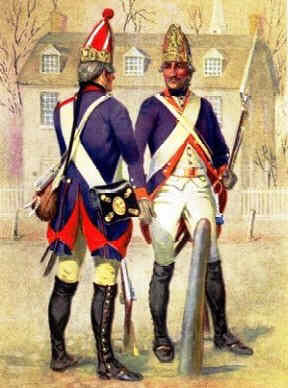
Hessian soldiers as they would have appeared in 1776.

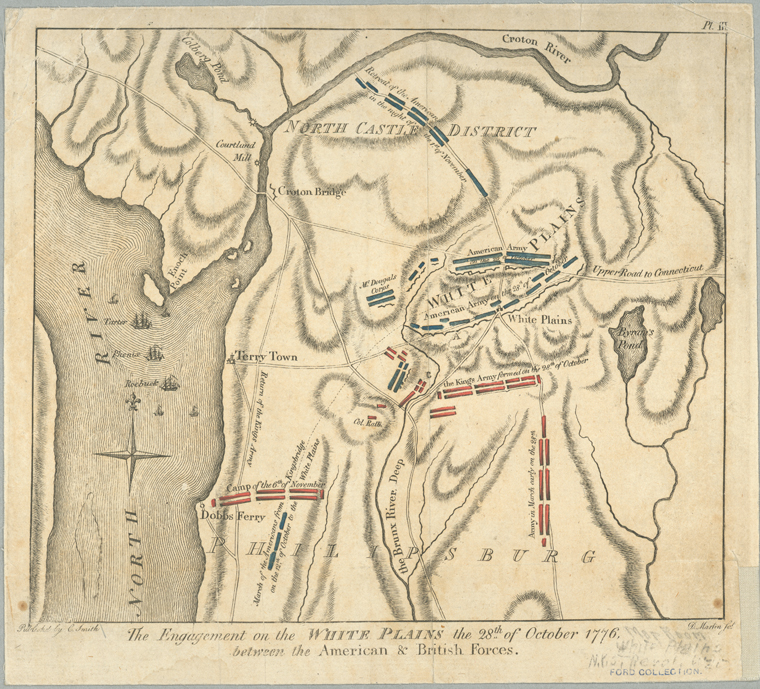
The Hessian that provided the inspiration for the Headless Horseman may have been killed during the Battle of White Plains on October 28, 1776.  Washington Irving even mentions this particular battle in his tale when he recounts a small anecdote of an “old gentleman . . .  who, in the battle of Whiteplains, being an excellent master of defence, parried a musket ball with a small sword.”  During this battle Hessian troops played a large role.

Some of these Hessian troops, commanded by Colonel Johann Rall, led a flanking assault on the American troops and pushed the entire American force back.  More than 400 British, Hessian, and American soldiers were dead or wounded at the end of the day and although the Americans fought bravely, Hessian and British troops commanded the battlefield.
white_plains_battle_plans
This 18th century map of the Battle of White Plains shows the disposition of British and American troops. On the British left flank you can make out “Col. Rall” and his Hessians.  On the left side of the map you see the North River (Hudson River) and can see Terry Town (modern day Tarrytown). Sleepy Hollow is located just north of this town.

Perhaps the ghost of the Headless Horseman was the spirit of one of the many Hessian soldiers killed during the Battle of White Plains.  Another possibility is one of the Hessians killed in the skirmishing that occurred in the days that followed.  Major General William Heath of the American army remembered a particular skirmish that occurred a few days later on November 1, 1776 when “a shot from the American cannon at this place took off the head of a Hessian artilleryman. They also left one of the artillery horses dead on the field.”
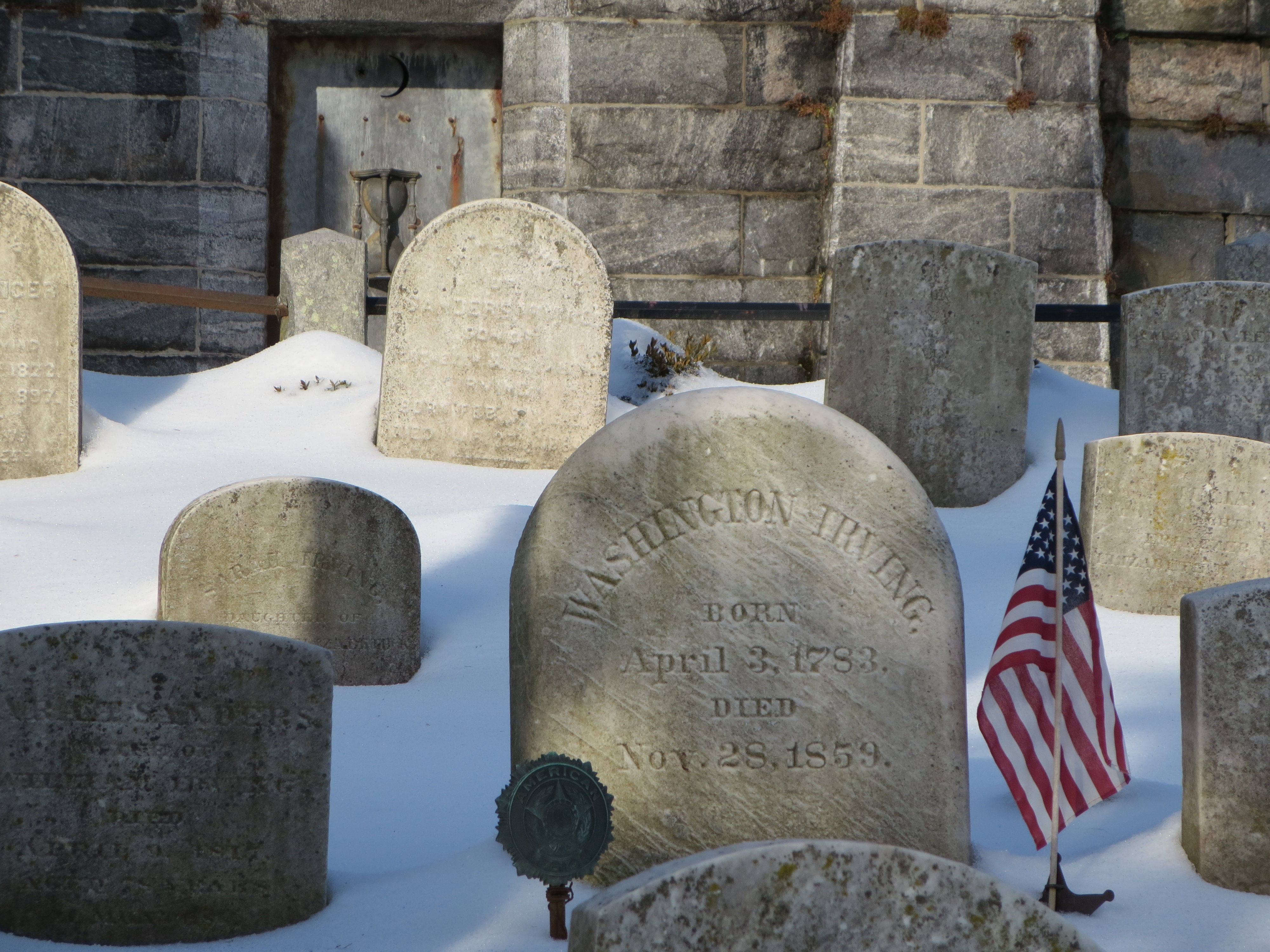
The grave of Washington Irving, most famous for his stories about Sleepy Hollow and Rip Van Winkle, he was actually very much fascinated with the Revolutionary War and later wrote a large historic biography of George Washington. (Author's photo)
The grave of Washington Irving who became famous for his stories about Sleepy Hollow and Rip Van Winkle.  Irving was actually very interested in Revolutionary War history and later wrote a large historic biography of George Washington. (Author’s photo)

Regardless of the true origins of this ghost, the Hessians’ victory at White Plains was short lived.  Colonel Rall and his brigade of Hessians would be surprised and captured by George Washington’s men at the Battle of Trenton on December 26, 1776, which would prove to be a major turning point in the Revolutionary War.

Christopher Walken famously played the Hessian who became the Headless Horseman in Tim Burton's Sleepy Hollow movie. In this retelling of the tale, the Hessian was killed in a skirmish in the winter of 1779.
Christopher Walken famously played the Hessian who became the Headless Horseman in Tim Burton’s Sleepy Hollow movie. In this retelling of the tale, the Hessian was killed in a skirmish in the winter of 1779.  Although there is no historical evidence that supports his fanciful outfit, weaponry or filed down teeth.

While the Battle of White Plains has been all but forgotten, the story of the Headless Horseman has become a touchstone which still connects us with this battle and the Revolutionary War in general.  And just like we like to find where these battles took place and walk the hallowed ground, so too does the Headless Horseman.  Irving writes that while the body of the Hessian lies “buried in the churchyard, the ghost rides forth to the scene of battle in nightly quest of his head.”  I urge you to follow in his footsteps and check out Battle Hill Park next time you are in White Plains, New York and the historic environs of Sleepy Hollow nearby.
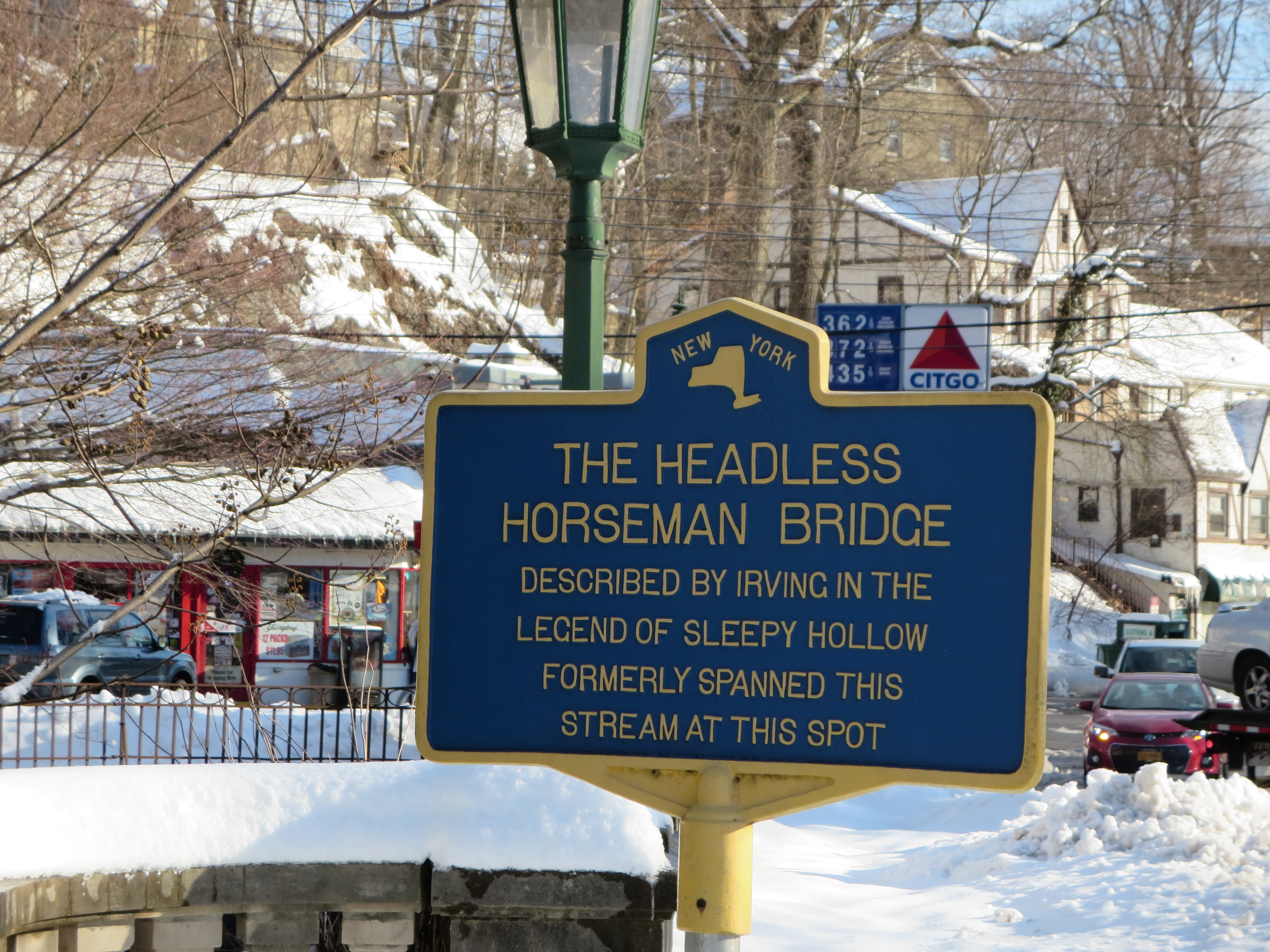
One of the many historic sites in Sleepy Hollow you can visit still today. (Author's photo)
One of the many historic sites in Sleepy Hollow you can visit still today. (Author’s photo)

“Madness!” The Battle of Green Spring, 1781

Last week marked the 235th anniversary of the Battle of Green Spring, which occurred near historic Jamestown in Virginia.  A couple months ago, historians form many different Civil War battlefield parks went to Jamestown, Virginia to get a tour of the Green Spring battlefield.  For many of these public historians, it was their first visit to the battlefield.  The battlefield is very sparsely marked, has no interpretative trail, no formal or regular tours and not usually given much thought.  However, with new initiatives like the Civil War Trust’s “Campaign 1776,” there has been a surge of Civil War historians looking to learn more about the War for Independence and the efforts to preserve its history and battlefields.

13254153_10100866263268337_9147869487519362505_n
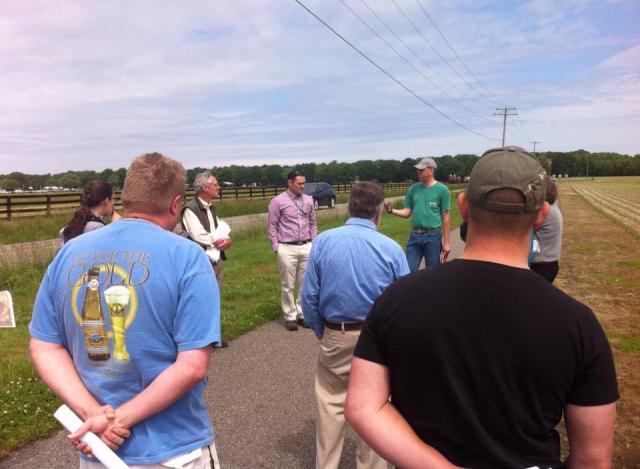
NPS historians Kirby Smith and Chris Bryce along with representatives of James City County lead a tour at the Battle of Green Spring battlefield in May 2016.

The Battle of Green Spring, while it is a little known footnote in the history of the Revolutionary War, was the largest open field battle of that war in the state of Virginia.  The battle was fierce and bloody, and part of a chain of events that ultimately resulted in the George Washington’s victory at Yorktown.

On July 6, 1781, General Marquis de Lafayette was looking for an opportunity to catch General Charles Cornwallis’ army unaware.  Cornwallis and his army of nearly 7,000 troops was near Jamestown Island and was looking to cross the James River.  Lafayette with his much smaller army of only about 4,000 men was looking to attack and raise morale in the invaded state.  He wanted to wait until Cornwallis’ army was in the middle of crossing the river, with half his force on the opposite side, and then launch an attack on the much smaller and cut off force.

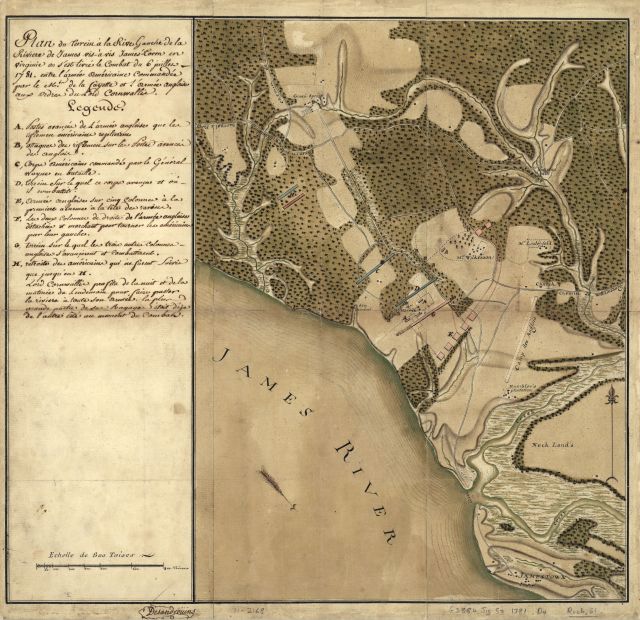
Left-Bank-James-River-Rochambeau-map
This map shows where the battle occurred near the James River and you can see marked the battle lines of the British and American troops.  Historic Jamestown Island is at the bottom of the map.

Cornwallis, though was no fool and went about setting up a trap to deal with this annoying force of American troops that had been trailing him now for months.  He planned to lure Lafayette’s army into bringing on an engagement with his entire British force.  Lafayette took the bait.

On July 6, 1781, Lafayette sent forward his army in a column formation with General “Mad” Anthony Wayne’s Pennsylvania regiments and Virginia militia (about 900 men) in the van.  They began to engage British pickets on the road to Jamestown and pursued them towards the James River for a few miles, crossing over the 17th century Green Spring plantation.  Wayne’s men made it to the Harris farm at about 5:00 in the afternoon.  The 900 Pennsylvanians and Virginians were far in the advance of the rest of the American column when the British finally launched a withering counterattack on the heavily outnumbered American troops.

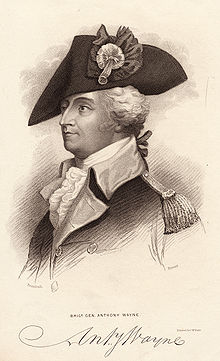
220px-Anthony_Wayne
General “Mad” Anthony Wayne led the vanguard of the American force.

At this point, rather than fall back, General Wayne, in a very unconventional and bold decision ordered his outnumbered force to fix bayonets and advance on the British line.  This advance momentarily stunned the British officers.  Did Wayne know something they did not?

For the next few minutes the British line and the American line stood about 50 yards apart  and fired volley after volley of musket fire into each other.  With an effective range of 80 yards, this part of the battle became the most intense and most bloody.  The skilled British regulars aimed low at the legs of the American.  This way, when the musket fired and kicked back, the musket ball would go slightly higher and hit the enemy in the body.  To have stood and fought in an open field at that range would have been an absolutely terrifying ordeal.  But there they stood and fought.  One contemporary later called it “Madness!”  Troops after the battle could actually tell how close the lines stood based on bodies of the men killed and the torn cartridge tops that littered the field.

After a few minutes of this close fighting, the American troops were forced to fall back quickly, leaving two cannon on the field.  The impromptu advance Wayne ordered though succeeded in stalling the British advance and allowing American reinforcements to cover their retreat.  Lafayette successfully disengaged and fell back that night.  Cornwallis chose not to give chase, and crossed successfully over the James River.

The battle was technically a British victory, but once again, as on many fields in the Revolution, the young American army had gone toe to toe and proved it was on par with British regulars.  Lafayette and the American press heralded the bravery of the American troops and viewed Cornwallis’ movement as a retreat.  Cornwallis would ultimately be forced to surrender that October at nearby Yorktown.

On July 6, 1781, the British suffered about 75 men killed and wounded and the American army suffered about 150 men killed and wounded.  The battle and the land it was fought on soon became forgotten.  Today, though, through the efforts of James City County, easements have been placed on much of the historic land and they and other organizations have bought and preserved much of the land where the fighting occurred.  Work continues to ensure the hallowed ground is preserved for the future.

However, the site contains very little interpretation, with really only a state historic marker.  Hopefully the site will get more attention in the coming years as an important historic site in a very historic area of Virginia.  Just this year there have been a few events to mark that bloody battle.

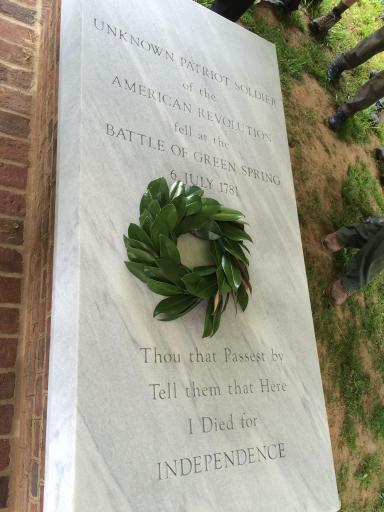
13246418_10100402679234641_3991847135870969452_o
New tombstone for an unknown Revolutionary War soldier that was recently buried at the Church on the Main in May 2016. (Photo by Drew Gruber)

A couple months ago, archaeologist Dr. Alan Outlaw led a re-internment ceremony for one of the Pennsylvania continentals that was killed in action at Green Spring.  His bones had been recovered over thirty years ago in the Harris farm.  After being studied by the Smithsonian Institution and being properly identified as one of the Pennsylvania continentals, he was re-interred with a proper Christian burial near the battlefield in the graveyard of the Church on the Main.

Also this past Saturday, the National Park Service and the Friends of Green Spring held a Revolutionary War living history program at the Green Spring Plantation about the retreat of the American troops and the aftermath of the battle.

Next time you find yourself in historic area of Williamsburg, Yorktown or Jamestown, make a trip out to the Green Spring battlefield or the Church on the Main and reflect on the sacrifices that occurred there to secure our independence.

“A Gallant Defense”

236 years ago America suffered its worst defeat of the entire Revolutionary War.  On May 12, 1780, patriot General Benjamin Lincoln surrendered the city of Charleston (then, Charlestown) South Carolina and its garrison of about 6,000 troops to the British army under General Henry Clinton.

Sullivans-island-1050x777
The Siege of Charleston.  This image shows a view of the British works and the city of Charleston in the background.

The British had set their sights on the wealthy southern city after taking Savannah in 1778 and successfully defending it against French and American attacks in 1779.  The British expedition against Charleston was a joint effort by the Royal Army and Navy.  General Clinton advanced by land, while Admiral Mariot Arbuthnot blockaded the harbor.  Their combined force had about 13,000 men.  George Washington in New York dispatched the Virginia Continental Line from his army to reinforce the southern army stationed in the city of Charleston.  General Benjamin Lincoln had a difficult choice of whether or not to stay in Charleston (a very difficult location to defend as it was on a peninsula) or evacuate the city and save his 6,000 man army.  The citizens of Charleston stubbornly insisted that Lincoln stay in the city, and Lincoln deferred.

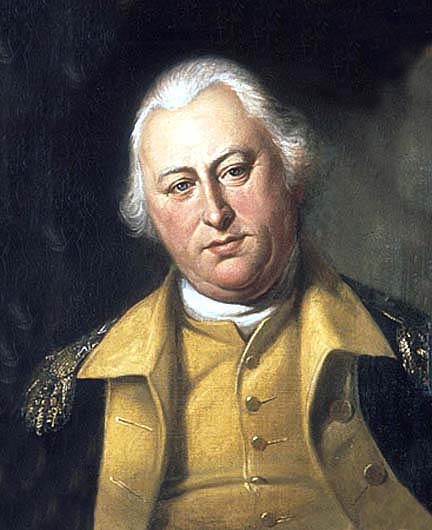
General_Benjamin_Lincoln-restored
General Benjamin Lincoln

Clinton moved down the peninsula and on April 1 began a classic siege of the city.  Lincoln got good news when on April 7 when the Virginia Continentals reinforced his army after marching nearly 700 miles.  Unfortunately, the noose around Charleston’s neck was just beginning to tighten.  The British dug earthworks inching closer and closer to the town while hundreds of American and British cannon fired at each other for 42 days.  This would end up being the longest siege of the entire war.  During this time there were also numerous infantry attacks and sorties as the Americans desperately tried to break the siege.  On April 24, a select group of Patriots sprang into the British works and bayoneted more than a dozen British soldiers.  During the fighting over the 42 days about 500 American and British troops would be killed and wounded and dozens of Charleston citizens would be killed from the bombardment.

SirHenryClinton
General Henry Clinton

Ultimately, it became impossible to break through or escape.  On May 9th, the British unleashed a massive bombardment.  General William Moultrie remembered it clearly: “There was a tremendous cannonade (180-200 pieces of heavy cannon firing), it was a glorious sight, to see them like meteors crossing each other, and bursting in the air; it appeared as if the stars were tumbling down.  The fire was incessant almost the whole night; cannonballs whizzing and shells hissing continually amongst us; ammunition chests and temporary magazines blowing up, great guns bursting, and wounded men groaning along the lines: it was a dreadful night!”

3-moultrie
General William Moultrie.  Moultrie’s brother, Thomas, was killed in the sortie on April 24.

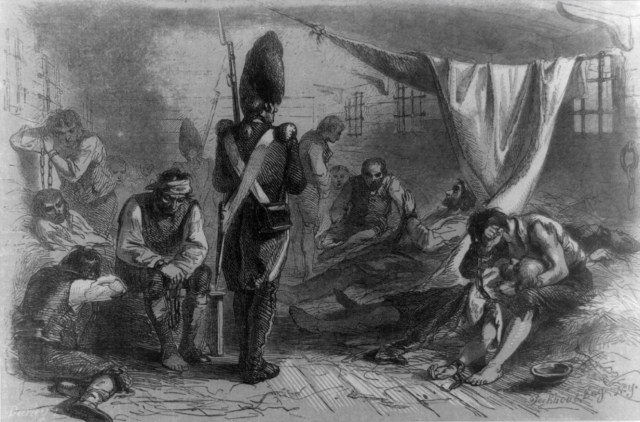
On May 12, 1780 Lincoln formally surrendered his army to Henry Clinton, after what one British officer described as “a gallant defense.”  It was the largest defeat of the war for the Americans and the next time an American force this large surrendered to a foreign army was during World War II at Bataan.  The defeat was humiliating.  The captured Continental soldiers would ultimately be placed on prison ships in Charleston harbor where hundreds more would die of disease and hunger.

interior of old prison ship
View of conditions on board a prison ship during the Revolutionary War.  About 12,000 American prisoners of war died during the Revolutionary.  Most were imprisoned in New York harbor (depicted here) but many were imprisoned in Charleston harbor after 1780.

General Benjamin Lincoln was exchanged and was with Washington’s army a year and a half later at Yorktown.  When General Cornwallis was forced to surrender his army in the face of American siege works, he refused to attend the surrender ceremony.  His second in command, General Charles O’Hara went to surrender his sword to the French general Rochambeau, who refused it and directed he give it to Washington.  Washington, in turn refused, and directed he give it to none other than Benjamin Lincoln.  The disaster at Charleston had been avenged.  But it would be more than a year after the victory at Yorktown before the city of Charleston would be liberated from British control on December 14, 1782.

Surrender_of_Lord_Cornwallis
Surrender of the British at Yorktown.  General Lincoln is front and center on the white horse.  A similar scene, only reversed, occurred in Charleston in 1780.

This event has been vastly overlooked and little remembered throughout history.  Today the only reminders of this important event are a small piece of the ‘hornwork’ (part of the American defenses) which survived and a state historic marker that was placed six years ago today for the 230th anniversary of the surrender.  Most of the hallowed ground that made up the deadly no-mans-land and the locations of the American and British earthworks are now under the trendy upper King Street area in the city of Charleston.  There was no attempt to save this battlefield land after the war.  This exemplifies the importance preservation of battlefield land has on how we remember our history.  Next time you visit Charleston, remember the significant sacrifices made in 1780 in that part of the city, even with no battlefield set aside to honor those men who fought.  The events that occurred there showed just how close America came to defeat as late as 1780 and gives more luster to the names of the men who in the face of such daunting challenges and defeats fought, died, persevered and were eventually victorious.

mark_maloy1
Dedication of a marker on the site of the American surrender in 2010.

Swords of Liberty

sword2
This 1778 sword Washing carried at Yorktown. (Mount Vernon)

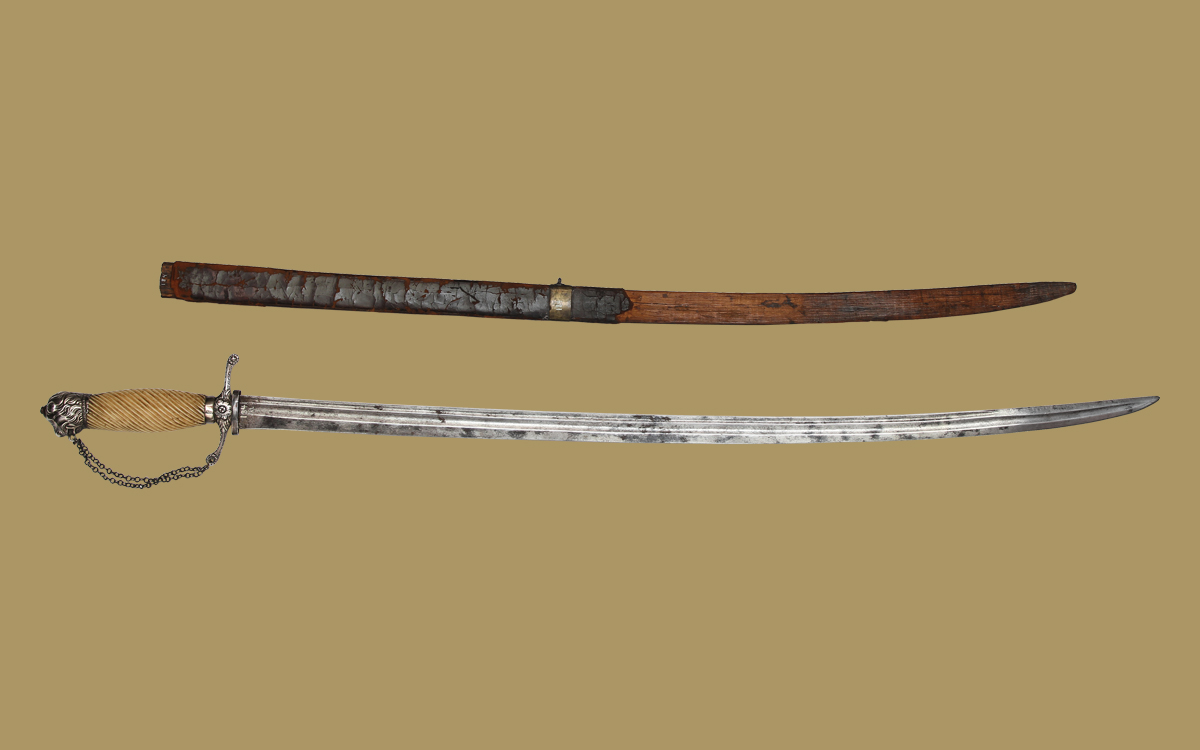
If you get a chance in the next month, go to George Washington’s Mount Vernon and see the temporary exhibit on Washington’s swords.  On display are two of George Washington’s swords he used during the Revolutionary War.  One, a green ivory hilted sword that he acquired in 1778 and likely carried at Yorktown, is on loan from where it is usually exhibited, the Smithsonian’s National Museum of American History.  But even more interesting is the only known Washington sword in private hands.  This bone hilted sword is on generous display by an anonymous donor.  The sword was made in Philadelphia and acquired by Washington in 1770, as tensions were rising between Great Britain and the colonies.  Historians believe this sword to be the one Washington carried in the early years of the Revolutionary War, and is therefore likely to be the sword on his side when he crossed the Delaware River on Christmas night in 1776 and through the Ten Crucial Days campaign.

sword3
This sword and scabbard Washington acquired in 1770 and is likely the one he carried at Trenton and Princeton. (Mount Vernon)

Washington’s swords are so humbling to gaze upon because of the virtuousness of the cause in which they were raised and the greatness of the man who carried them.  No sword of Napoleon Bonaparte or Julius Caesar can match it.  While Washington’s military conquests pale in comparison to these men, the ideas Washington fought for and the impacts of his victories would mean much, much more.  It is amazing to imagine what these swords saw when they were drawn in combat, but even more inspiring because of what they represented when they were sheathed.  At his military zenith at the end of the Revolution, Washington returned his sword to its scabbard and resigned his commission, an act for which he should always be remembered.  In his Last Will and Testament, when he made provisions for giving these swords to his nephews, Washington included an important passage: “These swords are accompanied with an injunction not to unsheathe them for the purpose of shedding blood, except it be for self defence, or in defence of their Country and its rights; and in the latter case, to keep them unsheathed, and prefer falling with them in their hands, to the relinquishment thereof.”

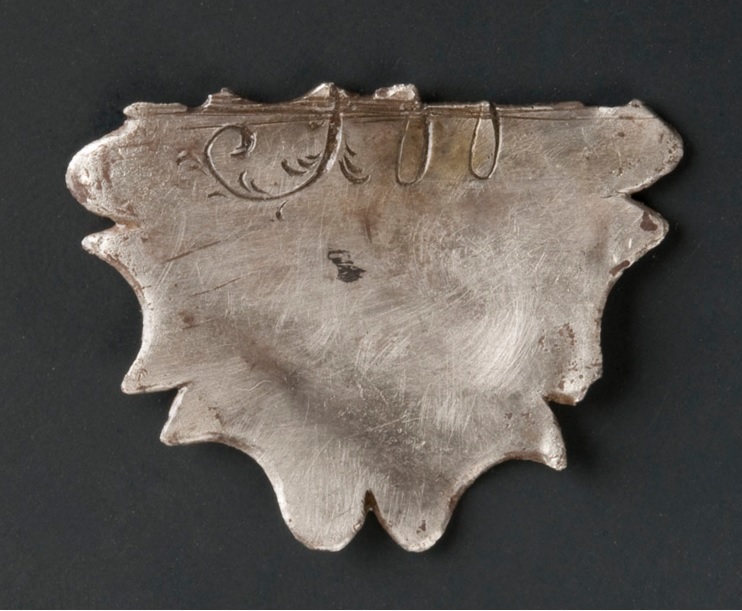
Included in the display are the sword scabbards and also a small silver medallion about the size of a quarter.  The piece of silver was found in an archaeological dig just outside of the mansion recently.  It was discovered that “GW” was engraved on it, and Mount Vernon archaeologists determined it was an ornament from one of Washington’s sword scabbards.  They believe it was discarded after Washington’s death and it is now on display in the case with the original scabbards.

sword
This scabbard ornament was found in an archaeological dig outside the mansion house.

Frederick Douglass, the famous 19th century abolitionist, once reflected on these kinds of important artifacts, including Washington’s sword.  He wrote that “there are some things and places made sacred by their uses and by the events with which they are associated,” and this included “the sword worn by Washington through the war of the Revolution.”  He noted that items like the sword “stir in the minds of men peculiar sensations.”  Go and see what he was talking about.

An excellent time to see this exhibit would be on the weekend of April 30 and May 1.  That same weekend Mount Vernon will be hosting hundreds of Revolutionary War reenactors from around the country, including yours truly.

The swords will be on display at Mount Vernon until May 30, 2016.

“The Hard Winter” of 1779-1780

Most Americans take time to reflect on the meaning of independence and the sacrifice of the founding generation of Americans around the 4th of July or on their summer vacations visiting Colonial Williamsburg, Independence Hall, or Boston’s Freedom Trail.  However, the story of the American Revolution is best told in the freezing days of winter.  As the mid-Atlantic region of the United States hunkers down for snow, it does well to remember what was the absolute worst winter in the 18th century: the “hard winter” of 1779-1780.

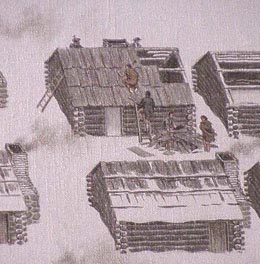
hut_building
The army had to construct their winter quarters with a foot of snow already on the ground.

The winter that year was bad.  Over the course of the winter, New Jersey had twenty six snowstorms and six of those were blizzards!  Every saltwater inlet from North Carolina to Canada froze over completely.   In fact, New York Harbor froze over with ice so thick that British soldiers were able to march from Manhattan to Staten Island.

George Washington decided to place his army at Morristown, New Jersey for winter quarters.  When they arrived at the encampment site in November 1779 there was already a foot of snow on the ground.  Some snowfalls dropped more than four feet of snow with snow drifts over six feet.  The temperature only made it above freezing a couple times in the whole winter.  Officers remembered ink freezing in their quill pens and one surgeon recorded that “we experienced one of the most tremendous snowstorms ever remembered; no man could endure its violence many minutes without danger to his life. … When the storm subsided, the snow was from four to six feet deep, obscuring the very traces of the roads by covering fences that lined them.”

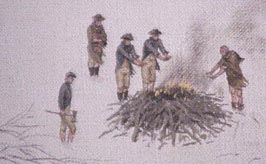
keeping_warm
Soldiers attempting to stay warm in the worst winter of the 18th century.

Because of the severity of the winter, provisioning almost 10,000 soldiers was nearly impossible.  A soldier in the Connecticut Line, Joseph Plumb Martin remembered “We were absolutely literally starved; – I do solemnly declare that I did not put a single morsel of victuals into my mouth for four days and as many nights, except for a little black birch bark which I gnawed off a stick of wood, if that can be called victuals. I saw several of the men roast their old shoes and eat them, and I was afterward informed by one of the officer’s waiters, that some of the officers killed and ate a favorite little dog that belonged to one of them.”

Even General Washington noted after the winter that “The oldest people now living in this Country do not remember so hard a winter as the one we are now emerging from. In a word the severity of the frost exceeded anything of the kind that had ever been experienced in this climate before.”  This came from the man who had suffered the terrible winter of 1776-1777 when his army had to cross an ice-choked Delaware River and who had witnessed thousands of his men die in the freezing winter of 1777-1778 at Valley Forge.

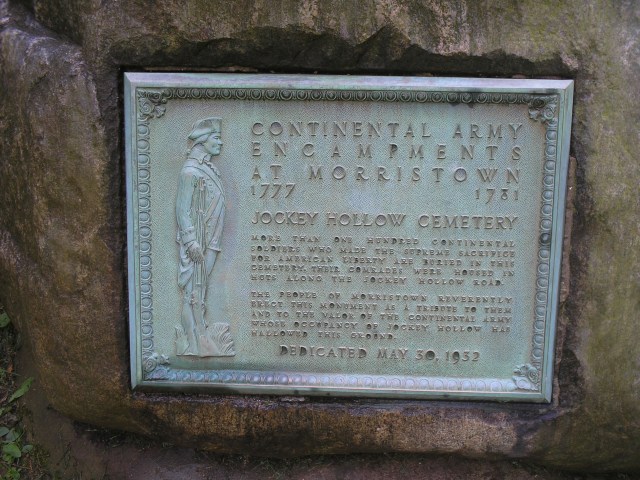
Jockey Hollow Cemetery Marker
Marker for the men who didn’t survive the winter of 1779-1780.

Despite the severity of this “hard winter” in 1779-1780 at Morristown, Americans tend to think that Valley Forge was the worst winter of the war.  This probably has to do with the fact more soldiers died of disease at Valley Forge than at Morristown.  While about 2,000 soldiers perished at Valley Forge, ‘only’ about 100 died at Morristown.  Also, the Continental army underwent an amazing transformation at Valley Forge, becoming a professional army.  The Morristown encampment, however, resulted in angry and hungry soldiers causing a mutiny that had to be put down.  Joseph Plumb Martin remembered how he and his fellow soldiers were “venting our spleen at our country and government, then at our officers, and then at ourselves for our imbecility in staying there and starving in detail for an ungrateful people who did not care what became of us, so they could enjoy themselves while we were keeping a cruel enemy from them.”

So this winter, as you dig out your driveway or your car over the next few days, take a moment and imagine what the soldiers in Washington’s army had to endure at Morristown in 1779-1780.  Next time you are in New Jersey or New York City make a point to visit the site of that encampment preserved by the National Park Service.  Visiting on a cold day will give you a small taste of the elements they endured.  These soldiers’ dedication to duty helped keep the light of liberty alive through an extremely “hard winter.”

Washington’s Charge

The battle was going poorly for the Patriots.  It was January 3, 1777 and after having been pinned against the banks of the Delaware River by a very large British army the day before, the Continental army made a risky night march around the British army’s flank to escape certain doom.  General George Washington’s small ragged army had nearly reached the small village of Princeton, NJ when they noticed across some open fields British soldiers marching on a different road going the opposite way.  The British soldiers were part of the larger army’s rearguard.  The two forces immediately headed to clash in the open fields just south of the town.  General Hugh Mercer led his Continental brigade to meet the British threat.

The_Death_of_General_Mercer_at_the_Battle_of_Princeton_January_3_1777
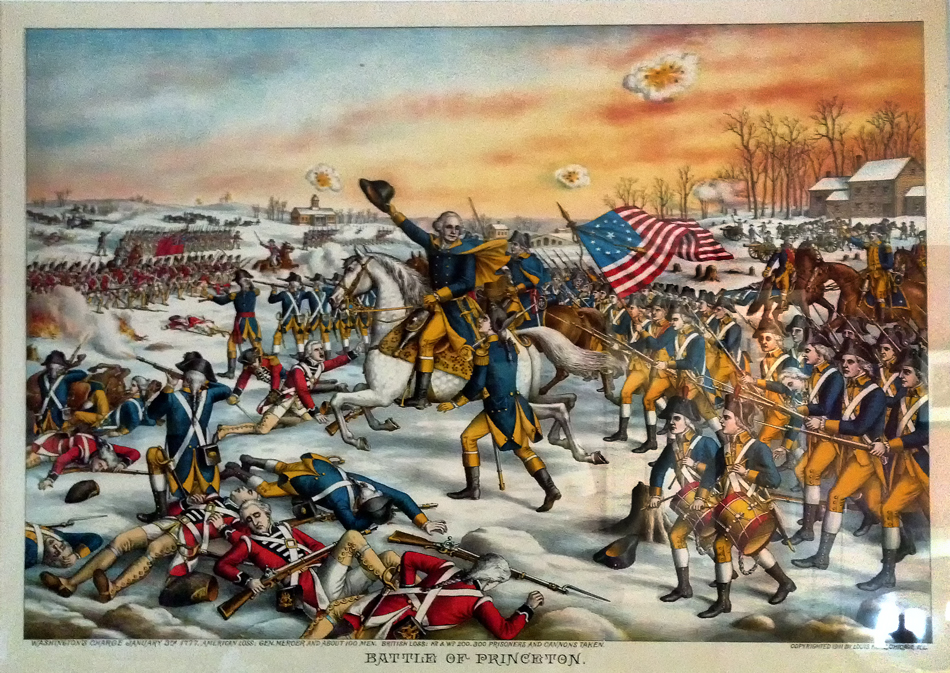
This painting by John Trumbull shows the climatic moment of the Battle of Princeton as General Mercer is killed (on the ground next to his horse) and Washington rides to save the day.

The morning was icy cold.  The soldiers began the action in earnest.  The British regulars made short work of Mercer’s brigade.  After engaging in a firefight, the British lunged forward with a bayonet charge.  The American troops were thrown back in confusion.  General Mercer, thought by the British troops to be Washington, was surrounded and bayoneted seven times and left for dead.  The fleeing men from Mercer’s brigade started to create a panic among other brigades in Washington’s army as they ran pell-mell through the reserves under General John Cadwalader.  Many of Cadwalader’s men began to flee as well.  At this moment, the victories at Trenton, the night march, and in many respects, the war itself, were all in the balance.  If Washington’s small force were to be crushed here at Princeton, popular support for the Revolution could potentially be siphoned away, and the American cause could be lost.  The stakes may have never been higher.

Battle-of-PrincetonWEB
In this scene you can see the snow that was on the ground at the time of the battle. Survivors remember seeing blood from dead and wounded men pool on the frozen ground.

And it was at that moment when none other than General Washington arrived on the field personally.  What an amazing sight it must have been to see.  Washington, renowned as one of the country’s best horse riders, riding up to the front lines of battle to direct the movements of his men in a time period where generals of his rank were more properly positioned in the rear to direct movements.  Washington saw the potential collapse and determined to personally appeal to the bravery of his men.

Washington also brought with him more troops that he immediately placed on the line.  Then, as Continental artillery kept the British as bay, he rode into the panicking and retreating soldiers.  Sergeant Nathaniel Root with the 20th Continental Regiment remembered this moment vividly: “At this moment Washington appeared in front of the American army, riding towards those of us who were retreating, and exclaimed, ‘Parade with us, my brave fellows! There is but a handful of the enemy, and we will have them directly.’”  Inspired by his courage and reassured by his presence, the men halted their retreat and reformed their lines.

Washington then rode with the soldiers as he ordered an advance.  The Continentals closed to within thirty yards of the British line.  Washington, in the front line, gave the order to fire.  At the same moment, the British soldiers unleashed a volley into the American line.  Washington’s aides feared with the crossfire Washington would have assuredly been shot down, but he came through the smoke of battle unscathed.  James Read, an officer with the Pennsylvania Associators remembered: “I shall never forget
what I felt at Princeton on his account, when I saw him brave all the dangers of the field and his important life hanging as if it were by a single hair with a thousand deaths flying around him. Believe me, I thought not of myself.”

battle-of-princeton
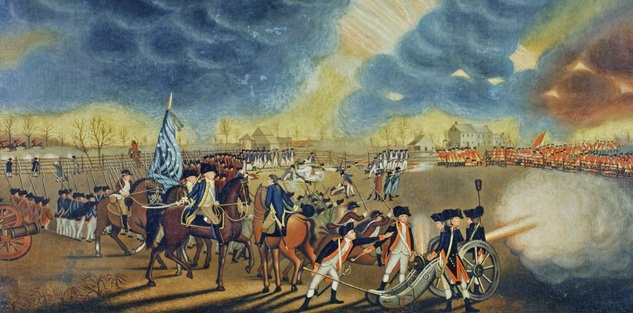
This image of the Battle of Princeton was actually painted by the deaf son of the slain General Hugh Mercer, William Mercer.

The American line overlapped the British line, and the superior British soldiers were forced to retreat in the face of the American rebels.  Washington spurred his horse after the retreating British exclaiming, “It is a fine fox hunt, my boys!”

After defeating the British at Princeton, the American army went into winter quarters in Morristown, NJ.  The result of Washington’s brilliant victories at Trenton and Princeton was a huge boost to American morale.  The militia in New Jersey rose up, enlistments in the army rose, and foreign powers took note as the vastly superior British army was forced back to the city of New York, showing they were unable to conquer New Jersey.  The war would continue for another five bloody years, but Washington had saved the American Revolution from being killed in the crib.

The ground where this battle occurred truly should be remembered as some of America’s most hallowed ground.  Some of it was saved and made into Princeton Battlefield State Park. To learn more about this momentous battle and the crucial ten day campaign it capped, check out one of the inaugural Emerging Revolutionary War books, “Victory or Death: The Battles of Trenton and Princeton, December 25, 1776 – January 3, 1777.”

The Revolutionary War’s “Gettysburg”

How time and memory have not been kind to the most important campaign in American history.

Nearly a million people visit Gettysburg every year.  Those visitors stand at Little Round Top or on Cemetery Ridge and reflect on what happened there in the summer of 1863.  They go to Gettysburg because it is remembered as a major turning point in the Civil War and where the fate of the entire nation hung in the balance for a few days.  How would the world have been different had General Meade’s left flank collapsed on July 2nd or had Robert E. Lee’s desperate frontal assault on July 3rd been successful?  Gettysburg is a place where one can ponder this and the sheer number of books, articles, monuments and visitors prove how important this narrative is to the American people.

Not too far away in New Jersey is the location of another major turning point in American history that does not draw millions of tourists.  Often termed “the ten crucial days”, the Battles of Trenton and Princeton during the American Revolution saved the United States from imminent destruction during the Revolutionary War, but the actions do not hold the same mantle of importance that Gettysburg holds in American public memory.

Washington_Crossing_the_Delaware_by_Emanuel_Leutze,_MMA-NYC,_1851
The most iconic reminder in public memory of the 1776 winter campaign is the famous Emmanuel Leutze painting Washington Crossing the Delaware. The actual location of the crossing was actually preserved and are now state parks, but unfortunately many people don’t know about the context of the crossing nor the intense battles that followed.

The idea of a free and independent United States of America never came closer to complete collapse than in December of 1776.  General George Washington’s military campaign that winter ultimately changed everything.  Washington’s starving, freezing, and disintegrating army dramatically crossed an ice-choked Delaware River on Christmas night, marched nine miles and then attacked and defeated a Hessian garrison in Trenton.  A few days later the British army descended on Washington’s force, nearly captured them all, but a daring night flank march moved Washington’s men around the British flank and struck the British rearguard at Princeton. Then they quickly escaped to western New Jersey, forcing the British back to New York City.  These engagements electrified the colonies and the world and secured an immortal place in history for George Washington and his small, ragged Continental Army.  British historian G.M. Trevelyan even stated “it may be doubted whether so small a number of men ever employed so short a space of time with greater or more lasting results upon the history of the world.”[1]


Death of Rall
John Trumbull’s painting of the Surrender of Colonel Rall at Trenton. Trenton was Washington’s most lopsided victory, having only lost a couple men to wounds and death, while crushing and forcing the surrender of most of Rall’s force.

While the Battles of Trenton and Princeton were exponentially smaller in size and scale than the Battle of Gettysburg, the impact of the battles (and the campaign) could be placed on the same or higher importance than Gettysburg.  So why is this 1776 turning point not remembered on the same scale as the 1863 turning point?  There are probably many reasons for this, though none of them though fully justify this contrast in public memory.

While the Revolutionary War overall is not as popular as the Civil War, a major reason one could argue is the lack of a well-interpreted battlefield.  The Battle of Trenton is memorialized today only by a 19th century monument to Washington and the victors and a few small bronze plaques located throughout the modern city.  A small state-run museum, the Old Barracks, is the only facility that interprets the history of the campaign in the city.  Needless to say, one million visitors are not making pilgrimages to this museum and honestly, most would not want to walk the ground where the soldiers fought since those former town roads are now crime ridden city streets.  Every year a small reenactment takes place in the city, but it is little advertised and sparsely attended, the largest having been in 2001 for the 225th anniversary which included thousands of reenactors.  Nearby in Princeton, a small state park preserves a portion of the battlefield land, while other parts of the battlefield are about to be developed by a research institute.

trenton2
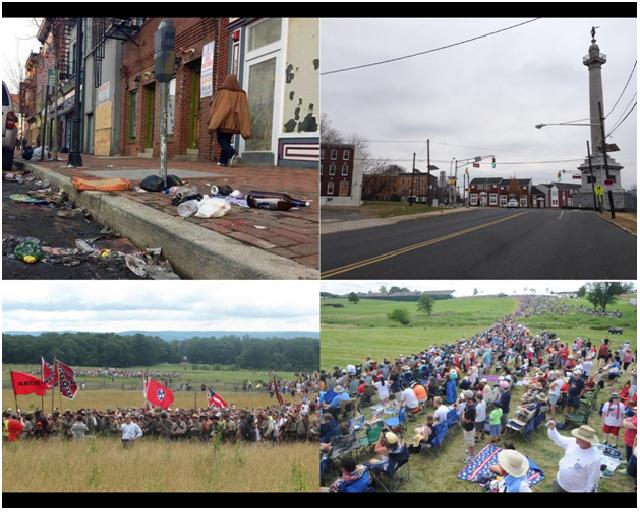
Compare the upper images of modern downtown Trenton, site of the major turning point in the Revolutionary War (upper left), and Trenton’s monument to the victors located where Washington was positioned during the battle (upper right) with the lower images of visitors walking the ground of Pickett’s Charge at Gettysburg battlefield (lower left) and the tens of thousands of visitors who paid to watch a Gettysburg reenactment in 2013. (lower right)

This is as an excellent example of the importance of battlefield preservation.  Trenton, with no interpreted battlefield park land, no National Park Service presence, nor even a city trail (i.e., Boston’s Freedom Trail), doesn’t have much to entice visitors to explore the ground where the battle actually happened.  This seems to be a problem with many Revolutionary War battlefields.  While some battlefields like Cowpens, Guilford Courthouse, Saratoga and Yorktown are preserved by the National Park Service and have staff working to interpret their place in history, these are in the minority.  Battlefields like Brandywine, Green Springs, Camden, and Eutaw Springs are only partially preserved and minimally interpreted.  Many significant Revolutionary War battlefields like White Plains, Brooklyn, Kip’s Bay, Fort Washington, Charleston, and Savannah are all places where development have obscured the memory of the battles that occurred there.  Unfortunately, many people incorrectly believe that all the battlefields of the Revolution have all been totally lost because of development.  The Revolutionary War then has become more about the ideals and thoughts that have been interpreted at historic homes and in Philadelphia, than as a major, bloody, painful war in which thousands paid the ultimate sacrifice and in which the fortunes of the nation moved with the military.

Rev-War_PrincetonWB.28
Washington rallies his troops at Princeton. In one of his greatest acts of personal bravery he rode to within 30 yards of British troops, exclaimed “Parade with us, my brave fellows! There is but a handful of the enemy and we shall have them directly!”[2] This helped raise the morale of the American troops and turned the tide of the battle.
 Thankfully, the Civil War Trust has launched a nation-wide effort to preserve remaining Revolutionary War battlefields (Campaign 1776).  But we must go beyond just saving battlefield land.  We must spread the word of these amazing deeds and build excitement and interest in these places.  And while it truly helps to have a well-preserved battlefield, it is just as important to stand on the modern city streets and remember that it was at these locations, beneath the modern concrete, that patriots fought and bled to create an independent American nation.

[1] Trevalyan, George Otto.  The American Revolution: Part III.  London: Longmans, Green, and Company, 1907.  113.

[2] Fisher, David Hackett.  Washington’s Crossing.  New York: Oxford University Press, 2004.  334.