An Irish Catholic Hero of the Revolution

One of the great unsung heroes of the American Revolution was an Irish Catholic colonel in the Continental Army who called Alexandria, Virginia home.  His name was John Fitzgerald and he would be by George Washington’s side during some of the most dramatic moments of the Revolutionary War.  Unfortunately, today in his adopted hometown, people are working to erase his gallant memory.

The_American_Soldier_-_U.S._Center_of_Military_History
George Washington conferring with an aide-de-camp. (U.S. Army Center of Military History)

In 1769 John Fitzgerald sailed from the emerald green fields of County Wicklow, Ireland to the southern British colonial town of Alexandria, Virginia.  Fitzgerald left a country that was firmly under the domination of British and Protestant rule.  Despite making up a majority of the residents of the country, Irish Catholics were treated as second class subjects in Ireland.  What Fitzgerald would find in colonial Virginia would not have been that much different as many British colonists had anti-Catholic sentiments.  Fitzgerald would find it illegal for him to openly worship in Virginia.  He would be forced to celebrate Catholic mass in his private home.

Despite the prejudices he faced, Fitzgerald became a merchant in Alexandria and would soon become good friends with the prominent local citizen, George Washington.  As tensions began to build between Great Britain and the American colonies, Fitzgerald would become an early proponent of the patriot cause.  As early as 1774, Fitzgerald had joined the local patriot militia, the Fairfax Independent Company, as an officer.

In early 1776, Fitzgerald became a captain in the 3rd Virginia Regiment of the Continental Line, and was promoted to major that fall.  In November, Fitzgerald was promoted to Lieutenant Colonel and joined Washington’s headquarters as an aide-de-camp.  Fitzgerald joined his staff at one of the darkest moments of the entire war.  Fitzgerald joined as what was left of Washington’s army was retreating across the state of New Jersey.  Washington’s army was dissolving before his very eyes. From 24,000 men that August, by December Washington only counted about 3,000 men.  In this trying time, Fitzgerald would be by Washington’s side as the revolution seemed near an end.  He would then join Washington and his men as they crossed the Delaware River on Christmas night and took part in the pivotal battles at Trenton and Princeton. (Read about these important battles in my book “Victory or Death: The Battles of Trenton and Princeton”)

Continue reading “An Irish Catholic Hero of the Revolution”

Victory or Death

1leutze
Washington Crossing the Delaware, by Emanuel Gottlieb Leutze.  Washington had crossed the Delaware River on the night of December 25 to attack Trenton. (The Metropolitan Museum of Art)

Early on the morning of December 26, 1776, George Washington and his 2,400 man army went running into the Hessian occupied village of Trenton, New Jersey.  It was snowing hard that morning and the one American soldier recalled that “we advanced, and although there was not more than one bayonet to five men, orders were given to ‘Charge bayonets and rush on!’ And rush on we did.” Continue reading “Victory or Death”

‘Twas the Night Before Christmas, 1776

nypl.digitalcollections.510d47e0-f5ee-a3d9-e040-e00a18064a99.001.w
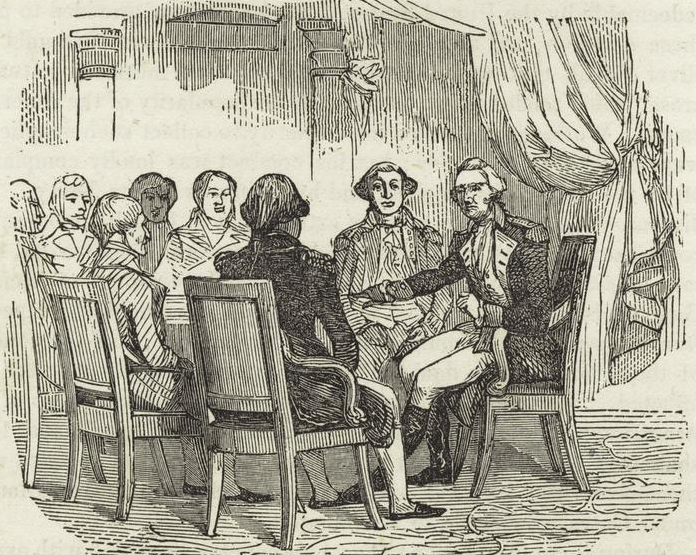
This drawing shows Washington holding a council of war in 1778.  The scene would have been similar in the Merrick house on Christmas Eve, 1776.  Washington always liked to consult his generals before making big decisions.  However, on Christmas Eve of 1776, there were almost no options left. (NYPL)

There was perhaps no darker Christmas Eve in American history than in 1776.  The cause of American liberty and independence was on the very verge of disintegration.  General George Washington’s army (that had once had more than 20,000 soldiers) had melted to only about 3,000 fit for duty.  Of those soldiers, many of their enlistments would expire the following week on January 1.  The victorious British and Hessian soldiers had thrashed Washington’s army in nearly every engagement they fought.  Just a week before Christmas, Washington wrote that he “tremble[d] for Philadelphia” and that he thought “the game was pretty near up.”  The British were well known for their harsh treatment of rebels, and it was likely they would show no mercy to these colonial rebels.  Gloom and dread filled the minds and hearts of the patriots.  Writer Thomas Paine famously wrote that “these are the times that try men’s souls!”  General Nathanael Greene was hopeful some event would change their fortunes when he wrote “I hope this is the dark part of the night, which is generally just before the day.”

Greene_portrait
General Nathanael Greene by Charles Willson Peale.  The final council of war before the Battle of Trenton was held at his headquarters and Washington would personally lead Greene’s division at Trenton. (Wikimedia Commons)

On December 22, Washington’s aide, Colonel Joseph Reed wrote to Washington that “our affairs are now hasting fast to ruin if we do not retrieve them by some happy event. Delay is now equal to total defeat.” Washington had to act.

Merrick House sign
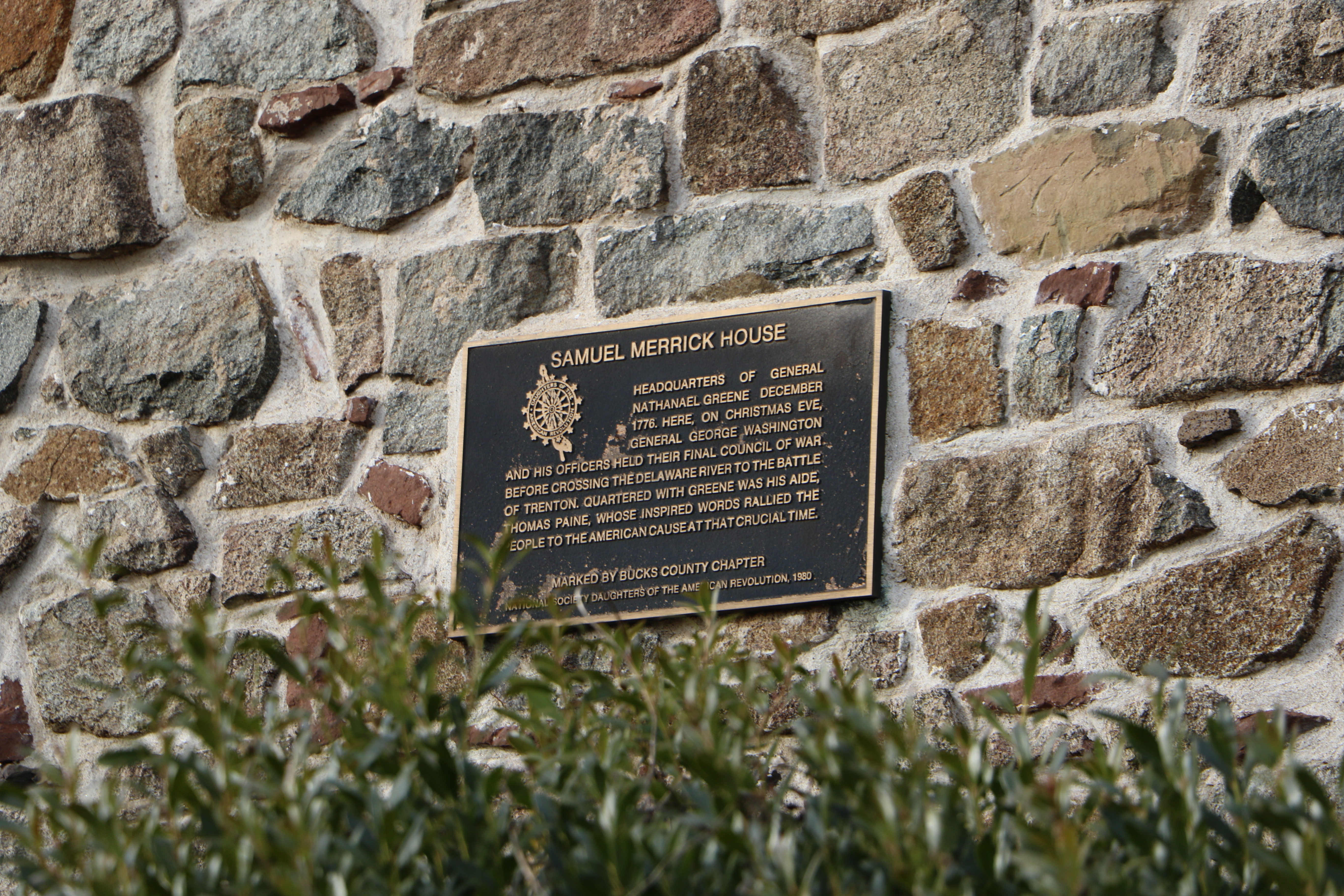
A plaque on the site of the Samuel Merrick house placed by the Daughters of the American Revolution denotes the structure’s historical significance. (Author Photo)

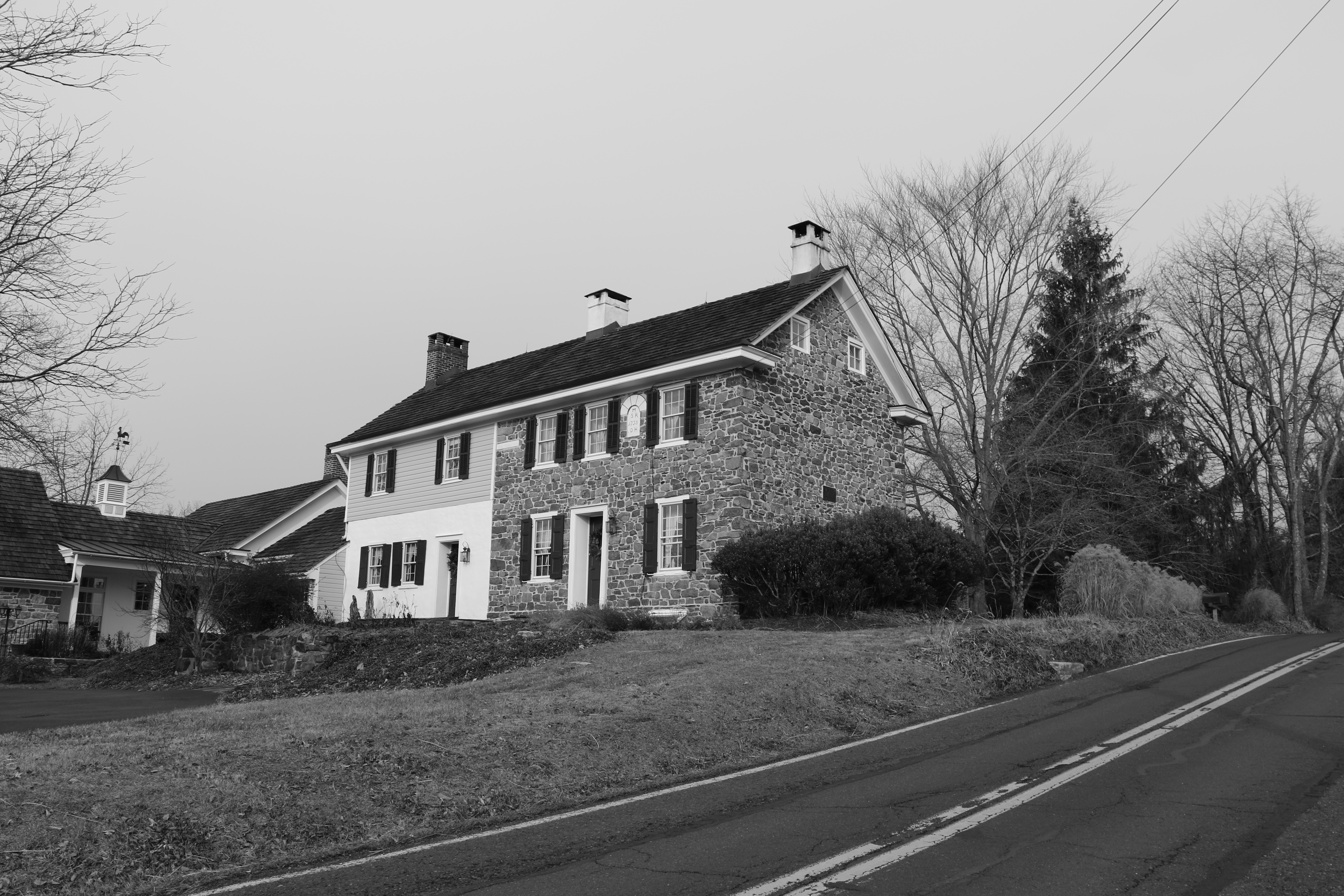
On the night before Christmas, Washington met with his generals in the home of Samuel Merrick in Bucks County, Pennsylvania, where General Nathanael Greene had made his headquarters.  Here, Washington laid out his final dispositions for what would be one of the boldest missions of the entire war.  The following night, his army would cross the Delaware River and march on Trenton, New Jersey and attack the 1,500 Hessian soldiers garrisoned there.  What exactly was said in this meeting we do not know, but there must have been major objections to such a dangerous and desperate action.  The demoralized army would have to cross an ice-choked river, march nine miles in a winter storm and defeat well-drilled and equipped German soldiers.  However, as Washington had written the day before: “Necessity, dire necessity, will, nay, must, justify an attempt.”  As Washington and his fellow generals left the Samuel Merrick house that Christmas Eve, they were given the password for this daring Christmas mission: “Victory or Death.”

Merrick House
The Samuel Merrick house as it looks in 2017.  The stone part is the original building.  Today it is a private residence. (Author Photo)

The events that would follow would prove to be the most crucial in the history of the United States. To learn more about these events and what must have been the gloomiest night before Christmas, as well as have a field guide to see where these sites are today, I hope you check out my new book about this campaign: “Victory or Death: The Battles of Trenton and Princeton.”

“I die hard; but I am not afraid to go.” – George Washington’s Final Battle

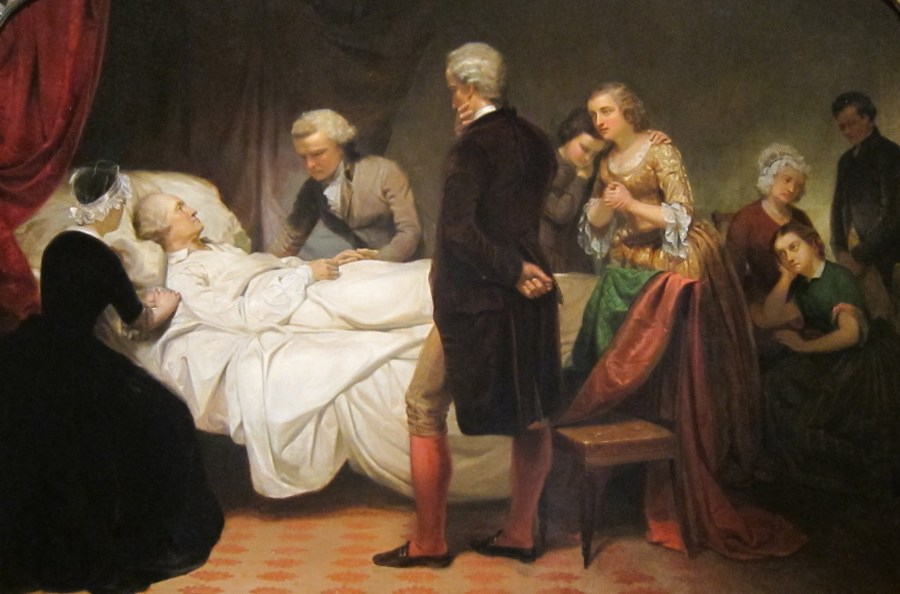
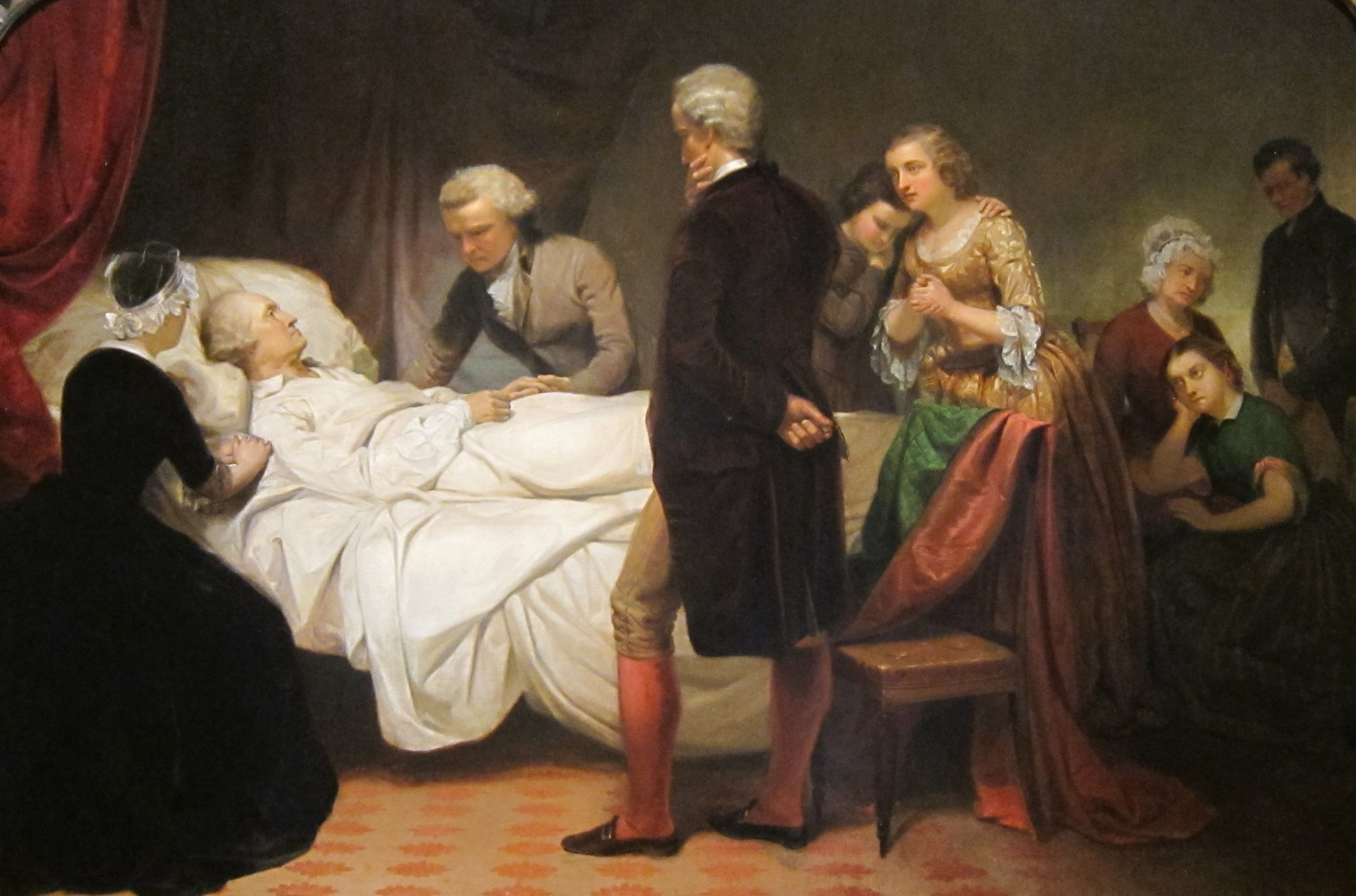
George Washington died on December 14, 1799.  On December 12, 1799, the celebrated Revolutionary War general and former president rode around his beloved Virginia plantation, Mount Vernon.  Despite the fact it was snowing and sleeting, Washington spent five hours in the winter weather.  Washington had survived much worse winters before, and gave little thought to this particular storm, even as he sat for dinner that evening with snow still clinging to his hair.  Later that night however, he began to show signs of a sore throat.  The next day, he went out again in the miserable weather to mark some trees that needed to be cut down.  On the night of December 13, the sore throat had gotten worse.  He stayed up that night reading the newspaper with his wife, Martha, and his personal secretary, Tobias Lear.  As he headed to bed, Lear suggested he take some medicine for his cold.  Washington declined, saying he would “let it go as it came.”[1]

Life_of_George_Washington,_Deathbed
In this highly romanticized painting done in 1851, painter Junius Brutus Stearns depicts the final moments of Washington’s life. (Wikimedia Commons)

Around 3 or 4 in the morning, Washington awoke with a fever and his throat even more tender.  Martha was worried and wanted to go alert Tobias Lear, but Washington was afraid the cold air would harm Martha and decided to wait until the enslaved handmaid Caroline came into the room to start a fire at 7 in the morning.  At that time, Lear was alerted and he immediately called for doctors to come to Mount Vernon. Continue reading ““I die hard; but I am not afraid to go.” – George Washington’s Final Battle”

Is the Mercer Legacy Secure?

In one of the songs of the Broadway hit Hamilton, the character of Aaron Burr says: “Did ya hear the news about good old General Mercer? You know Clermont Street? They renamed it after him. The Mercer legacy is secure.”

The line is referring to Mercer Street in lower Manhattan.  Ironically, while they mention in the musical that the renaming of this street secures Mercer’s legacy, many Americans probably have never heard of General Mercer, nor do they know what his true legacy was.

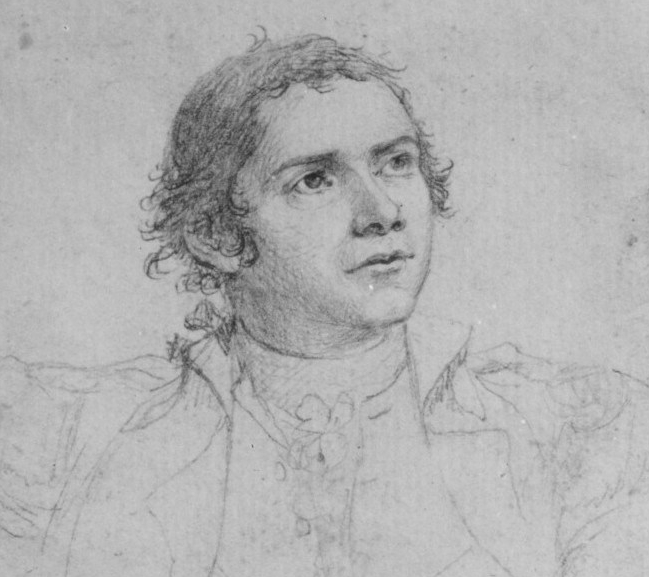
hugh_mercer_jr-_study_for_the_death_of_general_mercer_at_the_battle_of_princeton_january_3_1777_1791.jpg
A drawing study John Trumbull did of Hugh Mercer for his painting of the Battle of Princeton.  He likely used Mercer’s son as a stand in. (Wikimedia Commons)

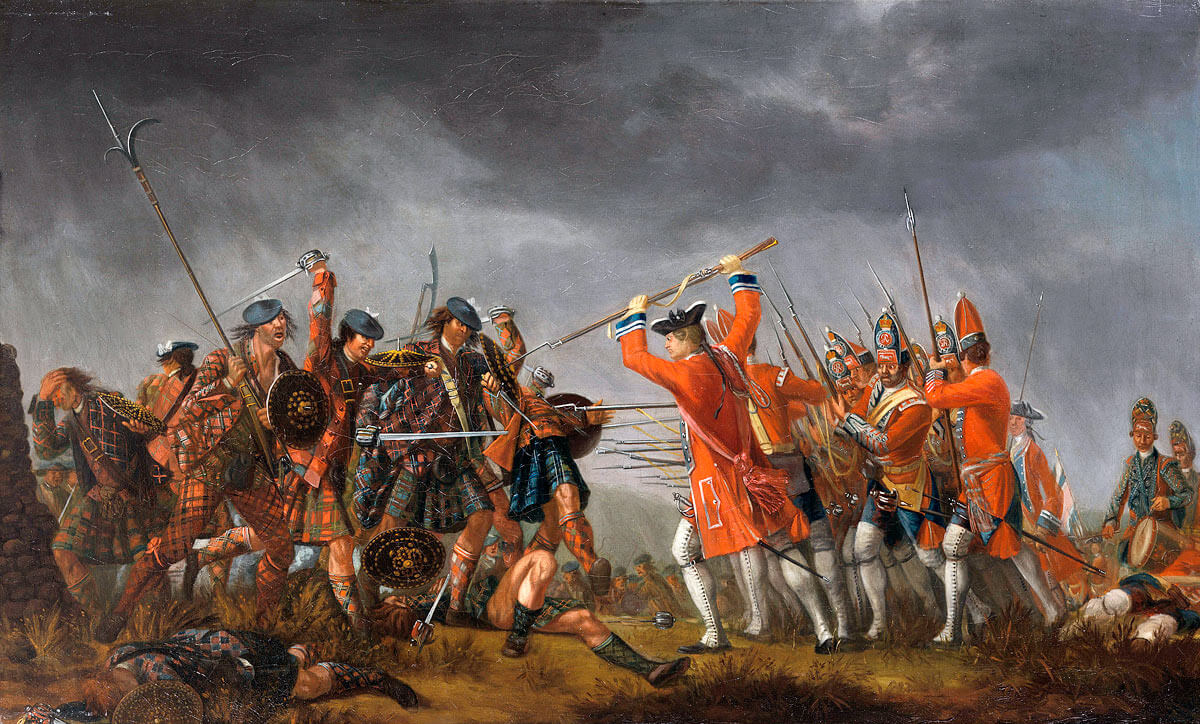
Hugh Mercer was regarded as one of the greatest American heroes of the Revolutionary War, at least by his contemporaries.  Interestingly, though, Mercer was born in Great Britain, (Scotland to be exact) and studied at the University of Aberdeen to be a medical doctor.  After graduating, he joined the Bonnie Prince Charlie’s army as an assistant surgeon and witnessed the bloody destruction of that army on the fields of Culloden in 1746.  The young 20 year old became a fugitive in his own land.

11-16-Incident-in-the-Rebellion-of-1745-AAA
The Battle of Culloden decimated the Jacobite forces in April of 1746.  The suicidal battle followed an aborted night attack that could have possibly resulted in a Jacobite victory. (Wikimedia Commons)

Continue reading “Is the Mercer Legacy Secure?”

Hugh Mercer’s Last Companion

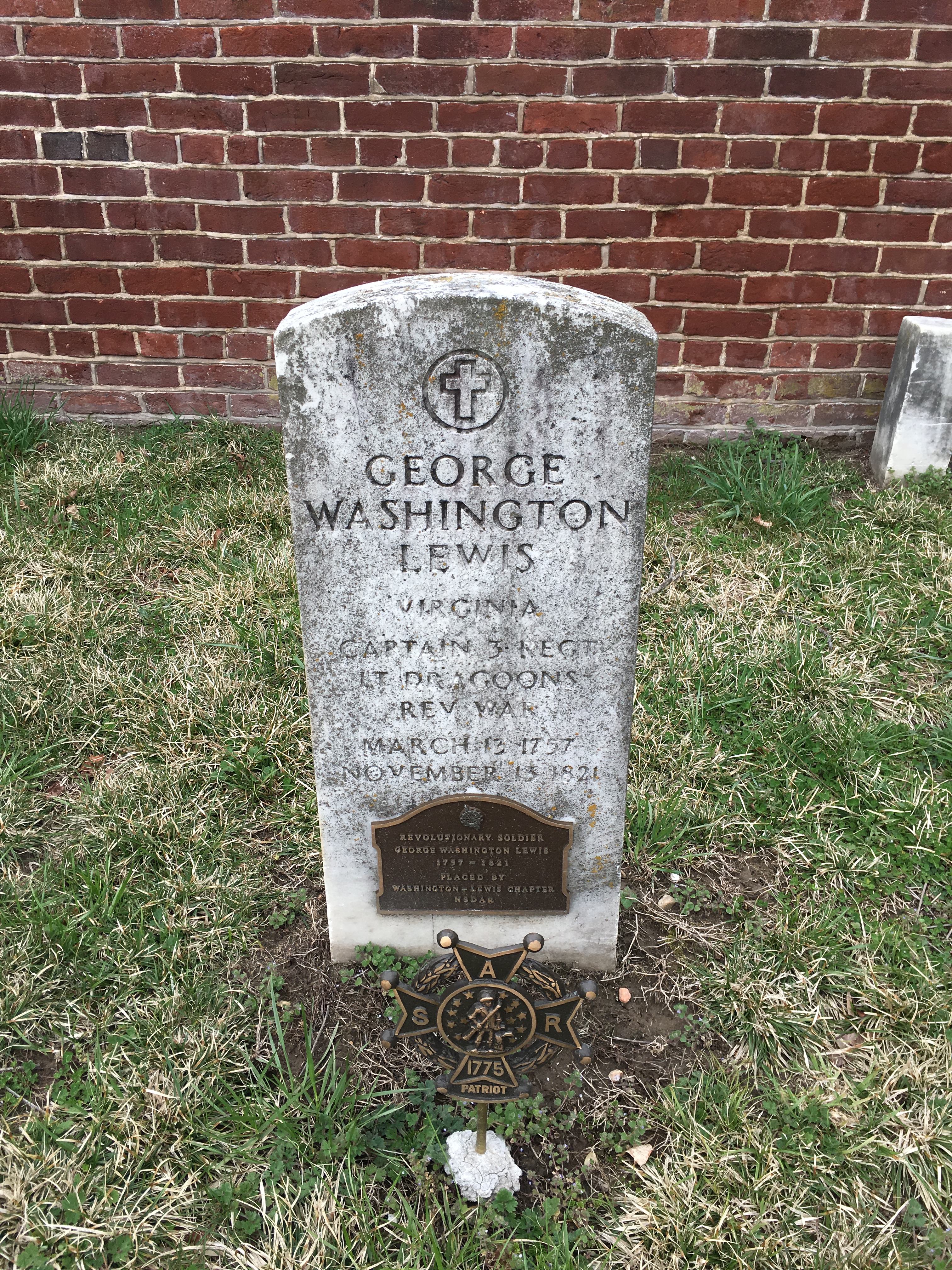
While walking through the Willis cemetery, located at the top of Marye’s Heights in Fredericksburg, Virginia, I encountered the grave of an American patriot from the Revolutionary War, George Washington Lewis.  Lewis, as it turns out was George Washington’s nephew and played a role in the Trenton-Princeton campaign in 1776 and 1777.

18AD352B-DF01-44F8-8550-D72A8914935D
A relatively modern stone marks the location of George Lewis’ grave in the Willis cemetery on Marye’s Heights. (Author photo)

Continue reading “Hugh Mercer’s Last Companion”

March 17: Evacuation Day

Boston is typically thought of as a quintessential place to celebrate St. Patrick’s Day.  Interestingly though, the celebration in Suffolk County (which encompasses Boston) is officially referred to as Evacuation Day, and the parade that meanders through South Boston is the St. Patrick’s Day/Evacuation Day Parade.  Evacuation Day celebrates the evacuation of the British army from Boston that occurred on March 17, 1776.

An Inclusive St. Patrick's Day Parade
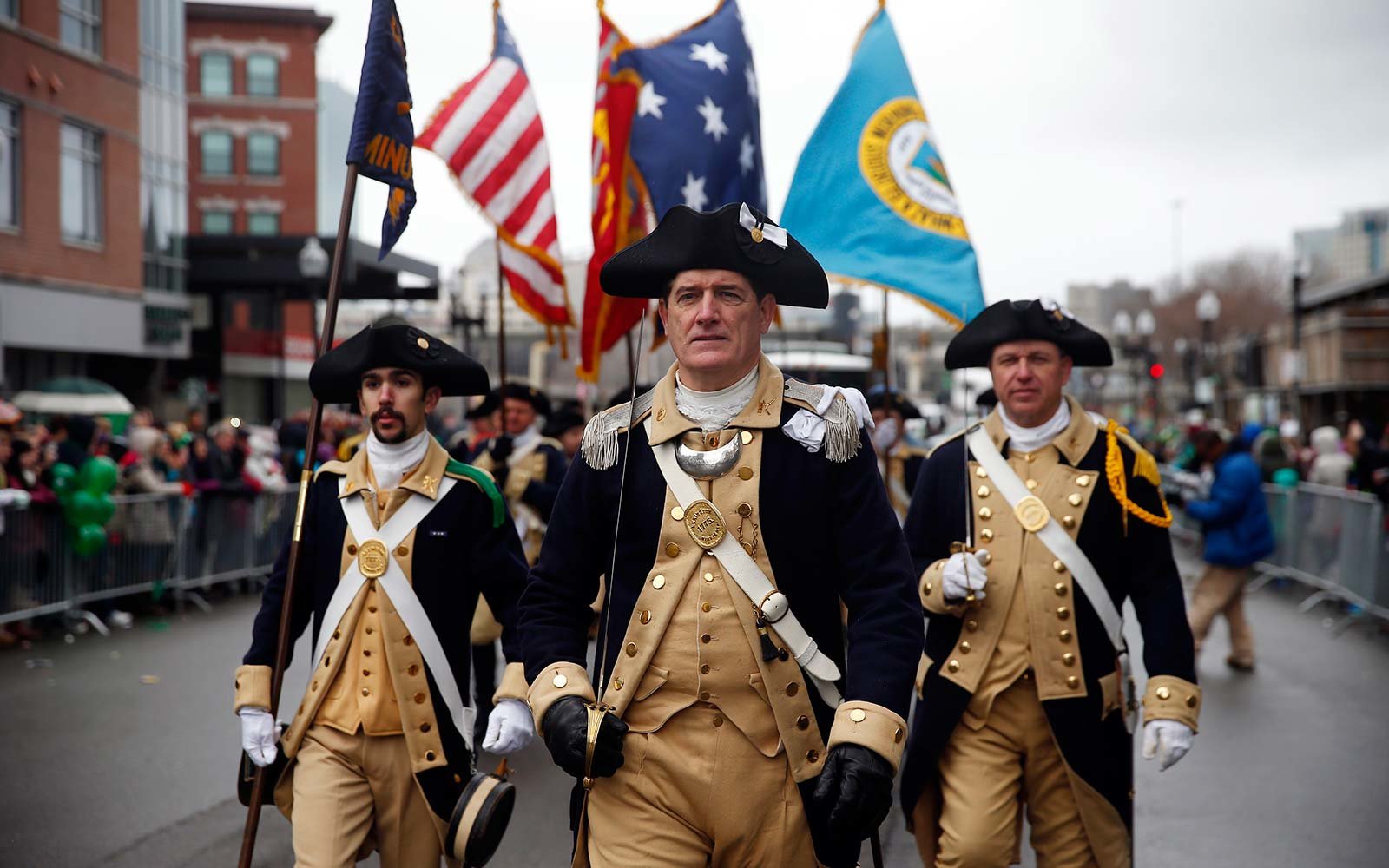
Revolutionary War reenactors march in the Boston St. Patrick’s Day/Evacuation Day Parade. (Boston Globe photo)

In early March of 1776, General George Washington and his Continental Army had been laying siege to the British occupied city of Boston for almost a year, ever since the first blood of the war had been shed on April 19, 1775 at Lexington and Concord. (read more about this in the new book: “A Single Blow”) The British had been holed up in the city for months as a stalemate ensued. Continue reading “March 17: Evacuation Day”

New Year’s Eve, 1776: “Your country is at stake”

6F487938-6D2D-4B12-88BE-49816A8C4044

On New Year’s Day 1777, Robert Morris wrote to George Washington and said: “The year 1776 is over, I am heartily glad of it and hope you nor America will ever be plagued with such another.”  While many of us have similar thoughts every New Year’s about the previous year, the year 1776 was exceptionally bad for the patriot cause, despite the Declaration of Independence being signed that summer.  After losing New York and a string of battles, Washington had shocked the world at Trenton on the day after Christmas.  This glimmer of hope was almost crushed by the fact that most of his army’s enlistments expired on January 1st.

51GqdvdQhGL._SX332_BO1,204,203,200_

Here is an exclusive excerpt about this pivotal moment from the forthcoming book Victory or Death by Mark Maloy, one of the inaugural books of the Emerging Revolutionary War Series:

“Washington’s men had sacrificed much in the past few weeks and suffered greatly. Many believed they had done their duty, and rightly so. But at this moment, they were needed more than ever before. All day on December 31, 1776, Washington’s generals appealed to the soldiers to reenlist. Washington authorized an exorbitant $10 bounty
to those men who agreed to remain, this being funded by financier Robert Morris in Philadelphia. Some of his generals, such as Gen. Thomas Mifflin, a politician and public speaker from Philadelphia, were successful in retaining some of the men, others were not as successful. However, the most affecting scene was when Washington himself personally appealed to the patriotism of the men who had campaigned by his side. Washington paraded Gen. John Sullivan’s and Gen. Nathanael Greene’s divisions just outside Trenton. He entreated the men to stay on just a few weeks more. He asked those who wished to reenlist to move forward, but at that point no one moved. Sergeant Nathaniel Root of the 20th Continental Regiment (Connecticut) remembered that the men were “worn down with fatigue and privation” and had their “hearts fixed on home.” Washington, pleading with his brave soldiers wheeled his horse in front of the men and declared to them, “My brave fellows, you have done all I asked you to do, and more than could be reasonably expected; but your country is at stake, your wives, your houses and all that you hold dear. You have worn yourselves out with fatigues and hardships, but we know not how to spare you. If you will consent to stay only one month longer, you will render that service to the cause of liberty and to your country which you probably never can do under any other circumstances. The present is emphatically the crisis which is to decide our destiny.” After considering their commander’s words, more than two hundred of these men stepped forward to stay on and fight, and some of these men would be killed in the coming battles. The combination of patriotic pleas and hard currency helped persuade many more to
stay. Washington retained a force of about 3,000 men from his army. These veterans would prove invaluable in the coming days.”

The Maryland 400

On August 27, 1776, in Brooklyn, New York, a small contingent of Maryland soldiers showed the world what valor and patriotism looked like.  During one of the largest and bloodiest battles of the Revolutionary War, the actions of these brave soldiers would earn them the venerated name of the Maryland 400.

The Battle of Long Island
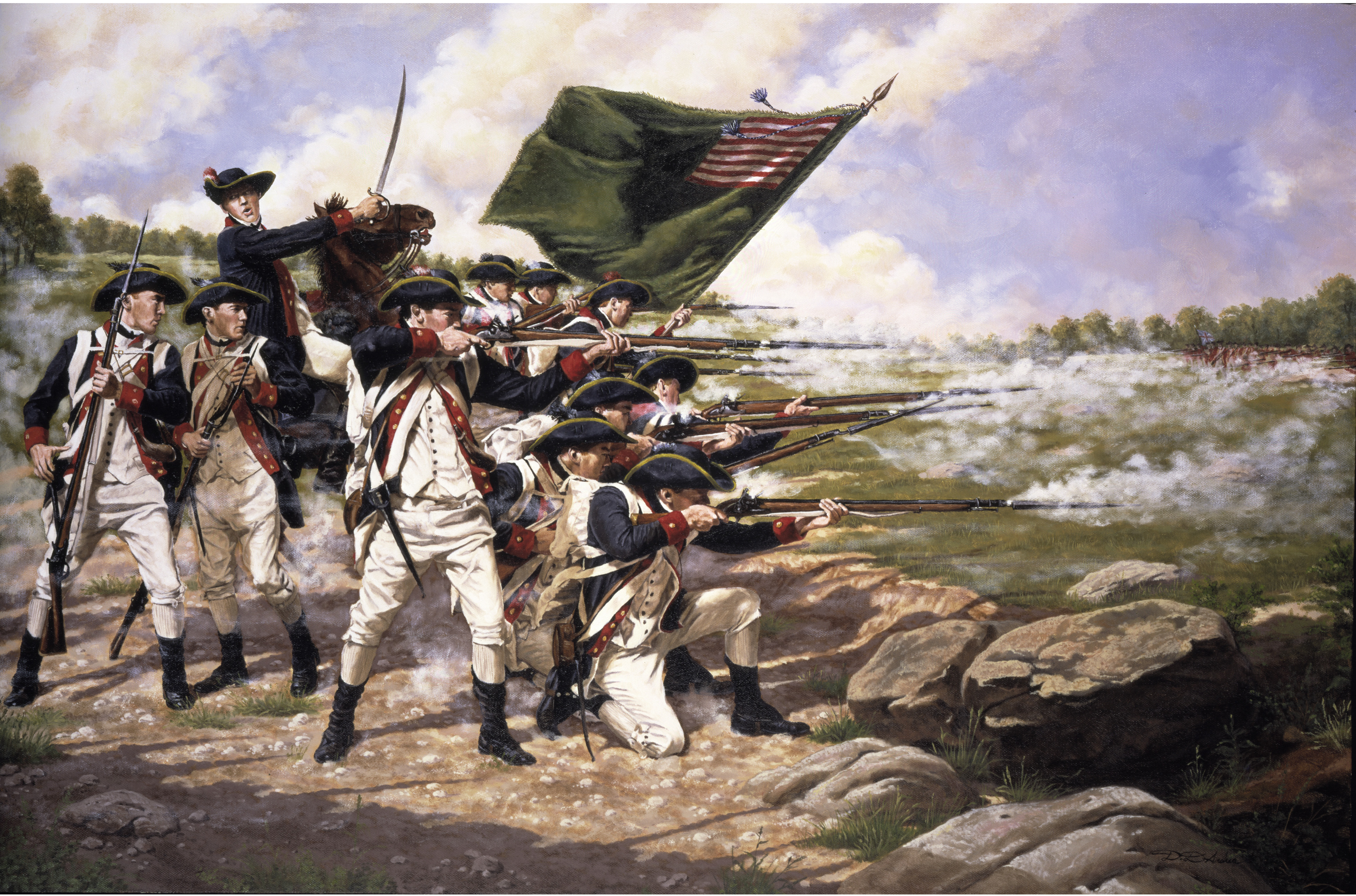
At Long Island, the 1st Delaware Regiment (pictured here) fought alongside the Marylanders on the American right flank. (Wikimedia)

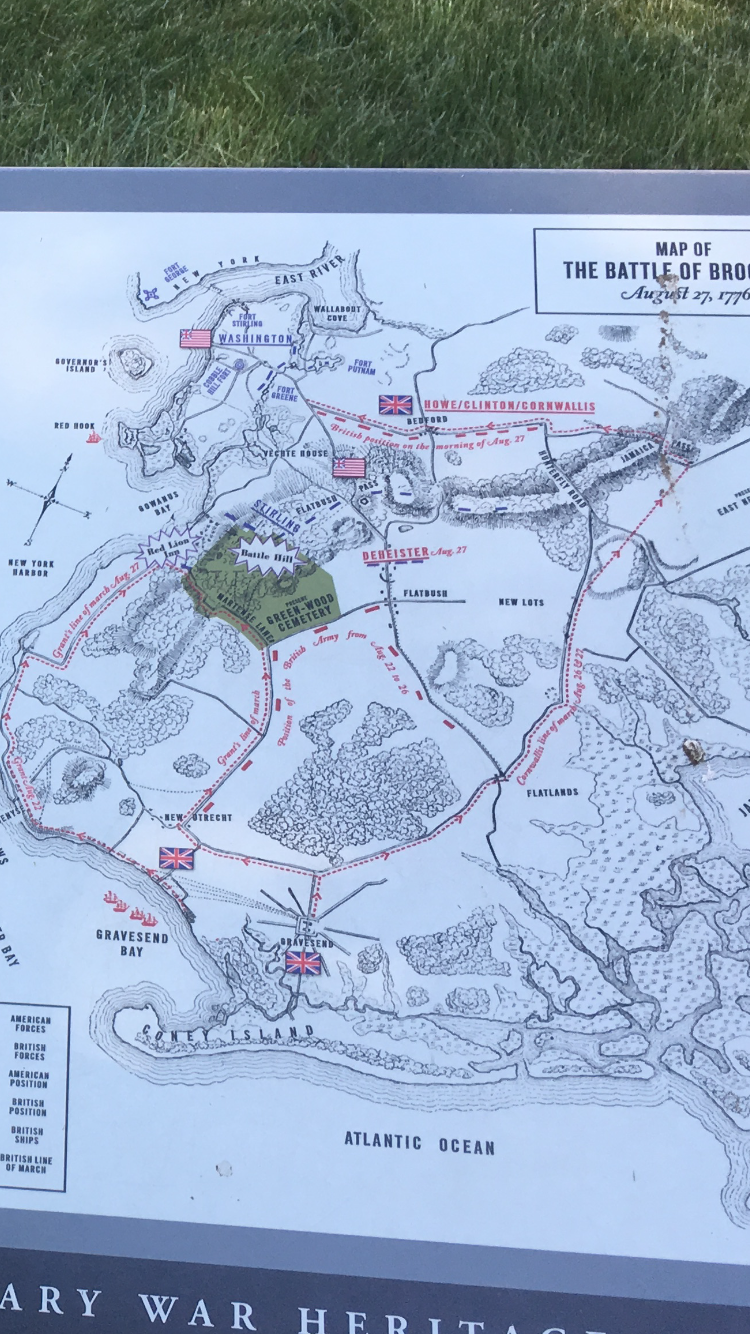
At the Battle of Long Island, the American Army was strung out in a long line across modern day Brooklyn facing south, with Washington and his headquarters located at Brooklyn Heights.  However, Washington and the Americans had failed to guard the extreme left flank of the American line.  As a result, British General William Howe divided his army in two, attacked the American main line head on to hold them in position, while British Generals Charles Cornwallis and Henry Clinton marched around the American flank and attacked from the east.

IMG_3869
Map of the Battle of Long Island. (Author’s photo)

Continue reading “The Maryland 400”

America’s Dunkirk

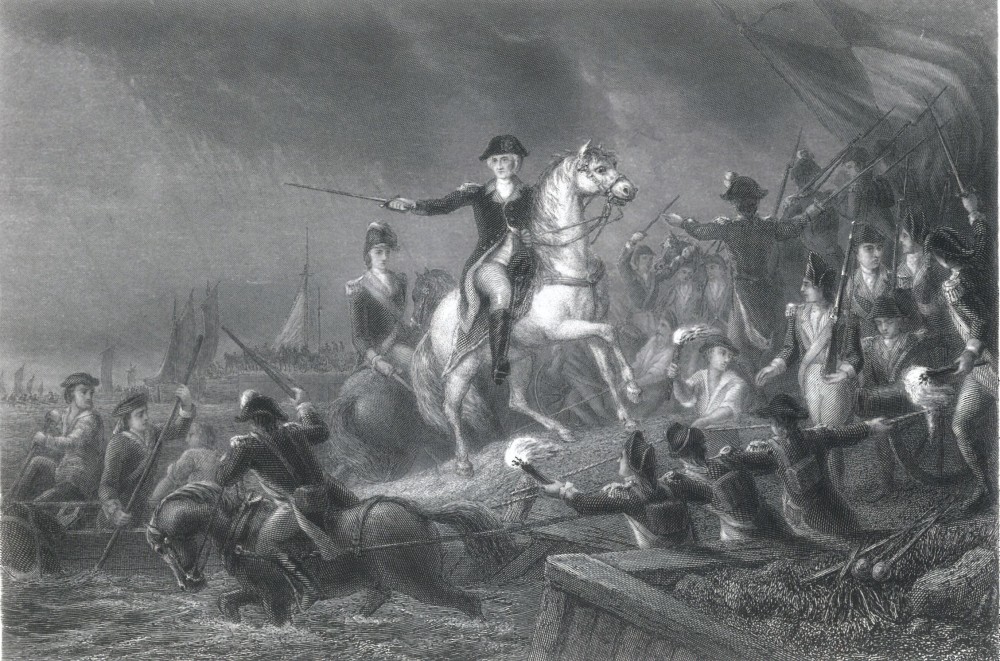
In 1940, during World War II, the British and French armies were completely surrounded by the Nazis at Dunkirk.  The Allies made a successful evacuation, lived on to fight another day, and gained a newfound resolve to resist the Nazi war machine.  The uncertainty and suspense of the evacuation at Dunkirk has recently been brought to life on the big screen with Christopher Nolan’s movie, “Dunkirk.”  As people pack the theaters this summer to see the film, it’s good to remember that America had its own desperate, nation-saving evacuation during the Revolutionary War.

E681566E-A283-4BF3-AA70-952D03CE1616-2358-0000059BEBECD74D
In one of the most daring maneuvers of the Revolutionary War, Washington led his men on a daring night time retreat across the East River. (Library of Congress)

In the summer of 1776, Great Britain dispatched the largest expeditionary force it had had ever sent anywhere in the world up to that point in history.  The British soldiers and sailors made their way into New York harbor to subdue the American rebels. Continue reading “America’s Dunkirk”