

Emerging Revolutionary War welcomes back guest historian Gabe Neville.
In his first book, Anatomy of a Massacre: The Destruction of Gnadenhutten, 1782, Eric Sterner has taken on a difficult subject. Racial violence is something many writers would shy away from while others might delight in the chance to condemn the perpetrators. Mr. Sterner, laudably, does neither. Instead, he seeks to understand what happened.
It is worth noting that the first known massacre of Indians by white men in what is now the United States occurred long before the events in the book. It happened near Jamestown, Virginia in 1610 when Virginia’s governor, Thomas West, 3rd Baron de la Warr, ordered an attack on the Paspahegh Band of Powhatans. Seventy men attacked the village, killing between 65 and 75 Paspaheghs and kidnapping the village leader’s wife and children. Rowing away, the colonists decided to kill the children, “w[hi]ch was effected by Throweinge them overboard and shoteinge owtt their Braynes in the water.” Three centuries of violence ensued.[1]
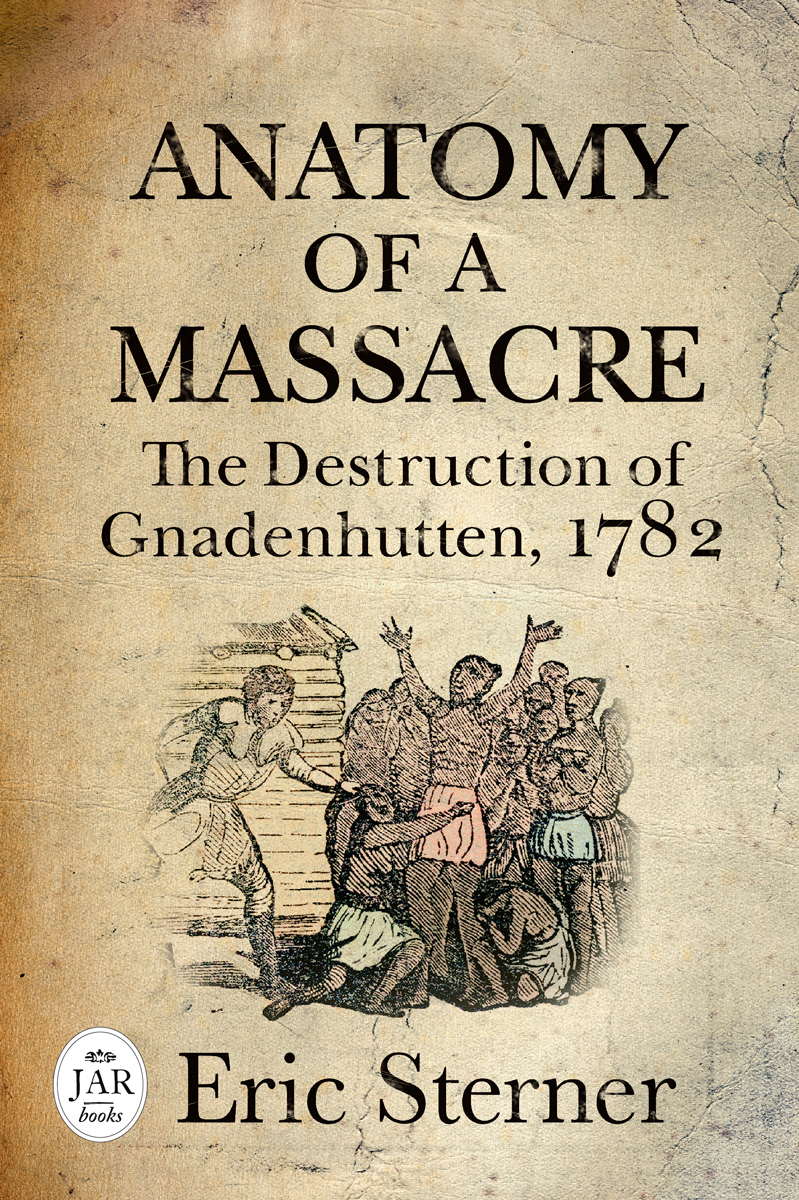
Lord de la Warr’s name appears frequently in Mr. Sterner’s story. His name was given to the Delaware River, which in turn lent its name to the Lenape people who have long been known to English speakers as the Delaware Tribe. Mr. Sterner has provided the definitive account of the worst atrocity of the Revolutionary War. In 1782 more than eighty white settlers clubbed, killed, and scalped ninety-six peaceful, Christian Indians as they prayed and sang hymns. The attack on the Moravian mission town of Gnadenhutten (Ohio) was intended as both a punitive and preemptive strike, conducted by settlers whose families and farms had been targeted by other Indians acting as proxies of the British. It is a horrific story that has defied understanding until now.
Histories of conflict between Native and European Americans have often served us poorly, reducing one or both sides to caricatures. Earlier histories, written by white men, put a finger on the scale of historical interpretation such that Indian atrocities were called “massacres” while white atrocities were called “battles” or “raids.” In the last half of the 20th century, the finger moved to the other side of the scale. Territorial expansion, the introduction of Old World diseases, missionary activity, the presumption of Manifest Destiny, and acts of violence large and small were braided together into a narrative of premeditated genocide.
These approaches reveal the eras and ideologies of their writers. More problematic is both schools tendency to gloss over of the complexity of frontier culture. The Gnadenhutten Massacre is not a cowboys-and-Indians story of “white” and “red” men exchanging bullets and arrows. It is far more complicated than that, with many of its actors desiring little more than their own survival. Though never stated, Mr. Sterner’s approach seems inspired by the axiom: “Don’t judge a man until you have walked a mile in his shoes.” The original expression, appropriately enough, referred to walking “a mile in his moccasins.”
The people in Mr. Sterner’s story can certainly be categorized as “whites” and “Indians,” and for narrative purposes two of the book’s chapters align with these groupings. Still, though racism is an important element of the story, there is plenty to suggest that skin color was not the only matter at issue. The two most prominent white characters –John Heckewelder and David Zeisberger—were Moravian missionaries who lived for decades among the Indians and were wholly dedicated to their welfare. Other whites, British agents, were Indian allies. The killers at Gnadenhutten were white, but acted independently and in defiance of government authority. On the Native American side, the Delaware, Shawnee, Wyandot, and Iroquois tribes were distinct political entities with different alliances, histories, and leaders. Even within these tribes, individual bands (what the author calls “phratries”) disagreed with each other, sometimes sharply, on military and political questions. Some were allied with the British and some with the Americans. The victims at Gnadenhutten were—though Indians—also pious, hymn-singing Christians. The white perpetrators behaved in a decidedly un-Christian manner despite their heritage. History, it turns out, was just as full of contradictions as the present is.
European-American settlers could indeed be brutal, as the events at Gnadenhutten show. Indians could also be ruthless. The first known massacre perpetrated by North American Indians was committed long before Europeans arrived on the continent. The tactic later employed by American armies of destroying villages and burning crops was first used by Indians against the colonists around Jamestown in 1622. Further complexity is found in the fact that even the line between “whites” and “Indians” was sometimes blurred. The Indian victims of the Gnadenhutten Massacre were Christians who dressed and lived much as Europeans did. Conversely, Indian armies—notably at the 1774 Battle of Point Pleasant—sometimes had white warriors among them. These were typically men who had been kidnapped as children and adopted into Indian society.
Mr. Sterner takes a dispassionate, investigatory approach to his work. It is refreshingly free of grand economic or social theories. He seeks to comprehend the events as those involved comprehended them and shows little interest in passing judgment. Instead, he seeks to “walk” a mile in their shoes and moccasins. In doing so, he respectfully refers to Natives by the Indian names, uncynically takes the faith of the Moravians at face value, and justly illustrates the terrors experienced by settlers on the frontier. Each of these groups is examined in its own chapter. Then, in his fourth and final chapter, Mr. Sterner tells us what happened at Gnadenhutten. By then the reader is left struggling to reconcile his or her outrage with the realization that what happened was likely inevitable.
The chance to experience this tension between the world that was and the world that ought to have been is a gift to Mr. Sterner’s readers. Conceiving of a world as it ought to have been is easy. Understanding it as it actually was is much harder. Period accounts indicate that even the perpetrators of the massacre wrestled with this tension in real time. One of them, after executing a dozen Moravian Indians, “sat down and cried because he found in it no satisfaction for his murdered wife and children.” Another whose family had been killed by Indians sat down by the river bank and burst into tears, crying, “You know I couldn’t help it!”[2]
Anatomy of a Massacre could have had an epilogue. Shortly after the events at Gnadenhutten, Col. William Crawford was captured and cruelly tortured to death by Delaware tribesmen as payback for the massacre. Crawford had played no part in the earlier atrocity, but men under his command had. Mr. Sterner has written about Crawford’s death for Emerging Revolutionary War and no doubt made a considered decision to let the Gnadenhutten story stand on its own.
The last “massacre” of American Indians occurred in 1911 in Nevada, when state police killed eight members of Mike Daggett’s Band of Shoshones, whom they were pursuing for horse theft and murder. This “Battle of Kelly Creek” occurred three hundred and one years after the massacre of the Paspahegh Band of Powhatans near Jamestown and closed the book on three centuries of racial violence between Native and European Americans. It is a cringe-inducing history, to be sure.
Mr. Sterner’s book suggests two lessons. First is that we should not blame atrocities so much on the perpetrators’ culture and demographics but rather on the killers themselves and on human nature. Culture matters, but people in every culture will do terrible things in terrible circumstances. Second is that we cannot substitute a cartoonish caricature of history for the nuanced reality of what really happened. The consequence of dumbed-down history is not a partial understanding but rather a false understanding. The Moravian Indians and missionaries lived in villages that were both physically and figuratively between two cultures. Though neutral, family and social ties to the war’s combatants remained and neither side could accept or understand them as a unique group. That led the Wyandots and British-allied Delaware to forcibly relocate them, and it motivated the settlers led by David Williamson to kill them.
An analogous refusal to understand the past for what it really was does a different kind of “violence” to history. Mr. Sterner’s book provides hope that historians can in fact focus on real history, avoiding the polemics and theorizing that characterizes so much academic writing. Like Glenn Williams, author of Dunmore’s War, Mr. Sterner seeks to trace the course of events and to understand the subjects of his work as they understood themselves. It’s good history.
Sources:
[1] George Percy, “’A Trewe Relaycon:’ Virginia from 1609 to 1612,” Tyler’s Quarterly, 3 (1921-1922): 259-282, 272. “Weroance” was a title for a “sub-chief” or a village leader.
[2] Eric Sterner, Anatomy of a Massacre: The Destruction of Gnadenhutten, 1782 (Yardley, Pa: Westholme, 2020), 148.

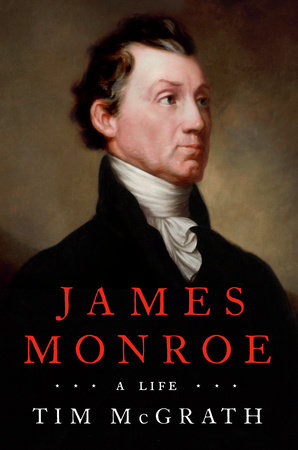 Tim McGrath has written two award-winning winning books about the early history of the United States Navy: Give Me a Fast Ship and John Barry. For his third book, he switched gears to tackle an oft-overlooked soldier, lawyer, politician, and president: James Monroe. In what will likely be the definitive Monroe biography, McGrath tackles the entirety of our fifth president’s life. Born in 1758, Monroe joined the American army in the Revolution’s early days until he was sidelined with a serious wound at
 Most people with an interest in the American Revolutionary War have heard of the Boston Massacre, in which Captain Thomas Preston of the 29th Regiment of Foot, commanding a contingent of British soldiers, fired into a crowd, or a mob depending on one’s point of view, harassing/threatening a guard outside the Customs House. Both sides in the growing dispute between Britain and its colonies rapidly turned the event, which occurred 250 years ago, to their political ends. Several books have been written about the massacre and tried to sort fact from propaganda, at least in the context of revolutionary Boston. In their latest book, John Adams Under Fire: The Founding Father’s Fight for Justice in the Boston Massacre Murder Trial, Dan Abrams and David Fisher tackle the trials of Captain Preston and his soldiers that followed.


 Emerging Revolutionary War Era