

Emerging Revolutionary War welcomes guest historian Mike Busovicki
If the majority of American Colonists were from the British Isles, Africa, and Germanic States, why was Spanish currency so prevalent and how did it get here?
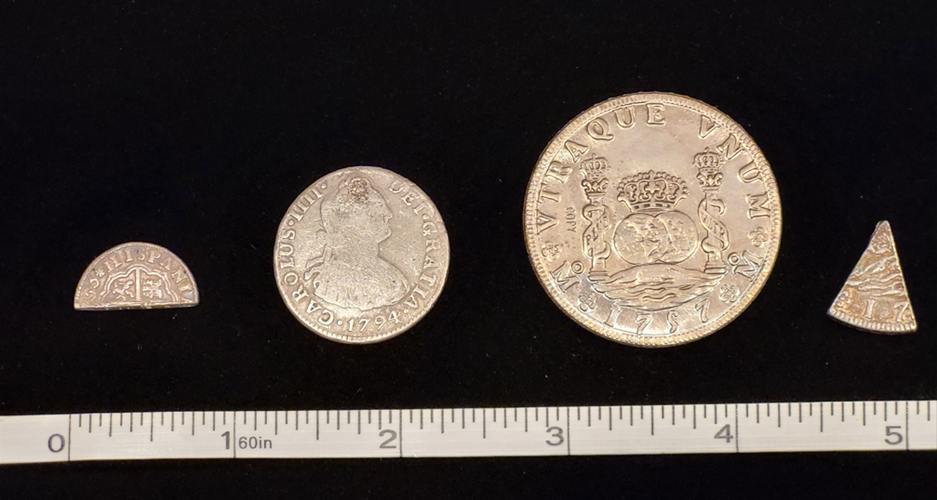
L-R: Silver half of a 1-reales coin, silver 2 reales, copy of an 8-reales (“piece of eight”) and copy of 1/8 (piece, or “bit”) of the 8-reales. Like cutting a pizza in half and cutting the halves again twice, it was easier to create a system based on “eighths” rather than a decimal one. (Photo by Mike Busovicki)
By the late 1400s, The Spanish had joined the kingdoms of Aragon and Castile through the marriage of Ferdinand and Isabela, wrested control of the Iberian Peninsula from the Islamic Moors and utilized the Catholic Church to enforce royal authority and justify brutal domestic and foreign policies.But these endeavors were expensive. Though successful in removing political opponents, it drove out or suppressed long standing medical, financial, and trade centers, especially in population hubs like Granada, Seville, and Toledo. Heavily in debt, the Spanish crown had to generate income from outside of Spain. Consolidating wealth and power into the hands of a few was expedient, but it excluded large segments of the population and resulted in domestic economic stagnation.
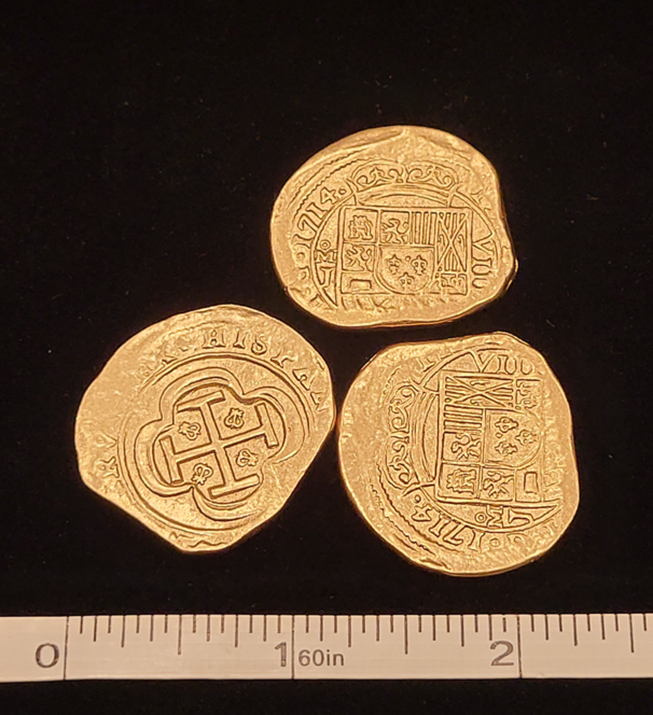
Copies of 4-Escudo coins. Escudo, meaning shield, referred to the coat of arms that validated coins. New world mines accounted for over 80% of the world’s silver and 70% of the world’s gold – it also funded conquest by the Ming, Qing, Mugul, Ottoman, and Safavid empires. (Photo by Mike Busovicki)
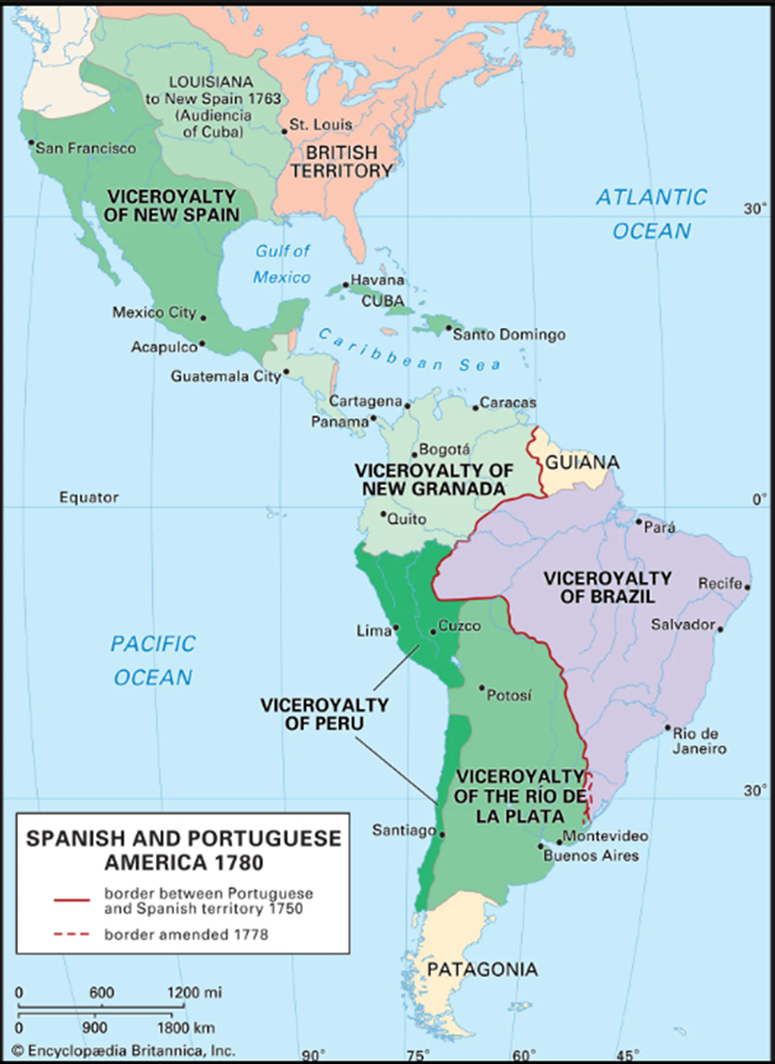
While French intervention, British politics, and German mercenaries constitute most discussions regarding European power during the Revolution, centuries of Spanish control of vast areas cannot be overstated. By courtesy of Encyclopædia Britannica, Inc., copyright 2016; used with permission.
Continue reading “Coin of the Realm”
