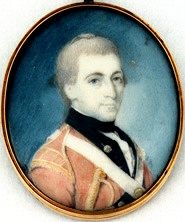
Six Signing Signers

Part One of Six

On August 2, 1776, in Philadelphia, Pennsylvania, the majority of the 56 men who would forever be known as the “Signers of the Declaration of Independence” placed quill to ink and affixed their signature.

On September 17, 1787, the men who persevered, haggled, and agreed on the United States Constitution, dipped a quill into ink and placed their signatures on that famous document.

If one looks closely and reads the names of the signers, six gentlemen’s names would appear on both documents. If one hazarded a quick guess, Thomas Jefferson, John Hancock, John or Samuel Adams, George Washington, and Benjamin Franklin would most likely be the first names to spill off the tongue.

Only one of those names would be correct; Benjamin Franklin. This post, the first in the series, will shed light on whose these men were, who had the great fortune–or luck?–to sign both famous political documents. The first of the “Six Signing Signers” is…..
29aa0f03f572a6bf876557dca1c4db16

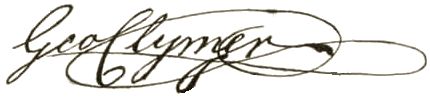
George Clymer. Continue reading “Six Signing Signers”

“Potentially Momentous”

RevWarWednesdays-header


Last week, Michael Harris wrote about the Battle of Brandywine and in his conclusion mentioned his excellent history on this important battle in the American Revolution.

While reading his work, I came across the account of Captain Patrick Ferguson.

Captain (Major) Patrick Ferguson

Harris describes it as one of the most “potentially momentous” non-incidents of the entire American Revolution.

I agree with him.

After reading the following, would you? Continue reading ““Potentially Momentous””

ERW Weekender: The Brandywine Battlefield: A History & Visiting the Field

RevWarWednesdays-header


Emerging Revolutionary War and Revolutionary War Wednesday is pleased to welcome guest historian and author Michael C. Harris this week. 

The Battle of Brandywine was fought on September 11, 1777.  Visiting the battlefield to commemorate what took place there began just three years later.  On his way to Virginia in 1780, the Marquis de Lafayette made a point of stopping for day at the battlefield where he was wounded and giving a tour to the officers that were travelling with him.  An older Lafayette returned in 1825 during his celebrated 15-month tour of America.

However, it would not be until after the American Civil War during the golden age of preservation that any kind of markers or monuments began to appear around the ten-square-mile landscape.  During the 1877 centennial, artillery pieces were placed to mark the fighting near Sandy Hollow.  Eighteen years later, a monument was dedicated along Birmingham Road supposedly marking the spot where Lafayette was wounded.  Had Lafayette been alive, he would have been able to put out the error in location.

Continue reading “ERW Weekender: The Brandywine Battlefield: A History & Visiting the Field”