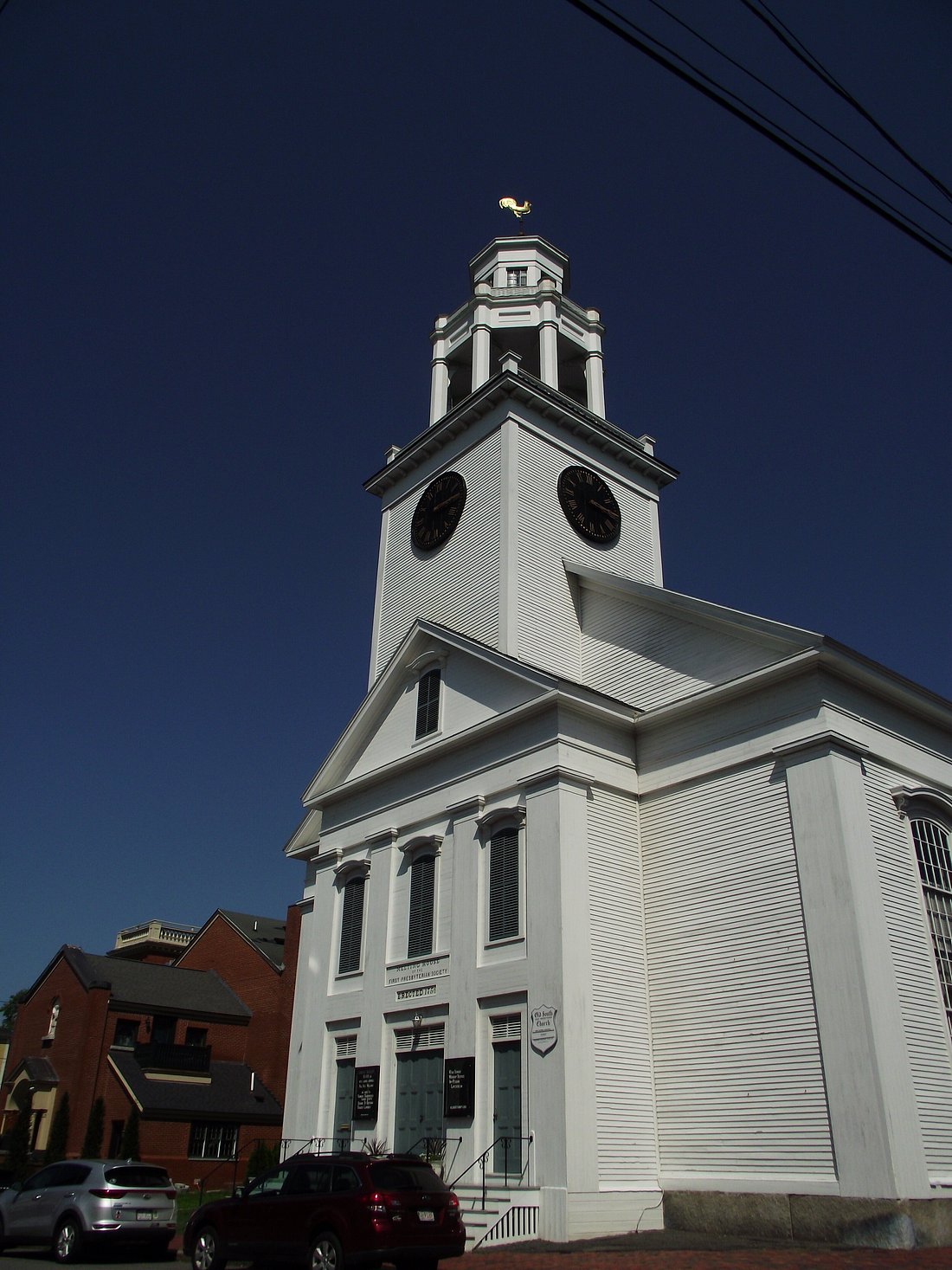
Modern view of the “Old South Presbyterian Church, Newburyport, MA
As Benedict Arnold assembled his small army of 1,100 men in Newburyport for his bold cooridinated strike on Canada (with General Richard Montgomery attacking via Montreal), there was one last stop before the men boarded the boats in the Merrimack River. From here they would hug the coast on their way to Maine, then overland to Quebec. It was a bold strategy for the inexperienced army and army commander. Though the was just started in April, and peace was still spoken by many political leaders, Washington approved this first American offensive. Strike the British forces in the Canadian colonies, with the hope of encouraging their northern colonial neighbors to join their cause.
Arnold felt it was appropriate that his mission have the blessing of God, so hundreds of men squeezed into the First Presbyterian Church (now called Old South Presbyterian Church). One of the largest churches in the city, it was the spiritual home of the Great Awakening in New England. Here, evangelist preacher George Whitefield, preached from when the church was built in 1756 until his death in 1770. Whitefield was buried in the crypt of the church. His fame was well known to Arnold and others, Whitefield is considered one of the founders Methodism and a great public speaker.
What men could not fit into the church pressed up against the doors and windows. Today’s service, held on Wednesday, September 20, was a dedication service. To bless the men and their task at hand. Reverand Samuel Spring, a popular orator in his own right, and he was now to serve as chaplain of Arnold’s small army on its way to Canada.
The scene was recounted in J. T. Headley’s, 1864 “The Chaplains and Clergy of the Revolution“:
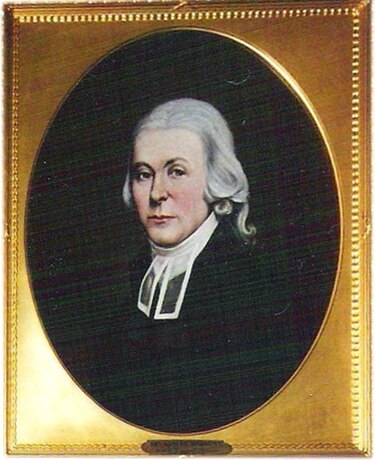
Reverand Samuel Spring
“There sat the fearless Arnold, the bold rifleman, Morgan, and a host of other brave men, who, notwithstanding their dauntless courage, felt that the perils of the untrodden, mysterious wilderness, they were about to penetrate, might be too great for human energy and endurance, and the hour come, that their only hope would rest in the God whose spirit the chaplain [Samuel Spring] invoked as their guide and stay. The citizens, who crowded the gallery, never forgot that sermon. It became the talk of the place, and was the cause of his eventually settling over them as their pastor.”
After the sermon, a surreal experience took place. Soon, someone on Arnold’s staff wanted to go to the crypt and see the tomb of Whitefield. Headley quoted Rev. Spring:
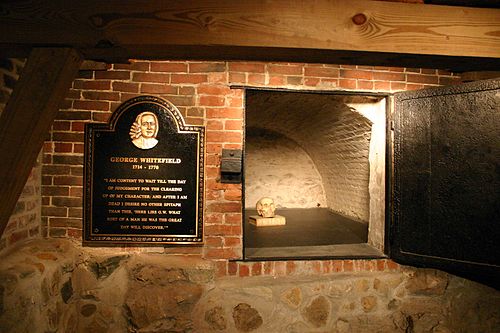
“I preached over the grave of Whitefield. After the service the general officers gathered around me. Some one requested a visit to Whitefield’s tomb. The sexton was hunted up, the key procured, and we descended to his coffin. It had lain in the tomb six years, but was in good preservation. The officers induced the sexton to take off the lid of the coffin. The body had nearly all returned to dust. Some portions of his grave-clothes remained. His collar and wristbands, in the best preservation, were taken and carefully cut in little pieces, and divided among them.”
A modern view of the crypt of Rev. George Whitefield
Headley continued; “The chaplain, with the haughty Arnold, the chivalrous Morgan, and group of officers, gathered in the dark vault around the tomb of Whitefield, formed a scene worthy of a painter. The clank of steel had a strange sound around the sainted sleeper, while the hallowed atmosphere filled all hearts with solemn awe and reverence.”
Now, with their good luck token from the grave of Whitefield, Arnold and his staff made their way to the shore where his men were boarding their boats in the Merrimack River. Arnold and his men saw their mission blessed by God, and wanted to tie their cause with that of the Great Awakening. They believed their cause was right and just. The process of visiting a tomb and taking pieces of a dead man’s clothing may seem a tad bit of “macbre” to us today, to Arnold it was a way to bless his mission. One that he believed would bring him and his men glory.


 Emerging Revolutionary War Era