

Burning Colonel Crawford

Last year I came across Dr. John Knight’s account of the torture and execution of Colonel William Crawford by members of the Delaware Indian tribe in 1782.  It was a vicious execution, but not unheard of in the wars on the American frontier, where violence and brutality from both sides were common.
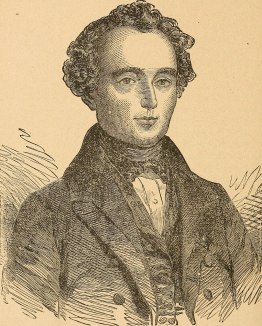
Wiliam Crawford at 40 (Wikimedia Commons)
Crawford at about 40, twenty years before his execution (Wikimedia Commons)

Born in 1722, Crawford was a long-time business partner of George Washington, particularly in the acquisition of land in the Ohio River valley.  A veteran of frontier conflicts, during the Revolution he had served as the Lieutenant Colonel of the 5th Virginia Regiment, commanded the 7th Virginia in the east, and then returned to the Pittsburgh area to raise the 13th Virginia.  Sidelined during the war’s last years, he commanded local Pennsylvania militia and was largely retired by 1782.  For years, settlers in the Ohio Valley had agitated for punitive raid against the Ohio Tribes along the Sandusky River in today’s northwestern Ohio.  Their goal was to retaliate for Indian raids across the Ohio and spoil future raids.  By the spring of 1782, they could not be restrained.  After the militia massacred defenseless Christian Indians at Gnadenhutten in March, Brigadier General William Irvine, the Continental Commander at Pittsburgh, arranged for Colonel Crawford to lead the inevitable militia expedition, likely in hopes that Crawford could prevent a repeat.  (Crawford had taken no part in the Gnadenhutten Massacre).

Continue reading “Burning Colonel Crawford”

Chief Cornstalk’s American Revolution (part two)

Fort Randolph (Wikimedia Commons).jpg

Modern Replica of Fort Randolph in Point Pleasant, WV (Wikimedia Commons)

At Fort Randolph, erected on the old Point Pleasant battlefield, Captain Matthew Arbuckle decided to take matters with the Shawnee into his own hands.  He was already suspicious of the Shawnee in general, and Cornstalk in particular.  In 1776, he reported that Cornstalk had traveled to Detroit and was “Treating with the English.”[i]  Of course, this was William Wilson’s attempt to preserve the neutrality of tribes nearer Detroit by inviting them to a pace conference.  Cornstalk had gone on the mission to lend weight to Wilson’s voice with those tribes.  Arbuckle did not know that.  Continue reading “Chief Cornstalk’s American Revolution (part two)”

Chief Cornstalk’s American Revolution (part one)

Chief Cornstalk (Wikimedia Commons).jpg

Chief Cornstalk after an 1870 rendering (Wikimedia Commons)

The American Revolution on the frontier was brutal.  Neutrality was difficult position to maintain, but some Native American tribes attempted it.  In the Ohio River Valley, it was particularly challenging.  But, for a time the Shawnee and Delaware tribes in modern-day Ohio sought to navigate their way between British power in Detroit and the Americans in Pittsburgh.  Chief Hokoleskwa, known as Cornstalk among the whites, was a leader of the pro-peace factions of the Shawnee.  Unfortunately, it got him killed. Continue reading “Chief Cornstalk’s American Revolution (part one)”