Visiting Historic Kenmore: A Preserved Patriot’s Home in Fredericksburg Virginia

Emerging Revolutionary War welcomes back guest historian Kate Bitely.

In the heart of Fredericksburg, Virginia, you will find a well-preserved, Georgian-style home that once belonged to Betty Washington Lewis, the sister of George Washington. Historic Kenmore, as the home is known today, was constructed in the 1770s and originally sat on 861 acres near downtown Fredericksburg. Today, the historic house museum is open for daily tours where guests can explore the gardens, the main living floor of the home, several historic structures on the priority, and a visitor center filled with riveting artifacts and information. 

Nearly 290 years ago, Betty Washington was born at Pope’s Creek in Westmoreland County, Virginia. As a young child, she lived in a few properties owned by the Washington family before relocating to Ferry Farm, located in Stafford County, Virginia, where Betty, George and their siblings grew up. On February 22, 1750, Betty married Fielding Lewis, a widowed distant cousin, and a father of two young children. In 1752, the family purchased 1300 acres in the Fredericksburg area and allocated a portion of the land as the future site for their home Millbrook, which was eventually renamed to Kenmore in the 1800’s. In total, Betty and Fielding welcomed eleven children, but only six survived to adulthood.

Fielding Lewis was a well-known member of his community. He built his wealth initially as a merchant, but was later elected as a member of the House of Burgesses and served as a colonel in the Revolutionary War. During the war, however, Lewis used his finances to personally pay for munitions and supplies for Patriot troops which ultimately drained much of the family’s resources.

The Lewis family were staunch Patriots. In 1775, when the Lewis’s were moving into their home, the spirit of independence was strong throughout the colonies. Given the Washington’s status, heritage and devotion to service, Betty and her family would become one of the biggest supporters for the Patriot cause, willing to risk their home, finances, reputation, and their safety in favor of breaking away from England. The impressive residence served as a visual representation of their wealth, which became significantly more important during the Revolutionary War.

Continue reading “Visiting Historic Kenmore: A Preserved Patriot’s Home in Fredericksburg Virginia”
Find Your Patriot, Part 2

For Part One, click here.

So, you have a relative that fought in the American Revolution and you want to know more… now what? Joining an organization, such as the Daughters of the American Revolution (DAR), is a lengthy and detail-oriented process. It takes patience and perseverance. Before beginning the process, I attended a research seminar hosted by the local chapter to learn about the specific requirements for applying. If you have any experience with records, the one consistent theme is that records do not consistently capture the same information. Some death records do not list birth-dates, birth records do not always list both parents, and worst-case scenario, many records can be lost, stolen or severely damaged.

As I mentioned in part 1, my grandmother provided me with a box of documents detailing the Bitely heritage. The materials she gave me was helpful for pointing my path forward, but it lacked the necessary vital records for completing the application. Luckily, each chapter has a registrar that guides you through finding the right resources and completing the paperwork accurately. The registrar in my chapter was a seasoned member of DAR and walked me step by step through the process. Together, we reviewed the documents from my box, made a family tree and contacted the Michigan vital records department for appropriate birth, death and marriage certificates for each generation between John and me. Thankfully, both New York and Michigan had the records I needed, in good condition and had the required information on them to meet DAR standards. If you hit a snag in the process, there’s an entire community of DAR women who are trained to help you through this. Reach out, we will help!


Here is a sample of the documents passed down to me in the family history box. This helped start the journey for learning more about my heritage.
Continue reading “Find Your Patriot, Part 2”

Finding Your Patriot

Emerging Revolutionary War welcomes back guest historian Kate Bitely

Part 1

How much do you know about your great-great-great-great-great grandparents? Did your family pass on detailed stories of their past? Perhaps you took a DNA test like ‘23andMe,’ or maybe you know little if anything about your roots. Whatever the case may be, now is a great time to start the journey of learning about your familial past, as it might just lead you to an unexpected destination. For me, I grew up knowing my distant relative, John Biteley Sr., a New Yorker who come to the U.S. from Germany in the 1750’s. His American born son, John Biteley Jr., went on to serve as a patriot in the American Revolution. My grandfather, Ralph Bitely, always told us, “the Bitely’s were at Ticonderoga!”  In 2010, my grandfather passed away. A few years after his death, my grandmother gave me a box filled with documents that detail the history of the Bitelys. This box would be the start of my journey back to the 18th century.

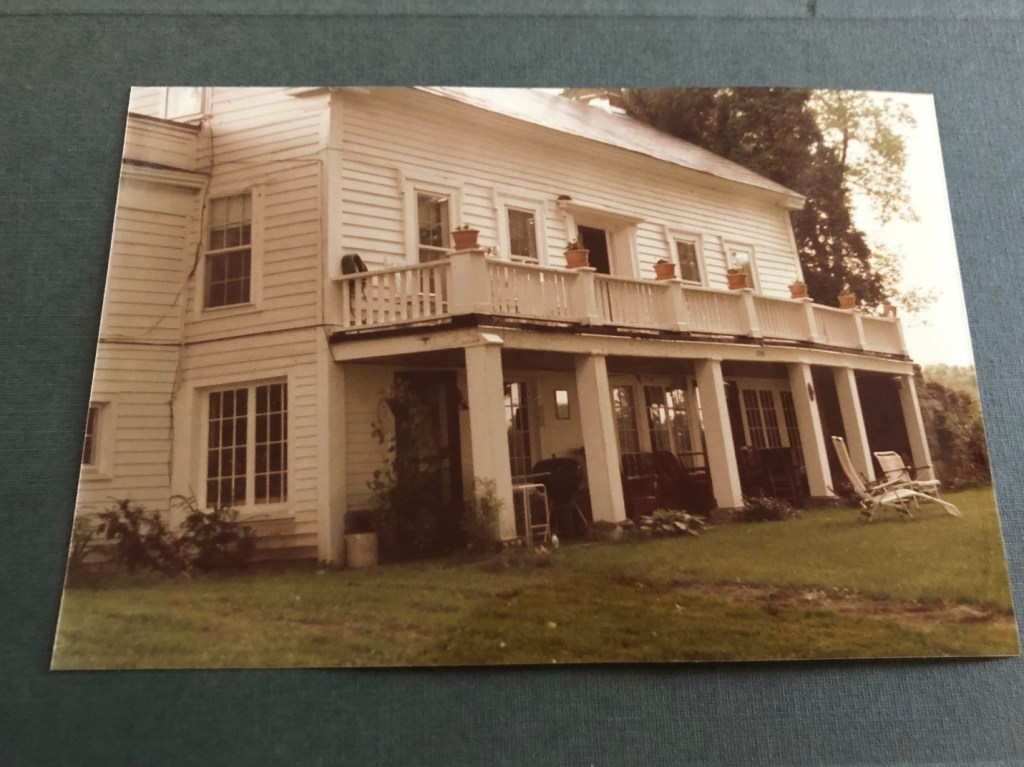
As I dug through the box a few years ago, I recall being filled with excitement as I learned about my family. They were farmers, predominately grape farmers to be exact. (My love for wine is clearly hereditary). As I dug deeper, I found a more modern picture of the “Bitely Homestead,” the home of John Biteley Sr., located in Saratoga County, NY. It was first built before the war around 1770, was burned down by Gen. John Burgoyne in 1777 and was rebuilt in 1779. Nearby remains a family cemetery where many of my relatives remain. While I have not been for a visit yet, I hope to make a trip soon when conditions are safe to do so.

Photo of the “Bitely Homestead” in Moreau, NY rebuilt in 1779 after the British burned down the original structure in 1777 found inside the box from my grandmother.
Continue reading “Finding Your Patriot”

ERW Weekender: In the Footsteps of James Madison

Emerging Revolutionary War welcomes guest historian Kate Bitely 

In the Foot Steps of James Madison.

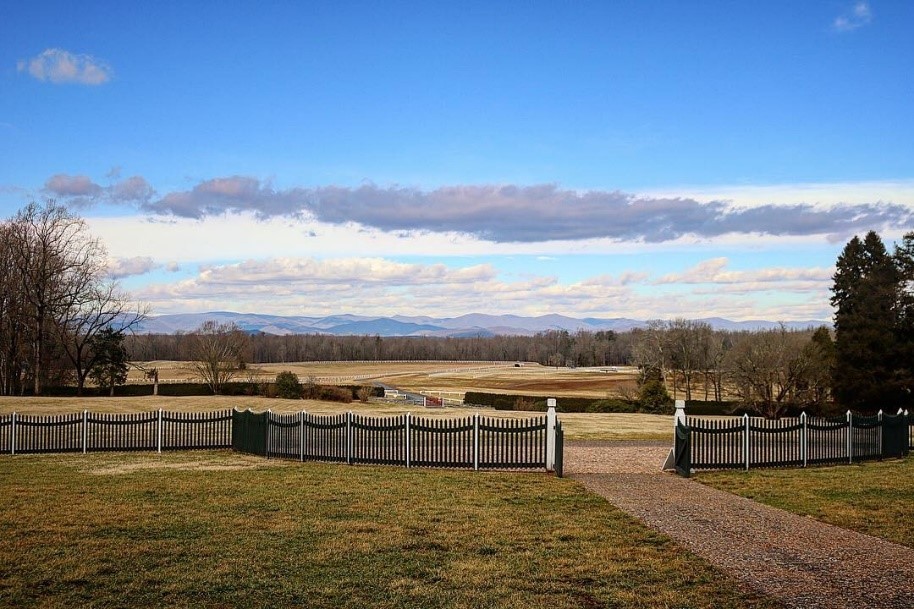
A view of the front yard of Montpelier
A view from the front yard of Montpelier (author collection)

Spring is finally here in Virginia and if you are looking for a place to explore that offers a great outdoor experience, get in the car and head to Montpelier, in Orange Virginia. James Madison’s plantation home offers visitors a glimpse of what life was like in colonial America.   Be sure to start your trip with the feature film in the welcome center that provides highlights of Montpelier’s lengthy history dating back to the mid 1700’s.  The preserved property has something to offer everyone including hikes, gardens, and a breath-taking view of the blue ridge mountains. The grounds are filled with opportunities to learn about our nation’s early history and the impact it still has on our country today. Continue reading “ERW Weekender: In the Footsteps of James Madison”