

Have you ever thrown a rock into a pond? The ripple effect spreads outward for quite a distance along the surface of the water. The American Revolutionary War had the same effect in the late 18th century world as that pebble did to the body of water.
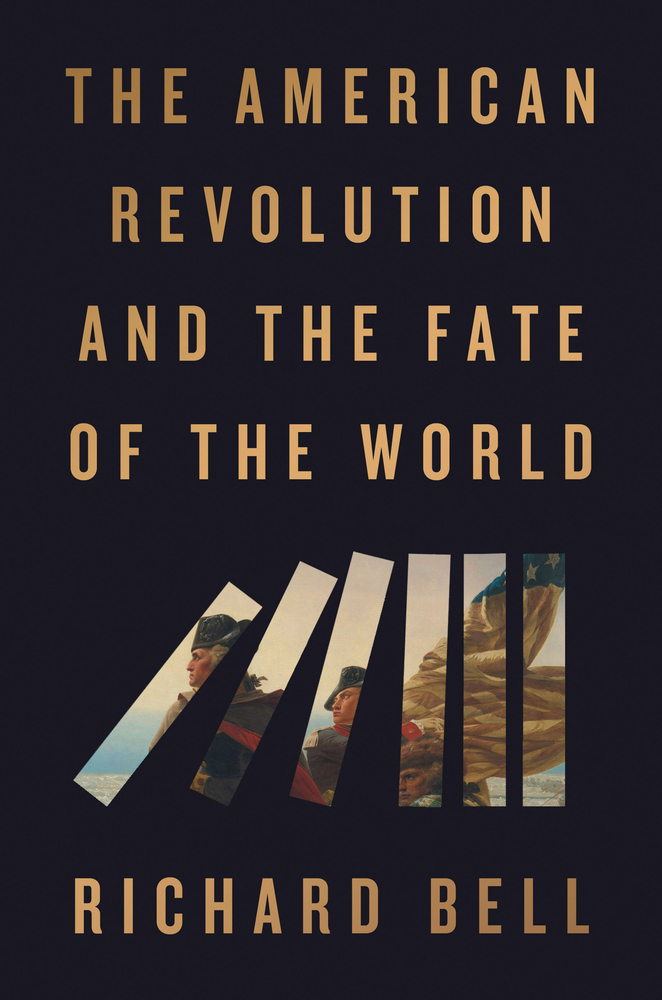
Historian, author, and University of Maryland professor of history, Dr. Richard Bell, focused on those fringes with this publication, bringing them into focus and discussion that was much needed in the historiography. Indeed, this is a new must-have addition to the bookshelf of American Revolutionary Era publications. His book, The American Revolution and the Fate of the World aim to “trace the sinews of the great war from its familiar epicenter outward to all those corners of the Earth” in which the conflict affected (pg. 9). Bell’s unique background, as he describes it, being an “English-born, American trained historian” is optimal to tackling this type of endeavor. As he elaborates, he attempts—successfully this reviewer’s estimation—to peel back the “amnesia…that has its own unique form” respectively on both sides of the Atlantic Ocean when discussing the history of the American Revolution. Between the two main antagonists, Great Britain and the rebelling thirteen North American colonies, “the ways individuals and communities, then as now, are entwined” will be the central theme running like a current through his book (pg. 2).
How does Bell aim to accomplish this approach and subsequent goal? Through seven core arguments, laid out briefly here. The American Revolution “stirred the mass migration and circulation of enormous numbers of people.” Second, the cost of the war was catastrophic, and victory was not certain for the patriots but a “highly contingent result of improbable choices and last-minute improvisations.” Naval power also played “an important key to military success” and “governments, soldiers, and civilians…often acted on the understanding that trade was power. The last two core arguments, patriot “struggle for self-determination stirred imperial authorities to increase oversight and security” on their remaining controlled territories and the American Revolution “was a conflict in which the call for liberty rang around the world as never before” (pg. 10).
Does he succeed? Admirably. By taking the reader through fourteen chapters that seem to be standalone essays but instead bring subjects usually forced to the fringes of histories of the period into focus. From female personas such as Molly Brant, the great leader for indigenous independence to using Peggy Shippen as the focal point for Loyalists and the throes of the great migration that followed the patriot victory in the American Revolution. From other exalted leaders, such as Baron von Steuben and King Louis XVI of France to ordinary citizens and the enslaved, trying to improve and sustain life during the conflict.
His astute insight and impeccable research acumen brings to life William Russell a privateer that might have some of the worst luck of any that sailed the Atlantic Ocean during the war to Bell, uncovering interesting snippets such as the twisted tale of tea. Americans are most familiar with the Boston Tea Party of December 1773, but did you know that by “the early 1800s, taxes levied on the tea trade had become a vital source of US government revenue and, ironically, “became a major contributor of funds to pay the nation’s war debts” (pg. 33).
Did you ever think of the central importance of trade to war? Maintaining colonies and trade routes that kept soldiers, sailors, and citizens fed and government coffers filled? Bell rightly traces the integral connection as “cargo vessels laden with Cuban gold, Barbadian sugar, Irish meat, and Dutch munitions bound together the conflict’s several theaters just as tightly as troops transports and naval fleets…” (pg. 360).
This was a whirlwind synopsis of Bell’s seven core arguments and a sneak peek into the dept of his research and viewpoints. He has filled in the foundation of those fringes of the American Revolutionary War era history. Like those ripples from that proverbial rock, there is still more to discover that have direct ties to the defining era of the American Revolution. One example that he discusses in need of further study is “in the 250 years since 1776, rebels, separatists, and state makers on every settled continent have crafted more than a hundred declarations of independence in imitation of the American original” (pg. 361). Another ripple, started by Bell, that can be explored more fully. The fate of the world rested with the tremors started by the American Revolution, and one can argue the fate of the world still relies on those same tremors of a 21st-century variety today.
Book Information:
The American Revolution and the Fate of the World
Richard Bell
Riverhead Books (Penguin Random House, INC), New York, 406 pages with images
$35.00
 Emerging Revolutionary War Era