Henry Knox and John André: An Unlikely Friendship

Emerging Revolutionary War welcomes back guest historian Evan Portman

It’s often said that politics makes strange bedfellows, but that’s also true of war. On a blistering December night in 1775, Col. Henry Knox found himself sharing a cabin with the unlikeliest of people: the British officer John André.
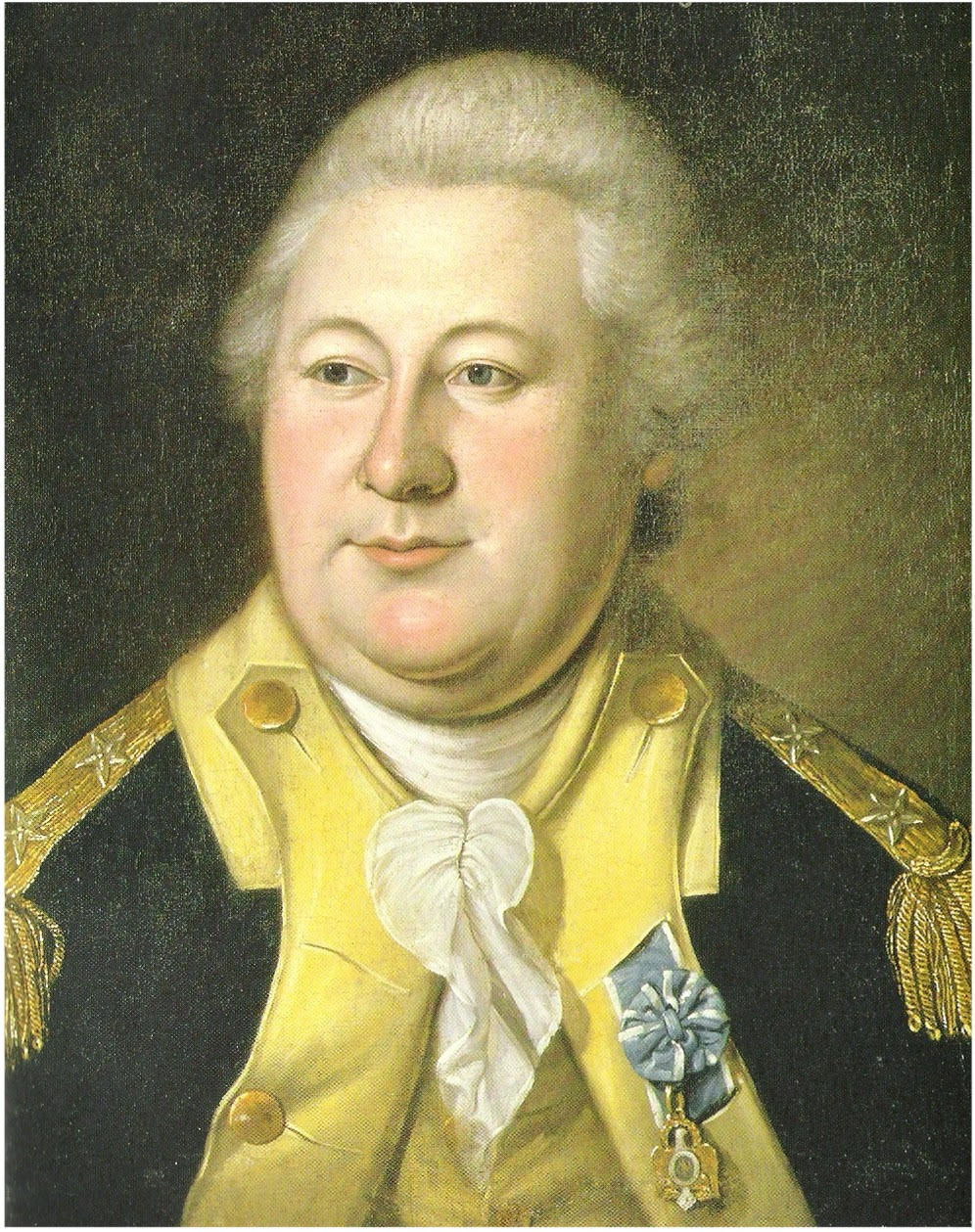
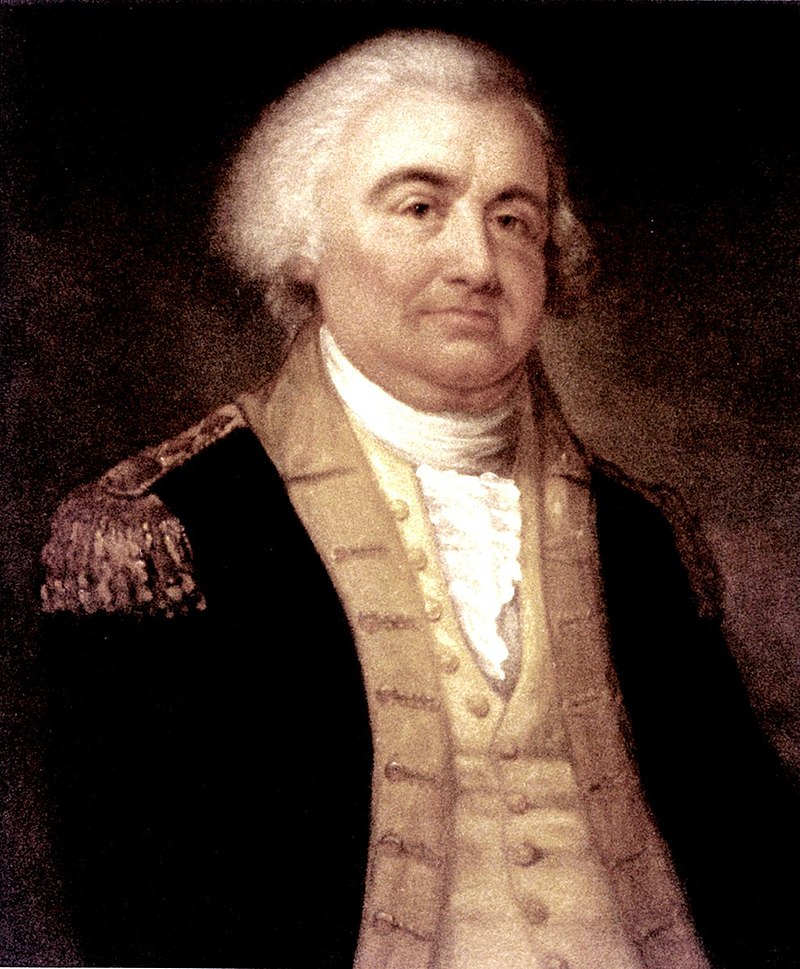
Henry Knox

Knox was on his way to retrieve captured artillery at Fort Ticonderoga alongside his brother, William. The pair traveled up the Hudson River, facing heavy winds and harsh winter weather along the way. On December 4, a snowstorm hit just as Knox and his brother reached Fort George at the south end of Lake George, about 40 miles from Ticonderoga. Colonel Knox decided to spend the night there and sail up the lake to Fort Ticonderoga the following day.[1]

Knox received a one-room log cabin for the night, which, for lack of proper quarters, he shared with a captured British lieutenant named John André. André had surrendered during the American siege of Fort Saint-Jean in November 1775 and was being transported as a prisoner of war to Lancaster, Pennsylvania. The chance encounter sparked a brief companionship between the two men. Knox and André were the same age and shared a variety of intellectual pursuits, including a deep passion for art and literature. Both had also given up their respective trades to pursue a military career.[2]

However, Knox was careful not to betray the secrecy of his mission. The colonel, who was dressed in civilian clothes, probably did not reveal his military affiliation as a chief lieutenant of George Washington. Nonetheless, the two bedfellows passed the night by the firelight discussing their common interests. André charmed Knox, as he did most men who made his acquaintance, and the British officer’s intelligence and charisma made left a lasting impression on the artilleryman. Alexander Hamilton later recalled that “there was something singularly interesting in the character and fortunes of André” who “united a peculiar elegance of mind and manners, and the advantage of a pleasing person.”[3] The two men cordially parted ways the following day, as Knox made his way to Fort Ticonderoga and André departed for Lancaster.[4]
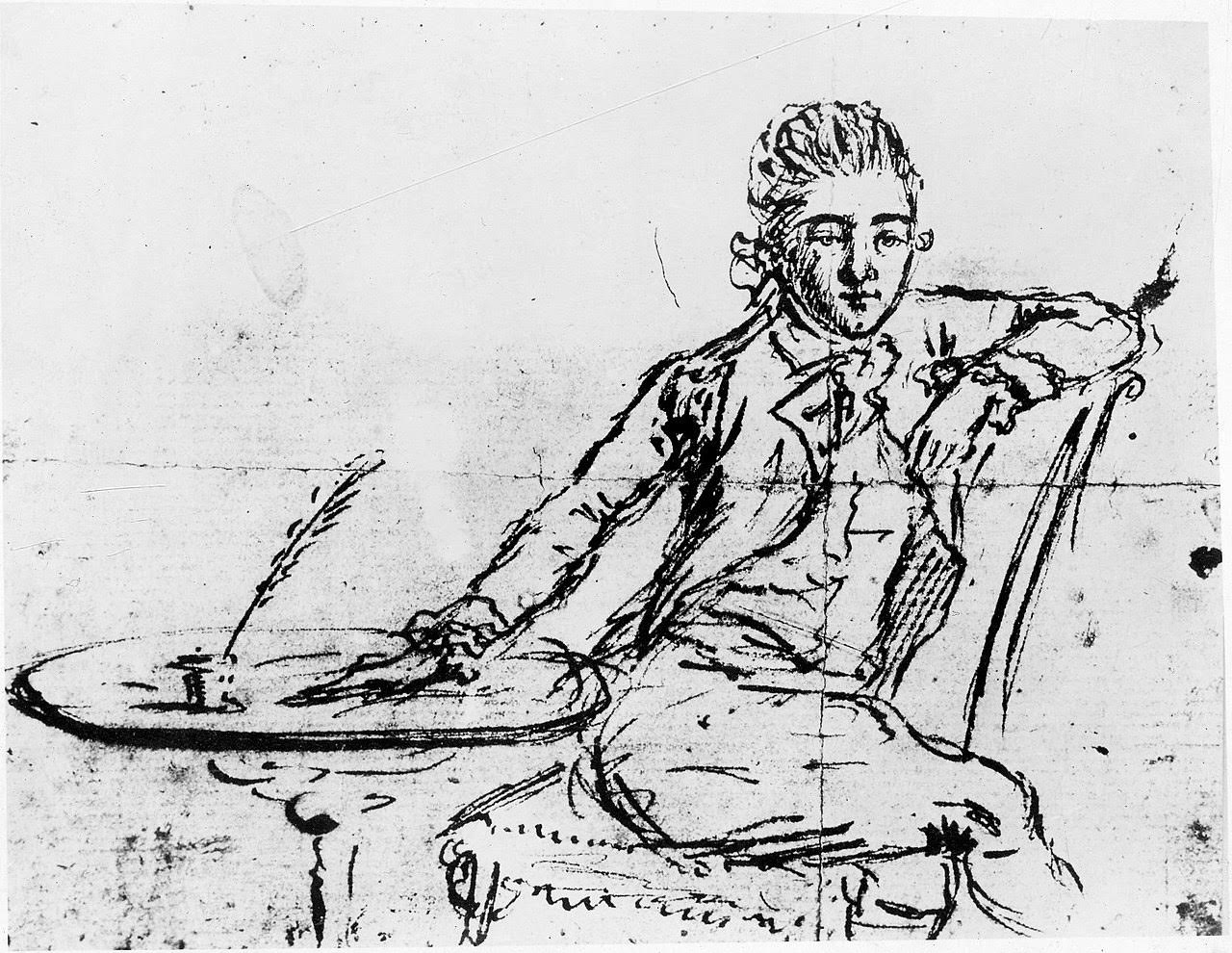
John André

Five years later Knox and André met again under much different circumstances. By 1780, André had risen to the rank of major and taken charge of the British spy network. It was in this role that the young officer found himself caught up in one of the great dramas of American history: the treachery of Benedict Arnold. André helped facilitate Arnold’s betrayal and eventual defection to the British army, but he was captured by American sentries in the process. Washington appointed a tribunal of 14 Continental Army officers to try André. Among them was Brig. Gen. Henry Knox.

The tribunal unanimously found André guilty of espionage and therefore ordered his death by hanging—the typical form of execution spy in the eighteenth century. Knox did not record his feelings on the matter, and André did not relate whether he recognized the portly artilleryman with whom he had once shared a cabin. Regardless, any companionship between the two men had evaporated as Knox signed André’s death warrant alongside his Continental comrades.[5]

Despite his tragic circumstances, André maintained marked civility even in the face of his execution. Knox looked on as André approached the gallows and declared, “I have said all I have to say before, and have only to request the gentlemen present to bear testimony that I met death as a brave man.”[6] With that, the cart moved out from under André’s feet, and Knox watched as his one-time companion hung.

Despite his role in André’s untimely death, Knox looked back fondly upon his one-time companion. James Thacher, who was stationed at West Point in 1780 and witnessed André’s trial, recalled that Knox “often afterward expressed the most sincere regret, that he was called by duty, to act on the tribunal that pronounced his condemnation.”[7] Though André’s life ended that October day, Knox served in the Continental army with distinction for the rest of the war. However, he never forgot his chance encounter with the charming British officer on that cold, winter night in 1775.
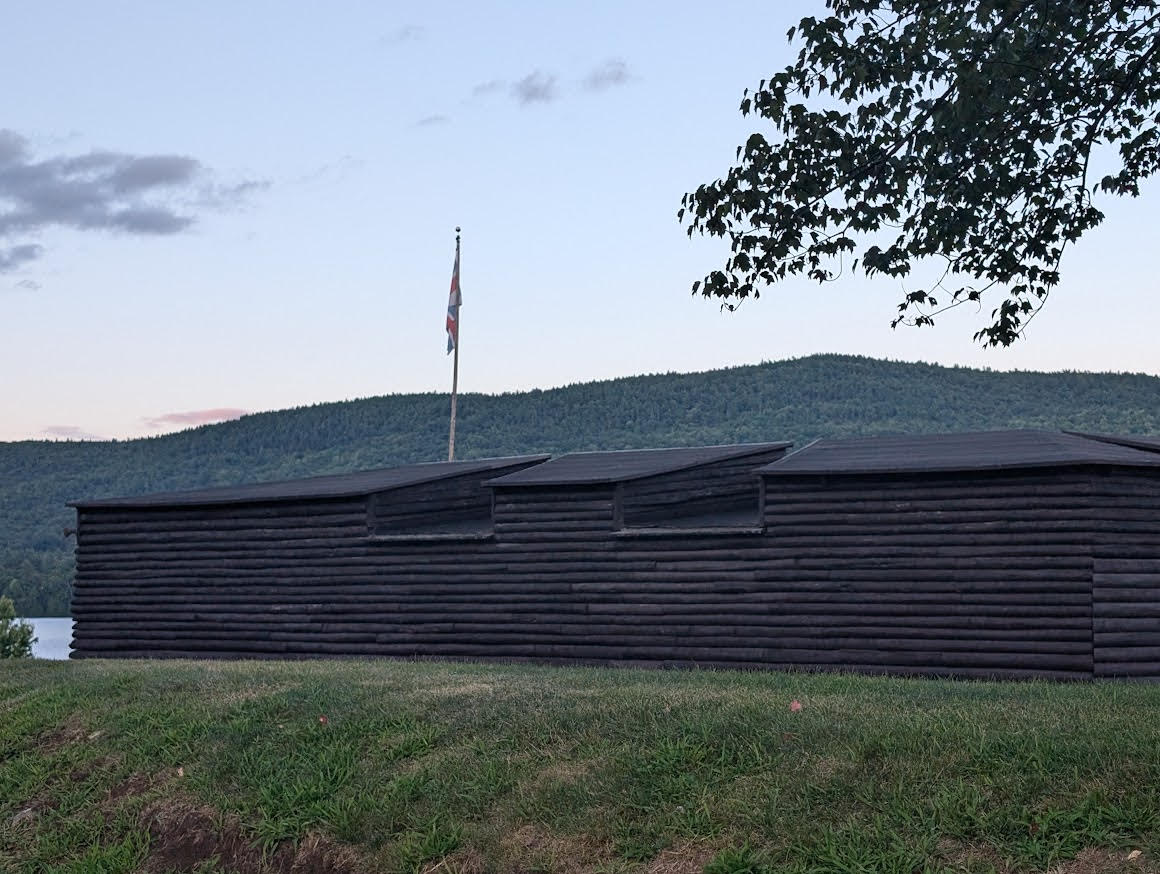
Fort George

[1] Mark Puls, Henry Knox: Visionary General of the American Revolution (New York: St. Martin’s Press, 2008), 37.

[2] Puls, Henry Knox, 37; Noah Brooks, Henry Knox: A Soldier of the Revolution, Major-General in the Continental Army, and Washington’s Chief of Artillery (New York: Cosimo, Inc., 2007), 42.

[3] Alexander Hamilton to Lieutenant Colonel John Laurens, 11 October 1780, The Papers of Alexander Hamilton, vol. 2, 1779–1781, ed. Harold C. Syrett, (New York: Columbia University Press, 1961), 460.

[4] Puls, Henry Knox, 37-38; Winthrop Sargent, Life and Career of Major John André (Boston: Ticknor and Fields, 1861), 85.

[5] Puls, Henry Knox, 149.

[6] Puls, Henry Knox, 150.

[7] James Thacher, Military Journal During the American Revolutionary War, 1775-1783 (Boston: Richardson and Lord, 1823), 584.

Major John Van Dyk and the Bones of Major John André. Part II

Emerging Revolutionary War welcomes back Jeffrey Collin Wilford
For Part I, click here.

General Benedict Arnold’s Betrayal

On the morning of September 21, 1780, while Captain John Van Dyk, only recently freed from the prison ship Jersey, was guarding West Point as part of Colonel John Lamb’s artillery unit, the HMS Vulture arrived at Haverstraw Bay and anchored just off Teller’s Point. Two men pressing apples at a cider mill on the shore became alarmed at the presence of a British warship on the river north of the “neutral ground,” and a barge disembarking from it filled with Redcoats. Not knowing their intent, both decided to take matters into their own hands and opened fire on the soldiers. John “Rifle Jack” Peterson, a veteran of the Battle of Saratoga, received his nickname due to his superior marksmanship. The other, Moses Sherwood was just 19 years old and a friend of Jack Peterson. Both were enlisted in the Westchester County militia. Their relationship was very close as Rifle Jack had held Sherwood’s father in his arms as he died at Saratoga three years earlier. 

Croton (Teller’s) Point today – (Wilford)

Several of their shots hit their mark, wounding soldiers and prompting the barge to return to the Vulture which opened fire with a barrage of grapeshot on the two men as they crouched behind rocks. This signaled to the pair that the ship was within cannon range and they quickly made their way in the darkness to Fort Lafayette ten miles to the north to secure a cannon from the officer in charge, Colonel James Livingston.

Cannon that fired on the Vulture
Peekskill Museum (Wilford)

At Peterson and Sherwood worked with several other soldiers to lug the 4-pounder back to the point while, unbeknownst to them, André slipped away from the Vulture. He made his way from the Vulture to shore, at around midnight, with Loyalist Joshua Hett Smith who had been instructed to gather him from the ship.  His destination was a clandestine meeting on the river bank with American General Benedict Arnold, the famous war hero of Saratoga who had been plotting for months to turn against the cause of American independence. What was clear, by André’s account, was that this meeting was to be a fairly quick round-trip between the Vulture and shore under cover of darkness. 

Instead, an unraveling of the circumstances dictated that he shed all previous warnings from British General Sir Henry Clinton to stay dressed in his regimental uniform, avoid enemy checkpoints, and not possess any incriminating papers. André admitted this to Clinton in a letter written after his capture and dated September 29, 1780 stating, “The Events of coming within an Enemys posts and of Changing my dress which led  me to my present Situation were contrary to my own Intentions as they were to your Orders.” This would force him to become, in his own words, “involuntarily an impostor.”      

As negotiations on the riverbank dragged on, likely due to Arnold’s negotiations around rank and compensation, daybreak drew near. Fearing discovery, and clearly against André’s original plan, they moved their talks to the home of Smith, which overlooked the river and the Vulture at anchor. During the meeting at Smith’s house, Arnold eventually handed over the defensive plans of the Continental Army’s citadel, West Point, and the minutes from General George Washington’s September 6th War Council meeting that created a vulnerability for the Americans that could have proved catastrophic. 

It is easy to understand why West Point was so significant to the British.  It was crucial, not just as a military installation situated on the banks of the Hudson between New England and the Southern Colonies, but as a symbol of American strength and resolve. Perched on the high ground overlooking the Hudson, West Point had been there to thwart British attempts to dominate the 300-mile-long river which would have allowed them to effectively cut off the rebels of New England from the rest of the colonies. Losing West Point would have taken an important strategic foothold away from the Americans. The potential of losing General Washington in the process would have also dealt a severely damaging blow to the American cause, if not ending the war altogether. 

While the Arnold and André negotiations were taking place, a contingent of men, along with Peterson and Sherwood, had dragged the 4-pounder to Teller’s Point into position on the riverbank within range of the Vulture. 

Early in the morning, awakened by cannon fire, the conspirators at Smith’s house could see the Americans in the distance opening fire on the ship. Though he did not immediately know it, this would permanently separate André from his only means of a safe escape. Hit several times and stranded in the middle of the Hudson by a slack tide and unfavorable winds, the Vulture endured the cannon fire but eventually cut her cables to drift with the currents south to Dobbs Ferry. 

As a result of the retreat of the Vulture, an alternative plan was devised to get André back to the British lines. On the morning of the 22nd, in disguise and with a pass written by Arnold to travel unmolested behind American lines under the alias John Anderson, he and Smith began the overland trek back to British-occupied New York City.  Arnold returned to his home at West Point. What was clear from André’s later testimony was that he felt like this change of plan made him a victim of circumstance saying he “thought it was settled that in the way I came I was also to return.”

What were the motivations for the thirty-nine-year-old hero of Saratoga, who had risen through the military ranks to become one of Washington’s most effective field generals, to give up not only West Point, but his reputation in history? Much has been written, but what is known is that he had been living a life well beyond his means. His wife Peggy Shippen, half his age and from a prominent Philadelphia Loyalist merchant family, had a taste for luxury. To woo the 19-year-old, Arnold openly lived a life of excess while in Philadelphia which turned more than a few heads, wondering if he had secretly been trading with the British. 

Benedict Arnold was also known for his self-assured nature and temper. Infighting within certain circles of the military, and his discovery that several junior officers had received promotions ahead of him, provided him even more motivation to turn. Arnold felt the military did not display the respect that was due a war hero and this sentiment was on display in a letter to Washington on May 5, 1779.  “Having made every sacrifice of fortune and blood, and become a cripple in the service of my country, I little expected to meet the ungrateful returns I have received of my countrymen.”  Perhaps the influence placed upon him by his relationship with Peggy due to her father’s position, and his criticism of the American cause added more weight to his self-imposed need to betray his country. Consequently,  he began to develop a plan to turn over West Point to British General Sir Henry Clinton, with Major John André as the British intermediary.

The second day treading enemy soil was rather uneventful as André and Smith carefully made their way south to the original King’s Ferry which crossed the Hudson between Stony Point and Verplanck, the site of the former Fort Lafayette. The crossing was a nerve-wracking affair for André as this was the main ferry crossing for all Continental troops and supplies just outside of the watchful eye of the British forces in New York City 45 miles to the south. Following the Crom-Pond Road, the journey was slow and deliberate, befitting a spy and his Loyalist guide. As nightfall approached, they bedded down at a farmhouse before continuing their journey early the next morning. 

Isaac Underhill House – Where André ate his last breakfast (Wilford)

The pair continued to make their way along the Croton River until reaching the southernmost lines of the Continental Army where Smith left André just after finishing their breakfast at the Isaac Underhill house. By the time André had reached Tarrytown, New York, by way of the Albany Post Road, a road he had been told to avoid, his luck had run out. Isaac Underhill House – Where André ate his last breakfast (Wilford)

      At 9 o’clock on the morning of September 23, 1780, André was stopped by three militiamen at Clark’s Kill, a stream that today marks the boundary between Sleepy Hollow and Tarrytown, New York. According to André, he “was taken by three Volunteers who not Satisfied with my pass riffled me and finding papers Made me a prisoner.” Isaac Van Wart, John Paulding, and David Williams would go on to be considered heroes by most, but certainly not by all. One of their leading detractors was the person George Washington entrusted with returning André to West Point and ultimately Tappan for trial, Major Benjamin Tallmadge. Tallmadge was Washington’s chief intelligence officer and he believed the three militiamen were “of that class of person who passed between both armies.” He felt they lacked the very character he would end up heaping upon André.

André Capture Site (Wilford)

While the circumstances surrounding Major John André’s capture unfolded in Tarrytown, General Arnold, aware that his treacherous plot had been uncovered, and leaving behind his baby and a hysterically distraught Peggy Shippen, raced to avoid capture and meet up with the HMS Vulture. Upon his return from a meeting with French General Rochambeau at Hartford Connecticut, Washington, unaware of any involvement by Shippen, allowed her to return to her family in Philadelphia, perhaps letting go of an important bargaining chip in the process. It would later be learned that she might have been complicit in her husband’s treason. While she openly denied it, an admission from Theodosia Burr, Aaron Burr’s wife, that she admitted to her involvement as well as a £500 annual pension from King George III would suggest this.

The Other Great Artilleryman

Mention the words “artillery” and “American Revolution” and what name instantly pops into your mind? Henry Knox.

Rightfully so.

Yet, like George Washington, Knox needed competent officers under him to successfully organize, train, lead, and develop the artillery arm of the Continental Army.

Enter John Lamb.

John Lamb
John Lamb

Born on the first day of 1735 in New York City, he was destined to rebel. The reason he was even born in New York City was due to the fact that his father, a convicted burglar had been sentenced for deportation to the colonies in the 1720s.

His early upbringing saw him become a prosperous wine merchant and he quickly ingratiated himself into the burgeoning patriot movement by becoming an integral part of the Sons of Liberty in New York City.  Continue reading “The Other Great Artilleryman”