
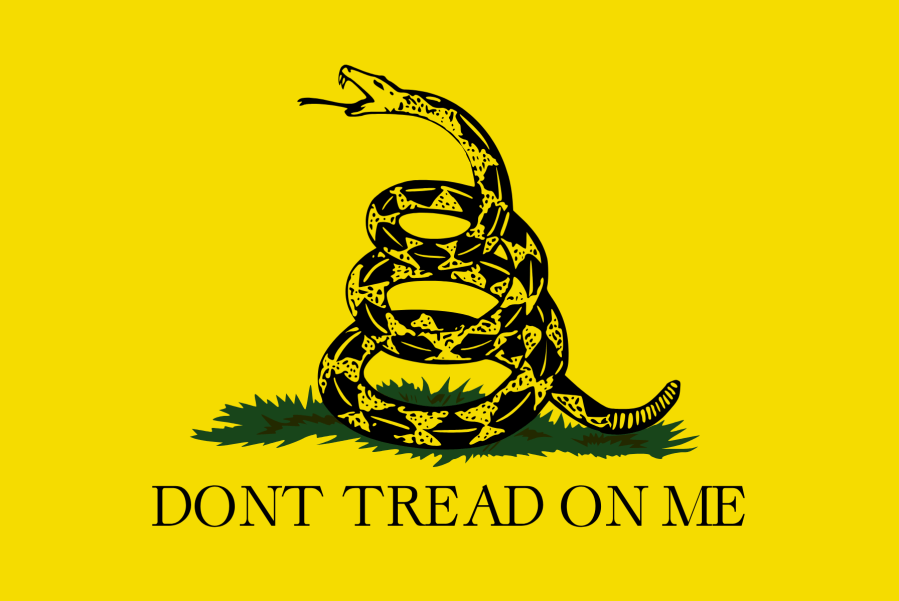
Every so often news stories arise about popular symbols of the American Revolutionary War that are used by various people to promote modern political agendas. One prominent symbol is the yellow flag with a coiled rattlesnake and the words “Don’t Tread on Me” below it. This flag, often referred to as the Gadsden flag, has a fascinating history dating back to the Revolutionary War.

The first real use of the snake representing the colonies begins before the Revolutionary War, during the French and Indian War, when Benjamin Franklin created a cartoon using a snake to represent the various colonies each separated from one another with the words “Join, or Die” under the image. This was an effort to get the various colonies to unite for common defense during that time period.

By the time of the Revolutionary War in 1775, the symbol had become a solitary rattlesnake, coiled and ready to strike often accompanied by the warning “Don’t Tread on Me.” Christopher Gadsden, a prominent South Carolina patriot, served in the Continental Congress and designed the yellow flag as a naval ensign. Beginning in 1776 the flag was hung up in the room where Congress met in Philadelphia and because it was designed by Gadsden, it became known as the Gadsden flag.
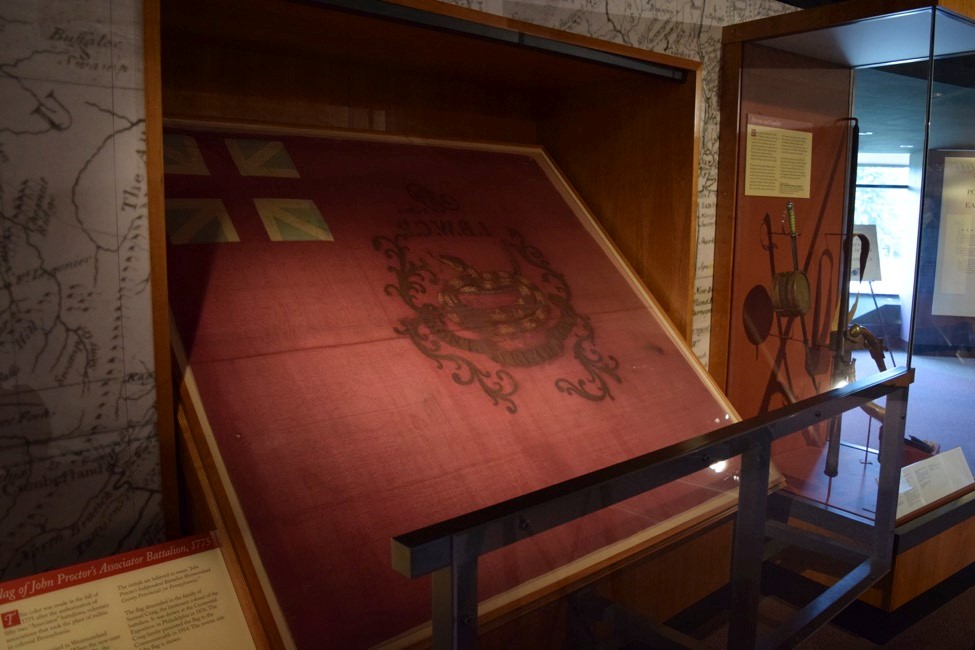
While the Gadsden flag is the most reproduced version of this symbol today, numerous flags from the Revolutionary War used identical imagery. In 1775, a Pennsylvania regiment had a flag made that depicted an American rattlesnake with the words “Don’t Tread on Me” written on it. Today it is preserved and displayed at Fort Pitt in Pittsburgh, Pennsylvania. It is the only surviving rattlesnake flag from the Revolutionary War. But it clearly wasn’t the only one.
In Virginia, the Culpeper Minutemen who fought at the Battle of Great Bridge had a flag with the rattlesnake and in addition to “Don’t Tread on Me” also had “Liberty or Death” on it. There were also naval ensigns that were striped flags with snakes across them with the words “Don’t Tread on Me.”

The symbol of the rattlesnake represented for many of the Americans fighting in the Revolutionary War their fierce adherence to personal liberty and their desire to guard it.
In 1775, an American patriot described in a newspaper why this symbol meant so much to the American patriots:
“. . . the rattlesnake is found in no other quarter of the globe than America, . . . [the snake] had no eyelids. She may therefore be esteemed an emblem of vigilance. She never begins an attack, nor, when once engaged, ever surrenders. She is therefore an emblem of magnanimity and true courage. . . she never wounds until she has generously given notice even to her enemy, and cautioned him against the danger of treading on her. Was I wrong, sirs, in thinking this a strong picture of the temper and conduct of America?”
As David Hackett Fischer asserts in his book “Liberty and Freedom”: “The rattlesnake flag, with its motto “Don’t Tread on Me” was a perfect symbol for this idea of natural liberty, and for a people who wished to be at a distance from government and free to go their own way.”
You can learn more about Christopher Gadsden who designed the flag and the South Carolina patriots by picking up a copy of my latest book, “To the Last Extremity: The Battles for Charleston, 1776-1782”.
To learn more about the rattlesnake symbol and other symbol’s from the Revolutionary War, check out George Henry Preble’s excellent 1880 history of the American flag or David Hackett Fischer’s 2004 book “Liberty and Freedom”.
 Emerging Revolutionary War Era
Very nice Mark! Just bought the book. Stay well guys!
Jim Walsh
LikeLiked by 1 person
I need this book.
LikeLike
Pingback: AN APPEAL TO HEAVEN: The history behind the flag – Emerging Revolutionary War Era