
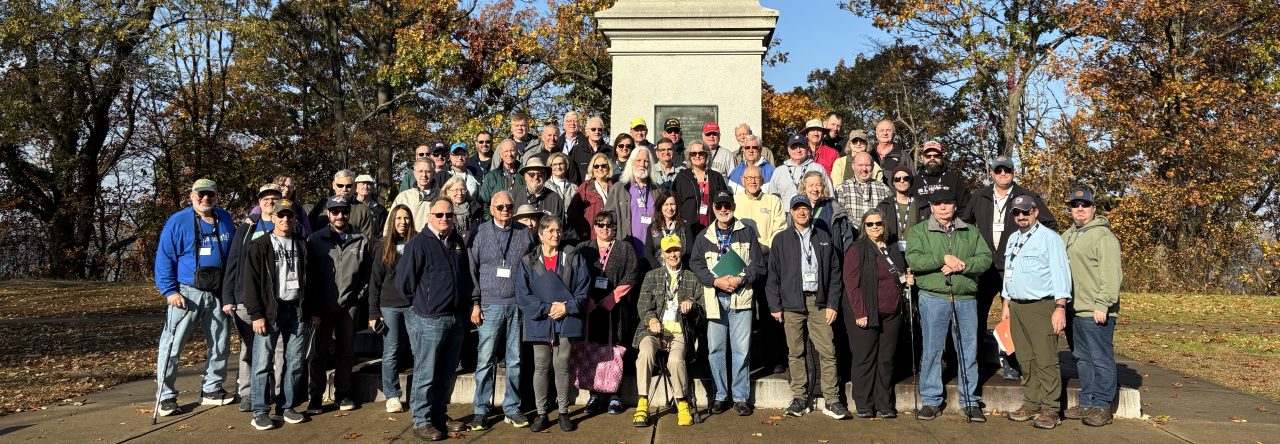
I have always had a particular interest in the New York City Campaign of 1776. Over the years I have been able to visit the battlefields and historic sites associated with these events. While it is easy to focus on the loss of so many sites with the city’s growth (definitely true), I enjoy the challenge of finding remnants of the past in the urban landscape.
Read more: Discovering White Plains
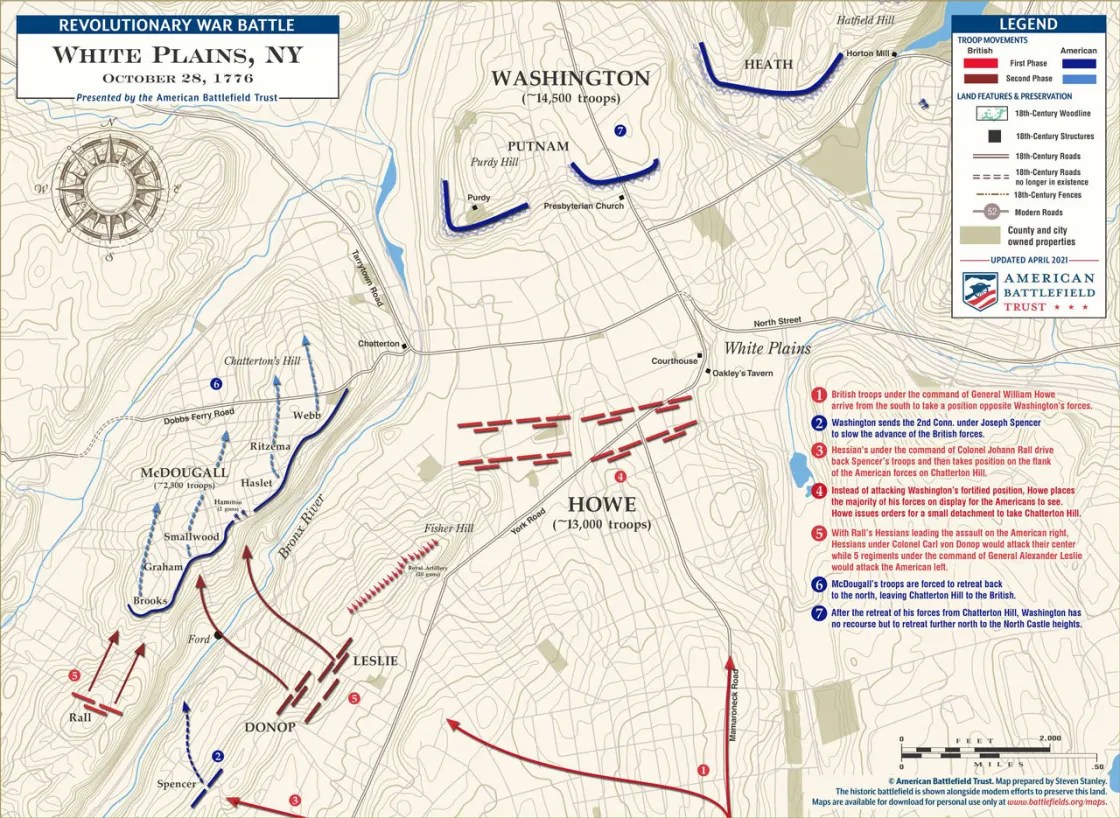
Following the capture of New York City by the British on August 27, 1776, Washington pulled his battered forces north, into Westchester County. He chose the village of White Plains to make his next stand. Anchoring his army on the Bronx River, his troops prepared a line of defense astride the road coming up from New York. The army’s left rested on Hatfield Hill and Horton’s Mill Pond, and their center was on Purdy Hill. The entire line was three miles long. Washington made his headquarters at the Jacob Purdy house, which still stands. He then moved to command from the Anthony Miller house, a bit to the north.
On the extreme right of the American line was Chatterton Hill’s, which dominated the area and which two regiments of militia occupied (one from Massachusetts and one from Connecticut). Farmers had constructed stone walls atop the hill and the militia used these convenient barriers for their defensive position.
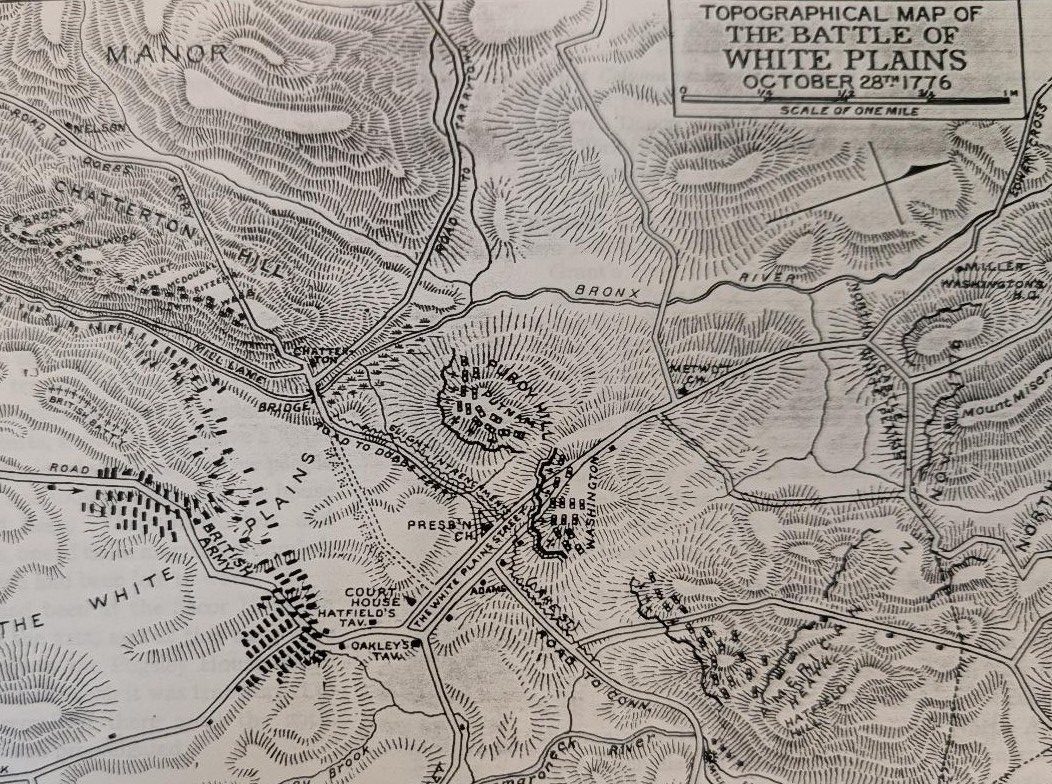
General Washington was late to recognize the importance of Chatterton’s Hill, but on the morning of October 28 he sent General Alexander McDougal’s brigade there, consisting of the 1st New York, 3rd New York, and 19th Continental Regiments. Haslett’s Delaware and Smallwood’s’ Maryland Regiment were also dispatched to the hill.
When McDougal arrived the Americans deployed with the 19th Continental on the far left, the two New York regiments next in line then the Maryland Regiment, and the militia on the far right. The Delaware Regiment was in reserve. The total American strength on the site was about 2,000 troops. About twelve artillery guns supported them.
In the meantime General William Howe deployed his army to attack. He focused on hitting the American right on Chatterton Hill. Other troops under Colonel Carl von Donop (consisting of five German units) moved against the American center, and General Alexander Leslie with four British regiments (the 5th, 28th, 25th, and 49th) attacked the American left. Another force of Germans under Colonel Johann Rall assisted on the left. Rall’s command included the regiments Rall, Knyphausen, and Lossberg.
Major Benjamin Tallmadge wrote of American preparations: “. . . breastworks were improvised… cornstalks pulled from the fields were stacked with the clods of earth on the bottoms facing the enemy, quickly creating defenses that looked much stronger than they were.” On the morning of October 28, Geneal William Heath wrote of the approaching British, “The sun shown bright, their arms glittered, and perhaps troops never were shown to more advantage than these now appeared.”
On Chatterton’s Hill, Captain William Hull of the 19th Continental Regiment wrote,
Having taken our position, we discovered, at a distance, the approach of the British army. Its appearance was truly magnificent. A bright autumnal sun shed its full lustre on the polished arms, and the rich array of dress and military equipage gave an imposing grandeur to the scene as they advanced in all the pomp and circumstances of war to give us battle. . .”
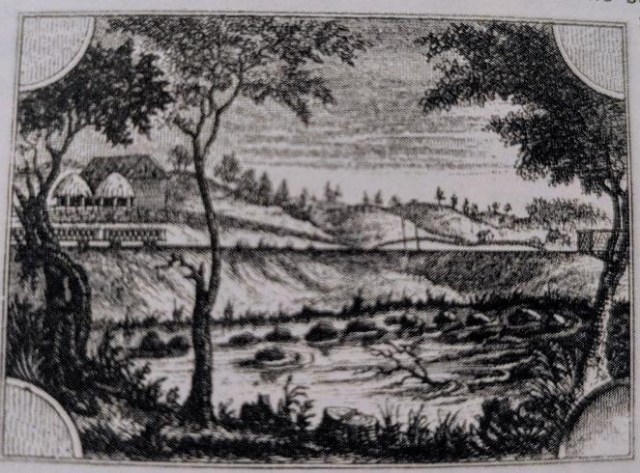
The first British troops to attack Chatterton’s Hill were the 28th and 35th Regiments. Crossing the Bronx River, which was about waist deep, they moved up the wooded slope. Colonel John Haslett recommended to McDougall that he sent troops forward to meet the attack. The Maryland Regiment and 3rd New York went forward and stopped the British cold.
In the meantime Colonel Rall brought up his German units to the left, beyond the American line, and hit them in the flank. His attack fell on the two militia regiments, who broke in confusion. The Germans then engaged the Maryland and New York regiments. McDougall’s entire command was soon forced back. Haslet’s Delaware Regiment provided covering fire while the remaining troops retreated to the north, and were the last to leave the hill. Haslet wrote of his Delaware troops, “the left of the regiment took post behind a fence on top of the hill with most of the officers, and twice repulsed the light troops and horse of the enemy, but finding themselves deserted on all hands, and the continued column of the enemy advancing we also retired.”
The next day the Americans improved their fortifications. British reinforcements arrived on October 30, and Howe prepared to attack again, but on the 31st Washington withdrew to the north. Although not particularly bloody or complex, I’ve always found the battle interesting. Losses were 217 American and 233 British/German.
Two of the principal commanders here were dead within two months. Rall was the commander of the Trenton garrison when Washington’s forces struck on December 26 and was mortally wounded. Haslet fell at Princeton on January 3. Another, von Donop, fell a year later at Red Bank.
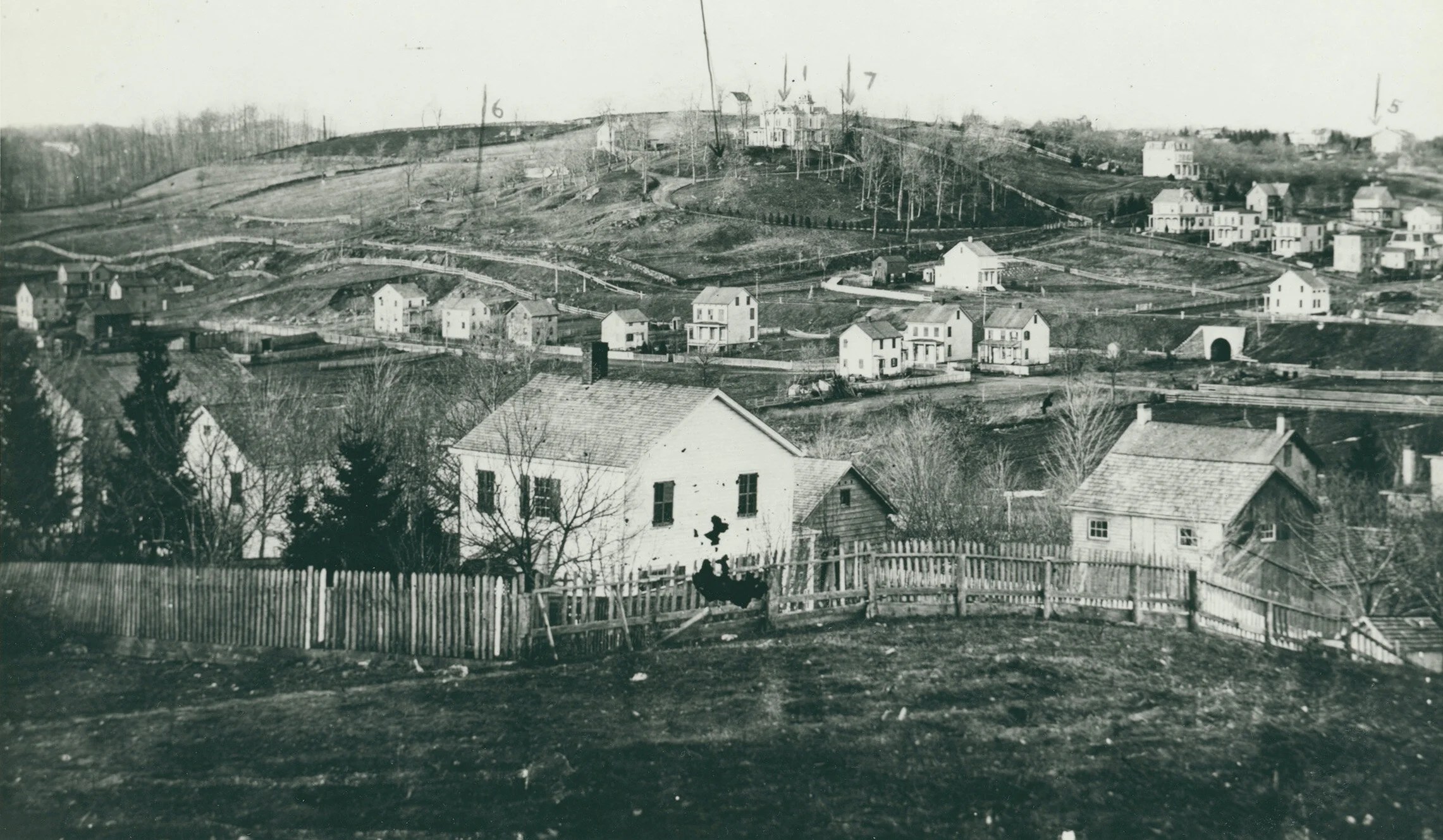
I first visited the battlefield with my friends Mike and Jen in the late 1990s. Jen was stopping to see her grandparents in White Plains. While she visited her relatives, Mike and I went out to explore the area, and found a remnant of the American defense line, and a historic marker. It was so exciting, right in the middle of a busy of a city downtown we found a tangible remnant of the past!
On subsequent visits to the area I found Chatterton’s Hill, the main area of fighting. Today it has a small park with historic makers, one of the few tangible things to see from the battlefield. I’ve also found Washington’s two headquarters sites at the Purdy and Miller houses.
Today the Miller House is preserved and open for tours, as is the Purdy House. The Battle of White Plains Park on Chatterton’s Hill includes several historic markers and preserves a remnant of the original terrain. A monument with a replica cannon stands not far from the train station in White Plains.
Learn more about this historic event in Mark Maloy and Dan Welch’s new book on the 1776 New York campaign: Conquer or Die, out this November!

