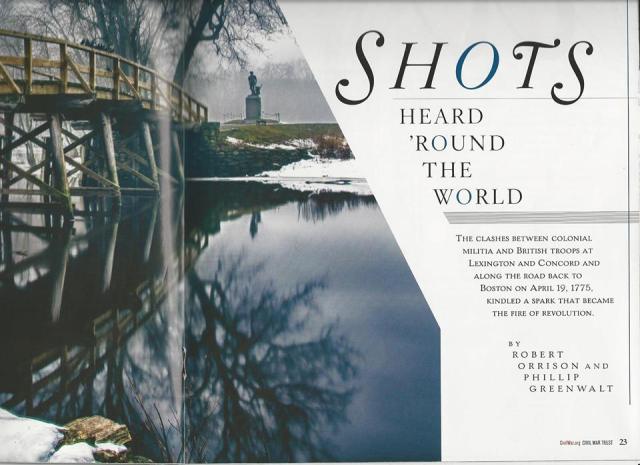
Recently Emerging Revolutionary War Era authors Phillip Greenwalt and Rob Orrison were featured in Hallowed Ground, the Civil War Trust’s quarterly magazine. Their article “Shots Heard Around the World” focuses on the events surrounding Lexington and Concord in 1775. As CWT President Lighthizer writes “the journey towards the stillness at Appomattox began with a shot heard ’round the world at Concord.”
As many of you know, the Civil War Trust has launched a new initiative called “Campaign 1776”, to preserve American battlefields that relate to the American Revolution and the War of 1812. Part of that initiative is funding the archaeology and preservation of land around the area known as “Parker’s Revenge.” Here, on the afternoon of April 19, 1775, Minutemen met the returning British column on its way from Concord to Boston. The Minutemen under Capt. John Parker, severely bloodied the British, in a “revenge” from their earlier meeting on the Lexington Green.
Also in the same issue of Hallowed Ground, ERW contributors Drew and Kate Gruber write about the how the American Revolution was on the minds of those who fought in the Civil War. Their article “So Doth History Repeat Itself” covers the “ancestral connection” that both sides had to the patriots of the revolution.
Be sure to check out Hallowed Ground and if you are not already a member of the Civil War Trust, be sure to join today. Their work in preserving American battlefields is unparalleled. We thank the staff of Hallowed Ground for including us in their latest issue. Look for more exciting ventures from Emerging Revolutionary War Era soon!
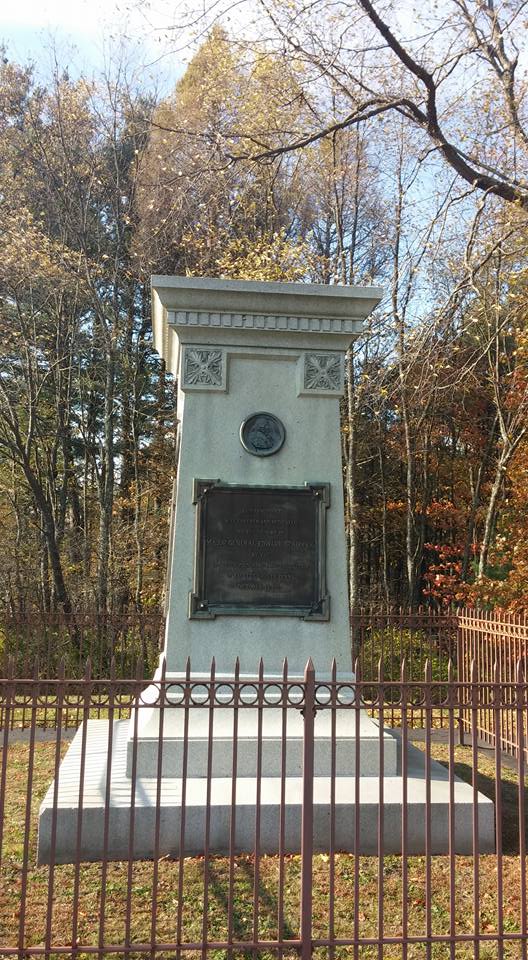
General Edward Braddock’s grave, near Fort Necessity
Recently myself and two other Emerging Rev War authors took a trek to the mountains of western Virginia, Maryland and Pennsylvania to follow in the footsteps of George Washington in 1754-1758. Washington played a significant role in the beginning of the French and Indian War. These were the developmental years for Washington, here he learned lessons of leadership, military command and gained the experience that earned him the future Commander in Chief of the Continental Army in 1775.
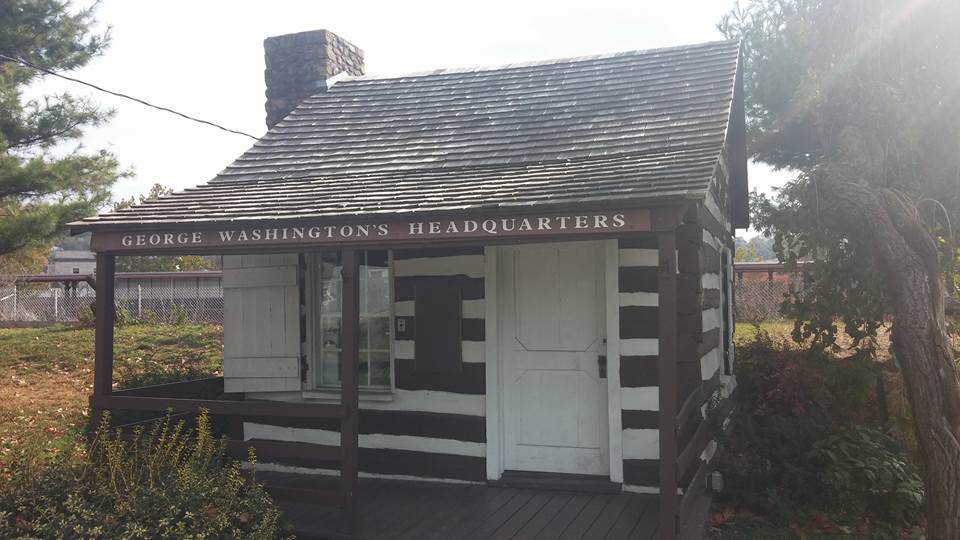
Rebuilt cabin from Fort Cumberland
One of the best ways to follow in the footsteps of Washington during this time period is to start in Cumberland, MD. Here, Fort Cumberland served as the stepping off point for many expeditions to the frontier. Today, the fort is gone but the location is well marked and interpreted. The City of Cumberland has established a walking trail and outlined the boundaries of the fort. Also, a restored cabin interprets Washington’s time at Fort Cumberland. From here, one can easily follow the famous “Braddock Road” by taking Rt. 40 west (the National Road).
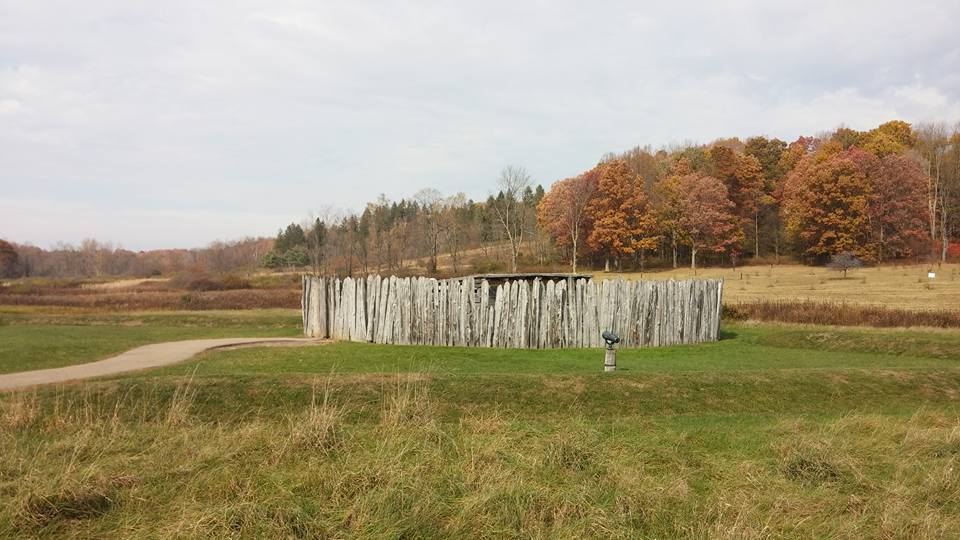
Washington’s “fort” at Fort Necessity National Battlefield
A must see site along Braddock’s Road is Fort Necessity National Battlefield Park. Here the young and inexperienced George Washington found himself in July 1754 surrounded by French and their Native American allies. As one gazes across the ‘Great Meadows” and see the small fort Washington built, one has to ask themselves “what was HE thinking?!” The newly built visitor center and museum is excellent and worth the small fee. The park preserves the site of the July 1754 battle, portions of the original Braddock Road and the early 19th century Mount Washington Tavern (that was built along the old National Road). Nearby is Braddock’s Grave (buried after the disaster near Fort Pitt where he was mortally wounded). Further north is Jumonville Glen. Of all the places I have been, this place represents the most pristine historic spot. Here in June 1754, Washington started the French and Indian War. When one views the spot today, it is easy to take yourself back to 1754 and there is a real sense of history here. Here Washington led his first command, here Washington set the stage that would lead him to command the Continental Army in 1775.
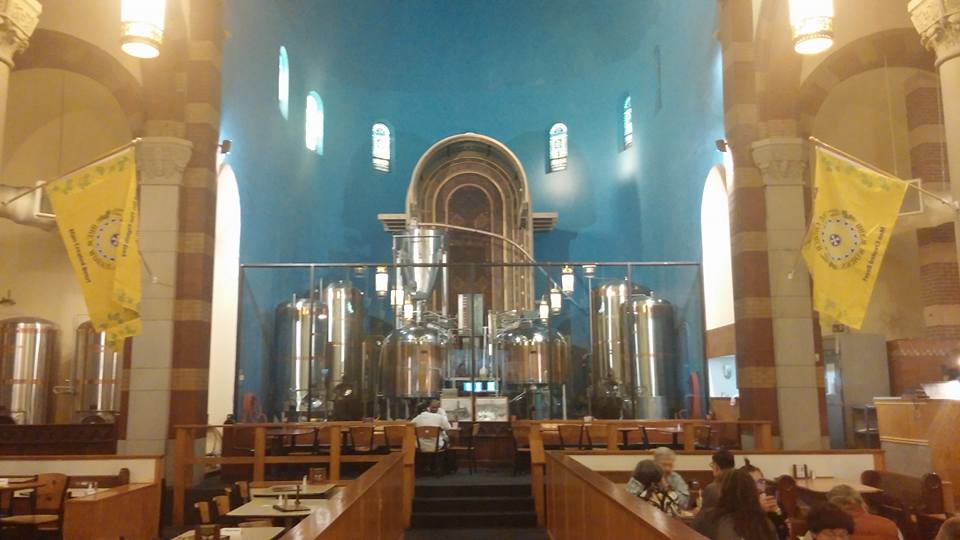
The Church Brew Works
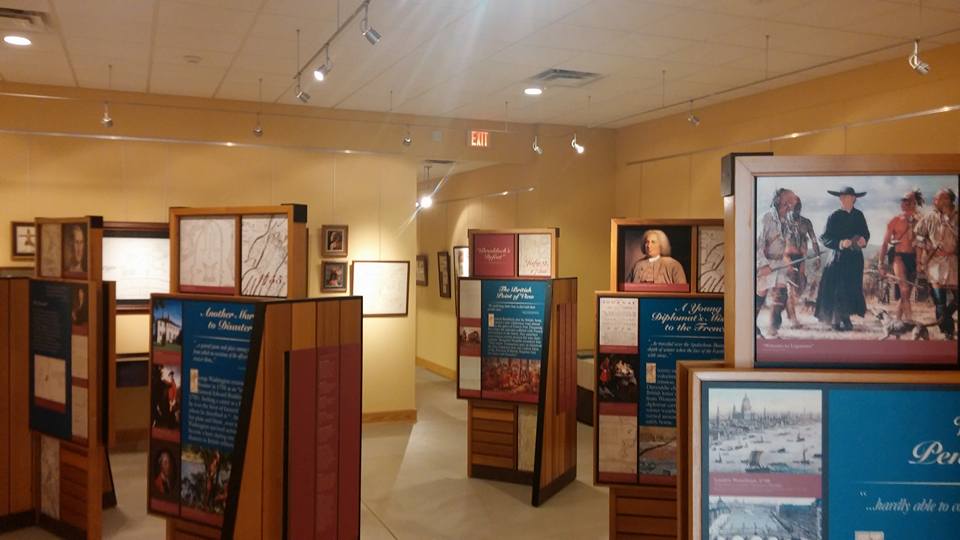
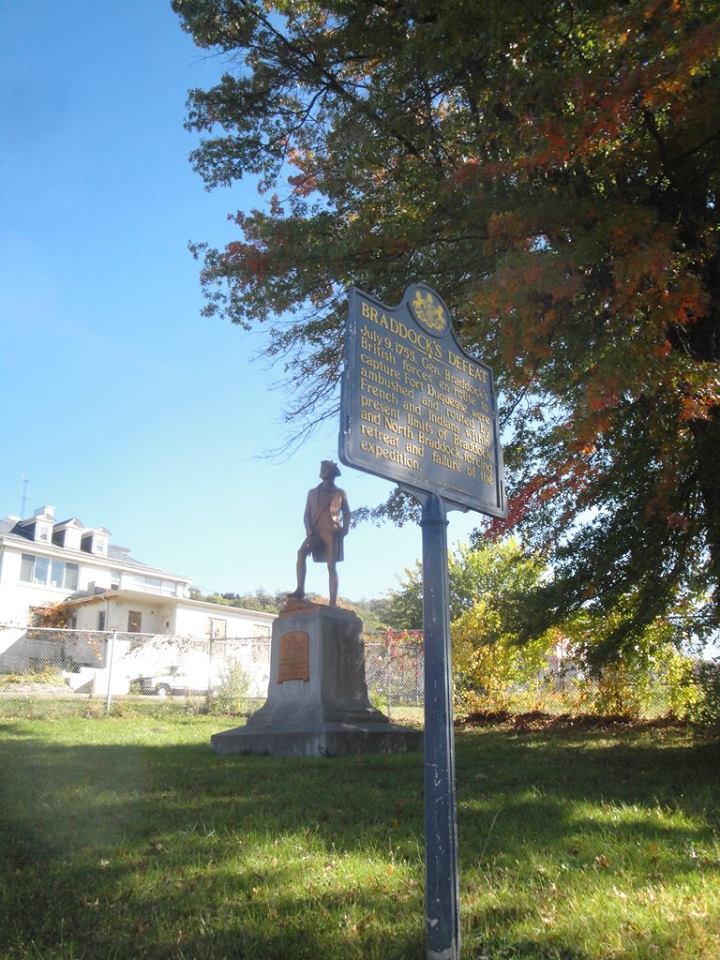
The Fort Pitt Museum, now managed by the Heinz History Center, provides a great timeline and history of the “forks of the Ohio” and also includes a rotating exhibit space. Since we had followed the route of Braddock all the way from Cumberland, Maryland we decided to visit North Braddock, PA. Here is where the French and Indians virtually destroyed the British force sent to capture Fort Duquesne under General Edward Braddock (Washington served as one of his aides). The battlefield is gone today to major development in the early 20th centuries with local steel mills. Unfortunately for the town, the collapse of the steel industry has left this once thriving town very much depressed. But, one new bright spot is the Braddock’s Battlefield History Center. Finally the story of Braddock and the battle along the Monongahela is being told. The museum is worth a visit and the building is a testament to the efforts of an all volunteer organization led by Robert T. Messner. While in Pittsburgh, a great place for a bite to eat or drink, a visit to Church Brew Works. This local brew pub/restaurant is located in a former 1902 Roman Catholic Church. The food and beer are excellent.
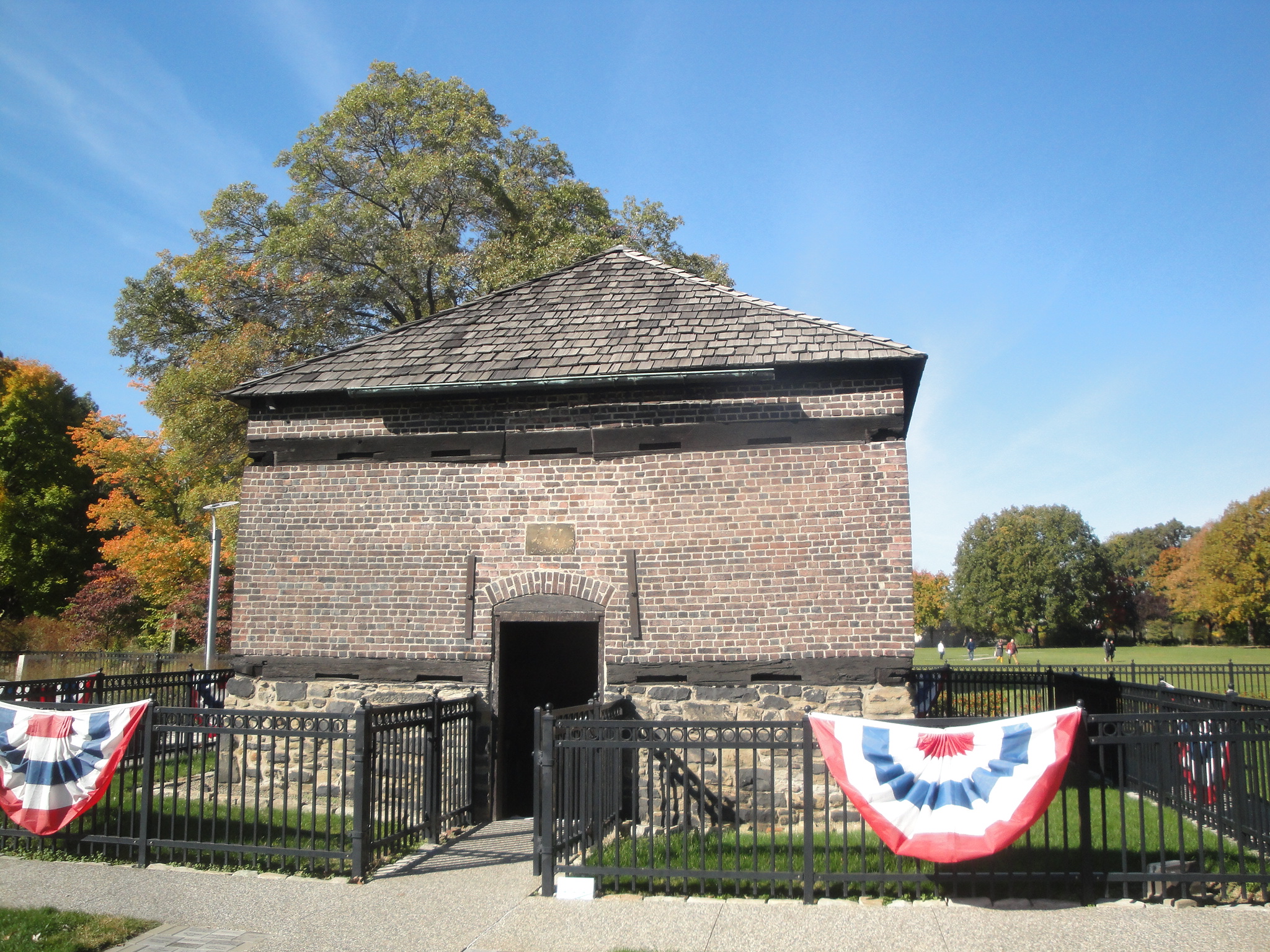
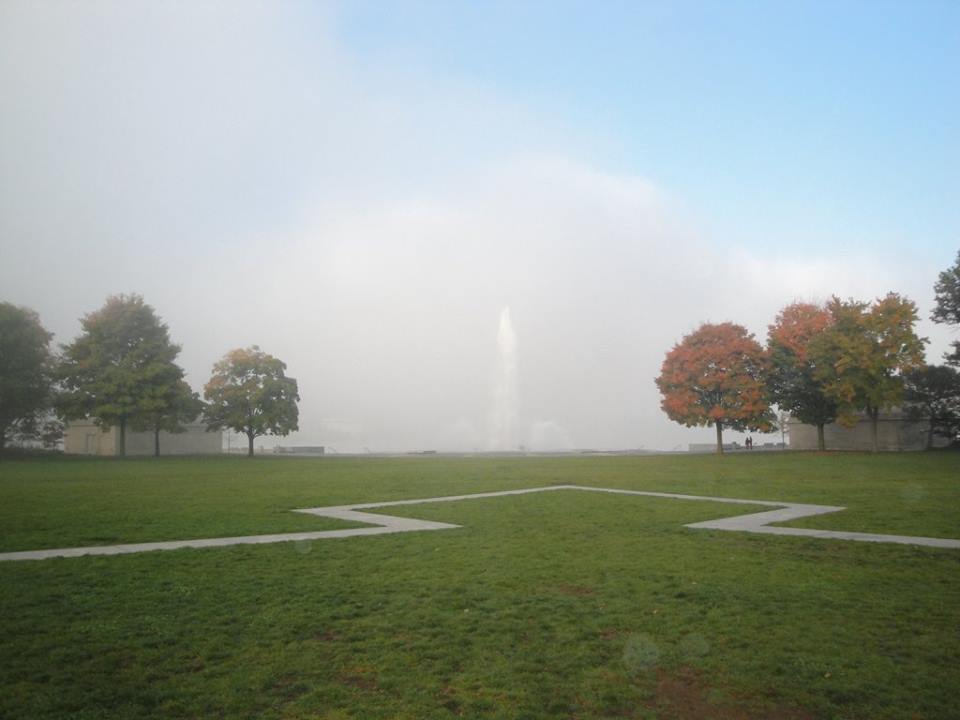
Fort Pitt blockhouse, only remaining structure from Fort PittOutline of the French Fort Duquesne, with the Forks of the Ohio in the distance
The Braddock’s Battlefield Visitor CenterThis statue of Washington is near where the British were attacked by the French near Fort Pitt
The Bushy Run Battlefield is a hidden gem near the historic “Forbes Road” (modern day Rt. 30). This much over looked battle of “Pontiac’s War” between the British and Native American warriors is well preserved and interpreted through great museum exhibits.
Bushy Run Battlefield, where the British made their “Flour Bag Fort”New monument at Bushy Run Battlefield
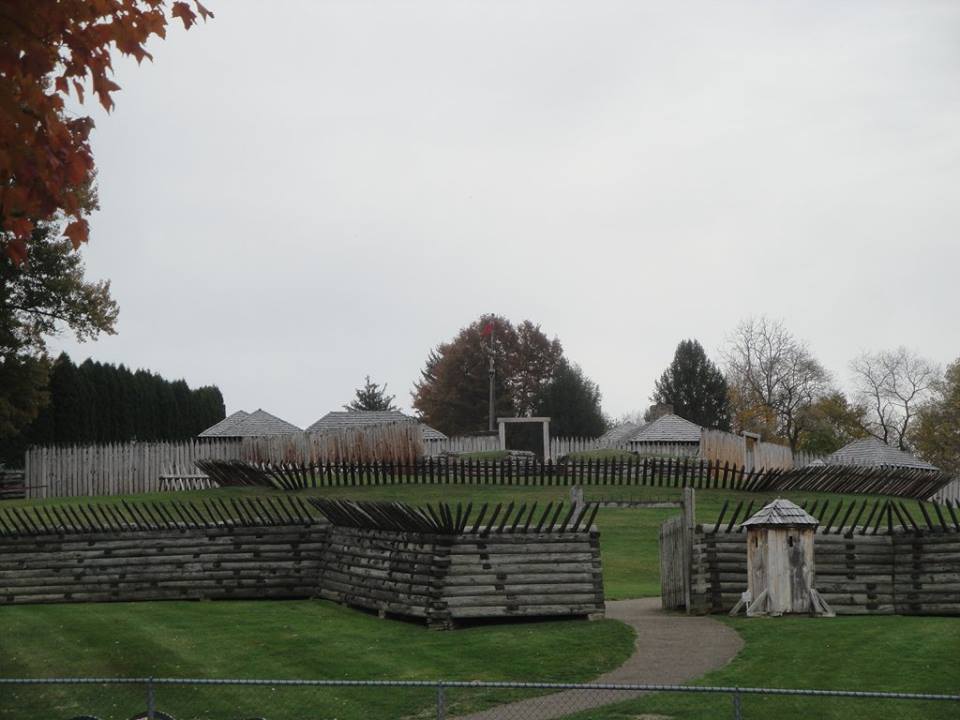
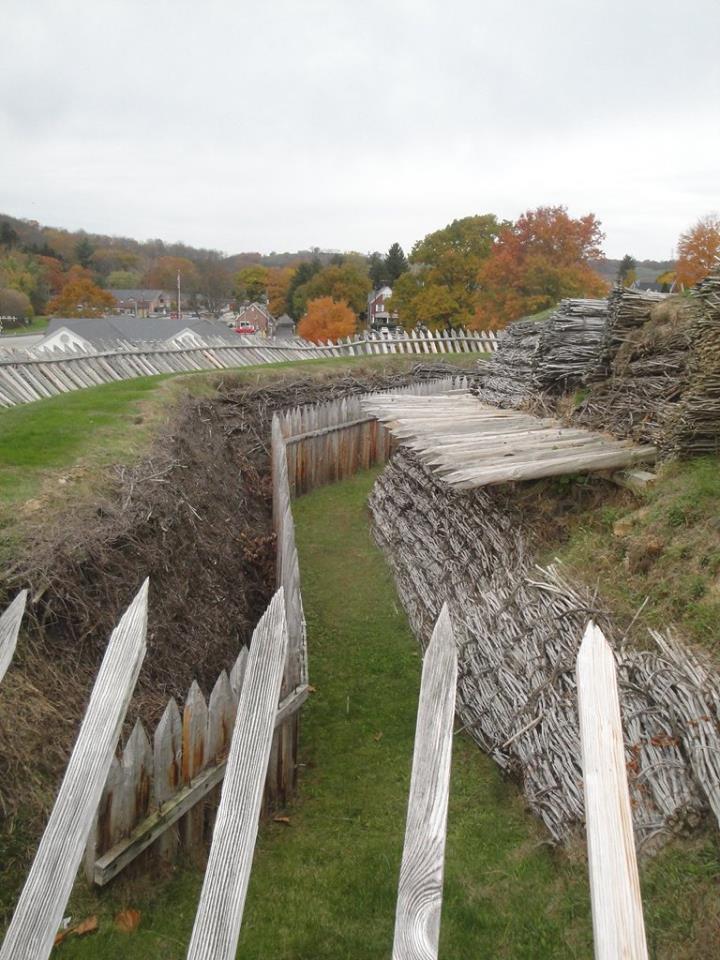
Finally, the highlight of the trip was Fort Ligonier. I have read about the fort and the historic site, but was pleasantly surprised by what I consider THE best museum on the French and Indian War. The museum attached to the reconstructed fort has a full exhibit on the history of Fort Ligonier and also a large exhibit on the entire French and Indian War. Artifacts range from Prussian firearms to Indian chain mail armor (yes, from Delhi, India!). All nations that fought in this “first” world war are represented. It is an exhibit that one would not expect at a small historic site. The reconstructed fort itself is an excellent representation of 18th century fortifications. The fort is fully interpreted, with all the buildings recreated on their original locations. If you are within 100 miles of Ligonier, PA…this is a MUST see museum/historic site.
Fort LigonierFort Ligonier
For more information to take your own “French and Indian War Trek”, see the websites below.
A lot of understanding history is understanding connections. Making relevant connections
Robert “King” Carter
and interpreting those connections to people. Recently I played a part in curating a new exhibit at the Manassas Museum. This exhibit “A Virginia Aristocracy: The Carters of Virginia” focuses on the Carter family in Virginia and their vast influence. Beginning with Robert “King” Carter, the Carters amassed great wealth and land in Virginia. The Carters were one of the leading families in colonial Virginia and their influence was felt all the way up to the Civil War.
As I was leading an exhibit talk last weekend, I started to make some of those connections that I love to share with the public. One that I knew about, but didn’t really contextualize until talking to a small group was how the Carters influenced the course of American history. In a way beyond their ancestry to future U.S. Presidents, but in a connection that “King” Carter never intended.
With the visit of the L’Hermione to the east coast of the United States this summer, there has been a heightened interest in the Franco-American alliance that won the American Revolution. The French rebuilt the L’Hermione not only for its beauty but also its historical significance. Most importantly, its mission and the passenger it contained when it arrived in Boston in the fall of 1780.
The spring of 1780 was a low point in the American cause of independence. Stagnation in the north between Washington and British commander General Sir Henry Clinton combined with devastating defeats in the Southern Theater caused low morale among the patriots. Cornwallis had complete control over the Southern colonies and no standing American force seemed to be able to stop his movements. Continue reading ““Our clocks are slow” L’Hermione, Lafayette and the Franco-American Alliance”→
It will be hard to describe in modern terms the celebrity of Marie-Joseph Paul Yves Roch Gilbert du Motier de Lafayette, Marquis de Lafayette (aka LaFayette) in 18th century America.
The young Marquis was fascinated with the American ideal of revolution and against the wishes of the French monarchy, in 1776 he cast his lot with the American patriots. His relationship with George Washington and other American leaders played a major role in the American-French alliance that brought about American independence. Continue reading “The Return of L’Hermoine”→
As we remember the events around Bennett Place this weekend, keep in mind our friends near Boston are commemorating another important anniversary. Today marks the 240th anniversary of the battles of Lexington and Concord. To read more about the events taking place at Minuteman National Park, the Lexington Historical Society and the Concord Historical Society our friend J.L. Bell’s “Boston 1775” blog is an excellent resource. You may visit his blog by following the link: http://boston1775.blogspot.com/
Thank you to everyone who has taken the time to read our Rev War Wednesday posts. We hope shedding light on the events during the American Revolution gives more perspective to the events leading up to the American Civil War.
As the British under Lt. Col. Francis Smith marched out of Lexington on the morning of April 19th, they left behind them 18 American casualties. One of these men who suffered wounds that morning was Prince Estabrook. Estabrook was unlike the others who lined up that morning on the Lexington Green, Estabrook was an enslaved African American.
Prince Estabrook Service Record for June 1775
Born in the 1740’s and owned by Benjamin Estabrook there is little information on Prince’s life and family. Benjamin Estabrook operated a grist mill near Lexington and maintained a decent sized farm. Benjamin served in various positions in Lexington including coroner, justice of the peace and Selectman. He inherited Prince from his father and both men were near the same age. Prince enlisted in the Lexington militia in 1773 and his owner had to grant him the ability to do so. Continue reading ““A Negro Man”: Prince Estabrook of Lexington”→
The above words were written by Lt. Col. Francis Smith in his official report to General Thomas Gage. Smith, in command of the British expedition to Concord recently returned from what would be the opening salvo of rebellion. Smith wanted to be clear that he never intended to start bloodshed. In the days afterwards, the Massachusetts militia made it clear that they intended to lay the blame at the “regulars.” As soon as the British returned to Boston, the war of words began on who fired the first shot to begin a worldwide war. The British column that was led by Smith was sent from Boston to capture supplies reportedly stored at nearby Concord. To get to Concord, the British would have to march through Lexington. Due to a complex warning system, the local militia in Lexington were mustered and called to arms. Captain John Parker and his minutemen were lined up on the Lexington green in two rows, facing the road to Cambridge and the Lexington meetinghouse. The road south of the green headed to Concord, and Parker had his mean assembled on the northern portion of the green, away from the Concord road.







 Emerging Revolutionary War Era