The Other German

RevWarWednesdays-header

Baron Frederich Wilhelm August Heinrich Ferdinand Steuben or Frederich Wilhelm Ludolf Gerhard Augustin von Steuben or more simply Baron von Steuben, may be the most recognizable German to serve with the American army during the American Revolution.*

Portrait of Baron Johann de Kalb  (by Charles W. Peale)
Portrait of Baron Johann de Kalb
(by Charles W. Peale)

His merits, pedigree, and how he came to America has been questioned and studied by many scholars and historians.

Another German has not fared so well in terms of recognition of his invaluable services to the American cause.

This post is about that other German-speaking military officer. He did something von Steuben did not.

Baron Johann von Robais de Kalb not only offered his services to the fledgling American Continental Army, he also gallantly gave his life for his adopted-cause.

Born June 19, 1721 in Huttendorf, near Erlangen in Bavaria, de Kalb led a life of privilege, learning multiple languages before earning a commission in the French army in the Loewendal Regiment. He served admirably in the War of Austrian Succession and the Seven Years War, in the later, he won the Order of Military Merit and gained his baronetcy.

Continue reading “The Other German”

Mr. Jefferson’s library: “a necessity of life”

RevWarWednesdays-header

Part three in a four-part series

tjstudy“I cannot live without books,” Thomas Jefferson wrote to John Adams in June of 1815. The former president had just packed his personal library—some 6,700 volumes—into a wagon train and shipped it north to the nation’s capital. He’d sold the collection to Congress for $23,950 to replace the collection burned by the British during the War of 1812.

His collection was, Jefferson rightly believed, “the choicest collection of books in the United States.”

And now he was left virtually bookless. Continue reading “Mr. Jefferson’s library: “a necessity of life””

“Our clocks are slow” L’Hermione, Lafayette and the Franco-American Alliance

RevWarWednesdays-header

unnamed
Marquis de Lafayette

With the visit of the L’Hermione to the east coast of the United States this summer, there has been a heightened interest in the Franco-American alliance that won the American Revolution.  The French rebuilt the L’Hermione not only for its beauty but also its historical significance.  Most importantly, its mission and the passenger it contained when it arrived in Boston in the fall of 1780.

The spring of 1780 was a low point in the American cause of independence.  Stagnation in the north between Washington and British commander General Sir Henry Clinton combined with devastating defeats in the Southern Theater caused low morale among the patriots.  Cornwallis had complete control over the Southern colonies and no standing American force seemed to be able to stop his movements.  Continue reading ““Our clocks are slow” L’Hermione, Lafayette and the Franco-American Alliance”

Fashion in the Historic Triangle

RevWarWednesdays-headerWhen one heads to the Historic Triangle of Jamestown-Williamsburg-Yorktown, Virginia becoming immersed in early American History is almost a given.

At the same time, when one is looking for fashion in the area, the Premium Outlets in Williamsburg would usually be the direction one would head.

However, thanks to Jamestown Settlement and Yorktown Victory Center, fashion and American history come together. But, the clothing styles does not end with just Colonial American history, as fashion from British military uniforms to Native American and West African cultures will also be on display. Continue reading “Fashion in the Historic Triangle”

The Return of L’Hermoine

RevWarWednesdays-header

It will be hard to describe in modern terms the celebrity of Marie-Joseph Paul Yves Roch Gilbert du Motier de Lafayette, Marquis de Lafayette (aka LaFayette) in 18th century America.

The young Marquis was fascinated with the American ideal of revolution and against the wishes of the French monarchy, in 1776 he cast his lot with the American patriots.  His relationship with George Washington and other American leaders played a major role in the American-French alliance that brought about American independence. Continue reading “The Return of L’Hermoine”

Jefferson: The Man Who Moved Mountains

RevWarWednesdays-header

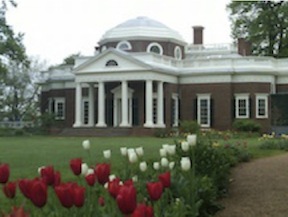
Montecello TulipsThe second in a four-part series

He leveled the top of the mountain with gunpowder.

He began the project in 1768, when he was twenty-five. He had his slaves literally sheer off the tip of the mountaintop, peeling away soil rich in iron and clay, revealing bedrock of a local variety known as Catoctin greenstone.

On the flattened plane, he built his dream home. Over the next fifty-eight years, Thomas Jefferson would significantly remodel the house twice more as his personal tastes evolved. The house has a splash of Cavalier Virginia to it, but it also has touches of the classical and the continental.

Jefferson called it “my essay in architecture.” He named his “essay” Monticello. Continue reading “Jefferson: The Man Who Moved Mountains”

James Monroe at War

RevWarWednesdays-header


Part Two

With an excess of officers in the Continental Army and little prospect of getting a field command, James Monroe resigned his commission in 1779.  He became a Lieutenant-Colonel of Virginia forces, but was unable to recruit enough men to form a new regiment.  In 1780 he went to North Carolina as a military observer for Governor Thomas Jefferson, with whom he had begun the study of law. Continue reading “James Monroe at War”

James Monroe at War

RevWarWednesdays-header


Part One

Emerging Revolutionary War is honored to welcome guest historian Scott H. Harris, Director of the James Monroe Museum.

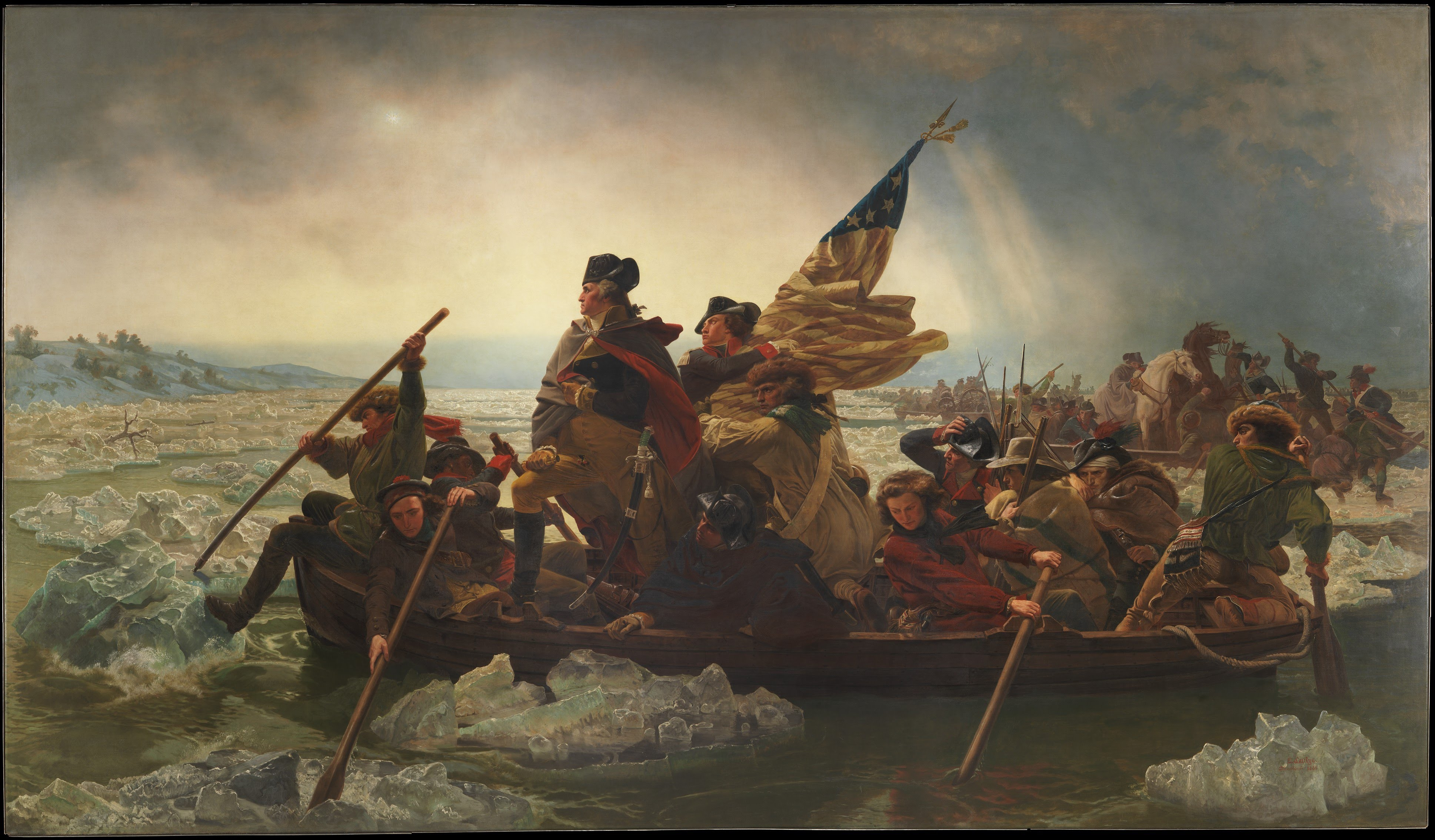
It is one of the great exploits of the American Revolution.  On the night of December 25, 1776, General George Washington led the Continental Army across the icy Delaware River to attack a Hessian garrison at Trenton, New Jersey.  Young Lieutenant James Monroe held the flag behind Washington as they were rowed across the freezing river (standing up).

Emanuel Gottlieb Leutze, Washington Crossing the Delaware.  Oil on canvas, 1851.  Only two figures in this fictitious image are identified—General George Washington and Lieutenant James Monroe (holding flag).
Emanuel Gottlieb Leutze, Washington Crossing the Delaware. Oil on canvas, 1851. Only two figures in this fictitious image are identified—General George Washington and Lieutenant James Monroe (holding flag).


Except, that’s not what happened.

Continue reading “James Monroe at War”

Inspired By the Americans

RevWarWednesdays-header

On December 16, 1773, in Boston, Massachusetts harbor, American colonists belonging to the Sons of Liberty stole aboard trade vessels anchored in the water. In protest to recently passed British legislation, the Native American dressed Sons of Liberty dumped 342 chests of tea into the water.

The Boston Tea Party became a prominent and well-known defiant act by the Americans on the road to the American Revolution.

Unbeknownst to the Adams, Warrens, and Hancock’s of the American Revolution, this particular form of protest–attacking the purse strings of the governing power–would resonate 75 years later, 3,284 miles, and one continent away. Continue reading “Inspired By the Americans”

Jefferson: America’s Great Contradiction

RevWarWednesdays-header

monticellobenchThe first in a four-part series

I sit on a small wooden bench, little more than a plank with legs, really, beneath a tulip poplar whose wide branches umbrella me. The grass around the bench has been worn away by weary travelers come to the bench to rest, revealing the reddish iron-rich soil of Virginia beneath.

A few yards away from me, Thomas Jefferson rests in peace.

A slow stream of visitors comes down the brick walkway from Jefferson’s house to stand outside the black, wrought-iron fence that surrounds his family’s small graveyard, still in use today by descendents. Many visitors have thrown coins onto the president’s grave—not just the Jefferson-faced nickels you’d expect, either, but pennies, dimes, and quarters, too. Considering the rift between Washington and Jefferson in Washington’s last years, I wonder what Jefferson would think about that. Continue reading “Jefferson: America’s Great Contradiction”