The Price is Right: Comparing Prices in 1794

Emerging Revolutionary War welcomes back guest historian Eric Olsen. Eric is a historian with the National Park Service at Morristown National Historical Park. Click here to learn more about this site.
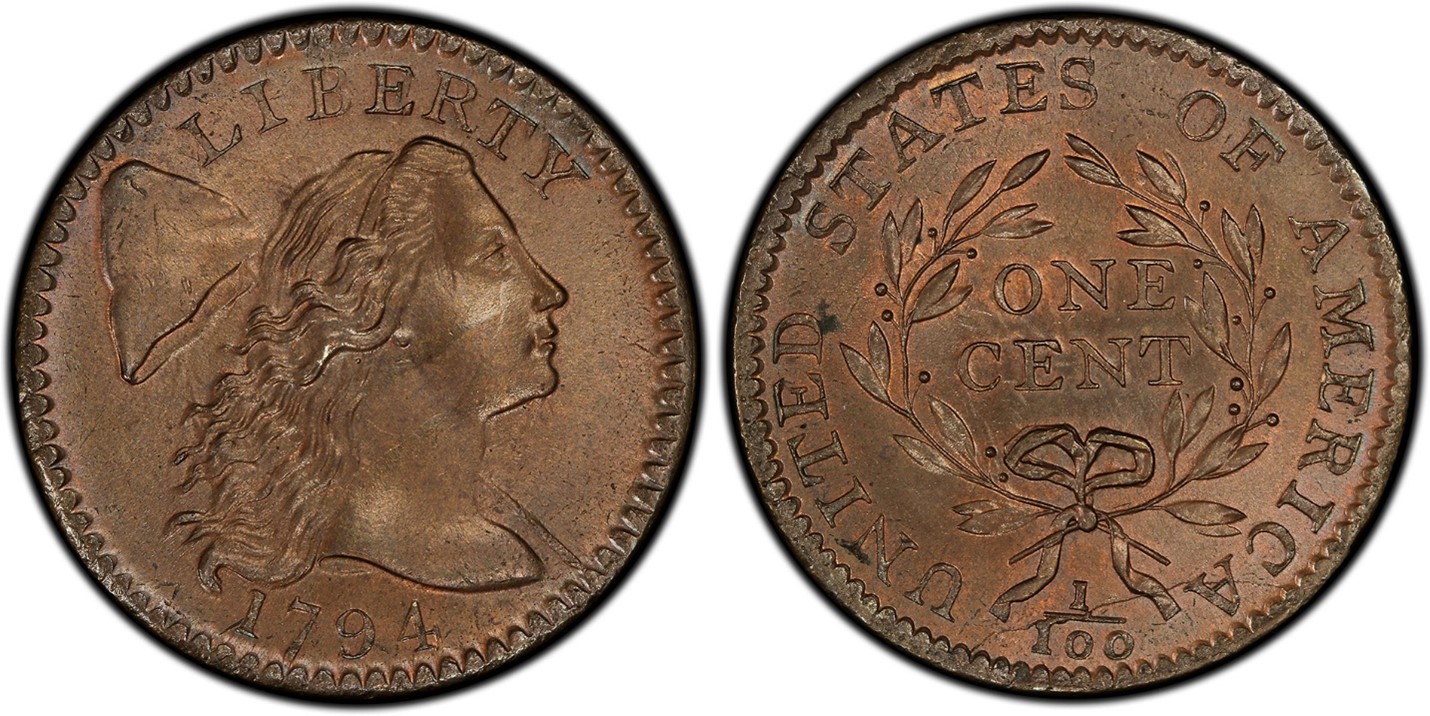
    

Visitors always want to know, “How much did “that” cost back then?” We used to tell them because of inflation and the conversion from pounds to dollars it was really hard to give a definitive answer. It is even harder to figure during the American Revolution when the value of the dollars changed dramatically just over the course of a few months. There are all sorts of fancy conversion sites on the internet today but since math was not my strong point, I don’t know how accurate they are. 

One book tried another approach to explain 18th century vs. modern prices. “A person today, purchasing the same product made the same way out of materials made the same way, will pay roughly the same percentage of their wages for the product as a person of equal economic status in the past would have. For comparison, at the present time [1997 book] an average shop rate runs thirty-five dollars an hour for labor. If you make ten dollars an hour, this costs you three and a half hours of work, and the same ratio applied to a craftsman making thirty pounds a year or two pence per hour.” Makes sense but seems a bit too complicated.

However, I did find one primary source that can give a clue to the relative value of items. It comes from Theophile Cazenove, a Dutchman who traveled through New Jersey and Pennsylvania in 1794 looking for investment opportunities for Dutch bankers. At his various stops in Morris County, Cazenove recorded the prices of farms, livestock, and even labor.

Sometimes the prices were in pounds, other times they were in dollars. When he included both prices for one item, I did some very simple math and found that it took eight shillings to make one dollar, and that $2.50 equaled one pound. According to the online conversion applications, one pound in 1790 equaled 167.58 pounds today. One dollar in 1790 equaled 32.20 dollars in today’s money.

But without doing any math or conversions if we look at the prices Cazenove listed we can see what items were more expense than other ones. From that we can also assume the more expensive items were more highly valued.   

Keep in mind, on the local level in 18th century America, it was not a cash driven economy. Specie, Hard Money or coins, made of valuable metals such as silver and gold were in short supply in North America and used infrequently. Paper Money was rarely used, appearing briefly during periods of war when armies needed a large source of money to buy goods and services.

Continue reading “The Price is Right: Comparing Prices in 1794”
Beer Drinking in the 18th Century

Emerging Revolutionary War welcomes back guest historian Vanessa Smiley

“Beer is living proof that God loves us and wants us to be happy.” – Benjamin Franklin, Poor Richard’s Almanack

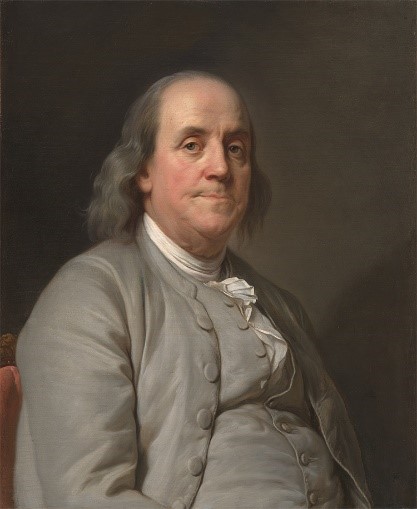
Benjamin Franklin was one of many 18th century beer lovers.
(Benjamin Franklin by Joseph Siffred Duplessis, c. 1785)

During the 18th century, Colonial society held three common beliefs about beer drinking:

  1. Drinking beer was healthier than drinking water
  2. Beer and its ingredients were a healthy supplement to the entire family’s diet
  3. It was an accepted way to promote social discourse

A little different from today’s society, except for beer connoisseurs (such as the Emerging Revolutionary War folks), these beliefs were formed from the circumstances of the time.

Though a generation away from understanding the connection between boiling water and sanitation, most folks understood that water could make you deathly ill. And yet, ale and beer drinkers did not seem to have that same risk. They did not know it at the time, but the boiling process to make these alternative drinking options neutralized much of any tainted water’s ill effects. Therefore, many substituted beer, ale, and other alternatives such as hard cider over water, making these a major dietary staple in the colonies.

Continue reading “Beer Drinking in the 18th Century”

HMS Invincible

A good friend, knowing my interest in military history brought me a very unique artifact, which led me to discover more about where this piece of history originated from. Here is what I discovered.

Launched in 1741 by the French as L’Invincible, this 74-gun French ship of line was captured by the British during the First Battle of Cape Finisterre on May 14, 1747.

The engagement during the War of the Austrian Sucession, was a five-hour engagement in the Atlantic Ocean, off the coast of northwest Spain. The British admiral, George Anson struck the 30-ship convoy of the French, which was under the command of Admiral de la Jonquiere and captured four ships of the line. One of those ships of the line was the L’Invincible.

The L’Invincible sacrificed itself to allow some of the convoy to escape and tried in vain to fend off six British warships.

L_Invincible_vaisseau_de_74_canons_capture_en_1747
A depiction of L’Invincible after being captured by the British in 1747

Given its more Anglicized name; HMS Invincible, the ship’s design was larger than the usual 74-gun vessels of the time. Her greater draft and lower center of gravity allowed her to carry much more sail. This allowed the ship to gain more speed.

Altogether her design helped revolutionize British warship making as she was the first 74-gun ship in the British Navy. By the time of the crucial Battle of Trafalgar in 1805, over three-fourths of the entire British Navy were line ships toting 74-guns.

In February 1758 while part of a large sailing of warships and transports, the HMS Invincible that left from St. Helens Roads near the Isle of Wight in England. The ship struck Horse Tail Sandbank and got stuck. Yet with the rising tide she was able to free herself.

Unfortunately, fate had it in for the ship, as the wind suddenly changed direction and increased in intensity and she dragged her anchor on the sandbank. A failed attempt to lighten her cargo and load of armament and putting her under full sail did not work either. She was marooned on the sandbar and began to take on water.

For the next three days, the majority of her cannons and stores were removed and on February 22, 1758 she rolled onto her side and was lost.

HMS Invincible laid wrecked, covered, and largely forgotten until the 20th century, when in May 1979 a local fisherman snagged his nets on the timbers. Local divers found more of the ship and has been investigated and parts recovered ever since.

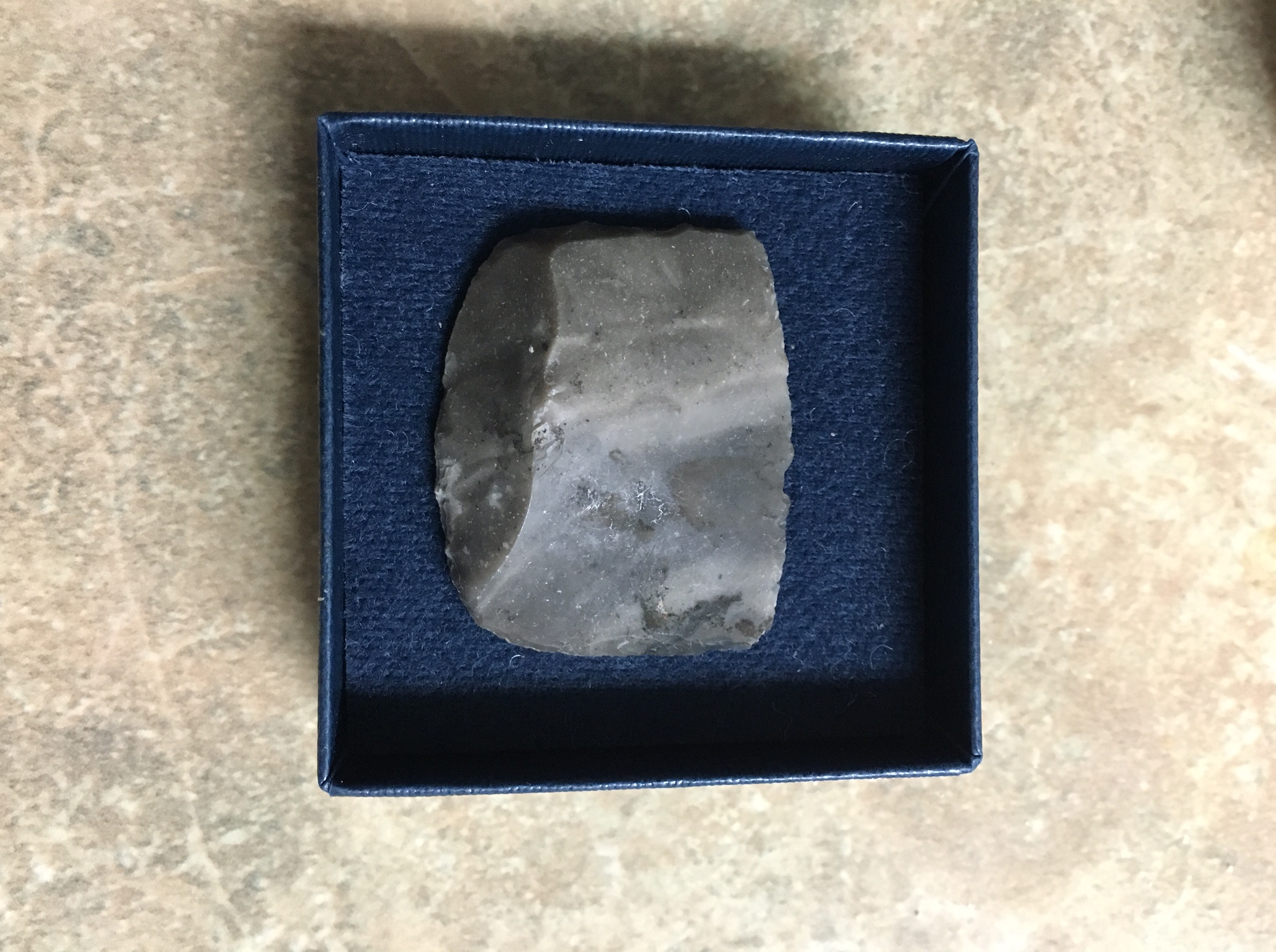
One of the interesting finds was the experimental flintlocks of the cannons of the HMS Invincible. Rather large, the nicely knapped flints were believed to be used in the canon locks. Canon locks and subsequent flints among the gunnery stores were considered a “unique find.”

IMG_1669
A “Large Wedge Type Gun Flint” from the HMS Invincible (author collection)

Fore more information about the ship, the wreck, and the discovery, check out Brian Lavery’s The Royal Navy’s First Invincible. Link to the book via Amazon is here.