

Coin of the Realm

Emerging Revolutionary War welcomes guest historian Mike Busovicki

If the majority of American Colonists were from the British Isles, Africa, and Germanic States, why was Spanish currency so prevalent and how did it get here?
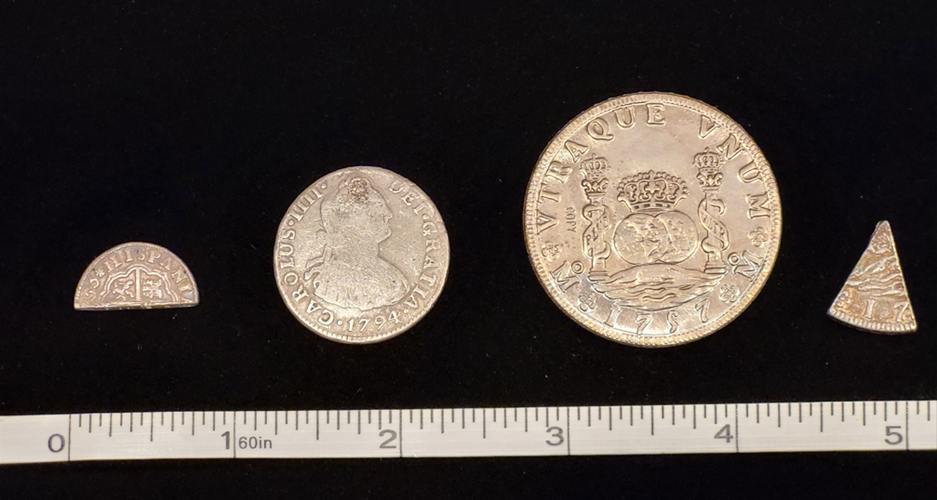
L-R: Silver half of a 1-reales coin, silver 2 reales, copy of an 8-reales (“piece of eight”) and copy of 1/8 (piece, or “bit”) of the 8-reales. Like cutting a pizza in half and cutting the halves again twice, it was easier to create a system based on “eighths” rather than a decimal one. (Photo by Mike Busovicki)

By the late 1400s, The Spanish had joined the kingdoms of Aragon and Castile through the marriage of Ferdinand and Isabela, wrested control of the Iberian Peninsula from the Islamic Moors and utilized the Catholic Church to enforce royal authority and justify brutal domestic and foreign policies.But these endeavors were expensive. Though successful in removing political opponents, it drove out or suppressed long standing medical, financial, and trade centers, especially in population hubs like Granada, Seville, and Toledo. Heavily in debt, the Spanish crown had to generate income from outside of Spain. Consolidating wealth and power into the hands of a few was expedient, but it excluded large segments of the population and resulted in domestic economic stagnation.
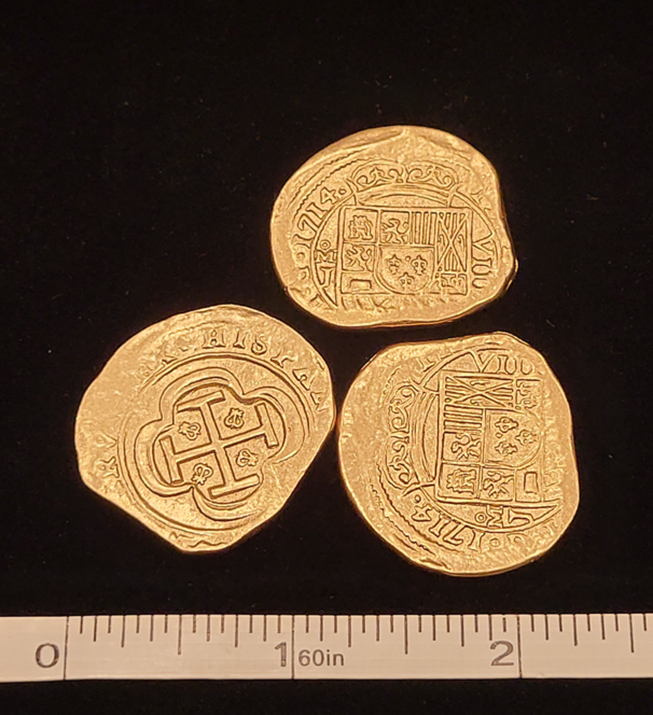
Copies of 4-Escudo coins. Escudo, meaning shield, referred to the coat of arms that validated coins. New world mines accounted for over 80% of the world’s silver and 70% of the world’s gold – it also funded conquest by the Ming, Qing, Mugul, Ottoman, and Safavid empires. (Photo by Mike Busovicki)
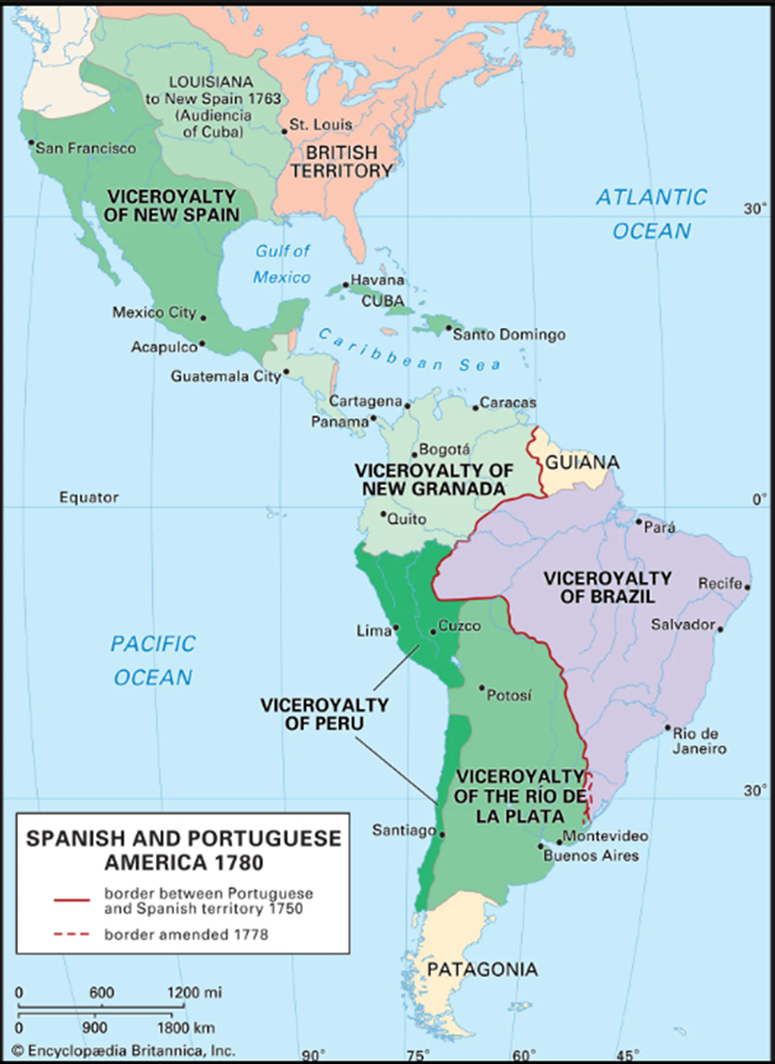
While French intervention, British politics, and German mercenaries constitute most discussions regarding European power during the Revolution, centuries of Spanish control of vast areas cannot be overstated. By courtesy of Encyclopædia Britannica, Inc., copyright 2016; used with permission.

Continue reading “Coin of the Realm”

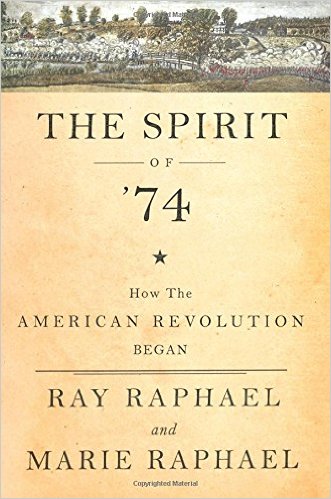
Review: The Spirit of ’74, How the American Revolution Began by Ray and Marie Raphael

ERW Book Reviews (1)Why did Boston’s act of political vandalism lead to a British military expedition against small towns in Massachusetts sixteen months later?

How, exactly did evolving political tensions result in actual warfare?

How did Lexington and Concord become, as Ralph Waldo Emerson wrote, “the shot heard around the world.”

The Spirit of '74, How the American Revolution Began by Ray Raphael and Marie Raphael
The Spirit of ’74, How the American Revolution Began by Ray Raphael and Marie Raphael

In a much-needed narrative, historians Ray and Marie Raphael fill in the movement toward those first shots at Lexington and Concord. In a primary source driven, easy to read history of that year before and leading up to 1775. However, “our story slows, pausing at additional markers that are often bypassed or slighted” (x).

Therein lies “only in a full telling is war a plausible outcome” (x).

The Raphael duo fluidly walks the reader through the build-up to that fateful April 1775 day. The book sheds light on developments in towns and counties across the colony of Massachusetts. A timeline in the beginning provides a good resource to remember the important dates as you read.

With the British response to the Boston Tea Party of December 1773, committed activists perceived that Britain had handed them a blueprint for disenfranchisement (44). What would be seen in the colony as the Coercive Acts, which, among other changes nullified the Charter of 1691 which colonists in Massachusetts held as sacrosanct. When the news of what the British government had did, which arrived in the harbor of Boston in May 1774 until the following April 1775, “resistance would mount, coalesce, and manifest itself in armed, relentless rebellion (44).

That coalescing would resemble an accordion, with Boston being one end and the countryside of Massachusetts the other end of the instrument. Both ends would reverberate the bellows as ideas, exchanges of opinions, passive and aggressive action, all marred the intervening months of 1774. Until as Abigail Adams wrote many months before April 1775, the”flame is kindled and like lightening it catches from soul to soul” (192).

The Raphael duo capture what the farmers in Berkshire set in motion, in accordance with capturing the attitude of townspeople in Worcester, Massachusetts at the same time. These various local uprisings, which put an emphasis on peaceful activities coalesced into the call for committees and eventually into the need for the Provincial Congress. This Congress acted as the de-facto governing body of Massachusetts in response to British measures to subdue and punish the intransigent rebels.

When viewed through the prism of the preceding years, what happened on the green of Lexington or the North Bridge at Concord becomes clearer as the pivot in which the simmering resentment in Massachusetts finally boiled over and led to the “shot heard around the world.”

Every once in a while a monograph is written that fills a necessary void in the field of early American Revolutionary history. This history is definitely one of those as it fills in that critical, yet overlooked, time period in the build-up to the fighting between British-American colonists and the redcoats that represented the mother country.

One cannot hope to understand the events of 1775 and beyond without knowing how the colonists of Massachusetts, so many that have unfortunately been lost to the passing of time, began the protests that led to independence, beginning in the years before.

Or as the authors more succinctly state; “and so begins a story we know” (214).


Book Information:

Publisher: The New Press, New York, NY

Pages: 219 pages plus acknowledgements, bibliography, index, and, timeline