

Emerging Revolutionary War welcomes guest author Michael Aubrecht
At the time of the Revolutionary War it is estimated that there were over a half million African-Americans living in the thirteen colonies. As the rebellion’s patriotic call to fight for liberty grew, the British government sought to undermine the expanding Continental Army by soliciting slaves who ran away from their masters. By promising to grant them their freedom and security, the Redcoat ranks were able to boost their manpower on the battlefield instead of constantly relying on the importation of additional troops who took months to travel to the Americas from England. Some of these all-black units even flourished as in the example of the Royal Ethiopian Regiment and later, the Black Pioneers.
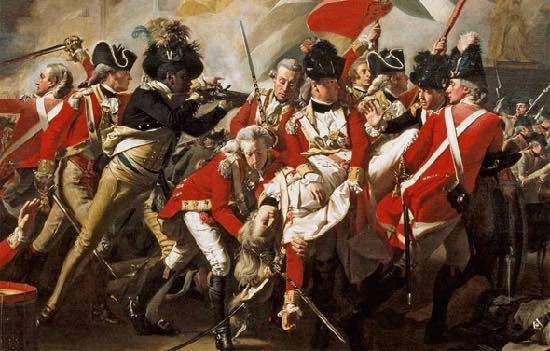
According to the Atlantic Canada Virtual Archives Website Black Loyalists in New Brunswick: “In November 1775, Virginia Governor Lord Dunmore, hoping to bolster the British war effort, encouraged slaves and indentured servants of the Patriots to join His Majesty’s army. Many did so. When the British evacuated their army from Boston to Halifax in 1776, a “Company of Negroes” was part of the entourage. British Commander-in-Chief Sir Henry Clinton extended the policy of appealing to African Americans in his Phillipsburg Proclamation of 1779 in which he offered security behind British lines to ‘every negro who shall desert the Rebel Standard.'”
Following the British Army’s surrender, it is estimated that nearly 35,000 loyalists fled the United States to settle north in the provinces of Canada including the maritime regions of New Brunswick and Nova Scotia. Nearly 3,500 free black loyalists were among them including many who had fought alongside the Redcoats on behalf of the English crown. New Brunswick saw thousands of African-Americans settle in as new citizens and many went on to fight again for Britain in the War of 1812. Despite their service to the king, many black loyalists and their families still faced racial discrimination, although it paled in comparison to the institution of slavery that continued to thrive in the southern United States.
Michael Aubrecht is the author of Thomas Jefferson and the Virginia Statute for Religious Freedom: Faith & Liberty in Fredericksburg.
 Revolutionary War Wednesday and Emerging Revolutionary War is pleased to welcome guest historian Mark Maloy this week.
 Emerging Revolutionary War Era