
Emerging Revolutionary War welcomes back guest historian Evan Portman

(Google Art Project)
It’s a scene familiar and frightening to most American schoolchildren. A headless horseman riding down a dark road, his jack-o’-lantern face alight.
But the Headless Horseman is not strictly an American legend. In fact, it probably didn’t even originate in America. An Irish legend tells of a rider who allegedly carries his severed head under his arm and wields a whip made of the spines of human corpses. A similar revenant is said to haunt the Rhenish valleys of Germany. Thus, it is no surprise that an American twist on the headless horseman tale emerged from the revolutionary era—and the imagination of Washington Irving.
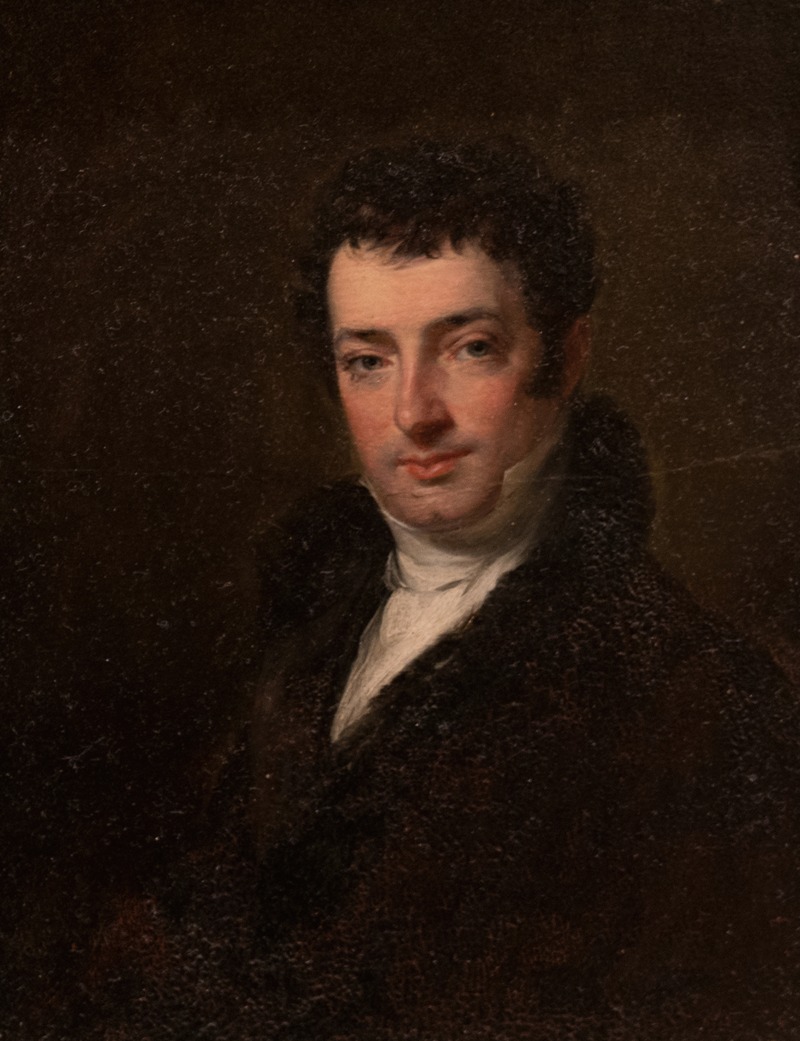
Irving’s life was intertwined with the history of the American Revolution. He was born in Manhattan in 1783 the same week that the city learned of the Treaty of Paris, which ended the Revolutionary War. Of course, Irving’s namesake was the hero of the revolution, George Washington. Irving briefly met the father of the country when he was only 6 years old in 1789, when Washington came to New York City for his inauguration as president. It is therefore no surprise that Irving decided to base his version of the horseman on Revolutionary War lore.[1]
Published in 1820, The Legend of Sleepy Hollow follows Ichabod Crane, a tall, lanky, superstitious man from Connecticut who had traveled to Sleepy Hollow (just outside of Tarrytown, New York) to become a schoolmaster. Much to Crane’s fright, the town is said to be haunted by “the ghost of a Hessian trooper, whose head had been carried away by a cannon-ball, in some nameless battle during the Revolutionary War.”[2] Despite this, the timid but ambitions teacher quickly infatuates himself with the young lady, Katrina Van Tassel, but competes for her attention with the brawny Abraham “Brom Bones” Van Brunt.
On the way home from a gathering at Katrina’s house, Crane encounters a lone rider who appears to be headless. Recalling the ghost stories he had heard, Crane gallops across a bridge that the horseman reportedly cannot pass. But just as he crosses the bridge, the rider strikes him with what seems to be a severed head. The following morning, Crane’s horse arrives home without him, and all that is left by the bridge is a smashed pumpkin. Brom Bones marries Katrina, and the narrator is reluctant to accept whether the stunt was orchestrated by Van Brunt himself or that the Headless Horseman might truly haunt the valley of Sleepy Hollow.
The Headless Horseman of Irving’s imagination might have grown from one of the European myths of old, but the legend may also have origins rooted in the history of the Revolutionary War.
In 1776, British Gen. William Howe had slowly but surely pushed Washington’s Continental Army from Long Island to Upper Manhattan over the course of three months. After a daring escape across the East River, Washington’s army narrowly avoided destruction and lived to fight another day. That day came on October 28, as Howe attempted to encircle the Continental Army. Washington withdrew his forces to White Plains where he fought a valiant, but unsuccessful, defensive battle.
During that battle, British cannons bombarded the Continental lines, and several American guns responded in what became a brief artillery duel. According to Maj. Gen. William Heath, this counter-battery fire decapitated one of the Hessian soldiers. “A shot from the American cannon at this place took off the head of a Hessian artillery-man,” he recorded in his diary on November 1, 1776.[3] Perhaps this fellow became the inspiration for Irving’s headless horseman, or the author based him on one of the other Hessian casualties of the New York Campaign.
By late autumn in 1776, the area south of the Bronx River had become a veritable no-man’s-land. That included Westchester County, where Tarrytown—the setting of the legend—is located. Scores of Loyalist militiamen, British infantry, and Hessian Jägers roamed the countryside and skirmished with Patriots, vigilantes, and raiders. Irving’s specter could have been based on one of the feared Hessian soldiers who patrolled and “haunted” Sleepy Hollow during the war. His legend also might have grown from the alleged headless Hessian corps discovered near Tarrytown after the battle of White Plains. The corpse was later buried in the Old Dutch Burying Ground, where other inspirations for characters in Irving’s story can be found.[4]
Regardless of its origins, the headless horseman and The Legend of Sleepy Hollow looms large in our collective memory, even two centuries later. Perhaps the “Galloping Hessian,” as Irving called him, still patrols the quiet roads of Sleepy Hollow, 250 years after his untimely demise. I, for one, don’t want to find out!
[1] Donna Davies, “Halloween History: The Legend of Sleepy Hollow,” New York Historical Quarterly, October 24, 2019, accessed September 2026, https://www.nyhistory.org/blogs/halloween-history-the-legend-of-sleepy-hollow-2.
[2] Washington Irving, “The Legend of Sleepy Hollow” in The Sketch Book of Geoffrey Crayon, Gent., (New York: C. S. Van Winkle, 1820), 425.
[3] William Heath, Memoirs of Major General William Heath, (New York: William Abbatt, 1901), 73.
[4] Jonathan Kruk, Legends, and Lore of Sleepy Hollow & the Hudson Valley, (Charleston, SC: History Press, 2011), 117–118.

