If one peruses the shelves of their favorite bookstore, histories line the shelves with words in their title “new look,” or “fresh perspective,” or “revisited,” or “rediscovered.” Usually, I am skeptical about what that history entails and whether that perspective will be based on a factual foundation or the author’s interpretation. That last word, “rediscovered,” graces the subtitle of William Edmund Fahey’s edited volume for The History Press. Fahey, who holds a doctorate degree and is a Fellow and President of Thomas More College in Merrimack, New Hampshire. In 2024, he was appointed the historian of the New Hampshire Society of the Sons of the American Revolution.
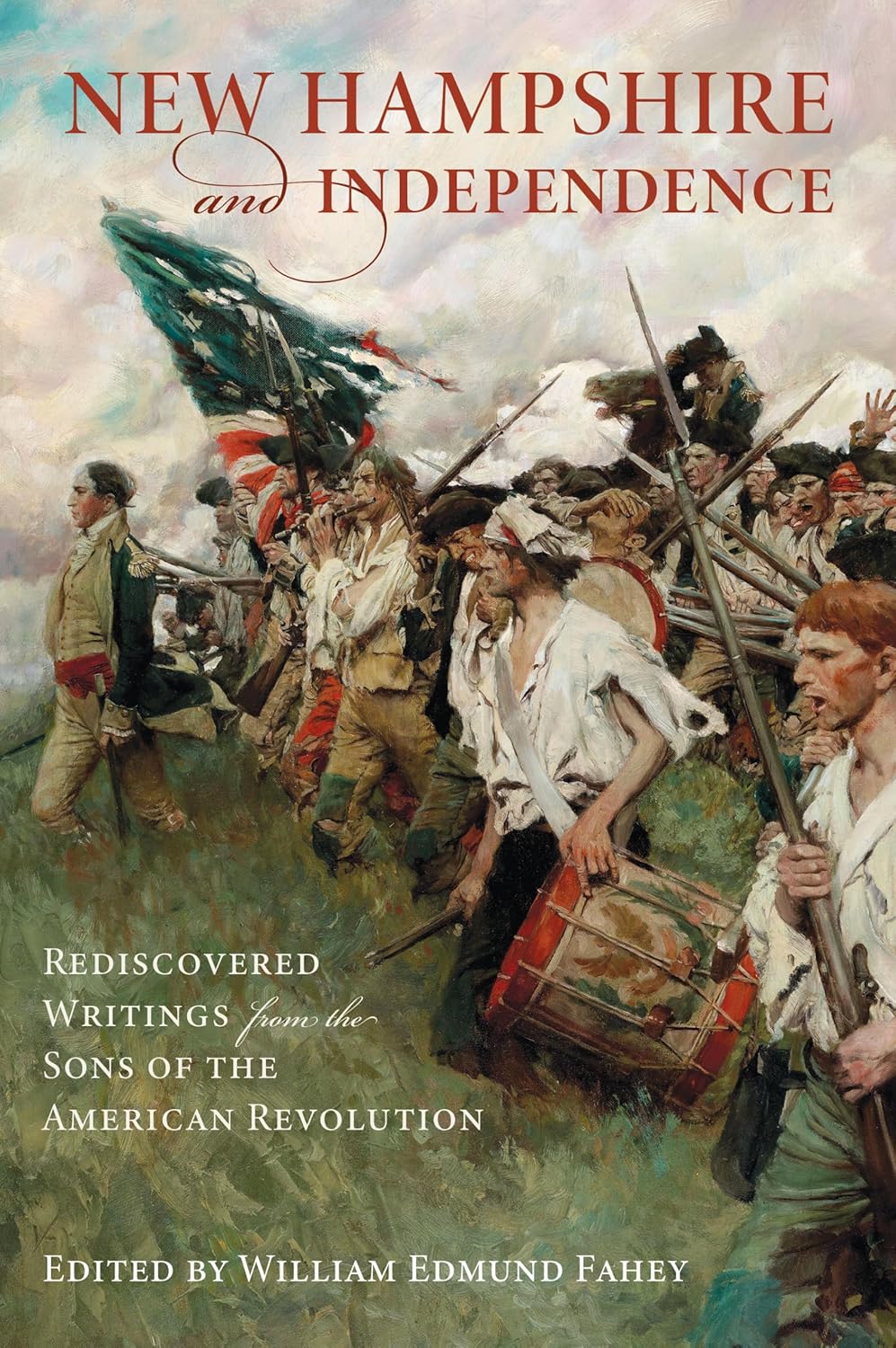
With that background, one can be assured that his “rediscovered” history will be based on impeccable research and accounts that have, unintentionally, been overlooked through the passage of time. That is the case in “New Hampshire and Independence, Rediscovered Writings from the Sons of the American Revolution.” As “questions or even needs that have arisen in recent years. The 250th anniversary of sovereignty is upon Americans” (pg. 29). This is the volume to understand and, if I may, borrow a word, rediscover the role of this small but important colony and its contributions to American victory in the American Revolutionary War.
“The structure of this book is rather straightforward…” (Pg. 30). Part one “sets the mood…the multi-generational effort to reflect, remember, and value the past” (Pgs. 30-31). “The heart of the book is found in the six addresses…” that comprises the entire second part of the publication (Pg. 31). Fahey wraps up this edited volume with the last section, part three, offering “readers key resources to become involved in the Sons of the American Revolution” (Pg. 31). Part four provides key legislative and primary source material for referencing and sparking research into the period. Now, let’s examine key points from each section to show Fahey’s mastery of the material and editorial prowess.
Continue reading “Review: New Hampshire and Independence; Rediscovered Writings from the Sons of the American Revolution edited by William Edmund Fahey”