

If one peruses the shelves of their favorite bookstore, histories line the shelves with words in their title “new look,” or “fresh perspective,” or “revisited,” or “rediscovered.” Usually, I am skeptical about what that history entails and whether that perspective will be based on a factual foundation or the author’s interpretation. That last word, “rediscovered,” graces the subtitle of William Edmund Fahey’s edited volume for The History Press. Fahey, who holds a doctorate degree and is a Fellow and President of Thomas More College in Merrimack, New Hampshire. In 2024, he was appointed the historian of the New Hampshire Society of the Sons of the American Revolution.
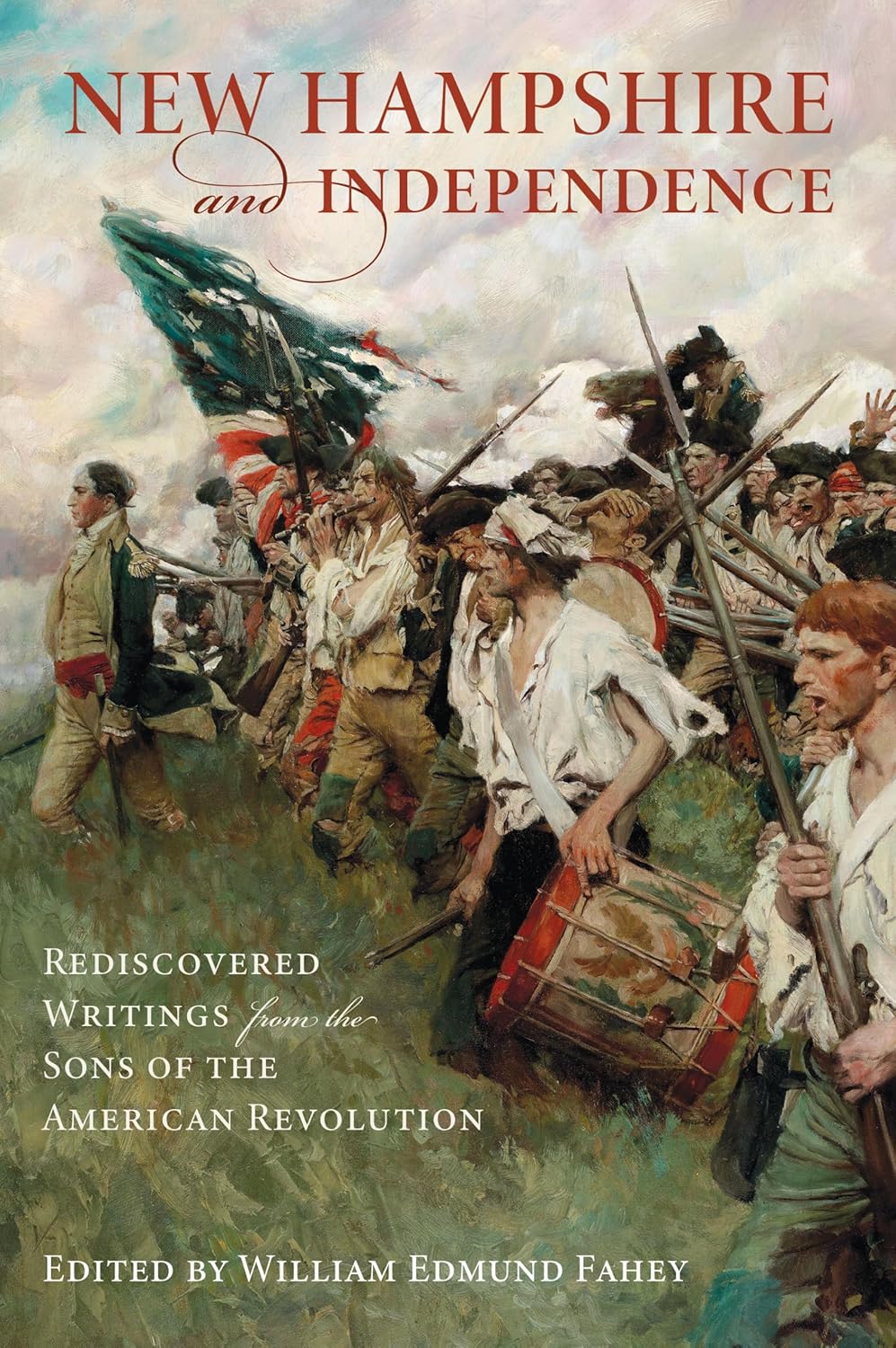
With that background, one can be assured that his “rediscovered” history will be based on impeccable research and accounts that have, unintentionally, been overlooked through the passage of time. That is the case in “New Hampshire and Independence, Rediscovered Writings from the Sons of the American Revolution.” As “questions or even needs that have arisen in recent years. The 250th anniversary of sovereignty is upon Americans” (pg. 29). This is the volume to understand and, if I may, borrow a word, rediscover the role of this small but important colony and its contributions to American victory in the American Revolutionary War.
“The structure of this book is rather straightforward…” (Pg. 30). Part one “sets the mood…the multi-generational effort to reflect, remember, and value the past” (Pgs. 30-31). “The heart of the book is found in the six addresses…” that comprises the entire second part of the publication (Pg. 31). Fahey wraps up this edited volume with the last section, part three, offering “readers key resources to become involved in the Sons of the American Revolution” (Pg. 31). Part four provides key legislative and primary source material for referencing and sparking research into the period. Now, let’s examine key points from each section to show Fahey’s mastery of the material and editorial prowess.
Part one is crucial to those aspiring Revolutionary War enthusiasts diving into this period of history for the first time. A brief overview of the Sons of the American Revolution and a helpful chronological timeline of events, and a resume of New Hampshire military during the Revolutionary period, provide the necessary foundation to fully embrace the upcoming section.
Examining the “heart” of the book covers an interesting array of New Hampshire’s contributions to the American Revolution. Picking out one that resonated with this reviewer was the examination of John Langdon. He was a delegate and signer of the Constitution and one of the first two senators to represent New Hampshire in the Senate. He also declined the offer of running as a vice-presidential candidate in 1812, feeble with advancing age. The candidate for president, James Madison, knew Langdon “intimately” and offered the best recap of the importance and personality of the New Hampshire politician.
“He was a true patriot and a good man, with a noble way of thinking and a frankness and warmth of heart that made his friends love him very much, as it did me in a high degree, and disarmed his enemies of some of the asperities indulged towards others” (Pg. 216).
The essays provide fresh content from a period of the historiography of the American Revolutionary War period. Reading in and developing the mental picture of the timeframe in which these speeches were given provides a unique wrinkle for a history book. This is a well-developed, organized book, providing the necessary context to understand the role of New Hampshire in American victory in the revolution and how the spark of memory is kept alive—and can be kept alive as part three reads—by current and future generations.
Concluding this review, much like the editor did in his afterword, “the stories and recollections found in these pages only scratch the surface of all the accounts that remain to be told of the heroes who fought to establish our republic of freedom” which is “vital…the stories of these great men and women continue to be told” (Pg. 254). But don’t fret, by the time you read these lines, Fahey has already provided recommended readings and resources for an active study section. This is very much a complete starter’s guide for some and, dare I say, a “rediscovery” publication for those that are looking to explore again New Hampshire and the American Revolutionary era.
Book Information:
History Press, February 2026, 256 pages plus images

