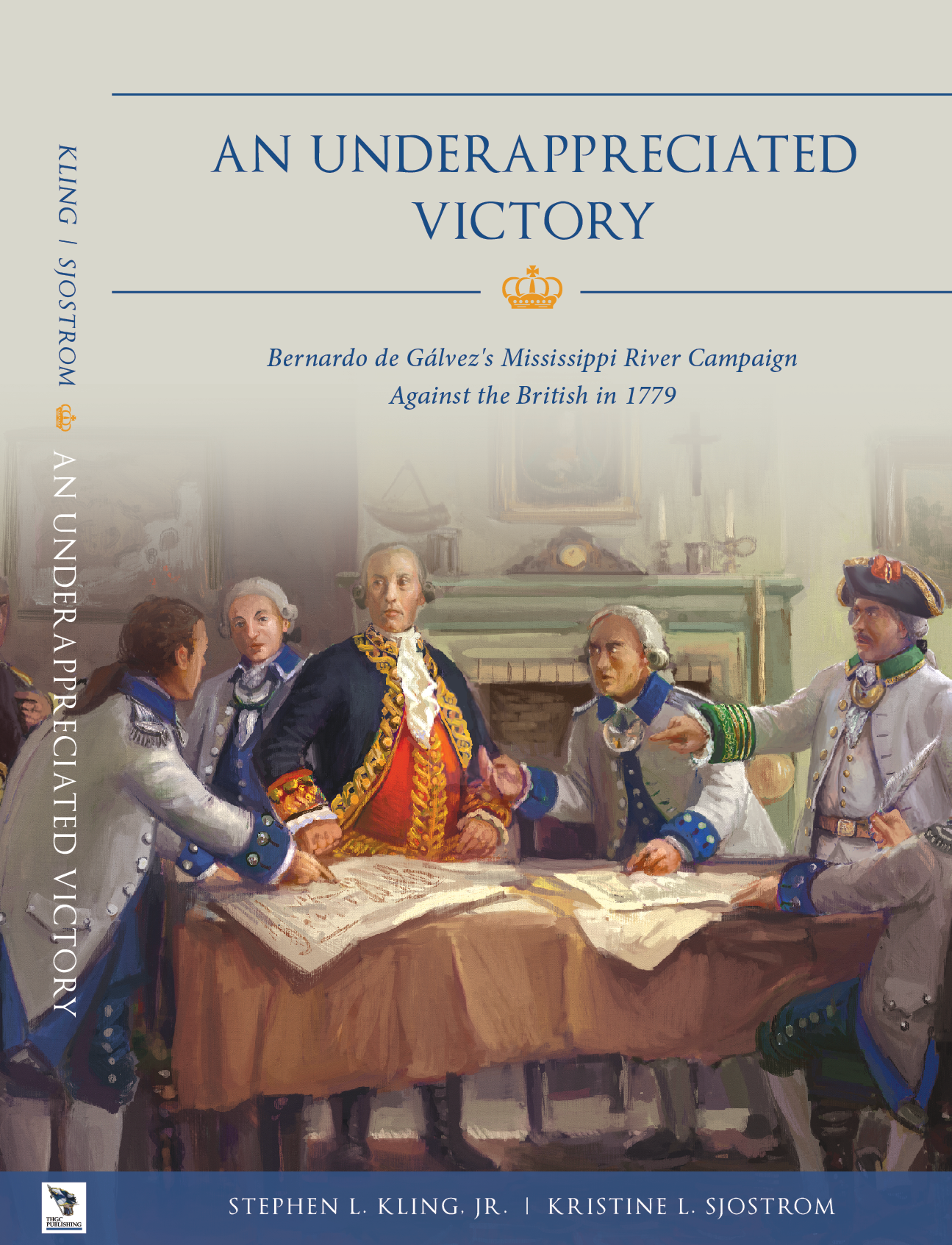
Review: “An Underappreciated Victory; Bernardo de Gálvez’s Mississippi River Campaign Against the British in 1779” by Stephen L. Kling, Jr. and Kristine L. Sjostrom

The American Revolution is often remembered through the familiar lens of successful campaigns and their contributing commanders: General George Washington at Yorktown, Virginia, and General Horatio Gates at Saratoga, New York, to name two of the most significant. Yet the Revolution was an international conflict fought across a much wider geographic area than just along the eastern seaboard of North America.  In An Underappreciated Victory, Stephen L. Kling, Jr. and Kristine L. Sjostrom seek to restore one of these overlooked campaigns to its proper place in the history of the war. Their study of Bernardo de Gálvez’s 1779 Mississippi River campaign demonstrates how Spain, despite pursuing its own strategic interests, contributed materially to the defeat of Britain and how Gálvez’s leadership produced significant results with remarkably limited resources.

The authors begin by establishing the strategic importance of Spanish Louisiana and the Mississippi River Valley. Following Spain’s entry into the war against Britain in 1779, Louisiana became both a potential target for British operations and a valuable base from which Spain could threaten British possessions. New Orleans was particularly vulnerable. British control of posts along the Mississippi posed a danger to Spanish interests while also threatening communications and commerce throughout the region. Rather than remain on the defensive, Gálvez recognized an opportunity to seize the initiative.

It is in this decision that the authors make one of their strongest arguments about Gálvez’s leadership. His forces were hardly overwhelming, and the campaign presented formidable logistical challenges. Distance, weather, disease, difficult terrain, transportation problems, and uncertain intelligence, all complicated operations. Gálvez nevertheless chose an offensive strategy. His willingness to act before the British could concentrate their forces became one of the campaign’s defining characteristics. The resulting operations against British positions, culminating in the capture of Baton Rouge and other posts, demonstrated the effectiveness of surprise, mobility, intelligence, and decisive leadership.

Kling and Sjostrom are very effective in showing that the campaign cannot be understood solely through its engagements. Logistics and geography receive significant attention, revealing the extent to which environmental conditions shaped military possibilities along the Mississippi River. The campaign’s success therefore becomes more impressive when measured against the obstacles continuing to confront Gálvez. His achievement was not simply that he defeated British forces; it was that he managed to organize and sustain an offensive in an environment that severely restricted the movement and supply of armies.

Another of the book’s greatest strengths is its use of multinational sources. By incorporating Spanish, British, and German accounts, the authors move beyond the predominantly Anglo-American perspective that has traditionally dominated Revolutionary War narratives. These sources allow them to reconstruct events from competing viewpoints and provide greater insight into the decisions made by both sides. Their documentary approach also strengthens the case for reconsidering Gálvez’s campaign as a serious military operation rather than an isolated episode on the margins of the Revolution.

The book’s greatest historiographical contribution, however, lies in its reassessment of Spain’s role in the American Revolution. Spain did not enter the war solely to assist the American colonies; it had territorial, commercial, and geopolitical objectives of its own. Nevertheless, those objectives frequently aligned with the interests of the American revolutionaries. Gálvez’s campaign illustrates how Spanish military operations diverted British attention and resources while weakening British control of the Gulf Coast and Mississippi Valley. The authors therefore broaden the traditional interpretation of the Revolution from an Anglo-American struggle supported by France into a genuinely international conflict.

The study is not without potential limitations. This book is a deep and exhaustive study of a particular subsect of war, designed to be the volume on this aspect. Similarly, the authors’ admiration for Gálvez occasionally raises the question of whether they attribute his successes too heavily to exceptional leadership rather than to a combination of favorable circumstances, British weaknesses, and Spanish strategic interests. Nevertheless, the evidence presented makes a convincing case that Gálvez exercised considerable initiative and understood the advantages of striking quickly against dispersed British positions.

Ultimately, An Underappreciated Victory shows that the importance of a military campaign cannot always be measured by the size of participants or soldiers. Gálvez’s 1779 Mississippi campaign involved relatively modest forces compared with the armies that fought at Saratoga or Yorktown, yet its strategic consequences were considerably greater than its obscurity might suggest. Kling and Sjostrom provide a valuable reconstruction of the campaign while challenging readers to reconsider the geographic and international dimensions of the American Revolution. Their study establishes Gálvez not merely as a peripheral Spanish commander but as an important participant in the broader struggle against Britain. In doing so, An Underappreciated Victory makes a persuasive case that the campaign—and Gálvez himself—deserve a more prominent place in the history of the American Revolution.

THGC Publishing, St. Louis, MO
2026
634 pages, including images
$50.00

Book Review: Closing the Ring, Geoge Washington’s War in the North, 1778 – 1781 by Jeffrey A. Denman

From June 28, 1778, until October 1781, there is a gap in major engagements by the main Continental Army under the command of General George Washington. A few minor engagements, at Springfield, Connecticut Farms in New Jersey or Stony Point in New York, occurred. Actions in the Southern Theater occupied much of that period and Newport, Rhode Island became a focal point as well, especially with the French arrival. Historians, especially popular and public historians, tend to quickly cover these approximately three years of war in short order, moving onto the finality.

Yet, these years are important, especially to understand the other facets of warfare, rebellion, and revolution. Diving into the primary sources, from the quill pens of Washington, his fellow generals, staff officers, Continental Congress, and the soldiery that comprised the Continental and militia forces, and one can easily surmise how important those non-major-warfare years were. Luckily for the avid students and enthusiasts of the American Revolutionary War, we now have a concise, richly researched, and impactfully created prose published by Casemate and authored by Jeffrey A. Denman to fill this gap.

A glance at Denman’s biography reveals that he was a public-school teacher and historian who has a resume filled with publications and researched articles. He takes that acquired skill set into this publication, weaving the story, sprinkled with direct quotes and primary source material, for an accurate and compelling overview of the high-stakes of the American Revolution and how success very much so hung in the balance from 1778 – 1781.

At the center is Washington, as the “book tracks…strategic and personal contributions across multiple theaters of war…” (pg. xv). This includes relationships with other military and political leaders, along with the French commander, Rochambeau, in how he “carefully navigated French egos, the paralysis of Congress, and state politics…” (pg. xvii). Yet Denman’s goal is to provide a balanced approach to these years from Monmouth Courthouse in 1778 to Yorktown in 1781, “History proves that Washington was not a great military strategist…committed serious tactical mistakes” but “no man…could match Washington in courage, fearlessness, and devotion to his country.” (pgs. xvi-xvii).

Concluding his introduction, Denman clearly states the purpose of the following pages and why, although no major engagements were fought for over three years under Washington’s command, “this book, focusing on moments and locales rarely chronicled, provides an in-depth and captivating window into how one individual galvanized meager resources to accomplish the extraordinary” (pg. xvii).

Continue reading “Book Review: Closing the Ring, Geoge Washington’s War in the North, 1778 – 1781 by Jeffrey A. Denman”

The Greatest Sentence Ever Written?

Is the second sentence of the Declaration of Independence the greatest sentence ever written?

That’s the contention of historian Walter Isaacson in his slim new book, The Greatest Sentence Ever Written. As a refresher:

We hold these truths to be self-evident, that all men are created equal, that they are endowed by their Creator with certain unalienable Rights, that among these are Life, Liberty and the pursuit of Happiness.

“[E]ach of its words and concepts bears scrutiny and appreciation,” Isaacson says, and then goes about in short chapter-length essays to do just that.[1]

Or almost so. His execution doesn’t go off with quite that kind of exactness. For instance, “hold” doesn’t get any particular attention. The verbs is always the most important word in a sentence because it’s the engine that drives the action. One could spend a little time on “hold” and its specific meaning and the perils inherent in it (anything held can be dropped!). Isaacson may or may not have missed opportunities by skipping some of the words that he apparently deemed unimportant.

But where he does parse out parts of the sentence, he shines. He explores the common ground of “We,” what made “truths” “self-evident,” and the restrictiveness behind the seemingly inclusive “all men.” What is “equality” in the context of the rest of the sentence? What did the Founders mean by any of these things?

Continue reading “The Greatest Sentence Ever Written?”

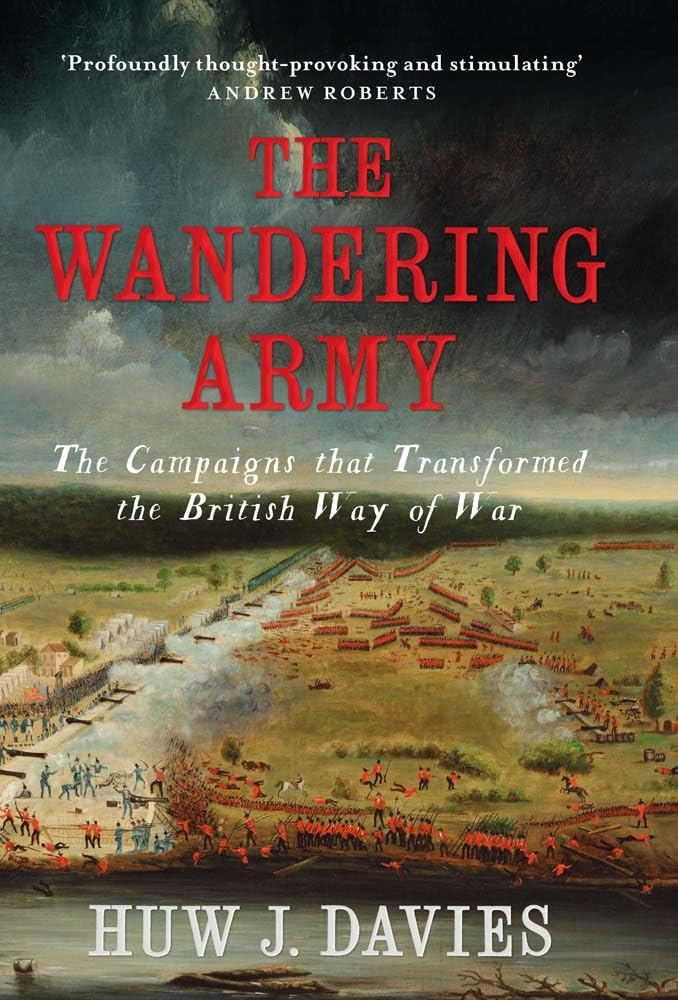
Review: “The Wandering Army: The Campaigns That Transformed the British Way of War” by Huw J. Davies

Emerging Revolutionary War welcomes back guest historian Ben Powers

Huw Davies’s work The Wandering Army: The Campaigns That Transformed the British Way of War posits that the British Army underwent a period of enlightenment during the late eighteenth century, inspired by its poor showing in the War of the Austrian Succession. Officers turned to continental Europe to study military art in the same spirit that enlightenment scholars studied moral philosophy. This period of military change, innovation, and adaptation encompassed what Davies refers to as “the interconnected relationship of these three areas: military thought, experience, and knowledge exchange, which together drove Britain’s accidental military enlightenment.”

Davies documents that the British Army in the 1700s entered a doldrums of intellectual and tactical stagnation in the early decades of the century, following its successful participation in the War of the Spanish Succession. Victory bred complacency, leading to a poor showing at Fontenoy in 1745. He goes on to demonstrate that defeat galvanized officers to undertake self-directed study of military theory and share lessons learned with other officers, forming a community of practice. Officers later combined these efforts with practical experience gained through active campaigns and peacetime training, resulting in cycles of learning throughout the latter half of the eighteenth century. Davies’s work contributes to the historiography of the British Army by demonstrating that officers actively sought to synthesize the latest military theories, their own combat experiences, and the ideas of their peers into innovative systems to address challenges across multiple theatres of war.

Davies uses a variety of evidence, including historical analysis, accounts of officer practices, and descriptions of training reforms. The bibliography of The Wandering Army contains almost 600 entries, ranging from period treatises, manuals, and official correspondence such as orderly books and military returns, to contemporary newspapers, to historical manuscripts. Davies traces a paper trail of British study of military art from 1745 to 1815, showing that officers studied war, applied what they learned, and discussed war in public forums and personal correspondence.  He cites examples of General Henry Clinton walking and studying old battlefields in 1774 to prepare himself for future challenges (Davies, 82–83); Lord Charles Cornwallis’ establishment of a standardized system of drill and equipage for his troops in India, based on lessons he had learned during the War for American Independence (Davies, 204); and the establishment of a camp for the training of light troops at Shorncliffe, England, to teach innovative tactics to light infantry, developed by Sir John Moore (Davies, 287–315).  

Continue reading “Review: “The Wandering Army: The Campaigns That Transformed the British Way of War” by Huw J. Davies”

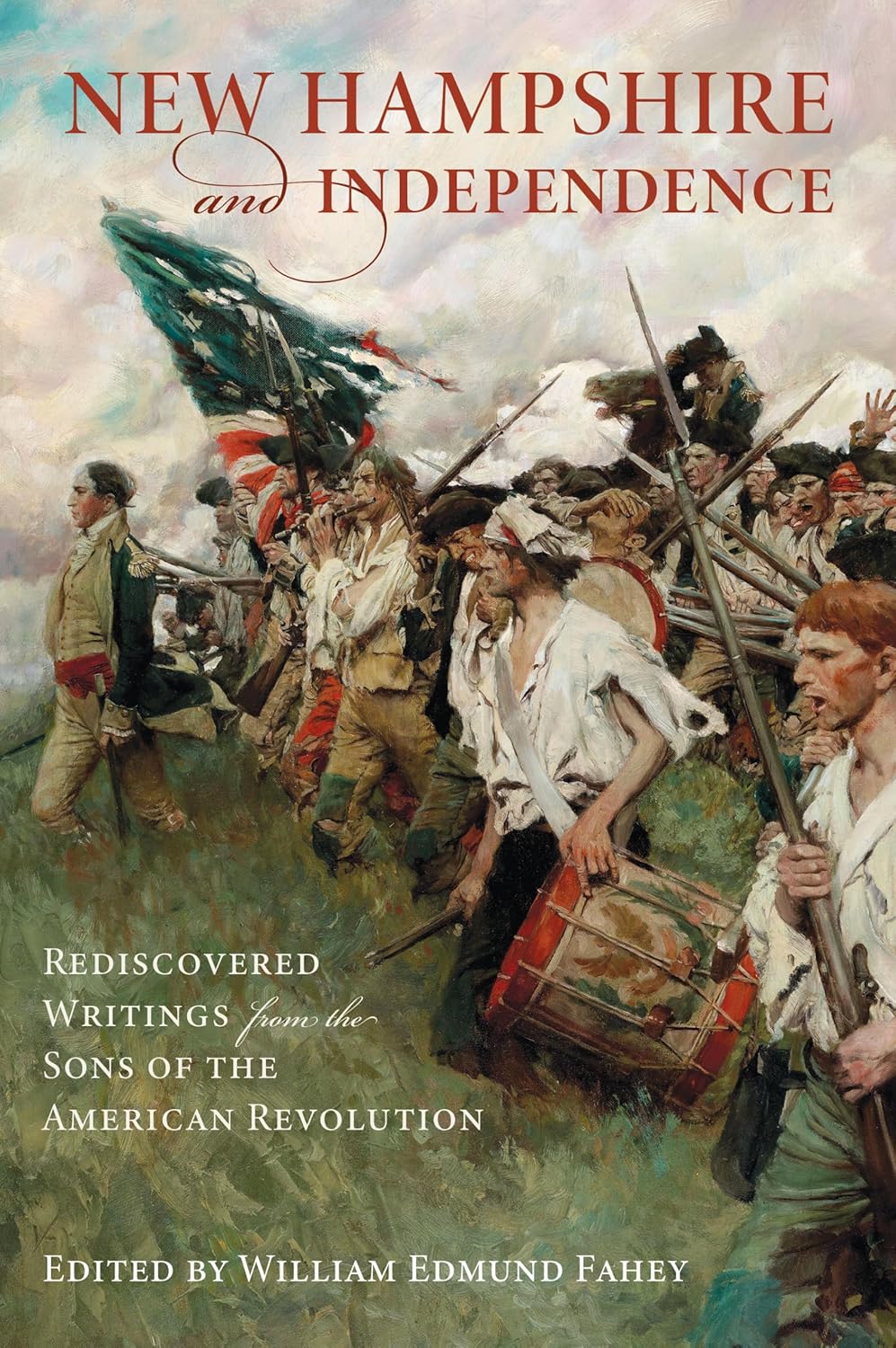
Review: New Hampshire and Independence; Rediscovered Writings from the Sons of the American Revolution edited by William Edmund Fahey

If one peruses the shelves of their favorite bookstore, histories line the shelves with words in their title “new look,” or “fresh perspective,” or “revisited,” or “rediscovered.” Usually, I am skeptical about what that history entails and whether that perspective will be based on a factual foundation or the author’s interpretation. That last word, “rediscovered,” graces the subtitle of William Edmund Fahey’s edited volume for The History Press. Fahey, who holds a doctorate degree and is a Fellow and President of Thomas More College in Merrimack, New Hampshire. In 2024, he was appointed the historian of the New Hampshire Society of the Sons of the American Revolution.

With that background, one can be assured that his “rediscovered” history will be based on impeccable research and accounts that have, unintentionally, been overlooked through the passage of time. That is the case in “New Hampshire and Independence, Rediscovered Writings from the Sons of the American Revolution.” As “questions or even needs that have arisen in recent years. The 250th anniversary of sovereignty is upon Americans” (pg. 29). This is the volume to understand and, if I may, borrow a word, rediscover the role of this small but important colony and its contributions to American victory in the American Revolutionary War.

“The structure of this book is rather straightforward…” (Pg. 30). Part one “sets the mood…the multi-generational effort to reflect, remember, and value the past” (Pgs. 30-31). “The heart of the book is found in the six addresses…” that comprises the entire second part of the publication (Pg. 31). Fahey wraps up this edited volume with the last section, part three, offering “readers key resources to become involved in the Sons of the American Revolution” (Pg. 31). Part four provides key legislative and primary source material for referencing and sparking research into the period. Now, let’s examine key points from each section to show Fahey’s mastery of the material and editorial prowess.

Continue reading “Review: New Hampshire and Independence; Rediscovered Writings from the Sons of the American Revolution edited by William Edmund Fahey”

Book Review: The Great Contradiction by Joseph J. Ellis

A time travel work of non-fiction to a foreign country are words usually not associated with a history of “the American Founding.” Yet that is exactly the intent of historian and author Joseph Ellis as he begins his exploration of this most important era of American history. Unlike those science-fiction journeys, this “trip will be different. Our tour will focus on the downside of the American founding.” (Pg. ix).

That downside is quickly explained by Ellis in his book The Great Contradiction: The Tragic Side of the American Founding. The past winner of a National Book Award for his work on the character of Thomas Jefferson, Ellis plans to “focus on two unquestionably horrific tragedies the founders oversaw: the failure to end slavery, and the failure to avoid Indian removal.” (Pg. ix).

Let’s review how this seasoned historian fulfilled his tour outline. “Most of the achievements were unprecedented…” as the triumphant British colonies made “the United States the political model of the liberal state.” That is the truth, “but it is not the whole truth…” as Ellis explains, “there are two legacies of the founding era…and both qualify as enormous tragedies.” Combined, “these triumphal and tragic elements constitute the ingredients for an epic historical narrative.” Ellis’s tour will include this “coexistence of grandeur and failure, brilliance and blindness, grace and sin” in his attempt to counteract how the narrative has so long been written by historians, which is of the “either/or” persuasion (Pgs. 17-18).

Since his aim is to provide context for how the world of the founding generation is vastly different than the one that has congealed over time, Ellis quickly reorients the lodestar of that time. “As far as the American founding is concerned, it is a lie—or, if you prefer less disturbing language, a massive delusion. None of the prominent founders believed they were creating a democracy” (Pg. 17).

“The political lodestar for the revolutionary generation was not ‘the people’ but, rather, ‘the public,’ or public things” rather “the public interest was the long-term interest of the people…” (Pg. 17).

As he further develops his approach, Ellis provides parameters: “if the original sin of American history is slavery, and racism its toxic residue, the original sin for American historians is ‘presentism.” In other terms, utilizing 21st-century “political and moral values” as the criteria to assess those in the Revolutionary era (Pg. 18).

Although there are two tragedies, the role of slavery and the failure to provide a roadmap to extinction have more dedicated pages in this book than the plight of the Native Americans, and Ellis admits that early on. Discussing the saga of the potential to end slavery, the debates, factors, and ultimate outcome are propped up by astute analysis by Ellis, and uncovering primary sources to let the founders speak as often as possible. The failure to end the institution of slavery must be judged the greatest failure of the revolutionary generation.” The passing of Benjamin Franklin, the “Virginia Staddle”, and other near chances provide a fascinating, yet tragic, “what if” scenario that Ellis unpacks with brilliant prose. (Pg. 129).    

The same can be said about the early republic and the relations with Native Americans, as “there is an almost irresistible urge to wonder if the story could have turned out differently.” The failure, though, once again, is frustrating. Part of that reason was the weakness of the Federal government and the inability to “impose its will on the state of Georgia and the white population” when facing the boundary of the Creek country. Although exceptional leadership by George Washington as president and Henry Knox as secretary of war, did formulate a treaty with the Creeks, due to the lack of strength and minuscule numbers in the United States Army, “at virtually every level—logistical, economic, political—there was not the remotest chance of implementing” the treaty. As the Federal government grew and the white population expanded, this scenario would transform somewhat—the Federal government gaining strength—but the conclusion for the Native Americans, sadly, was always the same. Loss of standing and loss of land and loss of ability to dictate terms or maintain their way of life (Pgs. 166-167).

Ellis addresses the questions that lie at America’s twisted roots and, with candor and deftness, successfully rises above the presentism that he highlighted as a curse for historians and history enthusiasts, especially of the current culture wars. This narrative is a must-read to understand these pivotal questions and ultimate failures of the early American republic, which even the “sharpest minds of the revolutionary generation” could not solve.

Book Information:
Alfred A. Knopf, New York, 2025, 226 pages, including images, bibliography, and index
$31.00

Book Review: The American Revolution and the Fate of the World by Richard Bell

Have you ever thrown a rock into a pond? The ripple effect spreads outward for quite a distance along the surface of the water. The American Revolutionary War had the same effect in the late 18th century world as that pebble did to the body of water.

Historian, author, and University of Maryland professor of history, Dr. Richard Bell, focused on those fringes with this publication, bringing them into focus and discussion that was much needed in the historiography. Indeed, this is a new must-have addition to the bookshelf of American Revolutionary Era publications. His book, The American Revolution and the Fate of the World aim to “trace the sinews of the great war from its familiar epicenter outward to all those corners of the Earth” in which the conflict affected (pg. 9). Bell’s unique background, as he describes it, being an “English-born, American trained historian” is optimal to tackling this type of endeavor. As he elaborates, he attempts—successfully this reviewer’s estimation—to peel back the “amnesia…that has its own unique form” respectively on both sides of the Atlantic Ocean when discussing the history of the American Revolution. Between the two main antagonists, Great Britain and the rebelling thirteen North American colonies, “the ways individuals and communities, then as now, are entwined” will be the central theme running like a current through his book (pg. 2).

How does Bell aim to accomplish this approach and subsequent goal? Through seven core arguments, laid out briefly here. The American Revolution “stirred the mass migration and circulation of enormous numbers of people.” Second, the cost of the war was catastrophic, and victory was not certain for the patriots but a “highly contingent result of improbable choices and last-minute improvisations.” Naval power also played “an important key to military success” and “governments, soldiers, and civilians…often acted on the understanding that trade was power. The last two core arguments, patriot “struggle for self-determination stirred imperial authorities to increase oversight and security” on their remaining controlled territories and the American Revolution “was a conflict in which the call for liberty rang around the world as never before” (pg. 10).

Does he succeed? Admirably. By taking the reader through fourteen chapters that seem to be standalone essays but instead bring subjects usually forced to the fringes of histories of the period into focus. From female personas such as Molly Brant, the great leader for indigenous independence to using Peggy Shippen as the focal point for Loyalists and the throes of the great migration that followed the patriot victory in the American Revolution. From other exalted leaders, such as Baron von Steuben and King Louis XVI of France to ordinary citizens and the enslaved, trying to improve and sustain life during the conflict.

His astute insight and impeccable research acumen brings to life William Russell a privateer that might have some of the worst luck of any that sailed the Atlantic Ocean during the war to Bell, uncovering interesting snippets such as the twisted tale of tea. Americans are most familiar with the Boston Tea Party of December 1773, but did you know that by “the early 1800s, taxes levied on the tea trade had become a vital source of US government revenue and, ironically, “became a major contributor of funds to pay the nation’s war debts” (pg. 33).  

Did you ever think of the central importance of trade to war? Maintaining colonies and trade routes that kept soldiers, sailors, and citizens fed and government coffers filled? Bell rightly traces the integral connection as “cargo vessels laden with Cuban gold, Barbadian sugar, Irish meat, and Dutch munitions bound together the conflict’s several theaters just as tightly as troops transports and naval fleets…” (pg. 360).

This was a whirlwind synopsis of Bell’s seven core arguments and a sneak peek into the dept of his research and viewpoints. He has filled in the foundation of those fringes of the American Revolutionary War era history. Like those ripples from that proverbial rock, there is still more to discover that have direct ties to the defining era of the American Revolution. One example that he discusses in need of further study is “in the 250 years since 1776, rebels, separatists, and state makers on every settled continent have crafted more than a hundred declarations of independence in imitation of the American original” (pg. 361). Another ripple, started by Bell, that can be explored more fully. The fate of the world rested with the tremors started by the American Revolution, and one can argue the fate of the world still relies on those same tremors of a 21st-century variety today.

Book Information:

The American Revolution and the Fate of the World
Richard Bell
Riverhead Books (Penguin Random House, INC), New York, 406 pages with images
$35.00

Book Review: The Letters of Robert Morris: Founding Father and Revolutionary Financier. By Michael Aubrecht

Emerging Revolutionary War welcomes back guest historian Evan Portman for this review.

Among the pantheon of America’s Founding Fathers, Robert Morris is a name rarely mentioned beyond circles of historians. However, Michael Aubrecht sheds light on this phantom revolutionary figure with his book The Letters of Robert Morris: Founding Father and Revolutionary Financier. His work represents the first time the primary sources of Robert Morris have been compiled in print.

The Letters of Robert Morris spans the financier’s political life from his time in the Continental Congress to his time in debtors’ prison at the turn of the eighteenth century. Morris’s correspondence provides a fascinating window into his public life. His recipients often include the likes of George Washington, Thomas Jefferson, Benjamin Franklin, and Alexander Hamilton. Some of Morris’s most fascinating correspondence comes from late 1776 and early 1777, during which the financier provided Washington’s army with much needed supplies. His letters to Washington during the Ten Crucial Days reveal the anxiety and trepidation that pervaded the fledgling United States at that time.

Also compelling is Morris’s role in establishing the Bank of North America and a new national currency, which he outlined to a letter to John Hanson, the president of Congress, in 1782. His frequent exchanges with individuals like Hamilton and Franklin about the bank and its expenditures highlight Morris’s financial acumen but also how much of his own personal wealth he was willing to pledge to the American revolutionary cause.

Overall, Aubrecht’s editorial approach is sound and tactful. He adapts hundreds of Morris’s letters the National Archives’ online repository. While many of these letters are accessible on the internet, there is particular value in assembling them in print as Aubrecht has. While an online repository can sometimes feel disjointed, a printed volume can help readers to make connections and allow the editor to exert a bit more influence over the narrative.  

However, Aubrecht places Morris’s voice at the center of this volume, intruding little on the language and meaning of the original texts. Aubrecht occasionally inserts a missing word or clarifies a misspelling, but his methodology essentially allows Morris to speak for himself. Aubrecht also provides useful biographical information on his subject in the introduction as well as advocates for his importance as one of the Revolution’s most prominent financiers.

The collection could, however, benefit from a bit more contextual information, particularly in between substantial time gaps between letters. While most readers need no introduction to many of Morris’s illustrious correspondents, a brief paragraph providing the context of a set of letters could prove useful in providing a more detailed picture of Morris’s life. The collection could also make more liberal use of footnotes in defining key terms and antiquated language, as well as elaborating on some of the lesser-known people Morris mentions in his correspondence.

Regardless, The Letters of Robert Morris is a welcome contribution to the existing literature on one of America’s underappreciated Founding Fathers. Aubrecht’s selection proves to be a key asset to researchers and history buffs alike.

Information:

The Letters of Robert Morris: Founding Father and Revolutionary Financier. By Michael Aubrecht. Berwyn Heights, MD: Heritage Books, 2025. Softcover, 431 pp. $43.00.

“The Line of Splendor” Guest Book Review

Emerging Revolutionary War welcomes guest historian Nicholas Benevento.

“The Line of Splendor: A Novel of Nathanael Greene and the American Revolution” is a historical novel written by Salina Baker.  In her novel, she brings to life a figure who deserves more fame and recognition for his pivotal role in the Revolution.  Nathanael Greene was a selfless general and leader who fought valiantly to defend his country and provide for his troops. He was a man who defied the odds and was placed in a position of power and leadership, a favorite of General George Washington.   He was a man willing to put everything on the line for the independence and freedom of the United States. 

Baker’s book picks up with Nathanael Greene’s life early in the 1770s when Nathanael is about the age of thirty.  At this time, there were growing tensions in the American Colonies with Mother England.  Shortly before the war broke out, Nathanael married his wife Caty in 1774, and Baker does a masterful job weaving their relationship into the story of his time in the war. 

Baker’s work is a fascinating depiction of Nathanael Greene and the American Revolution.  Readers of history often read facts and descriptions of events, which Baker provides.  But she also takes the reader into the thoughts and conversations of Nathanael Greene, as well as other key figures in his life.  Therefore, while this is a fiction novel, enthusiasts of this time period in American history would love this novel.  Baker weaves in the history of the war, while also providing us with dialogue and feelings of Nathanael.  Baker’s novel is a reminder to the reader that the generals and soldiers who fought in the Revolutionary War were not mythical figures who fought a war that would inevitably end in an American victory.  These were real men with real emotions carrying their insecurities and flaws, while experiencing the highs and many lows of the war.  Greene was central to many of the key battles early in the war, from the siege of Boston, to the debacle of New York, to the triumph of Washington’s crossing of the Delaware, to the trying times at Valley Forge.  Greene held a tremendous weight on his shoulders throughout the war, especially when he led the Southern Army late in the war during the Southern Campaign.  

Continue reading ““The Line of Splendor” Guest Book Review”

Book Review: “A Republic of Scoundrels” edited by David Head & Timothy C. Hemmis

In an age where the names of Franklin, Jefferson, and Washington are household, the names of Wilkinson, Kemper, and Bowles seem to be consigned to the fringes of histories of the early American republic. With the formation of the fledgling United States of America, both the honorable and not-so-honorable helped shape the direction of expansion, and diplomacy, and reinforce societal values of the 18th and early 19th centuries. This collection of essays is akin to watching a true crime television documentary.

With a collection of essays, editors David Head and Timothy C. Hemmis, historians, and biographers provide snippets into the lives of these scoundrels of the early Republic. A few of the names are well known, including Benedict Arnold and Aaron Burr, a few will conjure up memories from the fringes of other histories, such as James Wilkinson, whereas others have escaped the main avenues of historical exploration. Throughout the various essays, “this collection seeks to reexamine the Founding generation” to “replace the hagiography of the Founding Fathers with something more realistic” (pg. xx).

First, an examination of the word “scoundrel” is needed. According to usage at the time and the 1755 dictionary of Samuel Johnson’s authoring, that word meant “a mean rascal; a low petty villain” (pg. xiii). Through 12 individuals, the various authors explain how each earned the moniker “scoundrel” and how that affected the development of the United States. Especially interesting was the role of various individuals in Western expansion and the domino effect on international diplomacy. Individuals such as Aaron Burr and James Wilkinson are better known but Philip Nolan and Thomas Green are not so much.

Others, such as Benedict Arnold and Charles Lee get a fresh look from two great Revolutionary-era historians, James Kirby Martin and Mark Edward Lender. Included in those discussed, William Augustus Bowles and Diego de Gardeoqui show how international actors played prominent roles in providing heartburn to the national government. One theme, the west and south of the original thirteen states provided the arena for scheming, opportunity, and risk.

In conclusion, the editors examine three main reasons a study like this is important, that the “unintended result of the American Revolution” was “many men decided they had their own ideas about what was important” (pg. 266). Secondly, the “vital importance of the American West as a zone of territorial expansion, economic opportunity, and foreign intrigue” and lastly simply “early America was…a time and place for scoundrels…” (pgs. 267-268).

Overall this essay-comprised book is a fun, fresh read that looks at those scoundrels that sought an opportunity to change the landscape of the early American republic and potentially change the course of United States history. Who does not like to read about plots, scheming, and resultant escapades?  

Publisher: Pegasus Books, December 2023

368 pages, including images