Book Review: “Making the Presidency: John Adams and the Precedents That Forged the Republic” by Lindsey Chervinsky

Emerging Revolutionary War welcomes guest historian and reviewer Al Dickenson

No president has an easy job. But imagine holding the position of president immediately after undoubtedly the best president the United States has ever had.
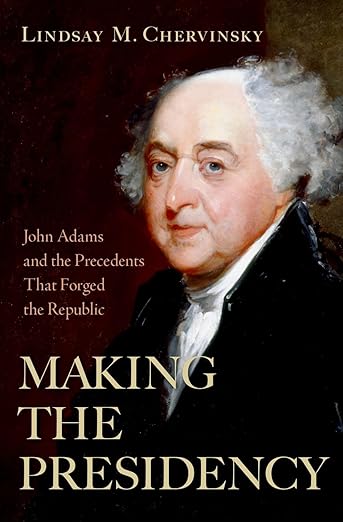
That was John Adams’ conundrum. Additionally, it is the subject of renowned historian Lindsey Chervinsky’s new book, Making the Presidency: John Adams and the Precedents That Forged the Republic. Initially released last year, in the midst of a politically fraught election season, Chervinsky places the modern world into a context we should all understand better: the history of the 1790s.

After a brief introduction regarding the Revolutionary War, the early republic, and George Washington’s presidency, readers are thrown into John Adams’ presidency. Federalists opposing Democratic-Republicans (commonly referred to as simply “Republicans” in Chervinsky’s text, as they referred to themselves), the Americans opposing the French, the North opposing the South, Federalists opposing Federalists: it seemed there could be no peace in the nation so split apart. Yet the nation stood for another 220 years. Why is that?

Chervinsky argues that the reason we are a nation today relies on how John Adams served his presidency, specifically the power sharing he enacted in his cabinet amongst Republicans (like Vice President Thomas Jefferson), Federalists (like Secretary of State Timothy Pickering), and Archfederalists (like Secretary of War James McHenry), the successful navigation of foreign affairs (see the ongoing French Revolution, specifically the XYZ Affair), and the peaceful transfer of power.

The final focus of Chervinsky’s book, Adams’ loss in the 1800 election, perhaps offers the most original outlook on Adams’ presidency. Being the loser of the election, and being the first incumbent president to lose an election, historians have often treated Jefferson a little kindlier than Adams. Where Chervinsky’s work shines, however, is in showing how these great, powerful men, the leaders of their respective parties, differed in how they saw power, and in how they wielded it.

Little scholarship focuses on Jefferson’s machinations to gain the presidency. Rarely researched are his Virginia and Kentucky Resolutions, which called for nullifying federal law, even though these ideas were eventually adapted into various Confederate causes and mentalities in the following decades. Nor are the essentially political and emotional blackmail Jefferson laid on Federalist members of Congress who refused to vote for him over Aaron Burr. Jefferson threatened the members of Congress with, in essence, secession of Republican states if they did not pick a president soon, given that this was the only election in American history where the House of Representatives made the presidential selection. The dirty tricks of politics manifested themselves in this election, including smear campaigns against Adams and unfounded warnings that the Federalist Party would forego the will of the people and simply appoint a new, Federalist president.

Compare this to John Adams, who, while certainly desirous of a second term, largely laid low during the turmoil occurring on the other side of the Capitol. When presented with suggestions to keep himself as president, he refused. When asked to annul the election, Adams refused. When asked to stand for himself and campaign in the final months of the election season, and during the contingent election in the House between Jefferson and Burr, Adams refused and stayed silent. He did not cling to power, nor did he view his opinion better than that of the American people who voted for a Republican and the House members who would choose the next presidency. Though he was a lame duck president in every sense of the word, he held true to his convictions of propriety in politics, though privately he fumed.

In this way, though history often sheds more light on the winner, makes historians wonder what other ways “losers” of an election may have impacted our politics and history. An interesting study question for any intrigued historian, but one that Chervinsky shows is vital to understanding American history and modern politics alike.
“…and the Acceptance of Congress, become the Seat of the Government of the United States.” The Creation of Washington, D.C.

There has been a lot of discussion recently (and over the past few decades) on Washington, D.C.’s ability to self rule and representation. Washington (the city within the District of Columbia) is one of a kind Federal District created explicitly by the Constitution. The creation and future authority of the District was very purposeful by the founders. The authority to create a federal district was established in the U.S. Constitution. Article I, Section 8, Clause 17 states:

“To exercise exclusive Legislation in all Cases whatsoever, over such District (not exceeding ten Miles square) as may, by Cession of particular States, and the Acceptance of Congress, become the Seat of the Government of the United States.”

This clause explicitly grants Congress the power to establish a federal district and to exercise complete legislative control over it. The reasoning behind this provision was to prevent any single state from having undue influence over the national government. The framers of the Constitution wanted to ensure that the federal government had an autonomous and secure location from which to operate, free from state-level political pressures.

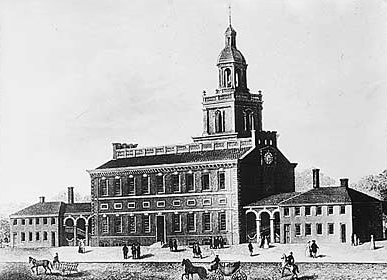
The need of a capital under Congressional control was highlighted in the Pennsylvania Mutiny of 1783. On June 20 1783 when a group of nearly 400 soldiers from the Continental Army, frustrated over unpaid wages and poor treatment, marched to Philadelphia and surrounded the Pennsylvania State House (now Independence Hall), where the Congress was meeting.

The soldiers demanded immediate payment and redress for their grievances, creating a volatile situation. The Pennsylvania government, sympathetic to the mutineers, failed to act decisively to protect Congress. As a result, Congress fled to Princeton, New Jersey, marking the first and only time the U.S. government was forced to relocate due to domestic unrest.

Pennsylvania State House, early home of the United States Congress

The mutiny underscored the weakness of the Articles of Confederation, particularly the lack of a control Congress had over its on own capital. Also, without a standing national army to maintain order, Congress relied on the state militias. Which proved to fail them in 1783.

Selecting the location for the new nation’s capital became a contentious issue. Different regions of the country had competing interests. Northern states, particularly those with economic centers like Philadelphia and New York, wanted the capital in their territory, while Southern states, particularly Virginia and Maryland, wanted it further south.

The final compromise, known as the Residence Act of 1790, resulted from negotiations between Alexander Hamilton and Thomas Jefferson, brokered by President George Washington. As part of the deal, the federal government assumed the war debts of the states, and in exchange, the capital would be located along the Potomac River, on land donated by Virginia and Maryland (near George Washington’s own Mount Vernon).

Washington, D.C., was officially established in 1791, and Congress first convened there in 1800. The land included portions of Maryland and Virginia, although the Virginia section (Arlington and Alexandria) was retroceded to the state in 1846.

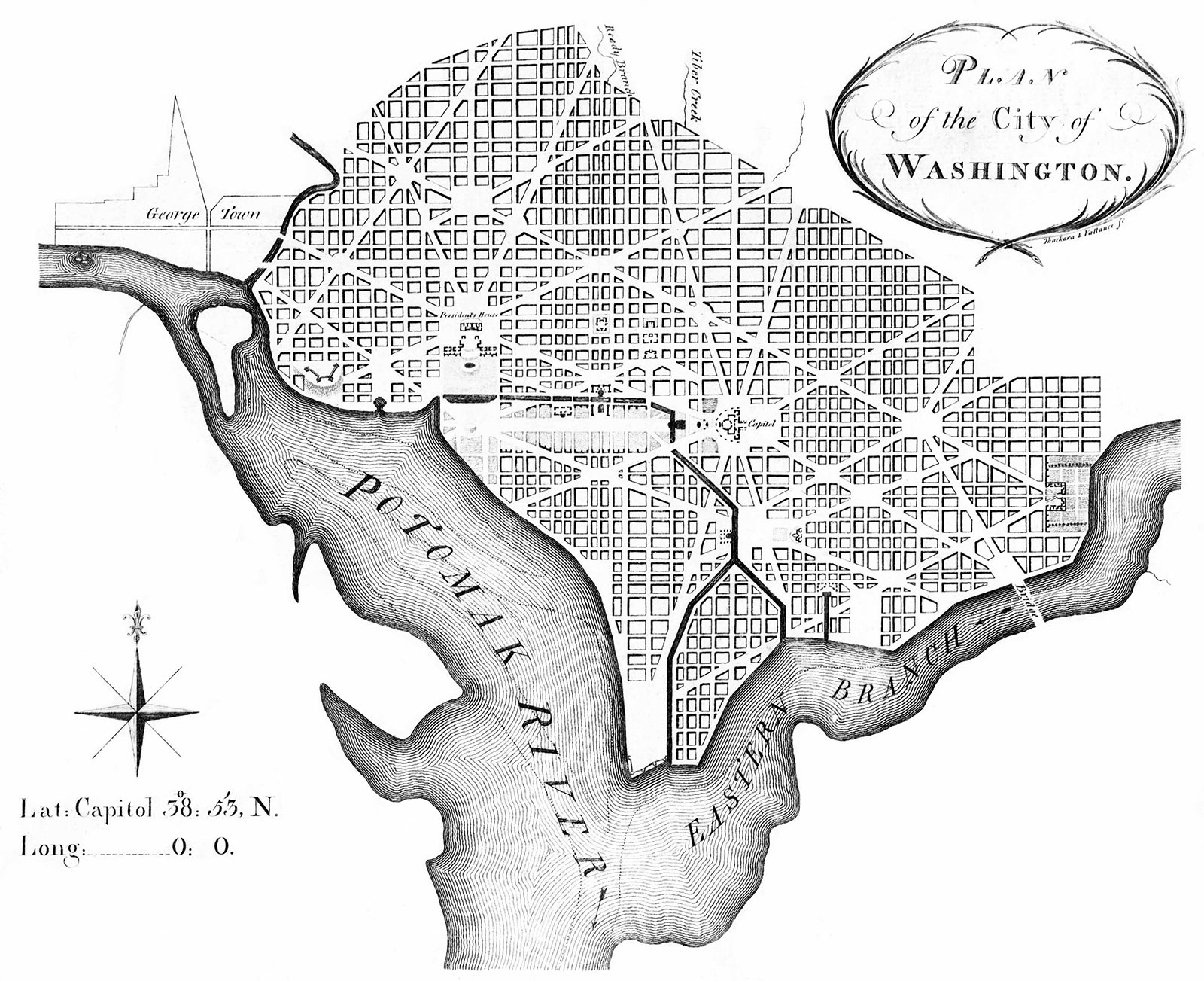
1792 plan of the City of Washington, in the District of Columbia by Pierre Charles L’Enfant

One of the primary reasons for creating Washington, D.C. as a federal district was to ensure neutrality. If the capital were located within a state, that state might wield excessive influence over the Federal government. The founders sought to prevent any potential conflicts of interest and ensure no state could claim privileged status or exert undue pressure on national affairs.

As a federal district, Washington, D.C., is directly governed by Congress. Unlike states, which have their own constitutions and legislative powers, the district’s governance structure is determined entirely by federal law. Over the years, this has led to ongoing debates about the representation and rights of D.C. residents. Today the city has an elected Mayor and City Council that manages the city’s affairs, but this authority is granted solely at the will of Congress. The debate over home rule and representation goes on, but the founding of a Federal District is rooted in a historic lesson learned by the early Congress.

War of 1812 – 210 Years Ago (and Change)

First, thank you all for understanding with the technical difficulties of yesterday’s potential Facebook Live.

Over this past weekend, the 210th anniversary of the Battle of Bladensburg and the Burning of Washington by British troops took place. In a potential future tour, I was scouting out locations around our nation’s capital that are connected with the year 1814. Although some of the sites have been rebuilt, some of the history is preserved in museums, and one of the places is still occupied by the president of the United States, there is still a lot of history underfoot related to the War of 1812.

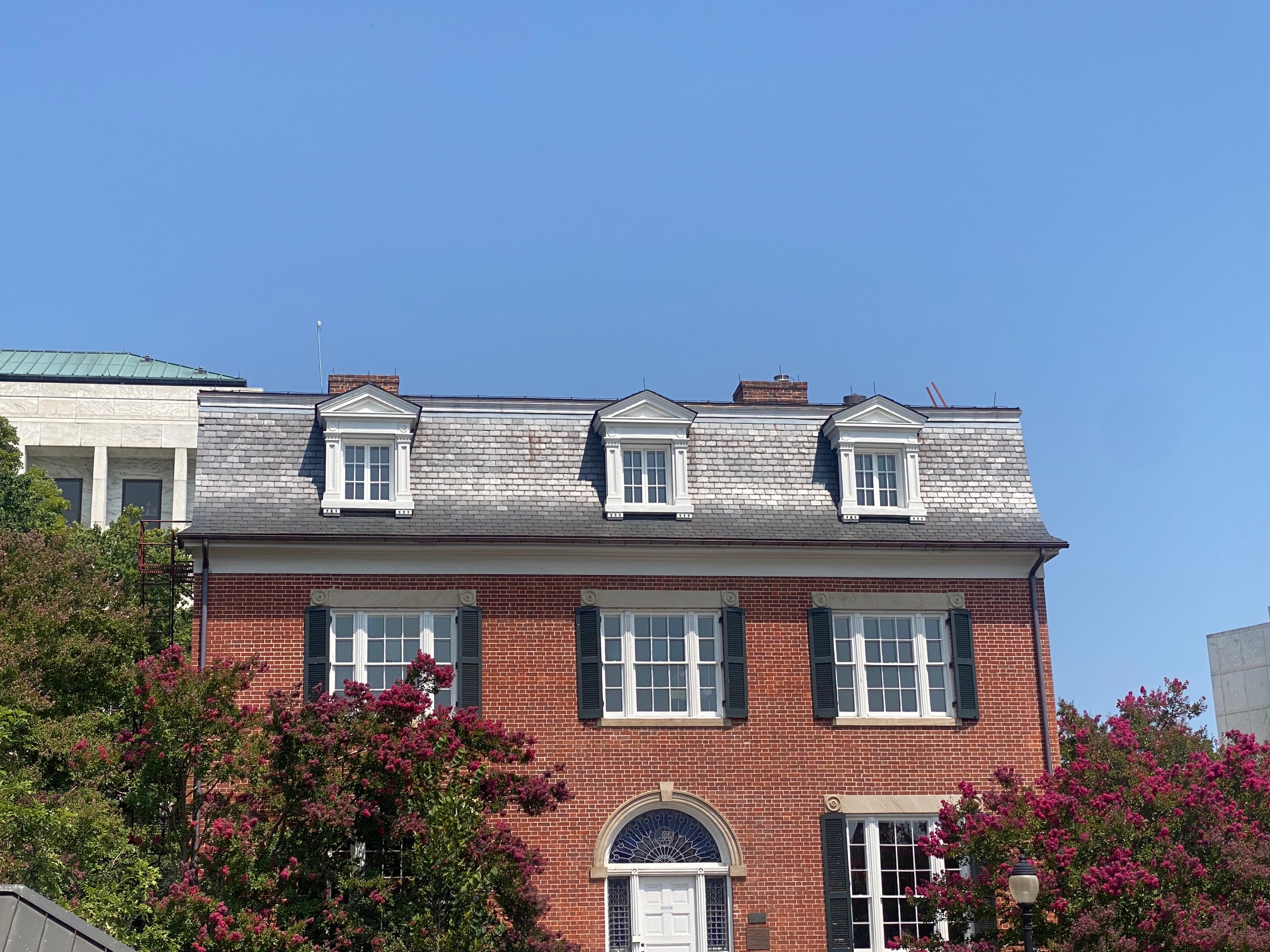
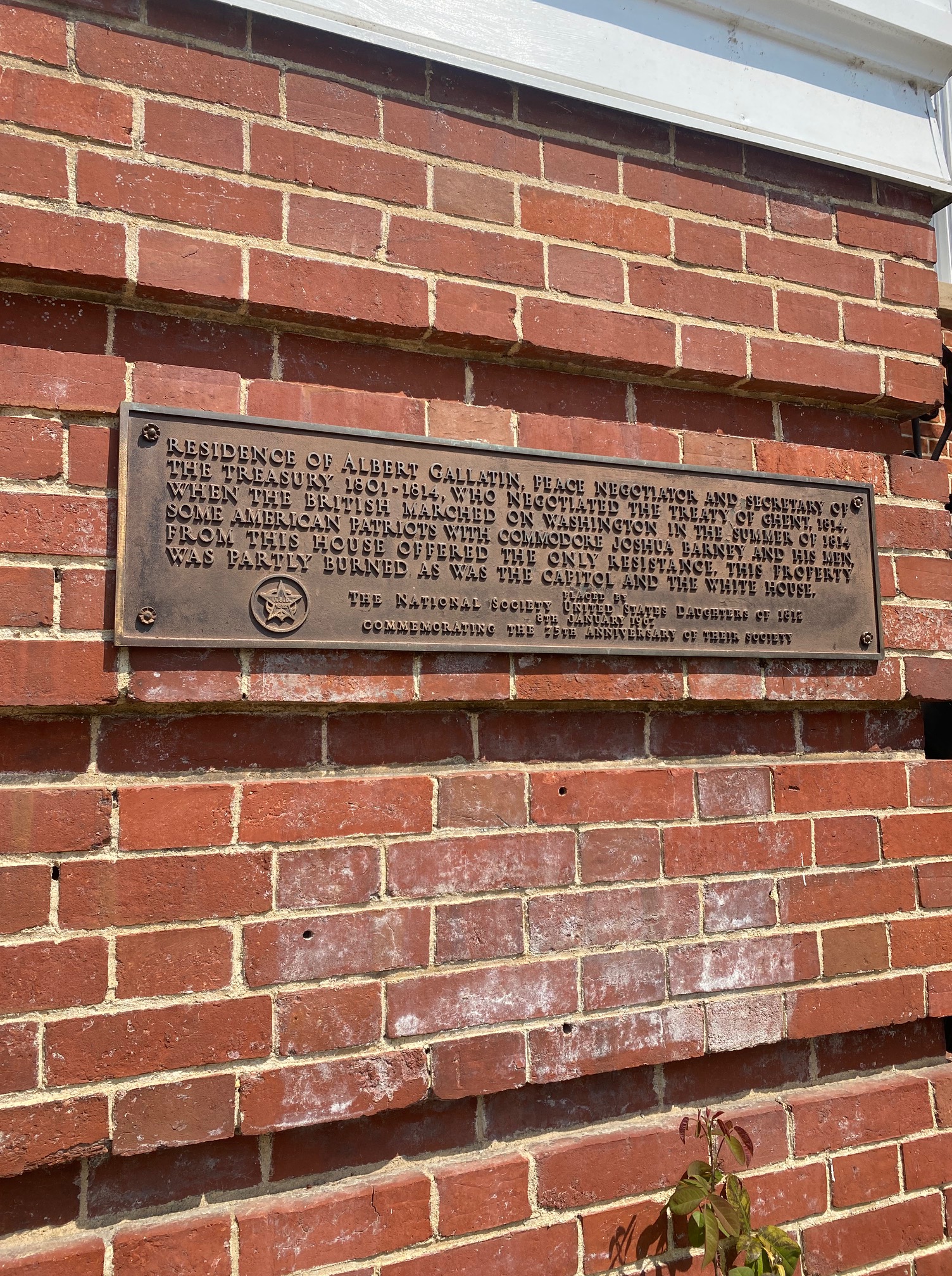
Some of that history is below. Robert Sewall built a house sometime between 1800 on 2nd and Maryland Avenue Northeast but with an inheritance from an uncle’s passing moved to southern Maryland. He rented the property to Albert Gallatin, who would serve as treasury secretary under both Presidents Thomas Jefferson and James Madison. In 1813, Gallatin left to become one of the United States peace commissioners in Ghent, Belgium charged with negotiating a treaty to end the War of 1812. William Sewall, Robert’s son, took responsibility for the house at that point. William served with Commodore Joshua Barney during the War of 1812 and records do not indicate he ever lived at the residence.

During the British march into the city, a group of Barney’s men took refuge in the residence and fired shots at the enemy column. Two British soldiers were killed and the horse of Major General Robert Ross was also struck. Ross ordered men into the structure to clear the snipers but not finding the culprits, the infantrymen burnt the property in retaliation. This would be the only private property burnt during the British incursion into Washington.

The property remained in the Sewall family, the house was rebuilt in 1820 and is now the Belmont-Paul Women’s Equality National Monument, a unit of the National Park Service.

After returning to Washington, the Madison’s took residence here, in the house of John Tayloe III. On September 8, 1814, the Madison family moved in and in an upstairs room, the president received the peace treaty negotiated in Ghent, Belgium. He ratified the treaty in the upstairs study on February 17, 1815. When the Madison family vacated the quarters, six months after moving in, Tayloe received $500 in rent from their stay.

“Rev War Revelry” Before the Dawn’s Early Light: Bladensburg and the Prelude to Fort McHenry

This Sunday, join Emerging Revolutionary War as we explore the prelude to Fort McHenry and the actions in Maryland and Washington D.C. in the summer of 1814. Joining Emerging Revolutionary War will be the American Battlefield Trust’s Senior Education Manager, Dan Davis.

This historian happy hour will discuss the first part of the campaign that eventually led to the climactic Battle of Baltimore, which included both the unsuccessful British attempts at Fort McHenry and North Point. Before that success for American arms, the United States suffered through the defeat at Bladensburg and the capture of the nation’s capital.

We hope you can join us on our Facebook page, on Sunday, April 30th at 7 p.m. EDT .

Washington Redskins…a team rooted in Revolutionary War History?

Fenway Park, ca. 1930’s

There is much debate today about names of streets, buildings, and sports teams. One team that has been in the headlines for several years about their name is the Washington Redskins. Now, I have to be upfront…I have been a Redskins fan since I was a young child. I remember most of the glory years of John Riggins, Joe Gibbs and many other Hall of Famers. In the years of the 1980’s, not much was said about the name as a racist connotation. I am sure there were protests, but they were not mainstream and everyone in Virginia, Maryland and DC in those years followed the team. The name Redskins was not a racial connotation that their racially “challenged” owner George Preston Marshall (who had many issues with his own racism) came up with degrade Native Americans. It was a name that harked to a historical theme.

What we know today as the Washington Redskins began in 1932 as the Boston Braves. Now this new professional football team was not the only team in Boston named the Braves. At that time, the oldest baseball team in Boston were also called the Braves. This team began as the Boston Red Stockings and then the Boston Beaneaters, changing their name to the Boston Braves in 1912. Here is where the history gets murky. The owner of the Boston Braves, James Gaffney was a product of Tammany Hall, a powerful political machine out of New York City. Tammany Hall used as their moniker an American Indian Chief, with other Native American symbols in their imagery and media. With his connection to Tammany Hall, many believed Gaffney used the same imagery to rebrand his baseball team. Others in Boston believed Gaffney was playing to the local historical ties of the Boston Tea Party. During the Boston Tea Party, colonists dressed up as “Indians” (Mohawks to be more precise) to raid three tea ships at Griffin’s Wharf, destroying over 300 chests of East India Company tea. Most of them covered their skin in burnt ochre, which gave a dark reddish tint. We will never know if Gaffney chose the name “Braves” for Tammany Hall or the Boston Tea Party, but both were fitting historical ties.

Boston Tea Party, December 16, 1773

So, how does this tie into the football team? As George Preston Marshall brought professional football to Boston, he wanted to tie into the local sports lexicon of the region. Picking the name “Braves” for his team fit well as it matched the popular baseball team in town and also the football team played in the same stadium as the baseball franchise. Also, the previous team that played professional football in Boston was a traveling franchise named the Cleveland Indians. Though not sure, I believe Marshall had all of these in his mind in naming the team the Braves. Native American imagery and mascots were well known in Boston at this time, it seems that Marshall was trying to set his new team up for success. That first season the Braves finished .500 and Marshall moved the team to play their games at Fenway Park. Fenway was a state-of-the-art stadium at the time, built in 1934 and was the home to Boston’s other professional baseball team, the Boston Red Sox (which, also claimed their lineage to the same team the Boston Braves did, the Boston Red Stockings).

Boston Redskins vs. New York Giants

In moving the team, Marshall tried to distance himself from the Braves baseball team and changed the name to Redskins. There were no other professional teams called the Redskins, though some minor league and local teams used the name. This move was more marketing than anything else, trying to establish their own professional sports team identity. Also, Marshall was known for being economical, and by using the name Redskins he wouldn’t have to change uniforms. The Boston Redskins would go on to play in Boston until 1936, moving to Washington, D.C. in 1937. Marshall, for all his faults, was a smart businessman and believed there was money to be made in bringing professional football to the south. By moving the Redskins to Washington, they were the first NFL team in the south (how many of us would consider Washington, D.C. the south today?). Even the original song “Hail to the Redskins” had the lines “fight for old Dixie” which have been changed to “fight for old D.C.”

Part of me believes the name is more contentious today mostly because the team on the field has not been very good since the 1990’s. If this was a perennial winner like they were in the 1980’s, would this be a hot topic? Maybe it would as we look at all of our names and mascots, but I think it is highlighted by the losing and the current unpopular owner, making the current pressure unbearable. We know the name will change (though I have my own personal opinions of why they should not change the name), but the original name is rooted in American history and is more complex than you see on ESPN or other news outlets. Through this brief synopsis of the team’s name, I hope the basis for the name is clearer. I know we all won’t agree on what is offensive and not offensive and we will never know if Gaffney and Marshall named their teams to honor the colonists at the Boston Tea Party. But for one young kid who grew up in Virginia who loved history and the Redskins, its was a great match of history and sports.

Benjamin Henry Latrobe: Architect of the Republic

Emerging Revolutionary War welcomes guest historian Darien Ashley. A short bio follows this post.

The best architecture is that which reflects clearly the ideals and activities of the people which inhabit it. This is true for both private dwellings and public buildings. The objects of architecture serve as a lasting testament to identity. These objects, once created, continue to shape minds long after the architect is gone. A nation’s capital city is a site where man can establish glorious structures which convey a sense of who the people are, where they came from, and where they intend to go. The United States Capitol building is a prime example of a structure that continues to inform American identity long after its architects have passed. This article serves as an investigation of the life of one of the most important architects of not only the Capitol, but of the nation itself, Benjamin Henry Latrobe.

Guests to the United States Capitol building often get a shock from the fact that one of its primary architects, Benjamin Henry Latrobe, was an Englishman. Indeed, the man who designed the hallowed, old halls of Congress hailed from a Moravian religious settlement located on the outskirts of Leeds, England. However, Latrobe himself would have objected to the label “Englishman”. Indeed, throughout his life, Latrobe referred to the United States as “his” country and was quick to point out that his mother, Anna Margaretta Antes, was born and raised in Pennsylvania. Latrobe’s father, Benjamin Henry Latrobe Sr., met Anna after she had been sent to London to finish her education. Both of Latrobe’s parents held prominent positions within the Moravian ministry and raised their children to follow in their example.

Continue reading “Benjamin Henry Latrobe: Architect of the Republic”

Union Jack o’er the Capitol: A Burning of Washington Walking Tour

Emerging Revolutionary War is honored to welcome guest historian Zach Whitlow. Zach’s biography is at the bottom of this post. 

August marks the 202nd anniversary of the Burning of Washington. On the heels of their astounding victory at Bladensburg, a British incursionary force under Major General Robert Ross and Rear Admiral George Cockburn occupied the American capital for about 24 hours on August 24th & 25th, 1814. Besides a small ambush at the Sewall House on Capitol Hill, in which two corporals and General Ross’ horse was killed, the British encountered no resistance in the city whatsoever. The Union Jack was triumphantly raised: Washington had fallen. Soon it would burn.

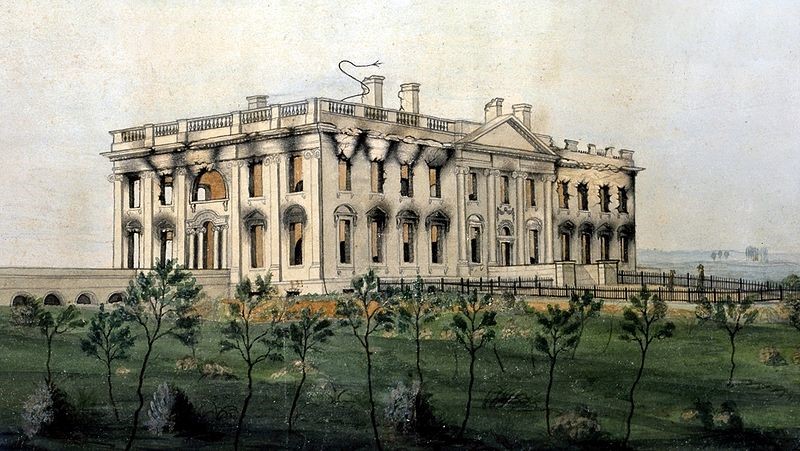
The burned out shell of the White House following the British occupation of Washington. (The President's House, by George Munger, 1814-1815)
The burned out shell of the White House following the British occupation of Washington. (The President’s House, by George Munger, 1814-1815)

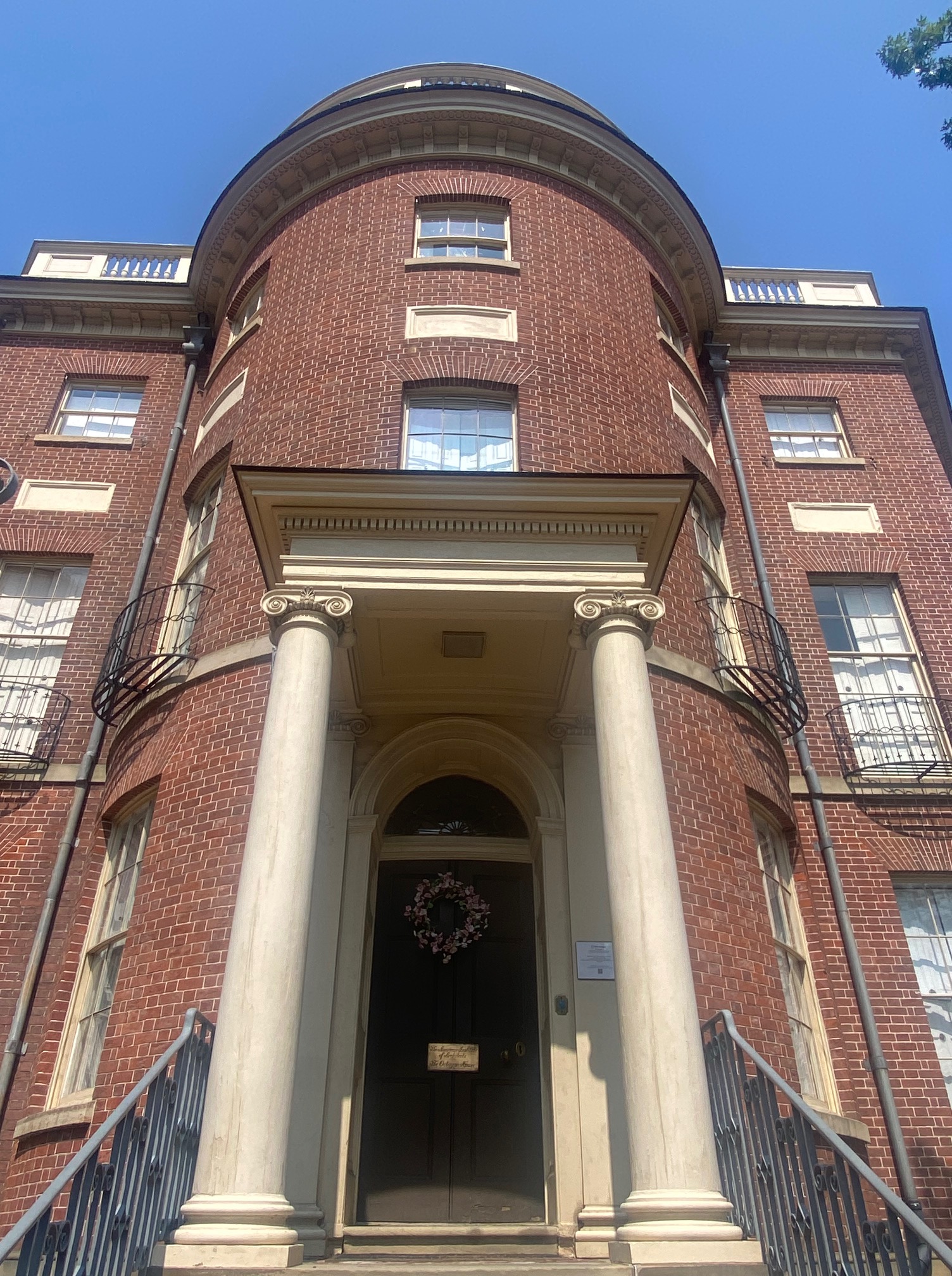
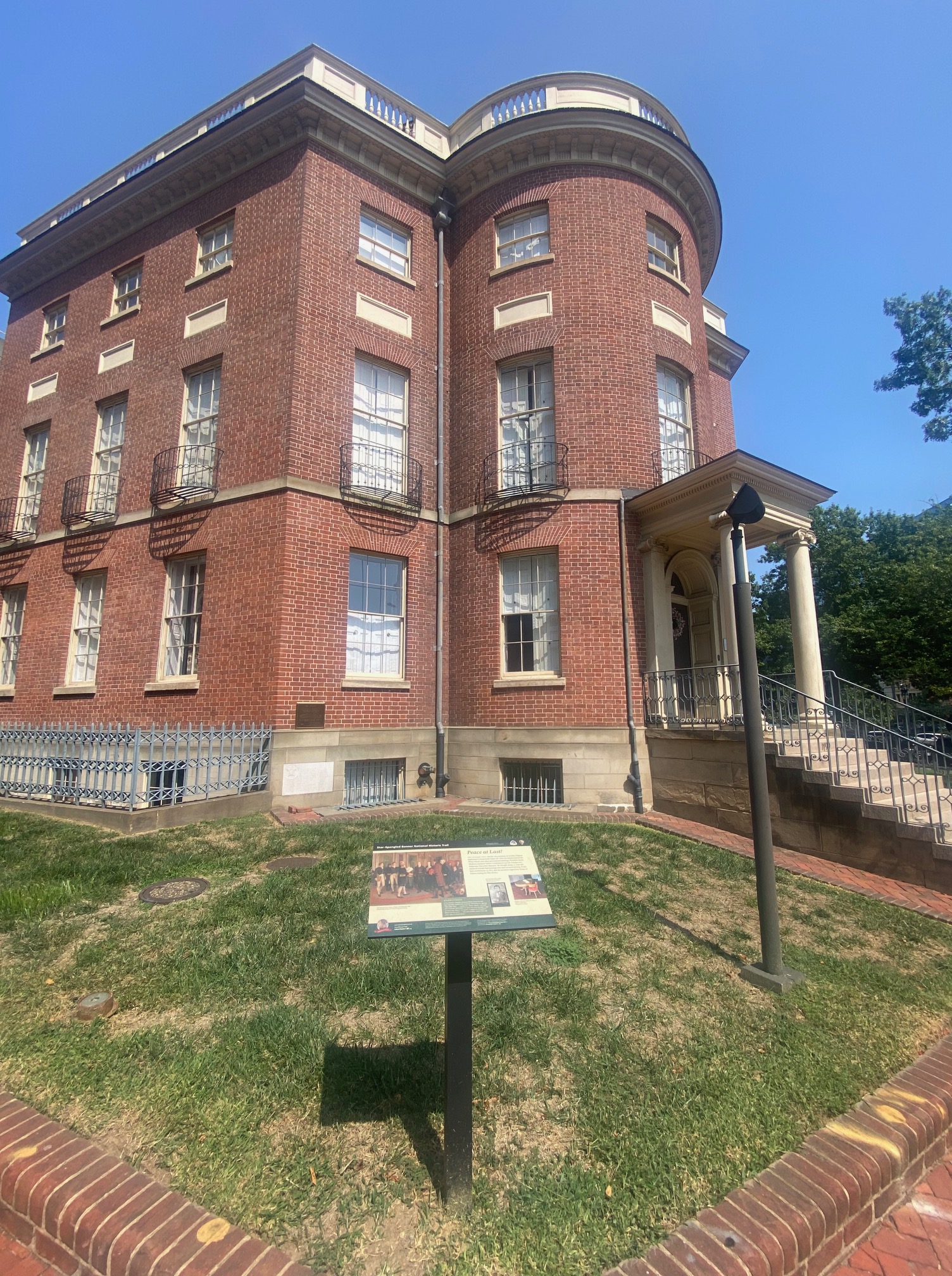
What followed were events that literally burned themselves into the American psyche. To remember this bleak moment in history, rangers from the National Mall & Memorial Parks are leading a series of walking tours in the month of August. Beginning at the newly designated Belmont-Paul Women’s Equality National Monument (the site of the ambush), visitors walk a total of 2.5 miles and retrace the British advance down Pennsylvania Avenue. Through the program, the rangers will sift through the modern paved environment and tell the stories of long gone places, such as the newspaper offices of the National Intelligencer and Barbara Suter’s tavern.  The tour will also feature some of the surviving remnants of that time, such as the Octagon Museum.

The walking tour begins at Belmont-Paul Women’s Equality National Monument (144 Constitution Ave NE, Washington, DC 20002) every Saturday in August at 3:00 pm. There will also be programs on Wednesday, August 24th and Thursday, August 25th at 3:00 pm. Please bring comfortable shoes and plenty of drinking water.


*Zach Whitlow has an M.A. in Museum Studies from the George Washington University, a B.A. in History from California State University, Long Beach, and three A.A. degrees from Fullerton College. A lifelong historian, he currently works for the National Park Service at the National Mall & Memorial Parks in Washington, DC and the Office of Historic Alexandria in Alexandria, VA. Prior to this, Zach worked at the National Archives, George Washington’s Mount Vernon, and the Queen Mary in Long Beach, CA. He currently lives in Alexandria, VA with his girlfriend Teresa and their two cats, Max and Lizzie.


James Monroe at War

RevWarWednesdays-header


Part Two

With an excess of officers in the Continental Army and little prospect of getting a field command, James Monroe resigned his commission in 1779.  He became a Lieutenant-Colonel of Virginia forces, but was unable to recruit enough men to form a new regiment.  In 1780 he went to North Carolina as a military observer for Governor Thomas Jefferson, with whom he had begun the study of law. Continue reading “James Monroe at War”