

Emerging Revolutionary War welcomes guest historian Dr. Nathan Provost
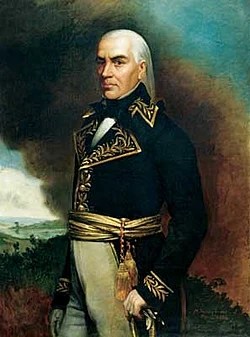
With the recent rumblings about Venezuela, it is important to remember that Venezuela’s independence began with a veteran of the American Revolutionary War. Francisco de Miranda was born on March 28, 1750, in Caracas, Venezuela. At the time, Venezuela and much of the Americas were under Spanish control. Born into a life of luxury, Miranda attended prestigious institutions of higher education, including the Royal and Pontifical University of Caracas. He later continued his education in Spain, eventually raising enough money to purchase his rank of Captain in the Princess Regiment. His first experience of combat was in North Africa against the Moors of North Africa. Upon returning to Spain, Miranda waited for another military operation to accompany. An ambitious young soldier, he sought adventure, wanting to see the world through military service. In 1780, Miranda reported to the Regiment of Aragorn; their destination was Havana, Cuba. Their objective was to concentrate with Major General Bernardo de Galvez’s men at Pensacola, Florida.
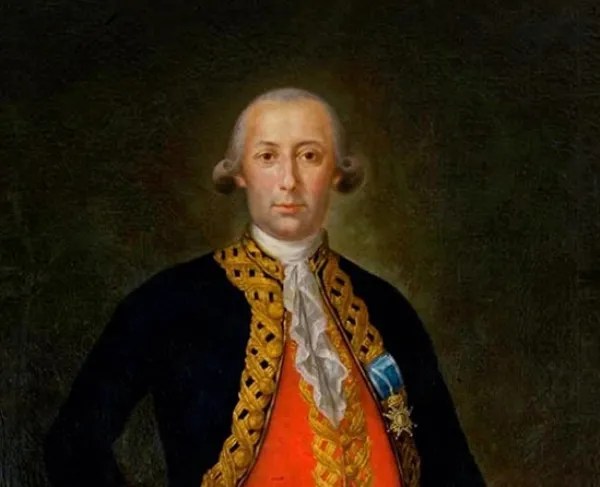
Spain was no ally of the recently independent United States; rather, their alliance with France was much more significant. After France entered the conflict following the American victory at Saratoga, Spain declared war on Great Britain in 1779. Spain had its own goals, hoping to reclaim territory in Florida lost during the Seven Years’ War. The Spanish were fortunate to possess a brilliant military officer, Bernardo de Galvez. He already captured what is now Baton Rouge, Louisiana, and Mobile, Alabama. All that was left was Pensacola on the Florida Coast. Galvez took several warships and many more transports filled with 3,701 men to lay siege to Pensacola, Florida. Inclement weather and Choctaw resistance interrupted their initial movements, but Galvez pressed on and established his army outside the walls. The number of troops was insufficient to make any headway against the British fortifications, despite the construction of a series of entrenchments and artillery positions. Then, on March 24, much-needed Spanish reinforcements arrived, among whom was Francisco Miranda.
Upon landing, Miranda noted Galvez was there to meet them. Miranda observed several entrenchments already constructed, but a few hundred men were already out of commission since the siege began. Upon learning this information, he knew that Galvez desperately needed these reinforcements. It was not until April 24 that all the soldiers disembarked at Pensacola. During the siege, Miranda personally inspected the siege lines and terrain and reported back on this reconnaissance to Galvez. Miranda and his men, entrenched outside the fort, often came under fire from the British artillery. There were also several skirmishes outside the breastworks in which the Spanish sustained some casualties. In one particular episode, Miranda and five companies of his men engaged in a firefight with some Native Americans. The fighting lasted roughly an hour and a half, with six of the Spanish wounded, but a Frenchman deserted the Natives and went over to the Spanish after the fight. In each of these skirmishes.
Again, Miranda played an important role on April 26, when the Spanish sent forward two cannons and mortars closer to the enemy position, and were met by a British contingent and their native allies. Miranda knew their intention was to cut them off from the rest of the army, so Miranda attacked first with his men. After an intense firefight, the British retreated. Over the following days, both the Spanish and British launched a series of sorties; some were more successful than others, but it was on May 8 that Miranda witnessed the explosion of the British Queen redoubt. The Spanish constructed platforms to move their artillery closer to the British redoubt, but as they moved their cannons, one of the Spanish mortars struck the gunpowder magazine inside the British Queen redoubt. It was at this moment that Galvez ordered his men forward to exploit the British position. His men quickly took control of the redoubt and fired on the other British forts nearby, forcing the British to surrender on May 10, 1781. For his distinguished service during the siege, Miranda was promoted to colonel.
These events would most often highlight someone else’s life, not Miranda’s. It was only a small part of his story. Following his experience in the American Revolution, he took part in military campaigns in the Caribbean and then in the French Revolution. He later took refuge in Great Britain after a contentious relationship with General Galvez. He then considered leading colonial forces against Spanish authority in Venezuela, following Napoleon’s occupation of Spain and installation of his brother Joseph as King of Spain. Miranda led his first expedition there in 1806, but he had too few troops to mount an effective offensive on the mainland. He made a hasty retreat and was deemed a “pirate” by Spanish authorities. It was not until 1811 that Miranda was approached by two Venezuelan patriots about taking command of their forces against Spanish rule. Miranda quickly agreed to the new position and returned to Venezuela. Upon arriving, crowds greeted him with roaring applause. Yet within months, Spanish forces loyal to the crown closed in on Miranda and the newly independent Venezuelan army from both the East and the West. In desperation, the Venezuelan government offered Miranda dictatorship of the new republic. He willingly accepted the role, but it mattered little; Miranda did not rule like Napoleon, nor did he command men like Galvez. He was a cautious general at best. Despite his bravery in battle, he and his men were overwhelmed. Miranda began negotiating with the Royalist forces and agreed to an armistice, but one of his subordinates, Simon Bolivar, was disgusted by Miranda’s peace. He thought it was treason, so he and another Venezuelan officer captured Miranda and handed him over to Spanish authorities before they could work out a deal. The Spanish sent him to prison outside Cadiz, Spain, where Miranda died in 1816.
Miranda’s performance at the Siege of Pensacola was impressive, and his documentation was noteworthy. However, he was not an adequate general. He was a capable subordinate and well-educated, and served with distinction in two revolutionary wars. Unfortunately for him, these experiences and traits did not translate into future success for his home country. His opportunism earned him commands larger than he could handle on his own. Still, it is ironic how Miranda and Nicholas Maduro likely share the same ending of their careers. At one point, the public loved and cheered for them, but by the end of their rules, they were largely forgotten. It was Simon Bolivar, the man who handed Miranda over to the Spanish authorities, who liberated Venezuela.
 Emerging Revolutionary War Era
A great story, and shows that the American Revolution was part of a global conflict.
LikeLike