

Emerging Revolutionary War welcomes back guest historian Ben Powers
If the Medal of Honor had existed during the American Revolution, which American soldiers might have received it? This is the kind of counterfactual question some of my history professors might eschew, but exactly the kind of thing I’ll debate endlessly with my pals over a burger after a day roaming a battlefield. As today is Medal of Honor Day, it’s appropriate that I share why I believe that, had the Medal of Honor existed at the time of the Revolution, there is no finer candidate for the honor than Delaware’s Robert Kirkwood.
Introduction
I recently found myself on a Zoom call with two colleagues, discussing various aspects of the American Revolution, and the conversation turned to a trip one of them planned to take to Delaware to do some research. I immediately responded with “The Blue Hens!”, thinking of the First Delaware Regiment, and followed up by asking if he had heard of Kirkwood. My friend said he had not, thus launching me into a rundown of Captain Kirkwood’s impressive combat record. I concluded with my assessment that Kirkwood was the Continental Army’s answer to World War Two Medal of Honor recipient Audie Murphy.
The Kirkwood/Murphy comparison is the kind of shorthand line that comes up in casual conversations about the War for Independence, a hyperbolic way of saying that a man was an excellent combat leader. But even after our call ended, the comparison stayed with me. Kirkwood had been in the fight from nearly the beginning, starting with the battles around New York City in 1776, and he had fought through to Eutaw Springs, SC, in 1781. Murphy likewise had seen hard campaigning from North Africa to Germany. Murphy had earned nine battle stars on his campaign ribbon. Had a similar honor been available to Kirkwood, he would have received six campaign stars, as the US Army classifies Revolutionary War campaigns, and he deserved at least three more. The more I thought about it, the more convinced I became that Kirkwood deserved a Medal of Honor.
The Medal of Honor
The Medal of Honor is the United States’ highest award for valor, reserved for acts of conspicuous gallantry in armed conflict performed at the risk of life above and beyond the call of duty. In other words, if a recipient had not performed the act, their conduct would not have been considered dereliction of duty. The decoration has been awarded fewer than 3,600 times since its inception in 1861, during the American Civil War. Conservatively, 41 million people have served in the United States military since the American Revolution, making Medal of Honor recipients 0.01% of all American veterans. To say the Medal of Honor is awarded sparingly is an understatement. Approval for the award of the medal requires extensive corroboration from witnesses and multiple levels of review to meet a standard of proof “beyond a reasonable doubt.” Audie Murphy received his Medal of Honor for single-handedly holding off an enemy infantry company in an action near Holtzwihr, France, in 1945. Did Kirkwood meet a similar standard of bravery during the American Revolution?
Historiography
The most distinctive element of Kirkwood’s service is the fact that he was in it for the duration. Name a major engagement, and there is a good chance he was there. Long Island and White Plains in 1776? He’s there. The Philadelphia Campaign in ’77? Check. Likewise with Monmouth in ’78. When the Delaware Continentals moved to the southern theater in 1780, Kirkwood marched with them. From Camden to Eutaw Springs, he is in every major fight in South Carolina from 1780 to 1781. For all that service, Kirkwood was not a self-promoter. He participated in decisive fighting under Daniel Morgan at Cowpens on January 17, 1781, fighting with the Continentals against Banestre Tarleton. His journal entry recording the day’s events simply reads, “Defeated Tarleton”. Descriptions of Kirkwood’s combat exploits are sparse. So, how to go about determining his eligibility for the nation’s highest valor award?
Medal of Honor Citations as an Analytical Framework
I hit upon using the Congressional Medal of Honor Society’s (CMOHS)database of Medal of Honor citations to create a baseline analytical tool for interpreting Kirkwood’s service. The modern criteria—conspicuous gallantry, risk of life, and action above and beyond the call of duty—offer a useful analytical tool.⁴ I engineered a very specific prompt for ChatGPT, directing the AI to search the CMOHS database, examining citations for structure, language, and standards of evidence. This analysis provides a basis of comparison consistent with recognized standards of valor. Once the model understood the threshold for a Medal of Honor, I went looking for evidence of Kirkwood’s performance in battle.
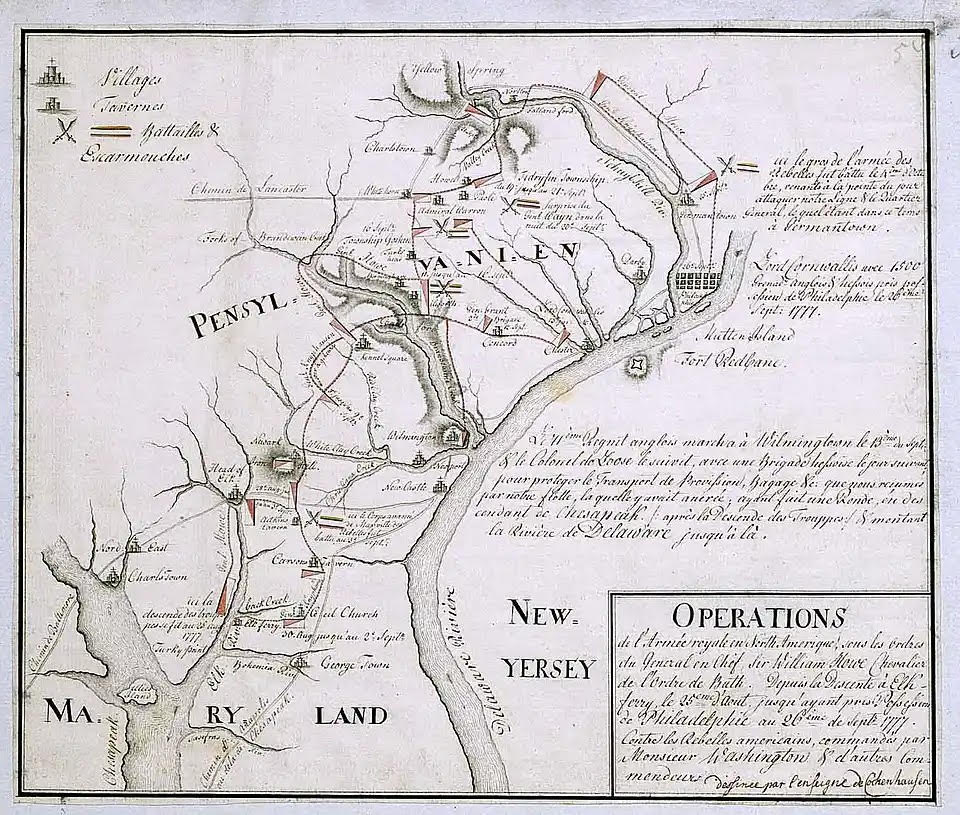
The best source remains Kirkwood himself. In contrast to his account of Cowpens, Kirkwood’s journal entry for the Battle of Brandywine is positively prolific. The journal records that, at Brandywine, Kirkwood’s regiment was engaged in a flanking action and “several times exposed to the fire of the enemy’s cannon and small arms.”⁵ Within this context, Kirkwood maintained control of his company under pressure and contributed to the preservation of order during withdrawal.
Comparative Analysis: Kirkwood and Murphy
Audie Murphy’s Medal of Honor citation emphasizes sustained, deliberate exposure to enemy fire in order to maintain control of a unit under extreme pressure. Murphy remained in an exposed forward position, even as friendly forces were compelled to withdraw. He initially coordinated supporting artillery fire but eventually manned a crew-served weapon mounted on a disabled armored vehicle to repel advancing infantry, while the vehicle was in danger of exploding due to being engulfed in flames from a previous hit. Murphy, though wounded, remained at his post and repelled the attack. A performance deserving of the Medal of Honor.
Murphy’s valor was corroborated by witness statements, and the award recommendation underwent several layers of review. No such chain of evidence exists for Kirkwood’s combat actions. That being said, we know from his journal entries that Kirkwood is nothing if not laconic. Therefore, I made allowances for Kirkwood’s modesty and compared the details of his conduct to Murphy’s and found that in both cases, an infantry company commander exposed himself to danger while displaying leadership under heavy fire. Both men demonstrated leadership at the head of their companies under fire. The standard isn’t the mission; it’s the officer’s conduct at the point of greatest danger, ability to influence outcomes, and accomplish his assigned mission.
The comparative table below lays out the circumstances:
Comparative Table
| Category | Kirkwood | Murphy |
| War | American Revolution | World War II |
| Battle | Brandywine (1777) | Holtzwihr, France (1945) |
| Rank | Captain | Second Lieutenant |
| Role | Company Commander | Platoon Leader (acting company-level control during crisis) |
| Unit | Delaware Regiment, Continental Army | Company B, 15th Infantry Regiment, 3rd Infantry Division |
| Type of Action | Sustained leadership under fire | Sustained leadership under fire |
| Exposure | Repeated artillery & musket fire | Continuous exposure to infantry and armored fire |
| Leadership Function | Maintains cohesion, controls withdrawal | Holds position, directs fire, stabilizes line |
| Outcome | Orderly retrograde | Enemy repelled; position held |
| Citation Tone | Controlled, evidence-based | Controlled, action-driven |
Based on this comparison and the analysis of the CMOHS database, I determined that Kirkwood’s actions at Brandywine are deserving of a Medal of Honor recommendation and offer the following proposed citation.
Captain Robert Kirkwood, Delaware Regiment, Continental Army
For conspicuous gallantry and intrepidity at the risk of his life above and beyond the duty expected of an officer of his grade at the Battle of Brandywine, Pennsylvania, on 11 September 1777.
While serving as a company commander with the Delaware Regiment, Captain Kirkwood repeatedly exposed himself to the fire of the enemy’s cannon and small arms while engaged with his regiment in a flanking action against the enemy. Maintaining control of his command under increasing pressure, he moved among his men, steadying their line and preserving their order in the face of sustained enemy fire.
Throughout the engagement, Captain Kirkwood remained in an exposed position, directing and encouraging his soldiers by personal example. As the action progressed and the American line was compelled to withdraw, his leadership contributed materially to maintaining cohesion and discipline, enabling an orderly retrograde rather than disorder or collapse.
Captain Kirkwood’s coolness under fire, his deliberate exposure to enemy action, and his unwavering devotion to duty reflect the highest credit upon himself and the cause for which he fought.
The Structural Limits of Recognition
In the Continental Army, formal decorations for valor did not exist for officers (although late in the war, General Washington authorized a Badge of Military Merit for deserving non-commissioned officers and soldiers). The army recognized officers for meritorious conduct primarily through promotion within the regimental structure. Advancement depended not only on merit but also on unit size, vacancies, and seniority. These constraints unfairly affected officers from smaller states such as Kirkwood. The Delaware Line’s small size limited advancement, and Kirkwood remained a substantive Captain throughout the war. Brevet promotions emerged as a partial remedy, granting honorary rank to acknowledge merit or service; however, with no additional command authority or pay. Noted Continental Army cavalry officer Henry Lee noted that Kirkwood “never could be promoted in regular routine. “⁹ Kirkwood’s sole reward at the end of the war was a brevet majority, presented in 1783.
Brave to the End
Kirkwood returned to service eight years after the end of the American Revolution, serving in St. Clair’s expedition against Native Americans resisting American expansion into the Northwest Territory. St Clair suffered a resounding defeat at the Battle of the Wabash in 1791. Kirkwood received a mortal wound at this battle, but the manner of his death reinforces the pattern of his service. Serving again as a captain, Kirkwood was in front of his men and under fire when he was hit. He refused evacuation and urged others to save themselves.¹⁰
Kirkwood’s career illustrates the limits of the Continental Army’s system of awards. This article is not meant to serve as a grassroots petition for a posthumous Medal of Honor for Robert Kirkwood. While deserved in my opinion, such a petition is both anachronistic and unnecessary. The Medal of Honor thought experiment serves to illustrate Kirkwood’s service in terms that a modern army would recognize and have the means to acknowledge. The fact that Kirkwood continued to serve without recognition is itself a testament to his valor, fidelity, and patriotism. As Henry Lee observed, Kirkwood died as he lived: “brave, meritorious, unrewarded.”¹¹
Footnotes
- Francis B. Heitman, Historical Register of Officers of the Continental Army (Washington, DC: Government Printing Office, 1914), 330.
- Michael Cecere, “The Forgotten Warrior: The Brave and Meritorious Robert Kirkwood,” Journal of the American Revolution, 2018.
- Ibid.
- U.S. Department of Defense, Manual of Military Decorations and Awards, DoDM 1348.33.
- Biographical Sketch of Robt. Kirkwood, Delaware Public Archives, historical marker file NCC-034-03, accessed March 24, 2026, https://archivesfiles.delaware.gov/markers/pdfs/NCC-034-03.pdf.
- Congressional Medal of Honor Society, “Lewis L. Millett,” Medal of Honor Citation.
- Francis B. Heitman, Historical Register of Officers of the Continental Army (Washington, DC: Government Printing Office, 1914), 330; American Battlefield Trust, “Robert Kirkwood,” https://american-revolution-experience.battlefields.org/people/robert-kirkwood.
- Heitman, Historical Register, 330.
- Lee, quoted in Cecere.
- Steven P. Locke, War Along the Wabash: The Ohio Indian Confederacy’s Destruction of the U.S. Army, 1791 (Havertown, PA: Casemate Publishers, 2023).
- Lee, quoted in Cecere.
Sources
American Battlefield Trust. “Robert Kirkwood.” https://american-revolution-experience.battlefields.org/people/robert-kirkwood
Cecere, Michael. “The Forgotten Warrior: The Brave and Meritorious Robert Kirkwood.” Journal of the American Revolution, 2018.
Congressional Medal of Honor Society. “Audie Murphy”.
Delaware Public Archives. Biographical Sketch of Robt. Kirkwood,
Heitman, Francis B. Historical Register of Officers of the Continental Army. Washington, DC: Government Printing Office, 1914.
Lee, Henry III. Correspondence (quoted in secondary sources).
Locke, Steven P. War Along the Wabash: The Ohio Indian Confederacy’s Destruction of the U.S. Army, 1791. Havertown, PA: Casemate Publishers, 2023.
U.S. Department of Defense. Manual of Military Decorations and Awards.
 Emerging Revolutionary War Era