

On May 15, 1776, the Continental Navy frigate Warren-32 slid down the ways into the Providence River, the first purpose-built American frigate to taste water. The local committee came up with fifty dollars to pay musicians and throw a party for the men who had worked on her. Eight more followed her in the next few weeks: Providence-28 (Providence) on May 18, Raleigh-32 (Portsmouth) on May 21, Boston-24 (Newburyport) on June 3, Hancock-32 (Newburyport) in July, Delaware-24 and Randolph-32 (Philadelphia) a few weeks later, Virginia-28 (Baltimore) in August, and Trumbull-28 (Chatham) in September.[i] They were far from finished. Rigging, masts, equipment, guns, and crews were all still necessary to complete them.
The colonies already had a navy, just back from a successful, if ill-considered, raid on the Bahamas, where it had seized cannon, shot, and other war materiel already making its way into the armed forces of the rebelling colonies. But, the ships were all converted civilian vessels turned into ad hoc navy ships. Some performed well; others were ill-suited to combat. But, these new ships were designed for war, making May 15 a seminal moment in the history of the Continental Navy. Thirteen colonies, which hadn’t declared their independence, were creating capabilities designed to take the fight to the mother country on the sea, where she was strongest.
The Continental Congress approved the creation of this second generation of naval vessels on December 13, 1775 after reviewing the report of a committee created specifically for the purpose. It intended to build 13 ships: five of 32 guns, five of 28, and three of 24. Congress was precise in the amount to be paid for these ships: 866,666 and 2/3 dollars for all of them, roughly 66,666 and 2/3 dollars each. Due to the limitations of the American shipbuilding industry—no yard was large or capable enough to handle the entire order in a timely fashion—the Congress spread construction across seven colonies. It also helped firm up political support for financing the fleet, a practice still evident today. Each colony was to provide the materials for the hull and masts assigned to it, but Congress undertook to provide the canvas and gunpowder.[i]
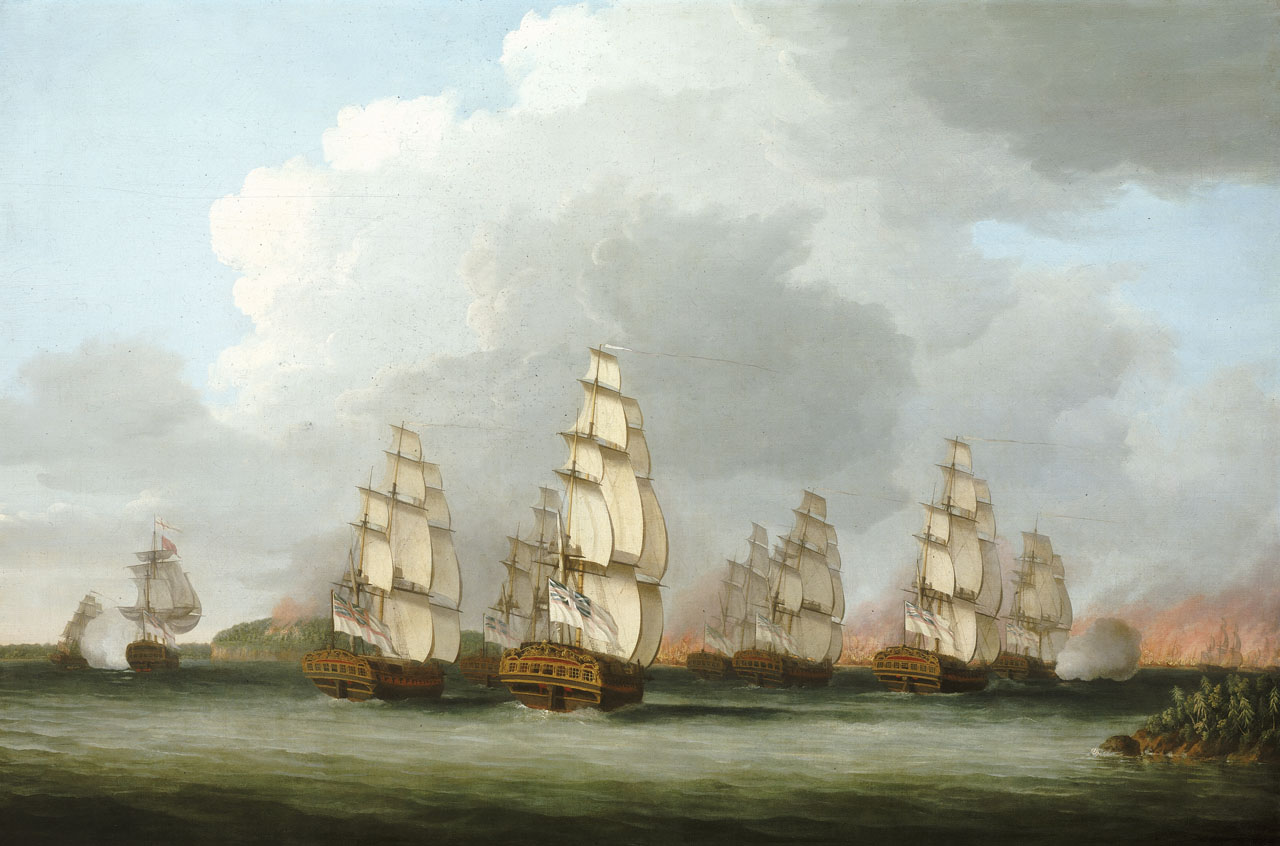
Captain Esek Hopkins, Commander in Chief of the Continental Navy, transferred his flag to Warren in December 1776, an indicator that he was ready to go to sea. Still, he struggled with recruitment and the Royal Navy blockading Narraganset Bay. Hopkins might be ready, but Warren wasn’t. It was more than a year before she finally reached open water in March 1778. Warren took two prizes, but entered Boston harbor on March 23 after only two weeks at sea. She sortied briefly again in the fall, and, a third time in company with two other vessels. On this cruise, in the spring of 1779, she took seven of nine ships in a British convoy. She put to sea a fourth time in July 1779 under the command of Captain Dudley Saltonstall, who was also leading an impressive American battle fleet to Penobscot Bay to eject a new British lodgment on the Bagaduce Peninsula. The Penobscot expedition was the largest American amphibious operation of the war. Unfortunately, the campaign against the British unraveled within days of reacing the peninsula. It wasn’t long before a superior British squadron arrived. The American ships fled deeper into the bay. Trapped eventually, their crews set them afire to keep them from falling into British hands. It was the worst American naval defeat of the war and a sad ending for a frigate that had begun life with such promise in May, 1776.[1]
[1] “Warren II (Frigate),” Naval History and Heritage Command. Available at https://www.history.navy.mil/content/history/nhhc/research/histories/ship-histories/danfs/w/warren-ii.html. Accessed April 13, 2026.
[i] “Journal of the Continental Congress, December 13, 1775,” William Bell Clark, ed., Naval Documents of the American Revolution, Volume 3 (Washington, DC: Government Printing Office, 1967), 90.
[i] Nathan Miller, Sea of Glory: A Naval History of the American Revolution (Annapolis, MD: Naval Institute Press, 1974), 209-210. The celebration in Providence was held on May 18 after the Providence’s hull joined the Warren in the river.
 Emerging Revolutionary War Era