This Sunday, join Emerging Revolutionary War as we explore the prelude to Fort McHenry and the actions in Maryland and Washington D.C. in the summer of 1814. Joining Emerging Revolutionary War will be the American Battlefield Trust’s Senior Education Manager, Dan Davis.
This historian happy hour will discuss the first part of the campaign that eventually led to the climactic Battle of Baltimore, which included both the unsuccessful British attempts at Fort McHenry and North Point. Before that success for American arms, the United States suffered through the defeat at Bladensburg and the capture of the nation’s capital.
We hope you can join us on our Facebook page, on Sunday, April 30th at 7 p.m. EDT .
Slathered on hamburgers across the United States of America. Added to coleslaw recipes. In Germany used to dip pomme frites, French fries into. This condiment or sauce is well-known throughout a large percentage of the globe. However, did you know that this white sauce has a tie to the French and Indian or Seven Years War?
Recently I was reading a book, Gibraltar: The Greatest Siege in British History by Roy and Lesley Adkins. When discussing some of the history leading up to the siege of Gibraltar from 1779-1783, the authors referenced an earlier siege, unrelated to Gibraltar actually, and had a note about the creation of mayonnaise.
Like any good historian, I decided to investigate the founding of this sauce that is used so predominantly in America. Below is what I found.
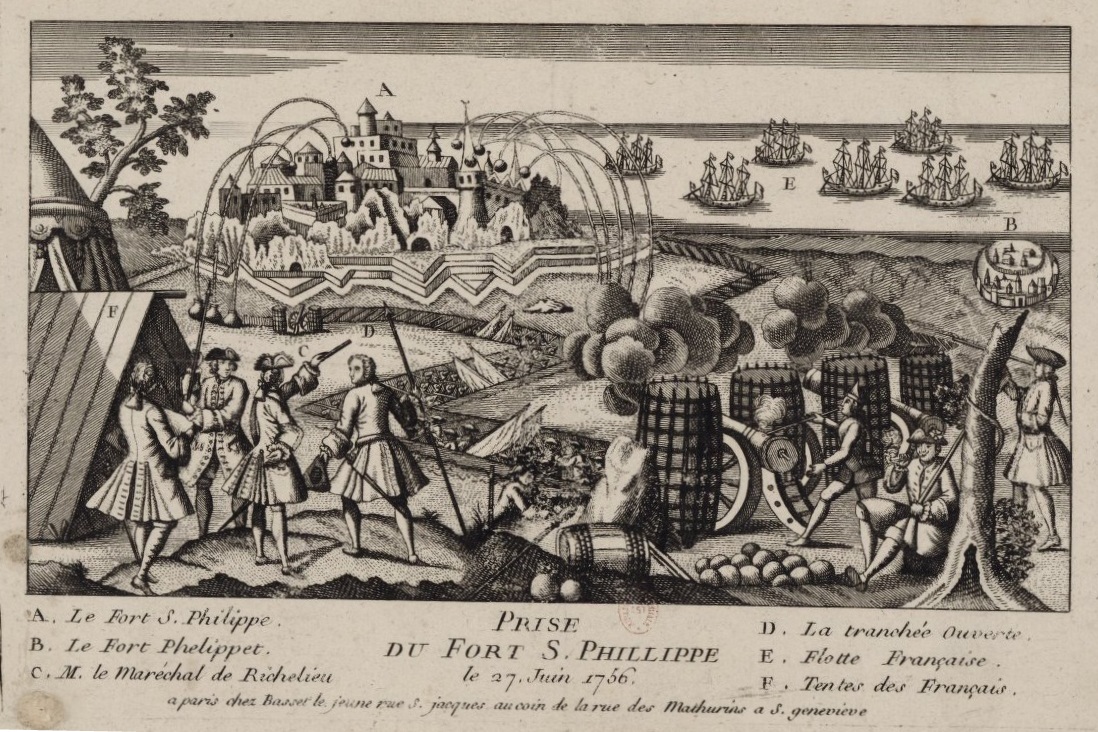
Created for a victory celebration after the French’s successful defeat of the British on the island of Minorca, also spelled Menorca which is the Catalan spelling. The siege and battle had lasted 70 days, from April 20 to June 29, 1756 and had cost the French approximately 3-4,000 casualties. The British loss around 400 men and one of the strategic defenses and the Mediterranean Sea. The French remained in control of the island until the end of the Seven Years’ War. The island recaptured by the Br was returned to the British at the end of the war, trading the island of Guadeloupe for it as part of the peace treaty signed in Paris.
Yet, after the British surrendered Fort St. Philip, in 1756, which protected the town and seaport of Mahon a large victory banquet was held. The French leader, the Duke de Richelieu instructed his chef to to create a feast that would honor the great victory. The island lacked the cream needed for the sauce the chef wanted to make so he invented the egg and oil dressing.
He named the concoction Mahon-aise, after the town he created the sauce in.
Hope you are reading this around lunchtime!
P.S. The author realizes that a few other accounts exist about the creation of the this sauce. Including that the chef of the French duke was told about the sauce by the inhabitants of the island who had already created it.
Beginning on December 8, 1777, General George Washington and his Continental army left the environs of White Marsh to begin the movement toward their winter encampment. The rank-and-file crossed over the Schuylkill River and headed westward. Within three days the soldiers had trudged into an area called the Gulph on a December Thursday morning.
During this sojourn Washington wrote a a flurry of orders and letters, finally selecting Valley Forge. His reasoning was explained in the general orders for that day while also observing another delay in order to honor a day of fasting and thanksgiving decreed by the Continental Congress. Washington began that general order on December 17, 1777 by acknowledging the thousands of men that were braving the weather, lack of sustenance, and the rigors of the 1777 campaigning season.
“The Commander-in-Chief with the highest satisfaction expresses his thanks to the officers and soldiers for the fortitude and patience with which they have sustained the fatigues of the Campaign. Altho’ in some instances we unfortunately failed, yet upon the whole Heaven hath smiled on our Arms and crowned them with signal success; and we may upon the best grounds conclude, that by a spirited continuance of the measures necessary for our defence we shall finally obtain the end of our Warfare, Independence, Liberty and Peace.“
The march resumed around 10 a.m. on December 19, a Friday, as the Continental army trudged out of the Gulph Mills area and on to their final destination for 1777; Valley Forge. The army would soon spread out to occupy over 7,800 acres of Pennsylvania countryside and spend the next six months resting, recuperating, surviving, and training.
To read more about the end of the 1777 campaign and the winter spent at Valley Forge, check out the book, by yours truly, Winter that Won the War, part of the Emerging Revolutionary War Series, published by Savas Beatie, LLC.
“Many believed then and have believed since that privateering was a sideshow in the war” Furthermore, “privateering has long been given short shrift in general histories of the conflict, where privateers are treated as a minor theme if they are mentioned at all” [pg. xviii].
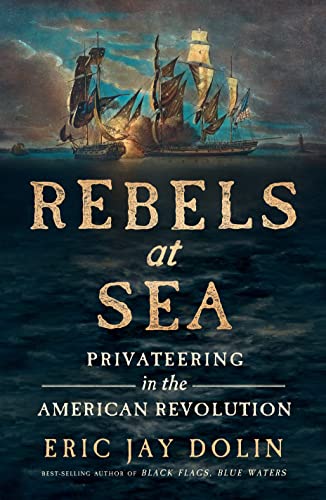
Best-selling maritime historian Erica Jay Dolin penned the two lines above in his introduction to his latest publication, Rebels at Sea, Privateering in the American Revolution. Building on previous works that covered specific aspects of “do succeed in showing how it [privateering] contributed to the American victory. But none of these books offers a comprehensive picture of the full extent of privateering” [xviii].
A bold statement to make, crafting a comprehensive picture “of the full extent of privateering” but that is exactly what Dolin does in his work. Starting with how individual colonies then states moved to outfitting vessels to begin preying on British maritime trade and on occasion Royal British Navy ships. The best tabulation of how much British maritime trade was affected during the American Revolution comes from John Bennett Jr. first secretary of Lloyd’s of London, the largest insurance marketplace at that time. He concluded that 3,386 British vessels were captured, only a 1,002 were recaptured or ransomed, which leaves a net gain of 2,384 that remained in enemy or American hands [pgs. 161-162].
Impactful.
The ensuing chapters after the introduction pivot the reader through the life of a privateersman, including the travails faced. He circles back to this in another chapter detailing the British response, including what imprisonment looked like; either in a British land jail or on the infamous Jersey prison ship in Wallabout Bay, New York. Keeping the narrative flowing, Doulin gives snippets on some of the greatest triumphs of American privateersman and some of the greatest tragedies to befall these sailors on the high seas. Tidbits of interesting information, for example, did you know that the future dentist of George Washington cut his teeth as a privateer? (Okay, pun intended).
Sandwiched in between is the role of the French, America’s steady ally, after 1777, and how that country and its ports helped American vessels. Lastly one of the other admirable additions to this text is the plethora of pictures Doulin was able to find and include. Having the visuals certainly enhances the public history side of this publication.
Overall, this is a great read on a lesser viewed subject of the American Revolution. However, what the privateers did enabled eventual American independence. As John Lehman, the secretary of the navy under President Ronald Reagan once wrote.
“From the beginning of the American Revolution until the end of the War of 1812, America’s real naval advantage lay in its privateers. It has been said that the battles of the American Revolution were fought on land, and independence was won at sea. For this we have the enormous success of American privateers to thank even more than the Continental Navy” [pg. xviii].
Individuals come to life in this narrative. The cat-and-mouse of life on the high seas comes to life in this book. Join Doulin in an adventure on the high seas and understand the role of privateers in securing American independence in the process. Enjoy!
In March 1778, Major General Nathanael Greene finally consented to become the quartermaster for the Continental army then encamped at Valley Forge. He was loathe to give up his position as a line commander in charge of a division of infantry but with reassurances from General George Washington that he would retain his place and that his expertise was absolutely needed to revitalize the quartermaster department the Rhode Islander agreed.
His work over the next two plus years paid huge dividends. On Sunday, August 21, at 7p.m. EDT join Emerging Revolutionary War on our Facebook page for the next “Rev War Revelry.” Joining ERW will be the American Battlefield Trust’s Senior Education Manager, historian and author Dan Davis.
In reference to Greene’s role as quartermaster general at Valley Forge, Davis said, “Primarily remembered for his actions during the Southern Campaign, Nathanael Greene’s efforts at Valley Forge were critical in sustaining the Continental Army during a crucial period of its history.”
We look forward to a great discussion and hope you can join us for this historian happy hour!
One artist’s depiction of what the encampment at Valley Forge looked like
On December 19, 1777 a bedraggled, underfed, undersupplied, and hemorrhaging manpower, the Continental army trudged into their permanent winter encampment at Valley Forge. Located approximately 20 miles from Philadelphia, General George Washington’s army would recuperate, revitalize, re-train, and march out six months later a different military force.
Meanwhile, the British army, victors of Brandywine and survivors of Germantown ensconced themselves in the colonial capital of the rebellious colonies after its peaceful fall on September 26, 1777. Commanded by Sir General William Howe the British were better fed, better equipped, and in theory better suited to continue conducting military operations to quell the rebellion.
Which begs the question, why did Howe not attack Valley Forge?
Sir William Howe
Although historians have grappled with this, there are a number of reasons why Howe did not press the issue during the winter months, some range from personal to logistical to how warfare was conducted in the 18th century.
Was Howe frustrated at Washington for not taking the bait at White Marsh in early December 1777 to fight outside defensive works and envisioned the same reticence would be shown by the Virginian if the British attempted an offensive action toward Valley Forge?
Or was Howe simply a man of his time and war was not practiced in winter when there were so many variables one could not control, chiefly the unpredictability of Mother Nature?
Was Howe already worried about his reception and defense when he arrived back in England? Only willing to take a low risk-high reward gambit, which he attempted in May 1778 at Barren Hill?
One of his own soldiers,Captain Richard Fitzpatrick in a letter to Charles Fox penned the following;
“If General Howe attempts anything but securing his army for the winter I shall consider him, after what has happened in the north, a very rash man. But if he lets himself be governed by General Grant I shall not be surprised if we get into some cursed scrape.”[1]
Or does this one paragraph explain the main reason behind no winter campaigning, “what has happened in the north.” A clear implication to the disaster of the other field army operating in the northern American colonies, Burgoyne’s that capitulated at Saratoga in October 1777.
Although we will never know for certain, this is a question that has come up in conversations, at book talks, and around the national park at Valley Forge. This is a question Emerging Revolutionary War will grapple with on our second annual bus tour, which will include Valley Forge, this November. Check the link “Bus Tour 2022” on the black banner above to secure your ticket and partake in the ongoing debate on why Howe did not attack. Limited tickets remain.
[1] Urban, Mark. “Fusiliers: The Saga of a British Redcoat Regiment in the American Revolution (Walker & Company: Manhattan, 2007).
I admit, I was skeptical when I saw the book on the bookshelf of my local bookstore and then again at the county library. Another biography on the Marquis de Lafayette? Was one truly needed? Four days later with the book finished and now laying beside me as I type this review I can emphatically say “yes” that this biography was needed about the most celebrated Frenchman in the history of the United States.
Having read previously a biography solely on Lafayette and another where a historian compared him as a revolutionary brother to Thomas Jefferson, I had a baseline knowledge of the marquis. Mike Duncan, popular history podcaster and New York Times-Bestselling Author provides a very readable, engaging biography that moves gracefully through Lafayette’s life, more graceful than supposedly the young Frenchman’s first dance at Versailles in front of Marie Antoinette.
After a brief but concise overview of the young Lafayettes’s formative years, Duncan dedicates the majority of the narrative of how the Frenchman became the “hero of two worlds.” From how he navigated his escape to America in 1777 to the ideals he brought back to France and his hopefulness for creating a better homeland. One of the values of Duncan’s work is his ability to find the inner workings of Lafayette’s demeanor and mindset. This is done by looking at his peers and their criticalness of how the Frenchman navigated the shifting sands of the turbulent French political scene from 1789 through the Napoleon era.
I greatly enjoyed the writing style and the blend of popular and academic historical scholarship that Duncan effortlessly moved between throughout the narrative. This work is definitely a must read for anyone looking for that introductory book about the Marquis de Lafayette. For those who have a little more foundational knowledge there may be limited new material but the primary sources from contemporaries adds a much-needed element of constructing the two worlds that Lafayette moved between.
To walk the footsteps of Lafayette at Valley Forge, join Emerging Revolutionary War in November for our Second Annual Emerging Revolutionary War Bus Tour. Click the “2022 Bus Tour” link on the black bar above to secure your ticket.
A few weeks back, you may have noticed a video on Emerging Revolutionary War’s Facebook page about the Marquis de Lafayette and his independent command during the spring and summer of 1781 in Virginia. Along with good pal, Dan Davis, we located a site of where Lafayette encamped while he maneuvers to protect the iron furnaces of the Fredericksburg area, keep a distance from British forces under General Lord Charles Cornwallis, and await reinforcements being sent south under General Anthony Wayne.
He continued to keep his commander-in-chief, General George Washington updated on affairs in the latter’s native state. From a camp in central Virginia the Frenchman penned the following letter.
“Camp Betwen Rappaahonock and North Anna June 3d 1781
My Dear General
Inclosed you will find the Copy of a letter to General Greene. He at first Had-Requested I would directly write to you, Since which His orders Have Been different, But He directed me to forward you Copies of My official Accounts. So many letters are lost in their Way that I do not Care to Avoid Repetitions. I Heartly wish, My dear General, My Conduct may Be approved of particularly By You. My Circumstances Have Been peculiar, and in this State I Have Some times Experienced Strange disappointements. Two of them the Stores at Charlotte’s Ville, and the delay of the [Pensylva] Detachement Have given me Much Uneasiness and May Be attended with Bad Consequences. There is great Slowness and Great Carelessness in this part of the world—But the Intentions are good, and the people want to Be Awakened. Your presence, My dear General, would do a Great deal. Should these deta[chments] Be Increased to three or four thousand, and the french Army Come this way, leaving One of our generals at Rhode island and two or three about New York and in the Jersays you Might be on the offensive in this Quarter, and there Could Be a Southern Army in Carolina. Your presence would do Immense good, But I would wish you to Have a large force—General Washington Before He personally appears must Be Strong enough to Hope Success. Adieu, My dear general, With the Highest Respect and Most Tender affection I Have the Honor to be Yours
Lafayette
If you persist in the idea to Come this Way you may depend upon about 3000 Militia in the field Relieved every two months. your presence will induce them to turn out with great Spirit.“
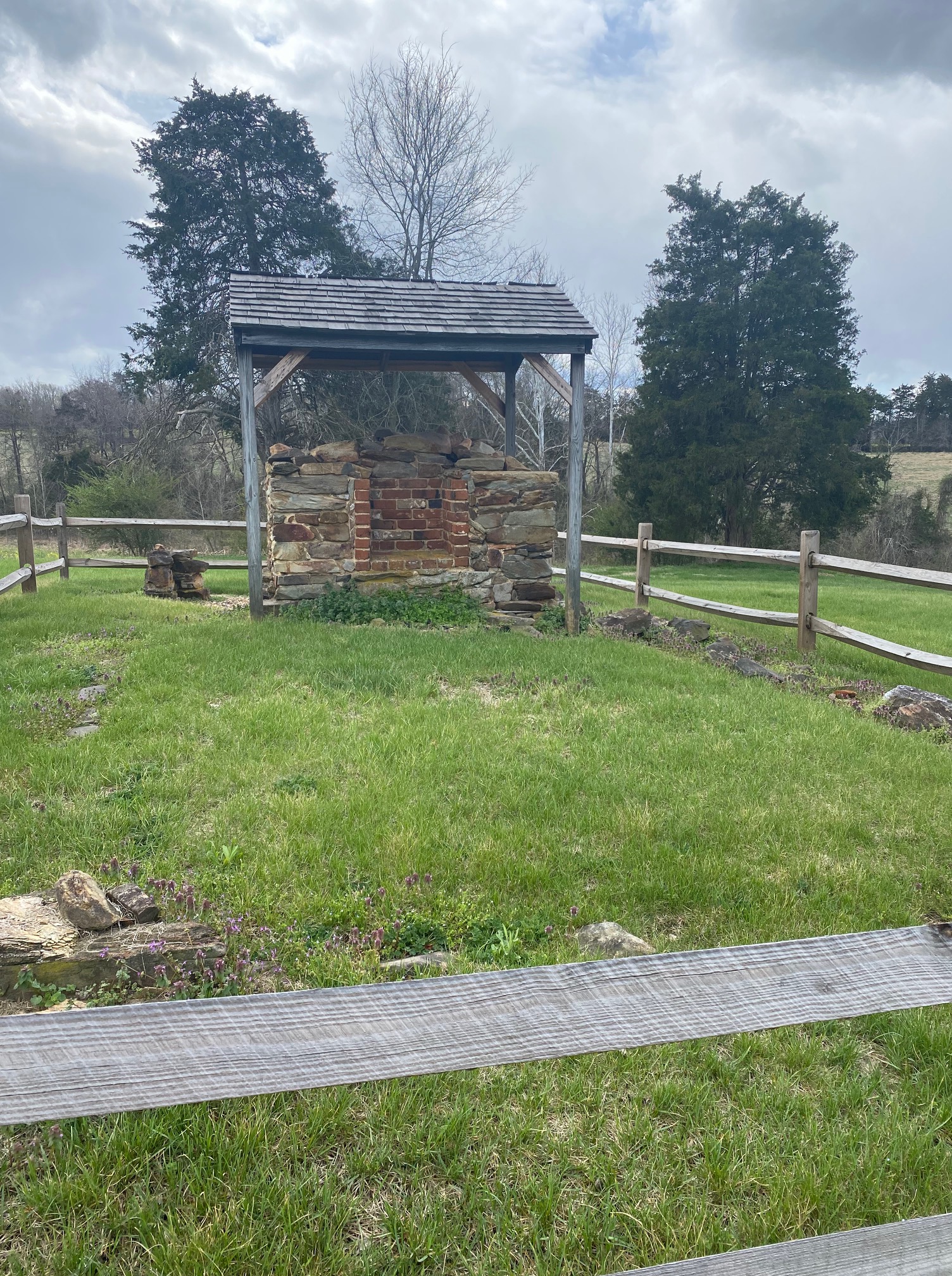
That letter may have been written somewhere around the terrain you see in the photos below. You never know what you can stumble into touring central Virginia!
Wilderness Tavern Ruins, the tavern was built after the American Revolution in 1810 View of the rolling terrain that made the encampment near Wilderness Run, which is in between the two hillsides, defensible View of where Lafayette’s forces were camped
After a circuitous journey, from Paris, France across the Atlantic Ocean and then into Pennsylvania, an eager participant trekked to join the American effort. After an introduction to the Continental Congress this European officer headed toward the Continental army encampment. Baron Frederich William Ludolf Gerhard Augustin von Steuben, 47-years old, rode into camp drawn by horses and relaxing, as much as one can on the roads of Pennsylvania during 1770s, in a sleigh, with a Russian wolfhound dog strolling beside the wooden vehicle. On this date, 244 years ago, General George Washington, his staff, and any inquiring eyes around camp saw von Steuben for the first time.
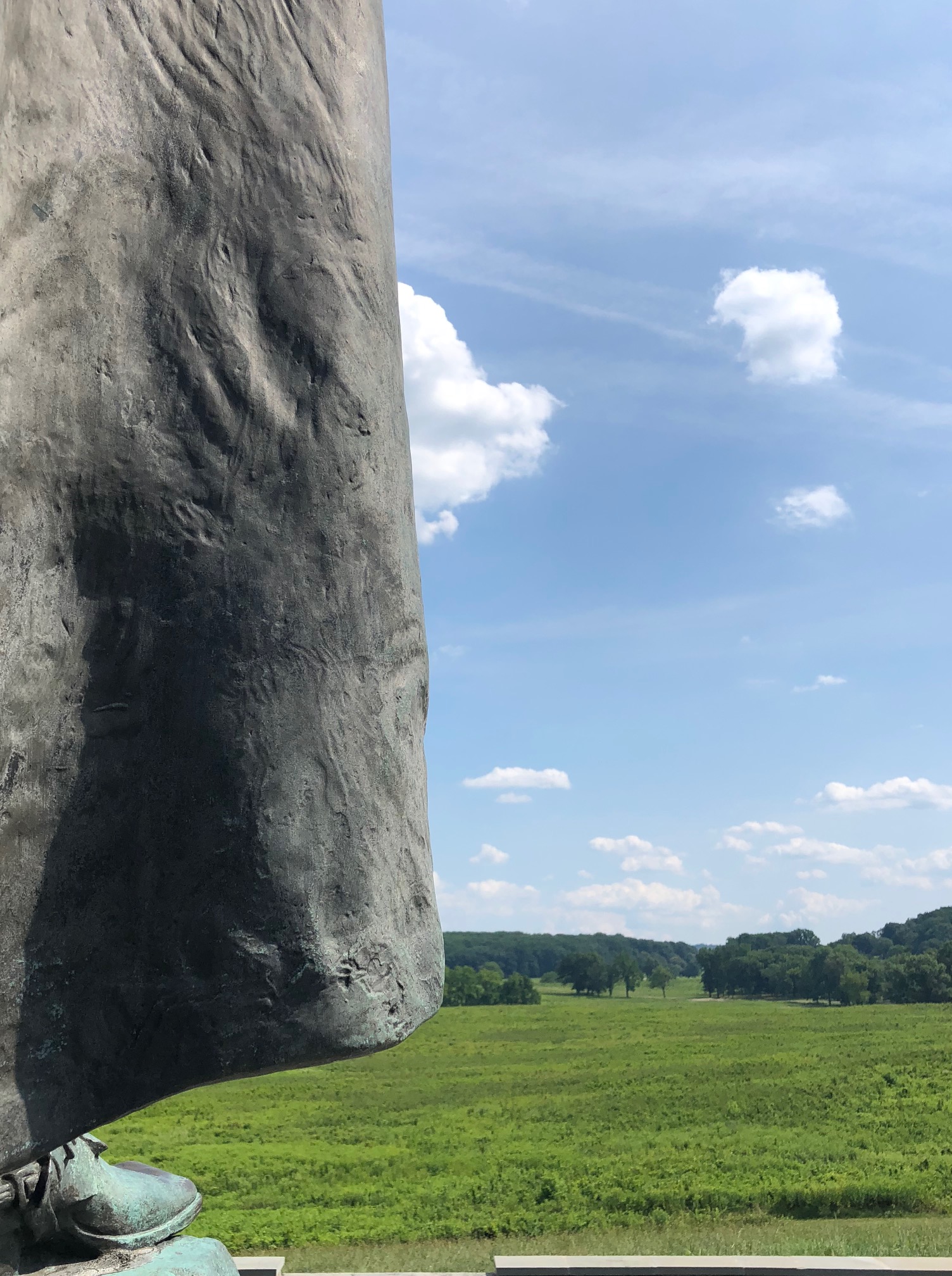
Baron von Steuben Statue, Valley Forge NHP
Although Christmas was almost two months in the past, von Steuben became a late blessing for Washington and his Continental army. Through an adaptation of a military training regimen from continental Europe which became a manual known as the “Blue Book” (this guide was used to train United States Army recruits for decades into the future as well), von Steuben began to morph the rank-and-file and junior officer corps of the Continental army into an actual army that knew how to follow commands and change formations. This training aided the Continentals in the battles of 1778, from a small engagement in May at Barren Hill to the last major fighting in the northern theater at Monmouth in June and into other theaters of the conflict.
Today, the field in which he trained the first model company is preserved by the National Park Service within the boundary of Valley Forge National Historical Park.
This November, during the second annual Emerging Revolutionary War bus tour, attendees will see the field and stand at the foot of the statue to von Steuben, looking over the same ground he first saw on this date, February 23, 1778. To secure your tickets, click the link on the header bar above titled “2022 Bus Tour.”
In the throes of the winter of 1778, spent at Valley Forge, General George Washington and his staff formulated a mountain of paperwork to multiple recipients of the American cause. On February 16, 1778, Alexander Hamilton composed a letter for the commander-in-chief of the Continental army to a gentleman who had moved from the military to the political ranks; George Clinton of New York.
George Clinton
He had seen service in the Hudson Highlands and had been commissioned a brigadier general in the Continental army on March 25, 1777. Later that same year both governor and lieutenant governor of New York, formally resigning the latter and accepting the former on July 30, 1777. In that capacity, he received the letter, excerpts below, from Valley Forge.
“It is with great reluctance, I trouble you on a subject, which does not properly fall within your province; but it is a subject that occasions me more distress, than I have felt, since the commencement of the war; and which loudly demands the most zealous exertions of every person of weight and authority, who is interested in the success of our affairs.”I mean the present dreadful situation of the army for want of provisions and the miserable prospects before us, with respect to futurity. It is more alarming, than you will probably conceive, for to form a just idea, it were necessary to be on the spot.2 For some days past, there has been little less, than a famine in camp. A part of the army has been a week, without any kind of flesh & the rest three or four days.3 Naked and starving as they are, we cannot eno⟨ugh⟩ admire the incomparable patience and fidelity of the soldiery, that they have not been, ere this, excited by their sufferings, to a general mutiny and dispersion. Strong symptoms however of discontent have appeared in particular instances; and nothing but the most active effort⟨s⟩ every where, can long avert so shocking a catastrophe.
Washington then asks for any help or supplies that Clinton can send his way, even though the army is outside the state lines of New York. Washington’s mindset is that the cause of the army in Pennsylvania is the cause of American independence and that Clinton, who had served would recognize that and do his utmost to provide what he can.
“I am calling upon all those, whose stations and influence enable them to contribute their aid upon so important an occasion, and from your well known zeal, I expect every thing within the compass of your power, and that the abilities and resources of the state over which you preside, will admit. I am sensible of the disadvantages it labours under, from having been so long the scene of war, and that it must be exceedingly drained by the great demands to which it has been subject, But though you may not be able to contribute materially to our relief, you can perhaps do something towards it; and any assistance, however trifling in itself, will be of great moment, at so critical a juncture, and will conduce to keeping the army together, ’till the Commissary’s department can be put upon a better footing, and effectual measures concerted to secure a permanent and competent supply. What methods you can take, you will be the best judge of; but if you can devise any means to procure a quantity of cattle or other kind of flesh, for the use of this army, to be at camp in the course of a month, you will render a most essential service to the common cause.“
Not only did Clinton receive this missive from Washington, dated February 16, but the following day Gouverneur Morris from a camp committee established by the Continental Congress also sent the New York governor a letter asking for any assistance he could provide for the army at Valley Forge.
These letters underscore the seriousness of the plight of the army encamped at Valley Forge as the winter slowly turned to spring. The action at Washington’s headquarters and from the camp committee helped create a path forward through that pivotal winter. To learn more about what transpired during those six months from December 1777 to June 1778, follow the link above to the “2022 Bus Tour” and join Emerging Revolutionary War on our second annual bus tour November 11-13, 2022.
The entire letter from Washington (Hamilton) to George Clinton can be found here.










 Emerging Revolutionary War Era