

Mark your calendars for September 28, 2019! Emerging Revolutionary War is excited to announce that we are partnering with Gadsby’s Tavern Museum and The Lyceum of Alexandria, VA to bring to you a day long Symposium focusing on the American Revolution.
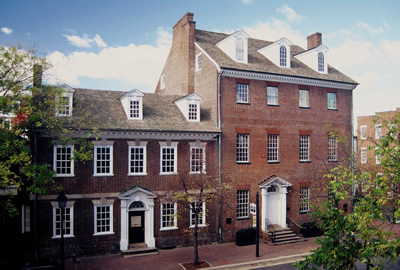
Alexandria is George Washington’s hometown and we feel is a great place for us to start this new endeavor. Historic “Old Town” Alexandria is home to dozens of museums and historic sites as well as great pubs, restaurants and shops. Gadsby’s Tavern Museum is the premier 18th century tavern museum in the country and is host to the famous annual George Washington Birthnight Ball. The Lyceum: Alexandria’s History Museum will be our host location. Today The Lyceum serves as the City’s history museum and is a center of learning through lectures, demonstrations and exhibits.
This year’s theme is “Before They Were Americans” and will highlight several topics
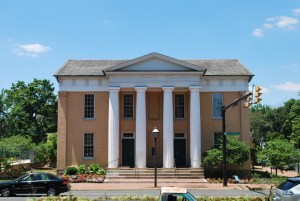
about the years leading up to the American Revolution. Our speakers include: Phillip Greenwalt, Katherine Gruber, William Griffith, Stephanie Seal Walters and Dr. Peter Henriques as the keynote. Registration will open on July 1, 2019 through AlexandriaVA.gov/Shop or by calling 703-746-4242. Stay tuned as we highlight each of our speakers and their topics.


 So, vacation time rolls around again and this year my family and I had an opportunity to travel to Paris, France for a few days. Riding into the city from Charles de Gaulle Airport, our taxi driver, by chance, took us past an old, green-corroded bronze statue, set in the middle of a little flowered square. From my vantage, I could only see the bottom portion of the statue; what appeared to be the lower portion of a man in buckled shoes, seated in a wooden chair, atop a marble pedestal. My wife happened to be in the right spot in the vehicle as we quickly drove by. “Looks like Benjamin Franklin, I think.” she said, and with those words, she sent me on a journey to find that statue again and, hopefully, other sites in Paris associated with Mr. Franklin.


 Emerging Revolutionary War Era