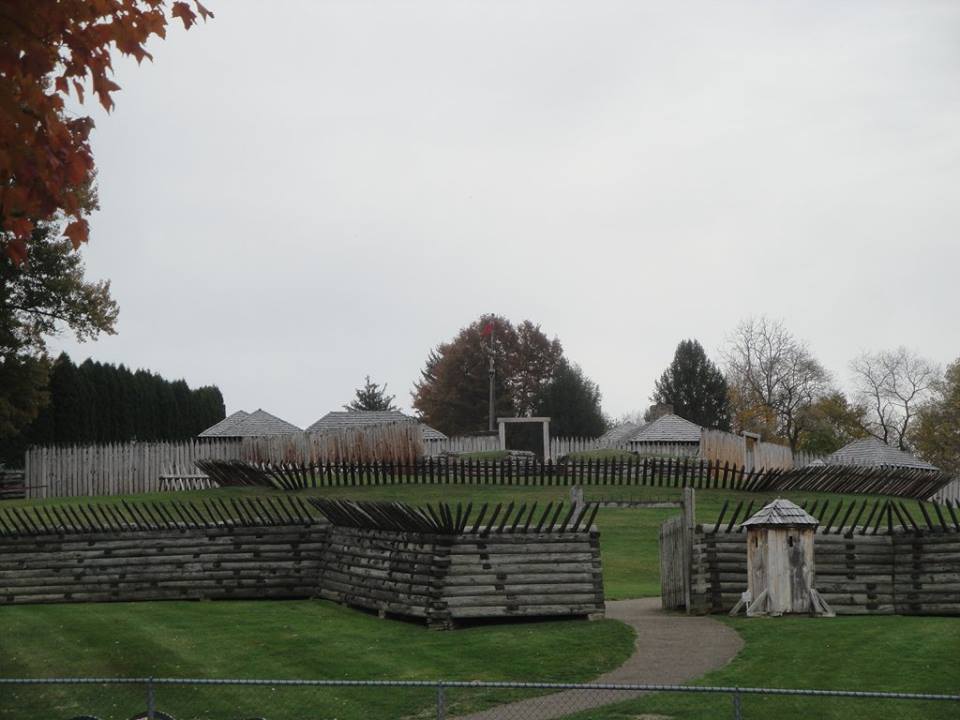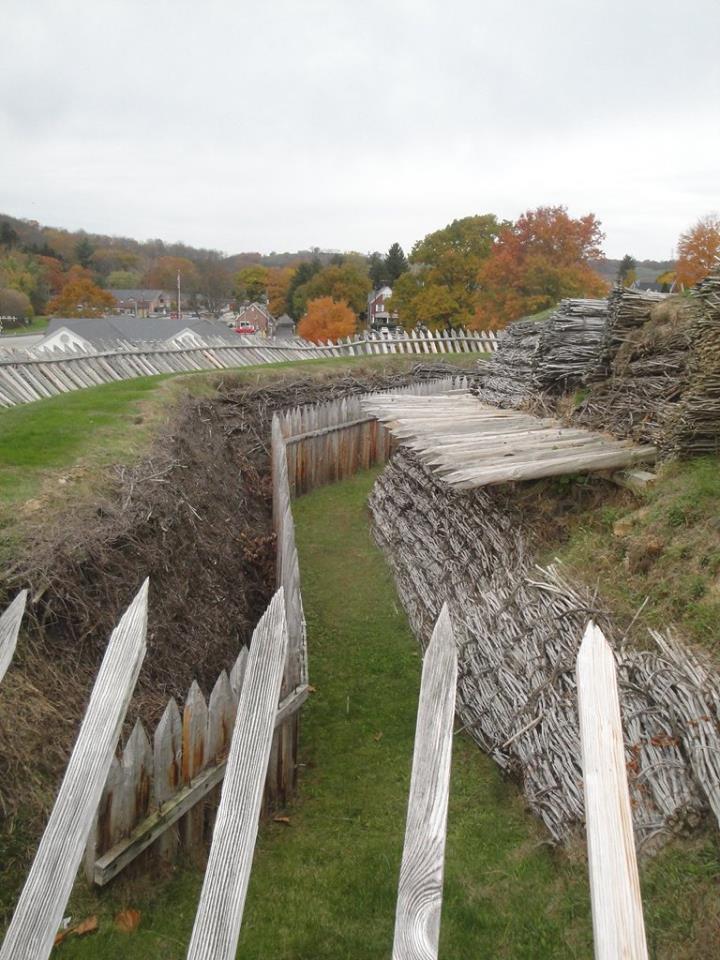
Emerging Revolutionary War Wishes You a Happy and Safe Thanksgiving Holiday

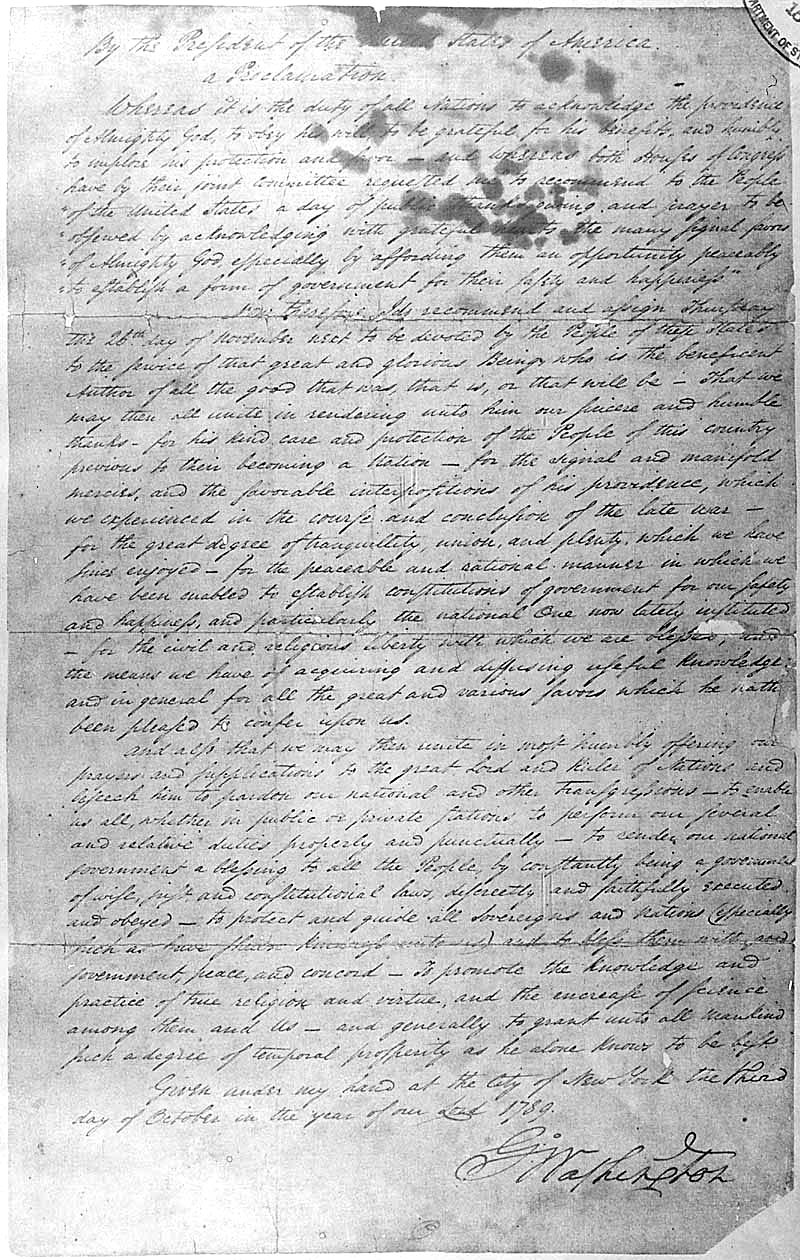
George Washington's Thanksgiving Proclamation, 1789. (courtesy of archives.gov)
George Washington’s Thanksgiving Proclamation, 1789.
(courtesy of archives.gov)

As president of the United States, George Washington wrote the following Thanksgiving Proclamation that was published and designated Thursday, November 26, 1789, as a national day of thanks.

Although the official holiday came later when the sixteenth president, Abraham Lincoln that made the national day of thanks as a national holiday.

Yet, Washington’s words, in their entirety below, still resonate today and give us a chance for reflection this Thanksgiving holiday.

Thanksgiving Proclamation

Issued by President George Washington, at the request of Congress, on October 3, 1789

By the President of the United States of America, a Proclamation.

Whereas it is the duty of all nations to acknowledge the providence of Almighty God, to obey His will, to be grateful for His benefits, and humbly to implore His protection and favor; and—Whereas both Houses of Congress have, by their joint committee, requested me “to recommend to the people of the United States a day of public thanksgiving and prayer, to be observed by acknowledging with grateful hearts the many and signal favors of Almighty God, especially by affording them an opportunity peaceably to establish a form of government for their safety and happiness:”

Now, therefore, I do recommend and assign Thursday, the 26th day of November next, to be devoted by the people of these States to the service of that great and glorious Being who is the beneficent author of all the good that was, that is, or that will be; that we may then all unite in rendering unto Him our sincere and humble thanks for His kind care and protection of the people of this country previous to their becoming a nation; for the signal and manifold mercies and the favor, able interpositions of His providence in the course and conclusion of the late war; for the great degree of tranquillity, union, and plenty which we have since enjoyed; for the peaceable and rational manner in which we have been enabled to establish constitutions of government for our safety and happiness, and particularly the national one now lately instituted; for the civil and religious liberty with which we are blessed, and the means we have of acquiring and diffusing useful knowledge; and, in general, for all the great and various favors which He has been pleased to confer upon us.

And also that we may then unite in most humbly offering our prayers and supplications to the great Lord and Ruler of Nations, and beseech Him to pardon our national and other trangressions; to enable us all, whether in public or private stations, to perform our several and relative duties properly and punctually; to render our National Government a blessing to all the people by constantly being a Government of wise, just, and constitutional laws, discreetly and faithfully executed and obeyed; to protect and guide all sovereigns and nations (especially such as have shown kindness to us), and to bless them with good governments, peace, and concord; to promote the knowledge and practice of true religion and virtue, and the increase of science among them and us; and, generally, to grant unto all mankind such a degree of temporal prosperity as He alone knows to be best.

Given under my hand at the City of New York the third day of October in the year of our Lord 1789.

Go. Washington”

Besides reflection, there are events going on at historic places, this Thanksgiving weekend, that will help you experience the American Revolutionary Era.

A few to note:

At Mount Vernon Estate & Gardens, the home of George Washington situated sixteen miles below Washington D.C., in Virginia, candlelight programs are scheduled for Friday and Saturday. Click here to learn more.

Check out what is going on at Plimoth Plantation in Plymouth, Massachusetts over the holiday weekend by clicking here.

At the Jamestown Settlement, in the Historic Triangle; Jamestown, Williamsburg, and Yorktown, a “Food and Feasts of Colonial Virginia” event begins on Thanksgiving Day. Click here to learn more about this event. On the same trip, Colonial Williamsburg has a plethora of activities ongoing over the weekend as well and can be discovered here.

Whether you head out to one of these events or enjoy your holiday weekend with friends and family, the ERW community wishes you and yours a “Happy Thanksgiving!”

Review: The Spirit of ’74, How the American Revolution Began by Ray and Marie Raphael

ERW Book Reviews (1)Why did Boston’s act of political vandalism lead to a British military expedition against small towns in Massachusetts sixteen months later?

How, exactly did evolving political tensions result in actual warfare?

How did Lexington and Concord become, as Ralph Waldo Emerson wrote, “the shot heard around the world.”

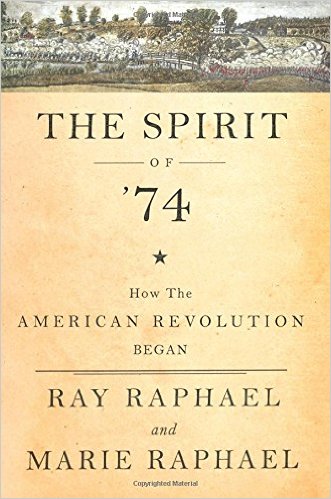
The Spirit of '74, How the American Revolution Began by Ray Raphael and Marie Raphael
The Spirit of ’74, How the American Revolution Began by Ray Raphael and Marie Raphael

In a much-needed narrative, historians Ray and Marie Raphael fill in the movement toward those first shots at Lexington and Concord. In a primary source driven, easy to read history of that year before and leading up to 1775. However, “our story slows, pausing at additional markers that are often bypassed or slighted” (x).

Therein lies “only in a full telling is war a plausible outcome” (x).

The Raphael duo fluidly walks the reader through the build-up to that fateful April 1775 day. The book sheds light on developments in towns and counties across the colony of Massachusetts. A timeline in the beginning provides a good resource to remember the important dates as you read.

With the British response to the Boston Tea Party of December 1773, committed activists perceived that Britain had handed them a blueprint for disenfranchisement (44). What would be seen in the colony as the Coercive Acts, which, among other changes nullified the Charter of 1691 which colonists in Massachusetts held as sacrosanct. When the news of what the British government had did, which arrived in the harbor of Boston in May 1774 until the following April 1775, “resistance would mount, coalesce, and manifest itself in armed, relentless rebellion (44).

That coalescing would resemble an accordion, with Boston being one end and the countryside of Massachusetts the other end of the instrument. Both ends would reverberate the bellows as ideas, exchanges of opinions, passive and aggressive action, all marred the intervening months of 1774. Until as Abigail Adams wrote many months before April 1775, the”flame is kindled and like lightening it catches from soul to soul” (192).

The Raphael duo capture what the farmers in Berkshire set in motion, in accordance with capturing the attitude of townspeople in Worcester, Massachusetts at the same time. These various local uprisings, which put an emphasis on peaceful activities coalesced into the call for committees and eventually into the need for the Provincial Congress. This Congress acted as the de-facto governing body of Massachusetts in response to British measures to subdue and punish the intransigent rebels.

When viewed through the prism of the preceding years, what happened on the green of Lexington or the North Bridge at Concord becomes clearer as the pivot in which the simmering resentment in Massachusetts finally boiled over and led to the “shot heard around the world.”

Every once in a while a monograph is written that fills a necessary void in the field of early American Revolutionary history. This history is definitely one of those as it fills in that critical, yet overlooked, time period in the build-up to the fighting between British-American colonists and the redcoats that represented the mother country.

One cannot hope to understand the events of 1775 and beyond without knowing how the colonists of Massachusetts, so many that have unfortunately been lost to the passing of time, began the protests that led to independence, beginning in the years before.

Or as the authors more succinctly state; “and so begins a story we know” (214).


Book Information:

Publisher: The New Press, New York, NY

Pages: 219 pages plus acknowledgements, bibliography, index, and, timeline


The Greatest Leaders of the American Revolution You Have Never Heard Of

Part Two
(for part one click here)

For the next year and a half, until he was exchanged for a British officer captured in the Battle of Saratoga, Williams faced an ordeal that would continue to haunt him for the rest of his life. Initially treated as a gentleman because of his officer status, the first few months of his imprisonment passed in relative ease. The ease of the beginning months of his captivity was the norm for officers taken in civilized 18th century viewed warfare. Williams’ early imprisonment showed the gentleman status he had attained through his rise in the military ranks. During this time, an anecdote reinforces this point.

While in prison in New York, he became acquainted with a Major Ackland of the British military. The two became fast friends. Williams, under the auspices of his imprisonment, was able to move freely through the city of New York with this new friend.The friendship was confirmed when after dining with Major Ackland he was invited to attend an assembly. This was the term used to describe a fashionable ball of the period. When arriving at the ball, the reception that Major Williams received was so contemptuous and full of scorn that it attracted the attention of Major Ackland who replied: “Come, Williams, this society is to ill-bred for you and me; let us go home.” The account shows the personable demeanor and gentlemanly qualities that Williams espoused. This quote only tells half the story. The other half of the account transpired after Major Ackland returned to England that makes this story so worthy.

Upon Ackland’s return to England attended a mass dinner and one of the topics broached was the questionable courage of the American military. The major defended Americans so vehemently that he was issued a duel by a fellow British officer. This led to his demise, with a fatal gunshot wound to the head. To defend the abilities of Americans to such an extreme depicted the immense respect and valued friendship that blossomed between the two officers. Along with showing the respect and admiration that constituted the friendship was the fact that Williams reached a level where he could fraternize with gentlemen of pre-war higher social classes. In addition he was an amiable companion and a worthy military adversary in the views of British counterparts.

A sketch of one of the prison complexes used in New York City by the British to house American soldiers.

The imprisonment of Williams took a drastic turn to the worse when an accusation of espionage surfaced against him. According to the General Phillips, the commandant of New York, Major Williams was in the habit of communicating to General Washington all the information to be collected from the British camp by means of emissaries employed for that purpose. Williams was seized as soon as the accusation was leveled against him and was denied a chance to provide a defense or refutation of the charges. He was placed in the provost jail in New York, in a room about sixteen square feet. The prison cell had poor ventilation and was best described as “disgustingly filthy.”Here Williams languished for approximately eight months; the last of the fifteen months he was a prisoner of war. Although the spying was never verified and for all intents probably a false accusation, Williams’ “naturally fair constitution…was much impaired” by this ordeal.

After his exchange in January 1778, Williams took command of the 6th Maryland Regiment and Williams would see action at Monmouth Court House in the summer of that same year.

Williams headed south with the Maryland Continentals to aid the Southern Department and relieve the American garrison at Charleston, South Carolina. Unfortunately, the American reinforcements arrived too late to lift the siege.

The reinforcements did make it in time for another American military disaster; the Battle of Camden. Plucked as adjutant general for Horatio Gates, the American commander, Williams was powerless to stop the route of march that Gates chose to move the American army from North Carolina to South Carolina.

The condition of the troops, fatigued from the march along with other difficulties, mixed with very limited rations would prove fatal tomorrow to the American effort at Camden. What ensued the following day was the death of General Kalb, the lost of over 1,000 American soldiers, and the ruin of Gates military career as a field commander. The way the battle unfolded would haunt Williams for the rest of his life, which was recorded in a written component for the Papers of Nathanael Greene. He remembered how the “great majority of the militia fled without firing a shot.” This was a significant issue because the militia comprised two-thirds of the total force of Gates! Williams, along with the survivors were left to question the reasons behind the campaign, the strenuous marching, and the condition they were led into battle with.

Williams took part in the strategic move north across the Dan River in Southern Virginia, part of Nathanael Greene’s strategic maneuvering in the face of British Lord Charles Cornwallis’ British forces. Able to recuperate and refit his army across the watery boundary from the British, Greene planned the strategy that would lead Williams and the rest of the Americans back to North Carolina and to a place called Guilford Court House.

After serving a stint as a commander of light infantry, Williams played a pivotal role in the March 15, 1781 Battle of Guilford Court House. Serving in the last line, where other Marylanders of the 1st Maryland Continentals played a decisive role in saving Nathanael Greene’s American army, Williams helped lead the rear-guard away from Guilford Court House.

Williams  would continue to serve admirable in future engagements at Hobkirk’s Hill and Eutaw Springs.  In the later stages of 1781 Williams was given command of the 1st Maryland Regiment, the same unit that the famous painting below depicted at the Battle of Guilford Court House.

1st Maryland Continentals at Battle of Guilford Court House

In January 1783, Williams received notice that Congress had approved his promotion to brigadier general on account of his merit and service in the Southern Theater Campaigns.

Approimately halfway through that same month, on the 16th, Williams retired from the army.

After almost eight years of arduous service, Williams, like the nation he helped create by his service was a changed being. The changes were numerous, first being the obvious, that he had shown tremendous progress in climbing the officer ranks, from lieutenant in 1775 to brigadier general in 1783. Secondly, and possibly the most important he had endured through numerous campaigns and some of the bloodiest battles of the war, from Fort Washington in New York to Camden in South Carolina.

Williams return to civilian life saw him appointed as commissioner of the Port of Baltimore and he was active in the Society of Cincinnati, the society created to preserve the fellowship of former officers of the American army during the Revolution.

In 1786 Williams married Mary Smith and became a father to four sons, settling on the banks of the Potomac River where he tried his hand at farming.

Springfield Farm, home of Otho Holland Williams (courtesy of HMDB.org)
Springfield Farm, home of Otho Holland Williams
(courtesy of HMDB.org)

With his friendship to George Washington, Williams had his appointment as commissioner of the Port of Baltimore renewed and then in 1792 was approached by Henry Knox, Secretary of War in Washington’s administration (and at the behest of Washington) to see whether he would accept a commission as brigadier general in the regular army.

Although the position would have made Williams the second highest ranking officer in the military, he declined the position because he had no ambition for the position and also his health was poor.

Williams died on July 15, 1794.  He was 45 years old. His health never recovered from the strains of imprisonment and the fatigues of war.

The town of Williamsport, Maryland, which would play a prominent role in the Gettysburg Campaign of 1863 was named after him and where he was laid to rest.


Tragedy After Success

On October 19, 1781, General George Washington had one of the ultimate highs in his military career. With the help of the French army and navy, Washington forced the surrender of British Lord Charles Cornwallis’ forces at Yorktown, Virginia.

To best sum up the impact of this momentous victory for the Americans in their cause for independence, British Prime Minister Lord Frederick North exclaimed when receiving the news:

“Oh God, it’s all over.”

But, weeks before North learned of the calamity in the Tidewater of Virginia, Washington dealt with his own calamity. One very personal. The death of his stepson.

John Parke Custis, affectionately known as “Jackie” or “Jack” as he got older, was one of two children that Martha Custis Washington brought into the marriage with George Washington on January 6, 1759.

Jack Parke Custis
John Parke Custis

The other child, Martha Park Custis, known as “Patsy” had died in 1773 of an epileptic seizure.

Now, seventeen days after the successful completion of the Siege of Yorktown, Jack Custis would be dead.

Custis had joined his stepfather as a volunteer aide-de-camp for the Yorktown Campaign and contracted “camp fever” a catch-all term for a whole litany of illnesses. With the disease quickly causing his health to fail, Custis had one last wish before leaving the lines at Yorktown. He wanted to see the surrender, so faithful attendants lifted Custis in a stretcher to the top of one of the redoubts.

From there Custis had a complete view of the proceedings, the crowning achievement of his stepfather.

To remove him from the scene of pestilence and in a hopeful attempt to save 26-years old life, Custis was moved 30 miles up the Tidewater Peninsula of Virginia to Eltham Landing, where his uncle, Burwell Bassett owned a plantation. His mother, Martha and wife, Eleanor Calvert Custis was summoned to his bedside.

Before Washington could arrive at the bedstead, Jack died on November 5, 1781. He was the last of five children Martha had given birth too. Martha was, understandably, slipped into a “deep and solemn distress.” Even the general exhibited some rarely seen emotion, And”clasping his [Jack’s] bereaved widow to his bosom and proclaiming that henceforth he regarded Jacky’s two youngest children as his own.”

Jack was buried in the family plot near Williamsburg, Virginia at Queen’s Creek.

The funeral was a week later and afterward Washington accompanied Martha and Eleanor back to Mount Vernon. George and Martha Washington would spend considerable energy in the pursuing years raising their late son/stepson’s children. Jack’s widow, Eleanor, would leave the two youngest children in the care of the Washington’s and by war’s end had remarried to a Dr. David Stewart of Alexandria in which the couple would have 16 more children.

But, all that was in the future. In the meantime, after leaving Mount Vernon in mid-November, George Washington had a revolution to see through to its successful conclusion.

The loss of his stepson, whose limited service in the war does not diminish the anguish felt by his family, put Washington in the company of countless parents whose sons had given their lives in the same cause.

And the war had approximately two years left in America.


Sources Used:

Ron Chernow’s “Washington, A Life”

George Washington’s Mount Vernon website – http://www.mountvernon.org – accessed October 18, 2015

ERW Weekender – In the Footsteps of Young George Washington

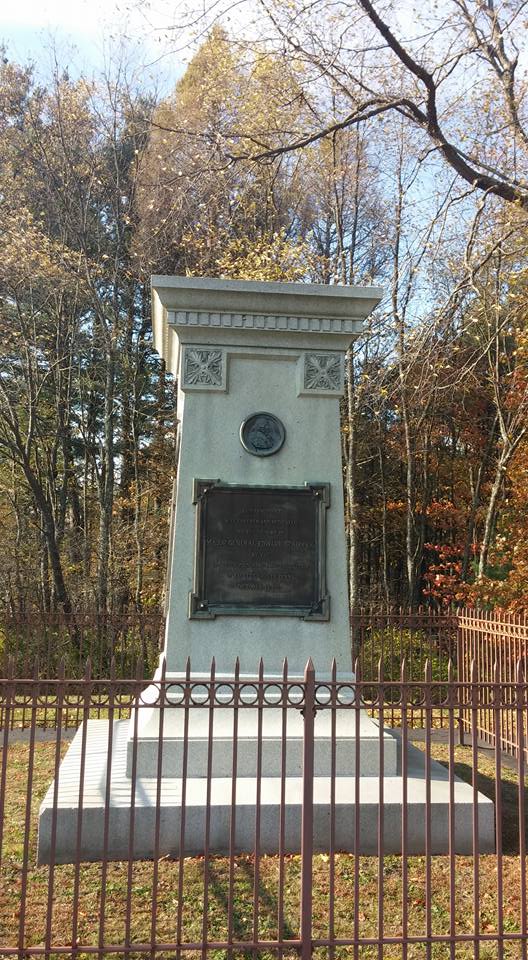
General Edward Braddock's grave, near Fort Necessity
General Edward Braddock’s grave, near Fort Necessity

Recently myself and two other Emerging Rev War authors took a trek to the mountains of western Virginia, Maryland and Pennsylvania to follow in the footsteps of George Washington in 1754-1758.  Washington played a significant role in the beginning of the French and Indian War.  These were the developmental years for Washington, here he learned lessons of leadership, military command and gained the experience that earned him the future Commander in Chief of the Continental Army in 1775.


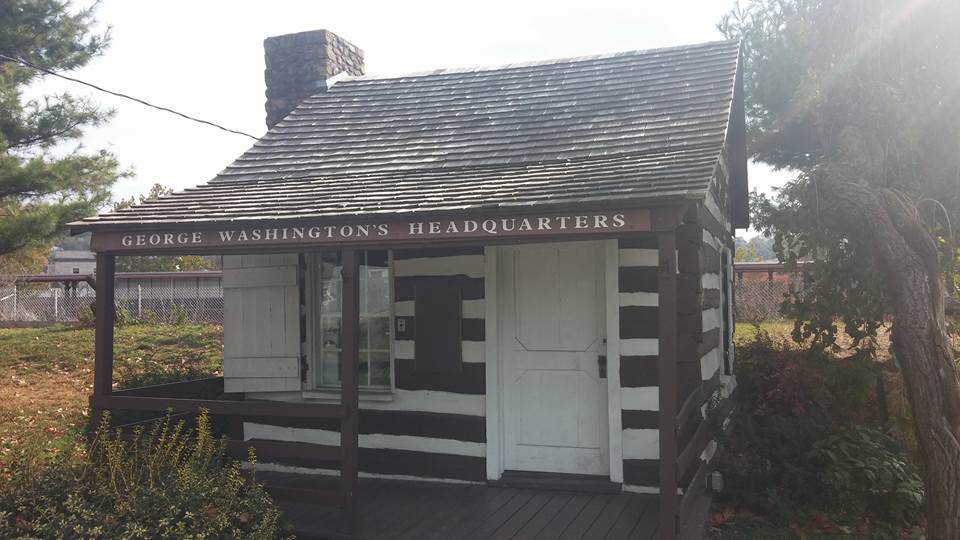
Rebuilt cabin from Fort Cumberland

One of the best ways to follow in the footsteps of Washington during this time period is to   start in Cumberland, MD.  Here, Fort Cumberland served as the stepping off point for many expeditions to the frontier.  Today, the fort is gone but the location is well marked and interpreted.  The City of Cumberland has established a walking trail and outlined the boundaries of the fort.  Also, a restored cabin interprets Washington’s time at Fort Cumberland.  From here, one can easily follow the famous “Braddock Road” by taking Rt. 40 west (the National Road).

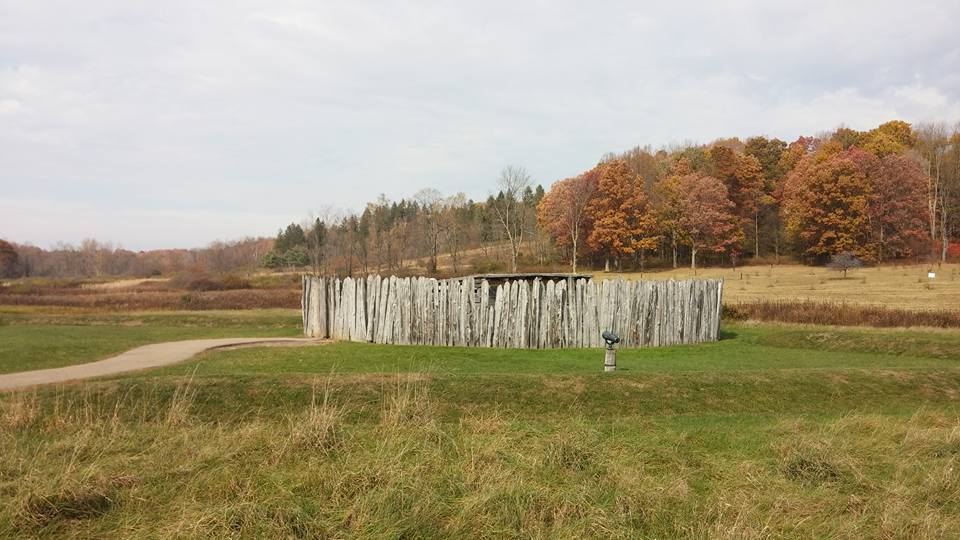
Washington's "fort" at Fort Necessity National Battlefield
Washington’s “fort” at Fort Necessity National Battlefield

A must see site along Braddock’s Road is Fort Necessity National Battlefield Park.  Here the young and inexperienced George Washington found himself in July 1754 surrounded by French and their Native American allies.  As one gazes across the ‘Great Meadows” and see the small fort Washington built, one has to ask themselves “what was HE thinking?!”  The newly built visitor center and museum is excellent and worth the small fee.  The park preserves the site of the July 1754 battle, portions of the original Braddock Road and the early 19th century Mount Washington Tavern (that was built along the old National Road).  Nearby is Braddock’s Grave (buried after the disaster near Fort Pitt where he was mortally wounded).  Further north is Jumonville Glen.  Of all the places I have been, this place represents the most pristine historic spot.  Here in June 1754, Washington started the French and Indian War.  When one views the spot today, it is easy to take yourself back to 1754 and there is a real sense of history here.  Here Washington led his first command, here Washington set the stage that would lead him to command the Continental Army in 1775.


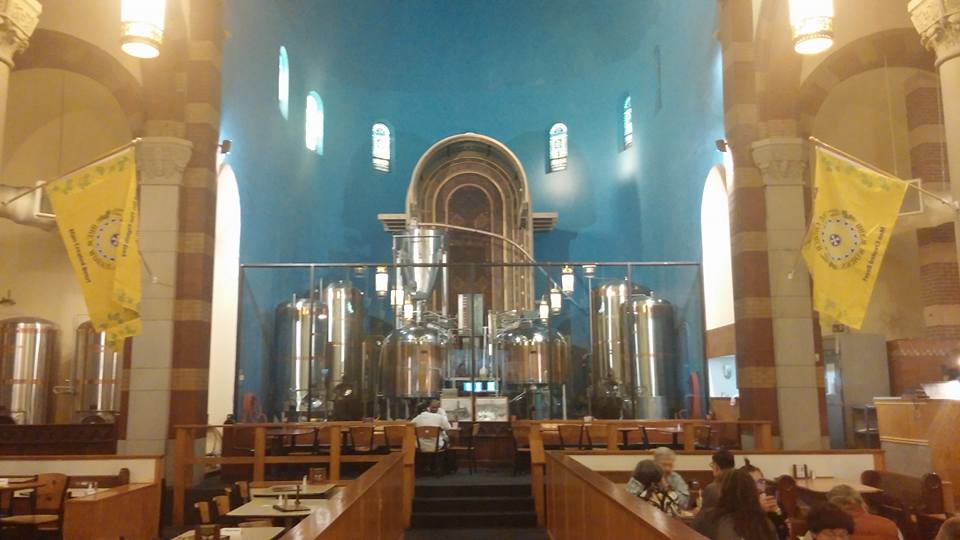
The Church Brew Works

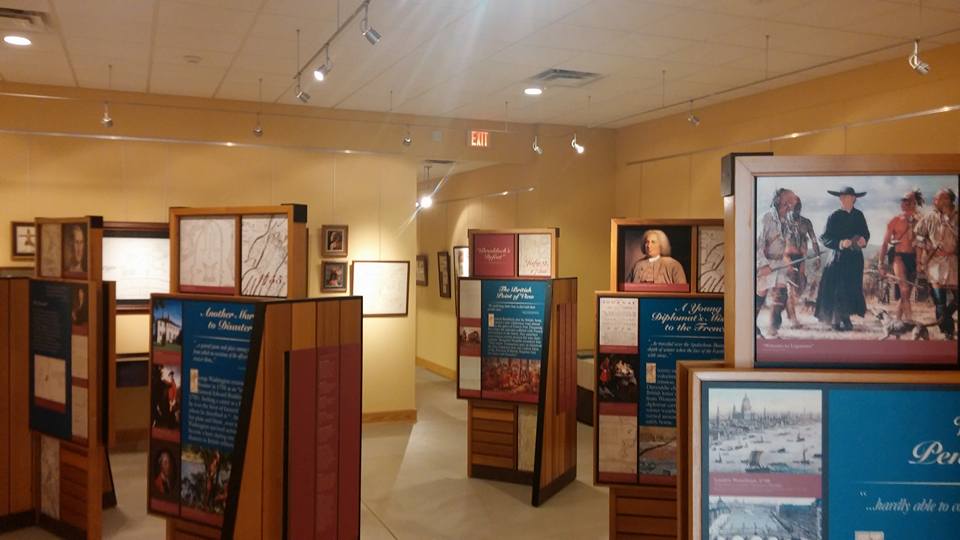
The Fort Pitt Museum, now managed by the Heinz History Center, provides a great timeline and history of the “forks of the Ohio” and also includes a rotating exhibit space.  Since we had followed the route of Braddock all the way from Cumberland, Maryland we decided to visit North Braddock, PA.  Here is where the French and Indians virtually destroyed the British force sent to capture Fort Duquesne under General Edward Braddock (Washington served as one of his aides).  The battlefield is gone today to major development in the early 20th centuries with local steel mills.  Unfortunately for the town, the collapse of the steel industry has left this once thriving town very much depressed.  But, one new bright spot is the Braddock’s Battlefield History Center.   Finally the story of Braddock and the battle along the Monongahela is being told.  The museum is worth a visit and the building is a testament to the efforts of an all volunteer organization led by Robert T. Messner.  While in Pittsburgh, a great place for a bite to eat or drink, a visit to Church Brew Works.  This local brew pub/restaurant is located in a former 1902 Roman Catholic Church.  The food and beer are excellent.

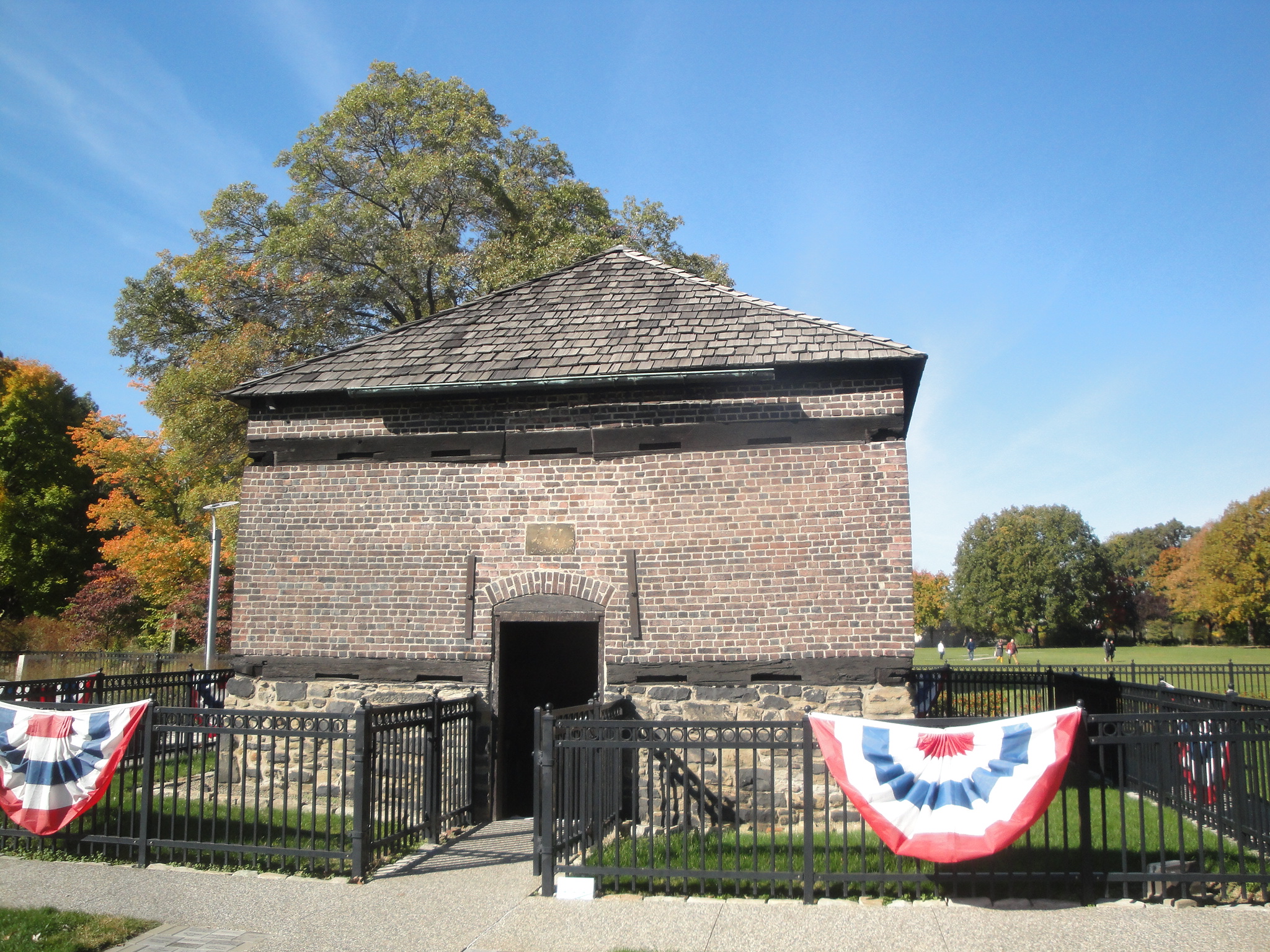
Fort Pitt blockhouse, only remaining structure from Fort Pitt
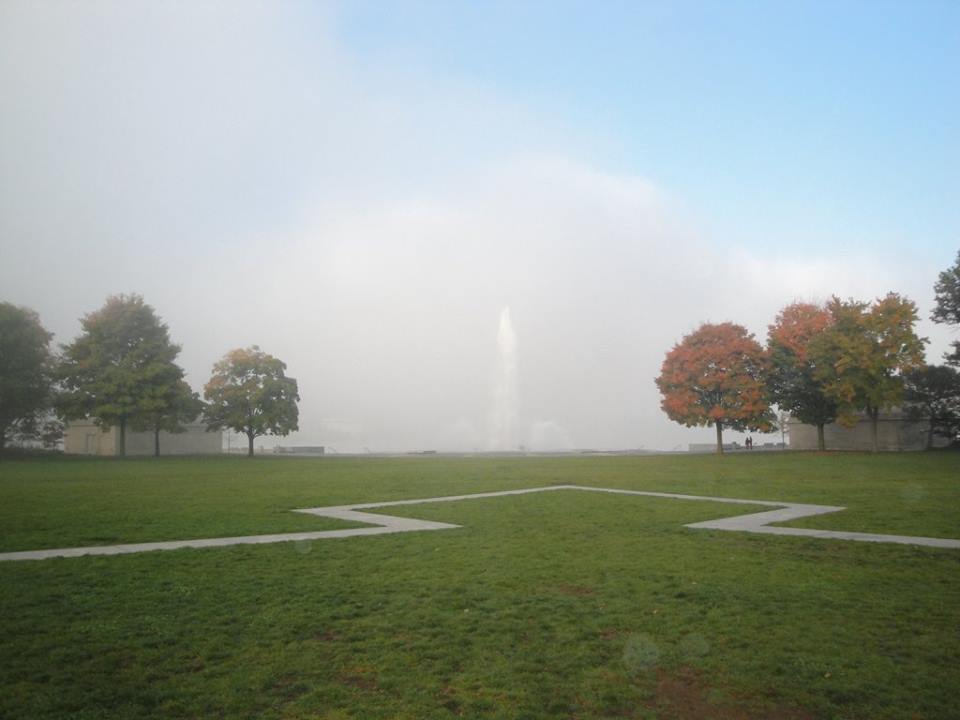
Outline of the French Fort Duquesne, with the Forks of the Ohio in the distance


The Braddock's Battlefield Visitor Center
The Braddock’s Battlefield Visitor Center
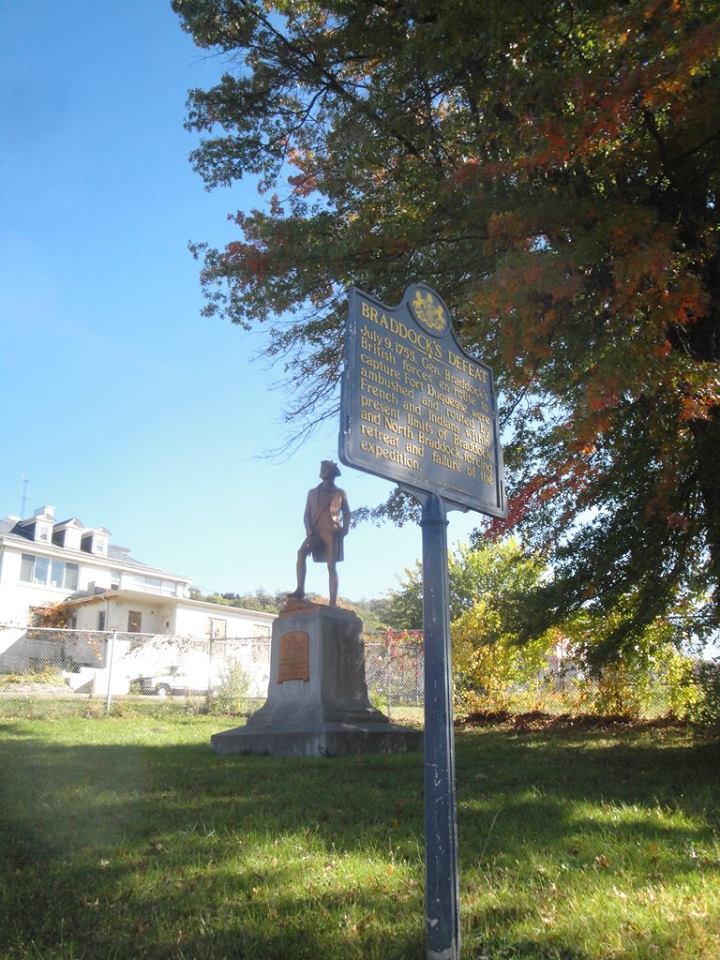
This Washington Statue is near where the British were attacked
This statue of Washington is near where the British were attacked by the French near Fort Pitt


The Bushy Run Battlefield is a hidden gem near the historic “Forbes Road” (modern day Rt. 30).  This much over looked battle of “Pontiac’s War” between the British and Native American warriors is well preserved and interpreted through great museum exhibits.

Bushy Run Battlefield
Bushy Run Battlefield, where the British made their “Flour Bag Fort”
New monument at Bushy Run Battlefield


Finally, the highlight of the trip was Fort Ligonier.  I have read about the fort and the historic site, but was pleasantly surprised by what I consider THE best museum on the French and Indian War.  The museum attached to the reconstructed fort has a full exhibit on the history of Fort Ligonier and also a large exhibit on the entire French and Indian War.   Artifacts range from Prussian firearms to Indian chain mail armor (yes, from Delhi, India!).  All nations that fought in this “first” world war are represented.  It is an exhibit that one would not expect at a small historic site.  The reconstructed fort itself is an excellent representation of 18th century fortifications.  The fort is fully interpreted, with all the buildings recreated on their original locations.  If you are within 100 miles of Ligonier, PA…this is a MUST see museum/historic site.

Fort Ligonier
Fort Ligonier
Fort Ligonier
Fort Ligonier


For more information to take your own “French and Indian War Trek”, see the websites below.

Braddock Road: braddockroadpa.org

Fort Necessity/Jumonville Glen:  http://www.nps.gov/fone

Fort Pitt Museum:  http://www.heinzhistorycenter.org/fort-pitt

Braddock’s Battlefield Visitor Center: http://www.braddocksbattlefield.com

The Church Brew Works: www.churchbrew.com

Bushy Run Battlefield:  http://www.bushyrunbattlefield.com

Fort Ligonier:  http://www.fortligonier.org


Greatest Leaders of the American Revolution You Have Never Heard Of

Part One 

When I was completing my graduate degree in American history from George Mason University a few years back, I took on the challenge of trying to examine the motivations of American soldiers during the American Revolutionary War.

The basis was to examine, “why they fought” if I can borrow a line used frequently by Civil War scholars and historians.

Being a native Marylander, I narrowed my focus on soldiers from that colony/state.

Yet, I was struck by the continued emergence of one name in particular and this gentleman became a focal point of mine.

This gentleman became through the war and could not be ignored with any mention of Maryland and her patriotic citizenry’s service in the war. His name is Otho Holland Williams.

Otho Holland Williams

First a little background on Otho Holland Williams. Otho Williams’ early life mirrors that of many early American colonists. His parents, Joseph and Prudence Holland Williams were born and married in Wales before emigrating to the colonies and settling in Prince George’s County, Maryland.

Otho was born on March 1, 1749, one of eight children. The following year the family moved to western Maryland, settling near the mouth of Conococheauge Creek in Frederick County. Life on the frontiers of the British North American colonies could be rough and hard and before Otho reached adulthood, he lost his father. However, he showed enough promise and potential to be entrusted by a brother-in-law to a clerk position in Frederick County. Showing his ability to grasp a new skill, the young Williams rose to be given “final charge” of the clerk’s office before moving on to a clerk position in the larger town of Baltimore at age eighteen in 1757.

In Baltimore, Williams continued to enhance his reputation and business prospects. After seventeen years in the spiraling, busy port town situated on the Chesapeake Bay, Williams moved back to more familiar grounds in Frederick in 1774. With the move, he entered into the merchant trade, overseeing commercial enterprises in the growing town. Williams was building a respectable life and he would have been considered a gentleman.

However, nothing truly remarkable had happened to cause this ordinary British colonist in Maryland to be remembered by history. Events transpiring on both sides of the Atlantic Ocean soon reared an opportunity for Williams to change that.

Otho Holland Williams now 26 years of age, at the direction of the Committee of Observation of Frederick County, Md, on the 21st of June, 1775, would have heard of a letter from the Delegates of Maryland asking for the formation of two companies of “expert Riflemen to be raised” to join the army near Boston.

The gist of that correspondence is below:

“A letter from the Delegates of Maryland, and a resolve of the Congress enclosed therein, were read, requiring two companies of expert Riflemen to be furnished by this County, to join the army near Boston, to be there employed as Light-Infantry, under the command of the Chief officer of that Army

In the second company, Williams was elected one of three lieutenants and within the month was marching north to join the army, arriving in Cambridge in 22 days, marching over 550 miles, which needless to say gave a great first impression on the military officers and one that the future Commander-in-Chief George Washington would realize in New York.

George Washington was using this house as his headquarters when Williams and the Maryland riflemen arrived after a 550 mile trek to report for duty (courtesy of Mt. Vernon)
George Washington was using this house as his headquarters when Williams and the Maryland riflemen arrived after a 550 mile trek to report for duty
(courtesy of Mt. Vernon)

In January 1776, Capt. Price, of the rifle company, was promoted to major in Col. William Smallwood’s Maryland Regiment. The gentleman who replaced Price was Williams who succeeded him as captain. Williams’ star continued to rise and in June 1776 was appointed major in Colonel Hugh Stephenson’s newly organized rifle regiment. He was still a major in November when he saw action in New York.

While other Marylanders serving valiantly but unsuccessfully in the opening engagements of the battles around New York City, further the Hudson River stood Fort Washington and stationed there was the rifle company that Otho Williams was a member of.

Upriver from New York City the Americans had constructed two forts on either side of the Hudson River. On the island of Manhattan stood Fort Washington, named in honor of the commander-in-chief of the Continental Army. On the other bluff, stood Fort Lee named in honor of Charles Lee, a major general in the American army that had overseen the defense of New York City prior to the Continental Army’s arrival. Nathanael Greene, the very capable American general convinced General Washington that his namesake fort could be held and although of a different opinion initially, Washington relented to his subordinate. The decision would have dire consequences for Williams and the men in the rifle regiment.

Before discussing the role of Williams and his gallant band of riflemen in the defense of Fort Washington, one fact that cannot be looked over is the rapid rise that Williams had undertaken. The mere fact that a young boy, with no prior military experience, could rise to the rank of major was truly exceptional.

To rise to that similar rank in the British army would depend more on family prestige and the ability to pay the price for the commission. That this was not the case in the American army was a sign of the difference in ideals and make-up of the military. The American colonies were revolting against the aristocratic regime of Great Britain, so to imitate their promotion mechanisms would seem out of place with the republican ideals espoused by the aspiring new republic. Furthermore, the ability to navigate the command structure with the added benefit of superior’s being promoted or more morbid, die, allowed Williams to rise.

However, the previous mentioned attribute only tell a portion of the career so far of Williams. His commitment and perseverance to the cause had been duly noted and he would soon show the coolness and battlefield leadership that would cement his rise through the officer ranks.

Battle of Fort Washington, 1776

Williams commanded men of the rifle company occupied a portion of the outlying trenches that surrounded the fort because of a very grave insight the defenses in the environs of Fort Washington could not accommodate the number of American defenders. In their exposed position, the men from Maryland and Virginia would come into contact with their British and Hessian counterparts in the opening stages of the conflict on November 16, 1776. The action commenced in the morning and would be an all-day, drawn out conflict, the epitome of a “fight to the death” type battle. Part of the reason the affair turned out to be so relentless and bloody was the fact that the Americans had refused to surrender the fort initially and the ensuing action could quite possibly result in the British and their allies showing no quarter if the Americans suffered defeat.

History does not depict whether the men with Williams and under the command of Colonel Rawlings knew this fact, but what they did know was that they had been given an assignment to defend the fort and the men from Virginia and Maryland were prepared to do just that.

Map of Battle of Fort Washington (courtesy of Wiki)
Map of Battle of Fort Washington
(courtesy of Wiki)

Unfortunately, after facing overwhelming odds and the collapse of other sections of the American lines, Williams and his men were forced to fall back from their exposed positions. During the action Colonel Rawlings received a severe wound to the leg, resulting in a fracture of the bone. Serving as second in command, Williams assumed command of the rifle regiment, continuing to show his unwillingness to yield the field even after suffering a severe groin wound.

With the wound and the collapse of the American lines, he did not command for long. The survivors of the regiment, along with the rest of the fort’s garrison, surrendered to the British and German forces.

After the conflict, a Hessian survivor remarked about attacking the Maryland riflemen, in which Williams was most likely in command of; that “he had a hard time of it.” Another enemy soldier noted the inordinate number of wounded. Official casualty reports, listed 2,780 Americans, including Williams, as prisoners of war, and another 149 were killed and wounded. The British lost 458 killed, wounded, and missing during the day long fight.

Williams was a prisoner of war.

DAR Exhibit Showcases Rev War Material Culture

The Daughters of the American Revolution (DAR) are showcasing a collection of unique historical objects tied to the Revolutionary War. The exhibit, “Remembering the American Revolution: 1776-1890,” opened at the DAR Museum on October 9 and will run through September 3, 2016.

“The exhibition explores how people following the fight for independence preserved, made, and bought items in order to retain a connection to the war,” the museum said in a recent press release. “More than 100 objects from the DAR Museum collection, and the many personal stories that accompany them, help visitors learn about the American Revolution in a whole new light.” Continue reading “DAR Exhibit Showcases Rev War Material Culture”

A Change on the Horizon…

RevWarWednesdays-header

You can almost feel the cold weather from just looking at the painting. With the snow on the ground, and white specks of wintry mix falling in the distance, one almost wants to say “brrr.”

With rags wrapped around feet, heads bowed into the storm, and no two soldiers dressed a like the painting depicts winter 1777 for the American Continental Army. The title “The March to Valley Forge” also concocts images of the harshness of that winter during the American Revolution.

And in the middle of the picture, sits George Washington, astride his horse, staring at the marching soldiers in silent tribute. One of the soldiers is depicted doffing his cap at Washington. Respect, admiration, and solidarity of  the joint struggle of the war, is present, by just examining the painting a little closer.

That is why this painting below, done by William Trego, a century and a few years after this march would have happened, is my favorite painting  about the American Revolution.

The March to Valley Forge by William Trego, 1883

Continue reading “A Change on the Horizon…”

Remembering John and Abigail (part two)

RevWarWednesdays-header

Abigail StatuePart two of two

“Remember the ladies,” Abigail Adams wrote in a letter to her husband during his service in the Continental Congress. And those words are how we now most often remember her: “Remember the ladies.”

And John did. He pined for her. His long public career—in the Continental Congress, as a minister in Europe, as vice president, as president—kept them apart for long stretches. They spent ten of their fifty-four years of marriage separated by war, by sea, by duty.

So they wrote—some 1200 letters in all. “My dearest friend,” he addressed her, and he meant it.

The lively correspondence between John and Abigail illuminates not only a great American love story but also a great political partnership. Among the company of great Founders, Abigail was the one forced to stay at home—by social convention and family duty—but she refused to be forgotten. Continue reading “Remembering John and Abigail (part two)”