Washington Redskins…a team rooted in Revolutionary War History?

Fenway Park, ca. 1930’s

There is much debate today about names of streets, buildings, and sports teams. One team that has been in the headlines for several years about their name is the Washington Redskins. Now, I have to be upfront…I have been a Redskins fan since I was a young child. I remember most of the glory years of John Riggins, Joe Gibbs and many other Hall of Famers. In the years of the 1980’s, not much was said about the name as a racist connotation. I am sure there were protests, but they were not mainstream and everyone in Virginia, Maryland and DC in those years followed the team. The name Redskins was not a racial connotation that their racially “challenged” owner George Preston Marshall (who had many issues with his own racism) came up with degrade Native Americans. It was a name that harked to a historical theme.

What we know today as the Washington Redskins began in 1932 as the Boston Braves. Now this new professional football team was not the only team in Boston named the Braves. At that time, the oldest baseball team in Boston were also called the Braves. This team began as the Boston Red Stockings and then the Boston Beaneaters, changing their name to the Boston Braves in 1912. Here is where the history gets murky. The owner of the Boston Braves, James Gaffney was a product of Tammany Hall, a powerful political machine out of New York City. Tammany Hall used as their moniker an American Indian Chief, with other Native American symbols in their imagery and media. With his connection to Tammany Hall, many believed Gaffney used the same imagery to rebrand his baseball team. Others in Boston believed Gaffney was playing to the local historical ties of the Boston Tea Party. During the Boston Tea Party, colonists dressed up as “Indians” (Mohawks to be more precise) to raid three tea ships at Griffin’s Wharf, destroying over 300 chests of East India Company tea. Most of them covered their skin in burnt ochre, which gave a dark reddish tint. We will never know if Gaffney chose the name “Braves” for Tammany Hall or the Boston Tea Party, but both were fitting historical ties.

Boston Tea Party, December 16, 1773

So, how does this tie into the football team? As George Preston Marshall brought professional football to Boston, he wanted to tie into the local sports lexicon of the region. Picking the name “Braves” for his team fit well as it matched the popular baseball team in town and also the football team played in the same stadium as the baseball franchise. Also, the previous team that played professional football in Boston was a traveling franchise named the Cleveland Indians. Though not sure, I believe Marshall had all of these in his mind in naming the team the Braves. Native American imagery and mascots were well known in Boston at this time, it seems that Marshall was trying to set his new team up for success. That first season the Braves finished .500 and Marshall moved the team to play their games at Fenway Park. Fenway was a state-of-the-art stadium at the time, built in 1934 and was the home to Boston’s other professional baseball team, the Boston Red Sox (which, also claimed their lineage to the same team the Boston Braves did, the Boston Red Stockings).

Boston Redskins vs. New York Giants

In moving the team, Marshall tried to distance himself from the Braves baseball team and changed the name to Redskins. There were no other professional teams called the Redskins, though some minor league and local teams used the name. This move was more marketing than anything else, trying to establish their own professional sports team identity. Also, Marshall was known for being economical, and by using the name Redskins he wouldn’t have to change uniforms. The Boston Redskins would go on to play in Boston until 1936, moving to Washington, D.C. in 1937. Marshall, for all his faults, was a smart businessman and believed there was money to be made in bringing professional football to the south. By moving the Redskins to Washington, they were the first NFL team in the south (how many of us would consider Washington, D.C. the south today?). Even the original song “Hail to the Redskins” had the lines “fight for old Dixie” which have been changed to “fight for old D.C.”

Part of me believes the name is more contentious today mostly because the team on the field has not been very good since the 1990’s. If this was a perennial winner like they were in the 1980’s, would this be a hot topic? Maybe it would as we look at all of our names and mascots, but I think it is highlighted by the losing and the current unpopular owner, making the current pressure unbearable. We know the name will change (though I have my own personal opinions of why they should not change the name), but the original name is rooted in American history and is more complex than you see on ESPN or other news outlets. Through this brief synopsis of the team’s name, I hope the basis for the name is clearer. I know we all won’t agree on what is offensive and not offensive and we will never know if Gaffney and Marshall named their teams to honor the colonists at the Boston Tea Party. But for one young kid who grew up in Virginia who loved history and the Redskins, its was a great match of history and sports.

“Rev War Roundtable with ERW” Tavern Talk

When the idea was formulated, back in April, to do a Sunday evening Zoom/Facebook live type history hour, the emphasis behind this “happy hour” was to style it as a more informal chat. Our goal was to create a virtual adaptation of what would occur if the same historians met at a tavern/bar/pub to casually chat about American history.

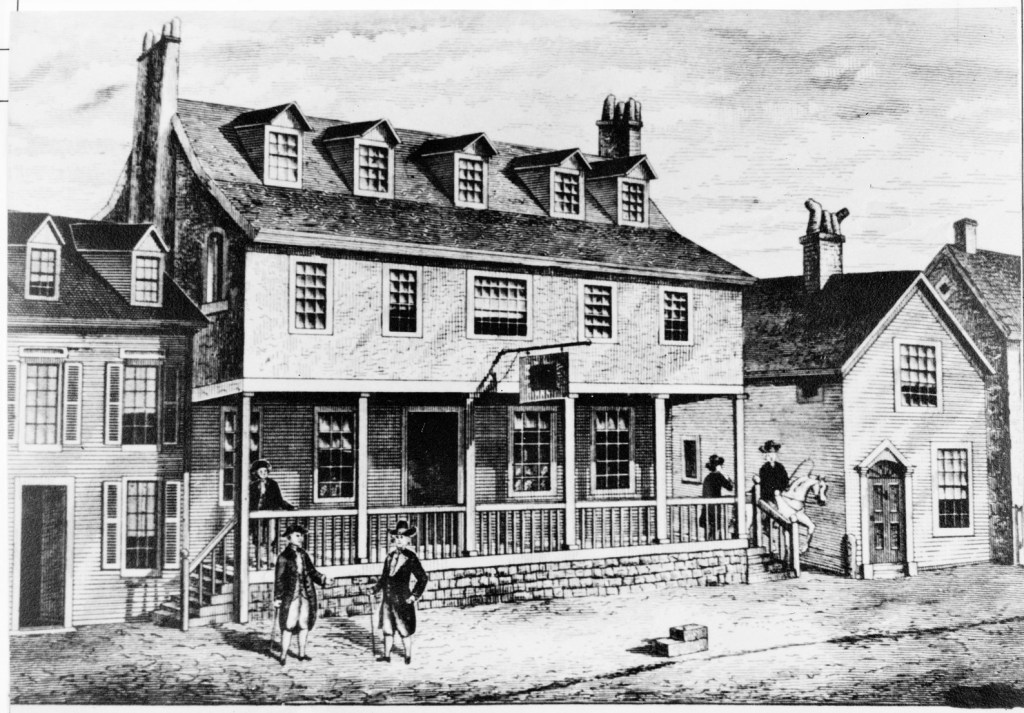
Speed up to this Sunday, June 7th, Emerging Revolutionary War will welcome three guest historians, who all have a connection to a historic tavern to join co-founder Rob Orrison on a talk about 18th century taverns. Yes, a “tavern talk about taverns.”

Joining Orrison on the hour-long happy hour chat will be:

Liz Williams, Executive Director of Gadsby’s Tavern in Alexandria, Virginia, part of The Office of Historic Alexandria, in which she has been employed with since 2004. She is a graduate of Mary Washington College in Fredericksburg, Virginia with a degree in Historic Preservation and a graduate degree in Tourism Administration from George Washington University. She has also worked at various historic sites in the Virginia and Washington D.C. area.

An ERW favorite and returning to the “Rev War Revelry” is Stacey Fraser, the Collections and Outreach Manager with Lexington (MA) Historical Society. One of the sites she oversees the collection of is Buckman Tavern, which played a role in the April 19, 1775 engagements that rolled through Lexington and Concord, Massachusetts.

The third guest historian is Sarah Kneeshaw, the Education and Public Programs Coordinator at Fraunces Tavern Museum. The tavern was built in 1719 in New York City by the De Lancey family. She joined the staff at the downtown New York City site (which is directly across from Federal Hall where George Washington was inaugurated president in April 1789) in 2016. Sarah holds a bachelor’s degree in Anthropology from Fordham University and also attained a graduate degree in Museum Studies from John Hopkins University. She is a native of Staten Island.

Thus, this Sunday, set a side an hour-ish, starting at 7pm EST, to hear these four historians discuss taverns, their importance, and roles in the 18th century social, military, and political history of the burgeoning United States. With your preferred drink, be it an 18th century tavern concoction or not, in hand, we look forward to your questions, comments and insights.

Rediscovery number 27587

Find Your Patriot, Part 2

For Part One, click here.

So, you have a relative that fought in the American Revolution and you want to know more… now what? Joining an organization, such as the Daughters of the American Revolution (DAR), is a lengthy and detail-oriented process. It takes patience and perseverance. Before beginning the process, I attended a research seminar hosted by the local chapter to learn about the specific requirements for applying. If you have any experience with records, the one consistent theme is that records do not consistently capture the same information. Some death records do not list birth-dates, birth records do not always list both parents, and worst-case scenario, many records can be lost, stolen or severely damaged.

As I mentioned in part 1, my grandmother provided me with a box of documents detailing the Bitely heritage. The materials she gave me was helpful for pointing my path forward, but it lacked the necessary vital records for completing the application. Luckily, each chapter has a registrar that guides you through finding the right resources and completing the paperwork accurately. The registrar in my chapter was a seasoned member of DAR and walked me step by step through the process. Together, we reviewed the documents from my box, made a family tree and contacted the Michigan vital records department for appropriate birth, death and marriage certificates for each generation between John and me. Thankfully, both New York and Michigan had the records I needed, in good condition and had the required information on them to meet DAR standards. If you hit a snag in the process, there’s an entire community of DAR women who are trained to help you through this. Reach out, we will help!


Here is a sample of the documents passed down to me in the family history box. This helped start the journey for learning more about my heritage.
Continue reading “Find Your Patriot, Part 2”

Finding Your Patriot

Emerging Revolutionary War welcomes back guest historian Kate Bitely

Part 1

How much do you know about your great-great-great-great-great grandparents? Did your family pass on detailed stories of their past? Perhaps you took a DNA test like ‘23andMe,’ or maybe you know little if anything about your roots. Whatever the case may be, now is a great time to start the journey of learning about your familial past, as it might just lead you to an unexpected destination. For me, I grew up knowing my distant relative, John Biteley Sr., a New Yorker who come to the U.S. from Germany in the 1750’s. His American born son, John Biteley Jr., went on to serve as a patriot in the American Revolution. My grandfather, Ralph Bitely, always told us, “the Bitely’s were at Ticonderoga!”  In 2010, my grandfather passed away. A few years after his death, my grandmother gave me a box filled with documents that detail the history of the Bitelys. This box would be the start of my journey back to the 18th century.

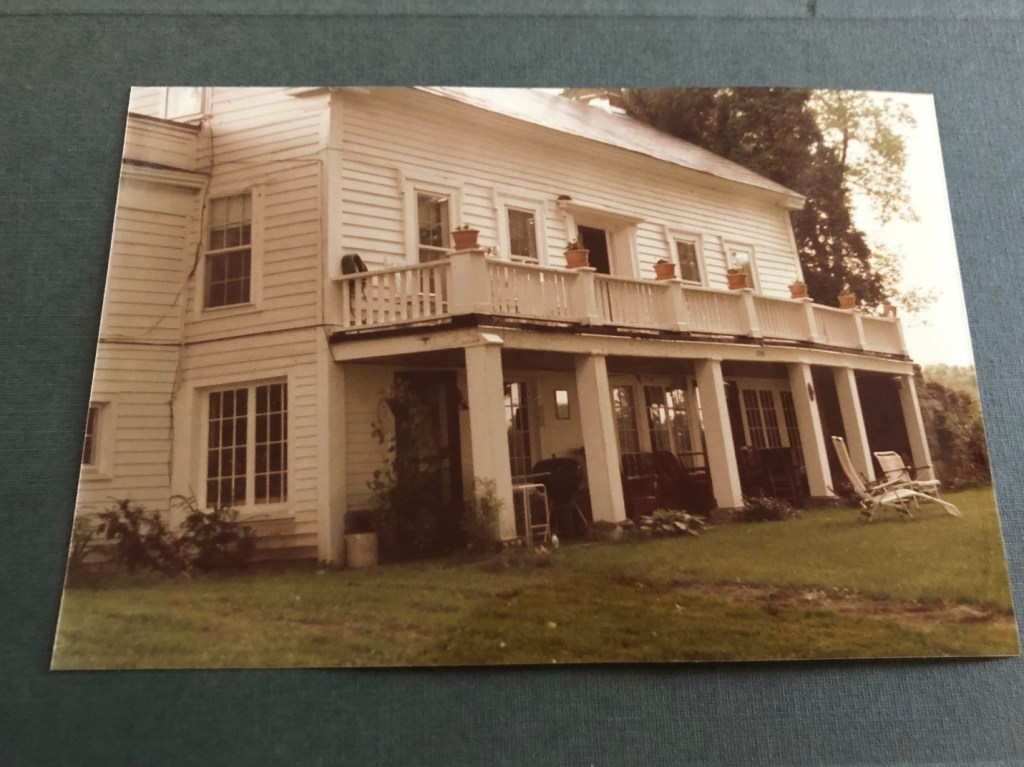
As I dug through the box a few years ago, I recall being filled with excitement as I learned about my family. They were farmers, predominately grape farmers to be exact. (My love for wine is clearly hereditary). As I dug deeper, I found a more modern picture of the “Bitely Homestead,” the home of John Biteley Sr., located in Saratoga County, NY. It was first built before the war around 1770, was burned down by Gen. John Burgoyne in 1777 and was rebuilt in 1779. Nearby remains a family cemetery where many of my relatives remain. While I have not been for a visit yet, I hope to make a trip soon when conditions are safe to do so.

Photo of the “Bitely Homestead” in Moreau, NY rebuilt in 1779 after the British burned down the original structure in 1777 found inside the box from my grandmother.
Continue reading “Finding Your Patriot”

Benjamin Henry Latrobe: Architect of the Republic

Emerging Revolutionary War welcomes guest historian Darien Ashley. A short bio follows this post.

The best architecture is that which reflects clearly the ideals and activities of the people which inhabit it. This is true for both private dwellings and public buildings. The objects of architecture serve as a lasting testament to identity. These objects, once created, continue to shape minds long after the architect is gone. A nation’s capital city is a site where man can establish glorious structures which convey a sense of who the people are, where they came from, and where they intend to go. The United States Capitol building is a prime example of a structure that continues to inform American identity long after its architects have passed. This article serves as an investigation of the life of one of the most important architects of not only the Capitol, but of the nation itself, Benjamin Henry Latrobe.

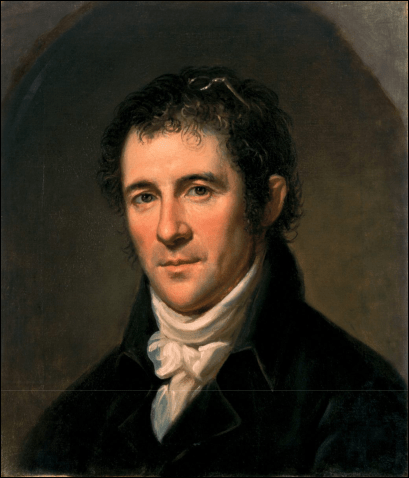
Guests to the United States Capitol building often get a shock from the fact that one of its primary architects, Benjamin Henry Latrobe, was an Englishman. Indeed, the man who designed the hallowed, old halls of Congress hailed from a Moravian religious settlement located on the outskirts of Leeds, England. However, Latrobe himself would have objected to the label “Englishman”. Indeed, throughout his life, Latrobe referred to the United States as “his” country and was quick to point out that his mother, Anna Margaretta Antes, was born and raised in Pennsylvania. Latrobe’s father, Benjamin Henry Latrobe Sr., met Anna after she had been sent to London to finish her education. Both of Latrobe’s parents held prominent positions within the Moravian ministry and raised their children to follow in their example.

Continue reading “Benjamin Henry Latrobe: Architect of the Republic”

Gaming Away Social Distancing. Deal or Duel: An Alexander Hamilton Card Game

IMG_0611.jpeg
Game Box for Deal or Duel (Eric Sterner)

Among his many aphorisms, Ben Franklin reportedly said “games lubricate the body and the mind.”  Given the large number of quotes attributed to the sage, it is suspect.  But, his generation certainly understood games, both as a way of sharpening the mind and passing time in amicable company.  Franklin was fond of chess, but not above games of chance and gambling.  George and Martha Washington often played different card games with their guests.  George, of course, also made an occasional wager, particularly when traveling on business.  Even today, many parlors in restored colonial homes will contain a gaming table. Continue reading “Gaming Away Social Distancing. Deal or Duel: An Alexander Hamilton Card Game”

Beer Drinking in the 18th Century

Emerging Revolutionary War welcomes back guest historian Vanessa Smiley

“Beer is living proof that God loves us and wants us to be happy.” – Benjamin Franklin, Poor Richard’s Almanack

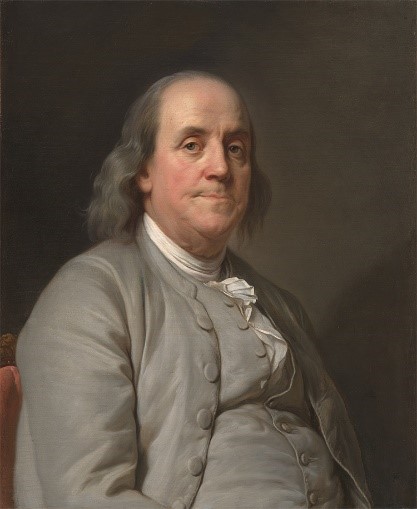
Benjamin Franklin was one of many 18th century beer lovers.
(Benjamin Franklin by Joseph Siffred Duplessis, c. 1785)

During the 18th century, Colonial society held three common beliefs about beer drinking:

  1. Drinking beer was healthier than drinking water
  2. Beer and its ingredients were a healthy supplement to the entire family’s diet
  3. It was an accepted way to promote social discourse

A little different from today’s society, except for beer connoisseurs (such as the Emerging Revolutionary War folks), these beliefs were formed from the circumstances of the time.

Though a generation away from understanding the connection between boiling water and sanitation, most folks understood that water could make you deathly ill. And yet, ale and beer drinkers did not seem to have that same risk. They did not know it at the time, but the boiling process to make these alternative drinking options neutralized much of any tainted water’s ill effects. Therefore, many substituted beer, ale, and other alternatives such as hard cider over water, making these a major dietary staple in the colonies.

Continue reading “Beer Drinking in the 18th Century”