Join Emerging Revolutionary War this Sunday evening at 7 p.m. ET on our Facebook page as we sit down for a pre-recorded discussion with historian and author Mike Cecere and his daughter, Jennifer Cecere to discuss their new historical fiction books centered on the Revolutionary War. “Witness to Revolution” focuses on the lives of children growing up in Williamsburg, Virginia during the beginning part of the Revolution. Their recently released second book, “Witness to War” follows the characters through the tumultuous war.
We discuss the importance of historical fiction, the differences between writing non fiction and historical fiction, and the challenges and opportunities getting the next generation interested in the Revolutionary War. Grab a drink and join us for a great discussion!
As the word of the “Intolerable Acts” spread throughout the colonies in response to the Boston Tea Party, colonial governments began to show support for Boston. Then in May 1774, the Virginia House of Burgesses voted for a day of “prayer” on June 1, 1774 in support of Boston and Massachusetts. In response to this, Virginia Governor Lord Dunmore dissolved the assembly. Soon after, the men of the Burgesses met at the Raleigh Tavern in Williamsburg to set up the “First Virginia Convention.” This extra legal body set the path towards revolution.
Join us this Sunday, May 12th at 7pm for this will be a pre-recorded discussion with historians J. Michael Moore and Maureen Wiese to commemorate the 250th anniversary of the First Virginia Convention. We will cover this early movement by an American colony to revolution and how it impacted other movements across the colonies.
On September 20, 1777 an American force under General Anthony “Mad Anthony” Wayne was surprised and routed by British forces under General Charles Grey. Wayne’s entire division was put to flight losing nearly 300 men (with the British losing just a dozen). Called by many the “Massacre at Paoli”, the fight was one of many that was part of the 1777 Philadelphia Campaign.
Join ERW on Sunday, April 14th at 7pm on our Facebook page as we welcome back historian and author Michael C. Harris, expert on the Philadelphia Campaign, we will discuss the battle, its role in the campaign, the personalities and the myths around Paoli. Harris is now working on his third volume in his much acclaimed Philadelphia Campaign trilogy, that will include the Battle of Paoli. If you can not make the livestream, the Revelry will be posted to our You Tube and Spotify channels.
Many of our readers love seeing the rifle and cannon demonstrations held in National Parks. Have you ever wondered about how park rangers manage this program? Recently I attended Historic Weapons Certification, an intense, two-week training held every few years for Park Rangers.
The program began in the 1970s with the coming of the nation’s Bicentennial, and has evolved over the years. Held at a National Guard base in Anniston, Alabama, the course teaches participants how to load and fire historic weapons, care and maintenance of equipment, historic manuals for loading and drill, storage and handling of black powder (a Class A Explosive), and Park Service policies for historic weapons programs. There are only about 152 certified Historic Weapons Supervisors in the entire National Park Service.
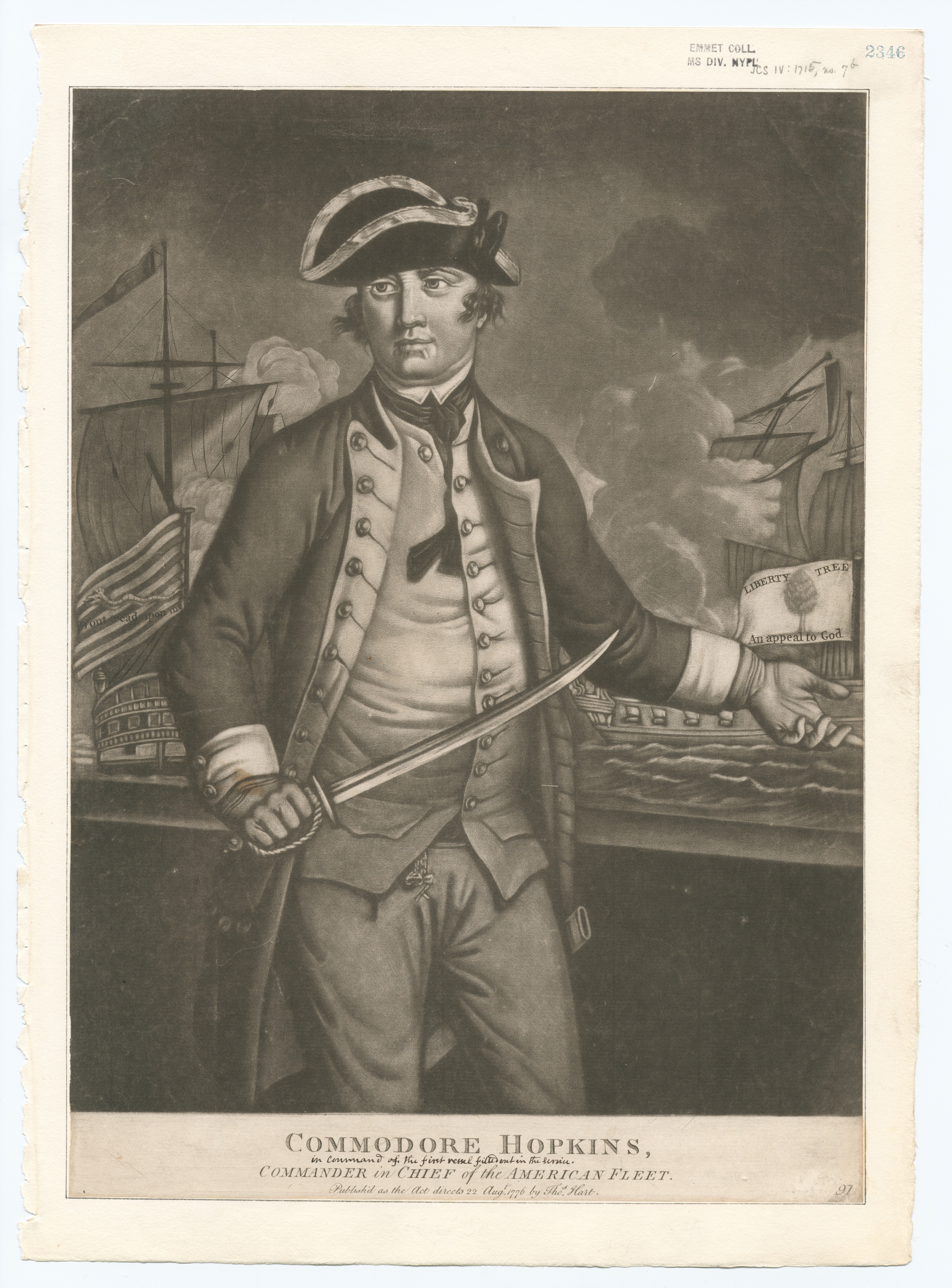
In March, 1776 Commodore Esek Hopkins led the bulk of the Continental Navy on a raid to the Bahamas, where it occupied the town of New Providence on Nassau Island for two weeks. Hopkins and his captains were drawn by a report of gunpowder stored in the town, which the patriot cause desperately needed.[1] Unfortunately for Hopkins, the colony’s governor had spirited away some 150 barrels the night before the American flotilla’s arrival. Not all was lost as the Marines quickly demanded and received the surrender of two small forts defending the town and its harbor. With those in hand, Hopkins and his men quickly got to work removing artillery, military stores, and other useful supplies.
While the American Marines and sailors managed to recover just 24 casks of powder, their haul in sizeable artillery pieces and mortars was impressive: 88 cannon ranging from 9- to 36-pounders; 15 mortars from 4-11 inches; 5,458 shells; 11,071 roundshot; 165 chain & double shot, plus fuses, rams, sponges, carriage trucks, mortar beds, copper hoops, and various stores not required for artillery.[2] It was a boon to be sure. The curious part of Hopkins’ inventory of captured war material, however, is that he sent it to Connecticut Governor Jonathan Trumbull, not a representative of the Naval Committee that had issued his orders. To John Hancock, president of the Continental Congress, he sent a report of his mission, but only mentioned “I have taken all the Stores onboard the fleet.”[3] Indeed, his report of the armaments aboard the British schooner Hawke, which the fleet captured on its return to American waters, was more complete. It took another day, until April 9, for Hopkins to forward the inventory of seized cannon. Congress merely resolved that an extract of his letter should be published for delegates to peruse.[4] Perhaps inadvertently, Hopkins exacerbated regional political conflicts and undermined his own command.
The American Revolutionary history world lost a legend recently with the passing of Charles Baxley of Lugoff, South Carolina.
Professionally, Charles was a retired attorney with Baxley, Wells & Benson in Lugoff, SC. Charles attended the University of South Carolina where he received his J.D. in 1976. He served as a judge for fifteen years, served as a Captain in United States Airforce Reserves and was involved in many community and professional organizations. But Charles’ real passion was history, especially the American Revolution. Charles worked with many local historians and organizations to preserve and then interpret the Camden battlefield. Few knew the Camden story as much as Charles. Charles He was the editor and publisher of the on-line magazine, Southern Campaigns of the American Revolution and worked hard to tell the story of South Carolina in the American Revolution.
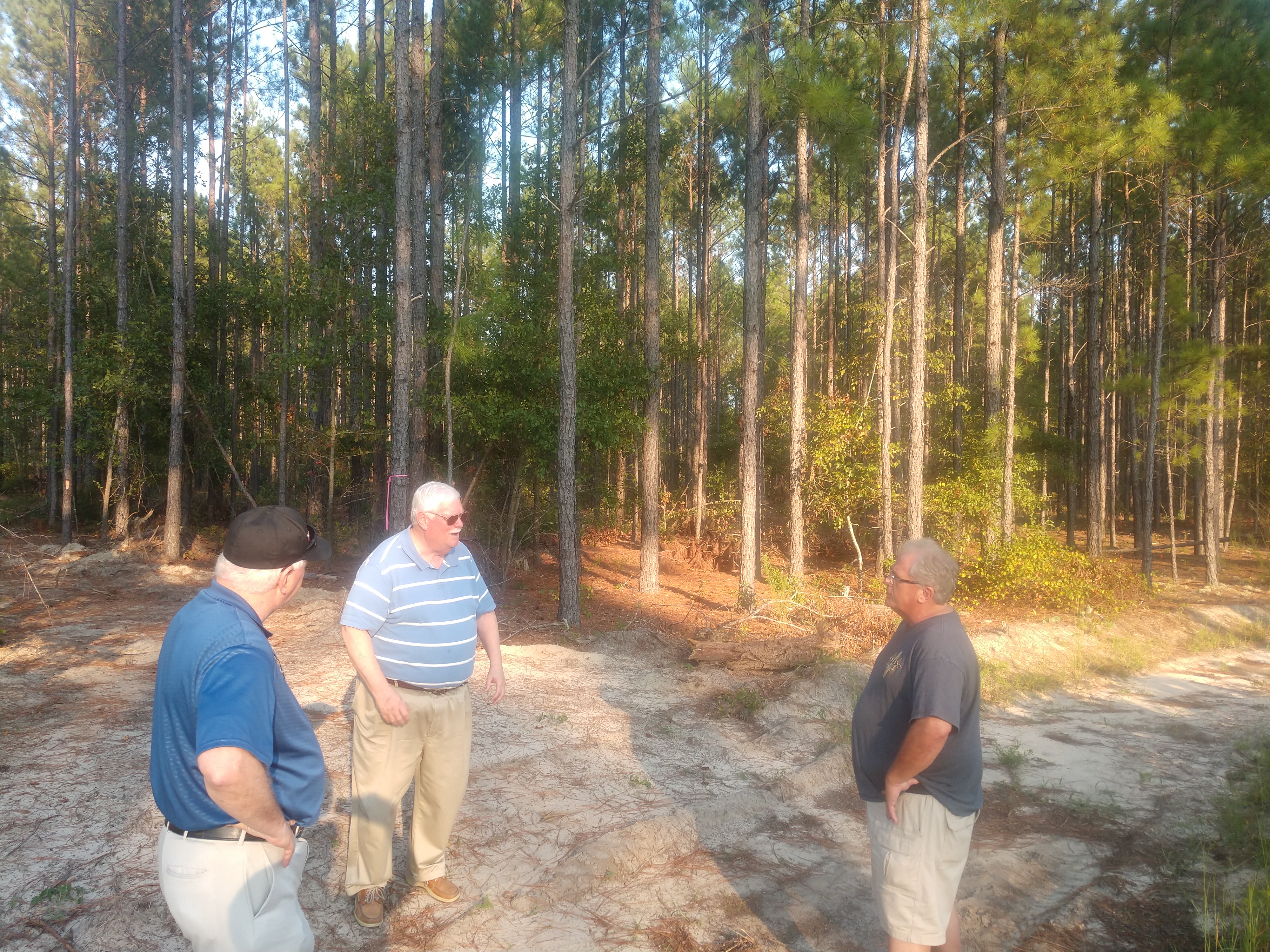
Charles Baxley with Rick Wise and Mark Wilcox on the Camden Battlefield.
Most recently, Charles served as the Chair of the South Carolina 250th Commission and was deeply involved with the Liberty Trail and the South Carolina Battleground Preservation Trust. Charles welcomed anyone who was researching South Carolina in the Revolution and that is where we met him nearly 15 years ago. Charles expected accuracy and great research and was not one to “suffer fools.” But his southern charm endeared him to many and we are honored to have called Charles a friend. He was instrumental in assisting us in our book about Camden “All That Can Be Expected” and used a fine tooth comb over our manuscript, especially the maps. His passion for this chapter in South Carolina’s Revolutionary War history truly inspired us, as authors, to get the Camden story right. There will never be another Charles and the loss is a big one for preservation and history, but it is our job to make sure his work continues and be sure we do it based in research and most of all, passion.
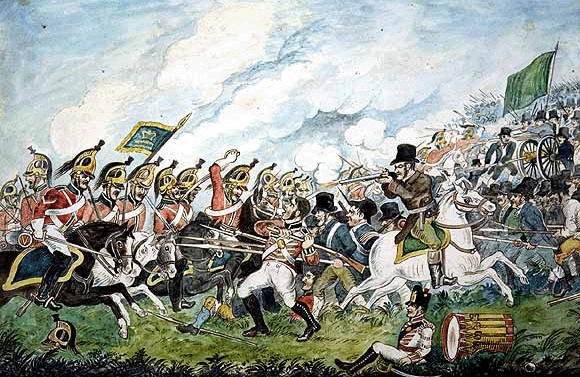
Join Emerging Revolutionary War historians Mark Maloy, Rob Orrison, and Mark Wilcox on this Sunday, March 17 at 7 p.m. on our Facebook page for a pre-recorded revelry as we discuss the Irish in the American Revolution. We’ll talk about the Irish who fought with Washington’s army (such as Colonel John Fitzgerald), those who fought with the British, and how the events in American ultimately spilled over into Ireland (the Irish Rebellion of 1798) and how we have come to remember the role of the Irish in the Revolution. Happy St. Patrick’s Day (and Evacuation Day)!
Can’t make it on St. Patrick’s Day because you’ll be celebrating? No problem, the episode will be up on our YouTube page later this week and available on our audio podcast. While there, check out our hundreds of Rev War Revelries and other videos!
Growing up in central Pennsylvania, the history of the Revolution seemed far away. There were no major battles here, and the big armies did not pass through here. The area produced no famous leaders or generals.
My hometown, Lewisburg, sits on the banks of the Susquehanna River. In the 1770s the area was the frontier, and Revolutionary connections here are few and far between. The militia served far away during the Brandywine and Germantown campaigns. There were some Indian raids through the region as well.
One thing I was always curious about, but never acted on, was the headstone of a Revolutionary soldier, literally next to Route 192. It is in the middle of nowhere, far from any towns or forts. I had moved away but on a recent visit I had the chance to pull over, look at the marker, research the name, and find out who the soldier by the road was.
The grave sits literally feet from the road. Author photo.
Christian Hettick was born in 1750 in Rheinland-Pfalz, modern Germany. He moved to Pennsylvania and settled with many other Germans in the Susquehanna Valley. He resided along the Susquehanna River in what later became the town of Lewisburg. In 1781 he was serving with the Northumberland County militia (today the area is in Union County).
While the Yorktown campaign was underway 300 miles to the south, reports of hostile Indians brought the militia out to patrol here. Finding no hostile enemy, Christian was apparently returning home when he encountered Indians, who shot, killed, and scalped him.
His body was found by the side of the road. He left a pregnant widow, Agnes, with four children, and a daughter was born shortly after his death. His son seven-year-old son Andrew was actually with his father when he was killed. The Indians captured Andrew, but he escaped after several months.
Another view of the grave. Author Photo.
So there he rests, literally by the side of a busy road (thankfully no cars have taken out the small marker). In this quiet corner of central Pennsylvania, far from the large battlefields and campsites, is this reminder of the Revolution.
The headstone is in remarkable condition, and a Revolutionary War service plaque with flag is next to it. Author photo.
December 16, 1773, was deep into the rear-view mirror. A new year had begun, and February 1774 lay close to the horizon. Yet, for the British Parliament, the events of what later became known as the Boston Tea Party were still very much breaking news. Word had just reached London of what had happened in Boston. Now, how would the Crown and those in parliamentary power react to this shocking news?
Most contemporary sources of the period, as well as a litany of works in the historiography of the subject, contend that Britian’s reaction to what happened in December 1773, and thus their course in handling the situation in 1774, was done so prematurely and without much rational debate and discussion. Historian Jon Ferling suggests, “the myth arose that its government, under Prime Minister Frederick, Lord North, had acted in haste.” The myth had grown during the numerous setbacks the British later suffered during the war itself. And, in the wake of their ultimate defeat, many contemporaries across the pond argued that Britain’s leaders, “had failed to comprehend the gravity of the challenge,” i.e., using the military might of their nation to quell the rebellious colonies in 1774.
If one was to examine the proceedings of Parliament during this period 250 years ago, however, they would not find hasty decisions being made based on emotional reactions to the news out of Boston the previous month. This is especially so when the use of the country’s military resources was debated as an option to deal with the rowdy and disobedient Bostonians. Nothing could be farther for the truth contends Ferling, noting that the use of their military to enforce Crown law in the colonies began in the opening days of 1774, even before the throwing of the tea reached London. Not only was this thought discussed and debated in Parliament, but the reactions the colonists would have was also heavily considered. Some openly debated that such a strong application of Britain’s military in Boston, the Massachusetts Colony, and other coercive actions, may indeed spark yet another war in North America. These arguments were then quickly followed by questions of whether Britian could win in another conflict on this continent so soon after the French and Indian War; a conflict that had drained Britain’s finances and depleted her military ranks.
As January 1774 concluded 250 years ago, and February was just days away, these larger questions on how Parliament and the Crown should react to the Boston Tea Party and course-correct those in colonies in open rebellion against Britain were continually debated. It was not until March 1774 that a decision was made. North, and thus Parliament, opted to avoid the potential for outright war by utilizing their military might first. Instead, they chose a route of punitive measures, the Coercive Acts (also known as the Intolerable Acts). As part of this legislation, certain parts would solely focus on Massachusetts as punishment for the events of December 16, 1773, in Boston. These acts also included closing Boston Harbor until the destroyed tea’s worth had been repaid, and Gen. Thomas Gage, commander of the British Army in America, installed as the colonial governor of Massachusetts. Gage contended that these refractory Bostonians would “be lions while we are lambs; but if we take the resolute part, they will prove very meek, I promise you.”
In the end, however, this course of action was not made in haste at all, but rather after nearly four full months after the throwing of the tea in Boston harbor. And, one could argue that North and Parliament initially sought to refrain from the sole use of Britain’s military might, rather opting for legislative settlement to the issues that arose from Massachusetts. But, as history played out 250 years ago in 1774, as historian Ferling contends, “Britain, of course, miscalculated hugely.”
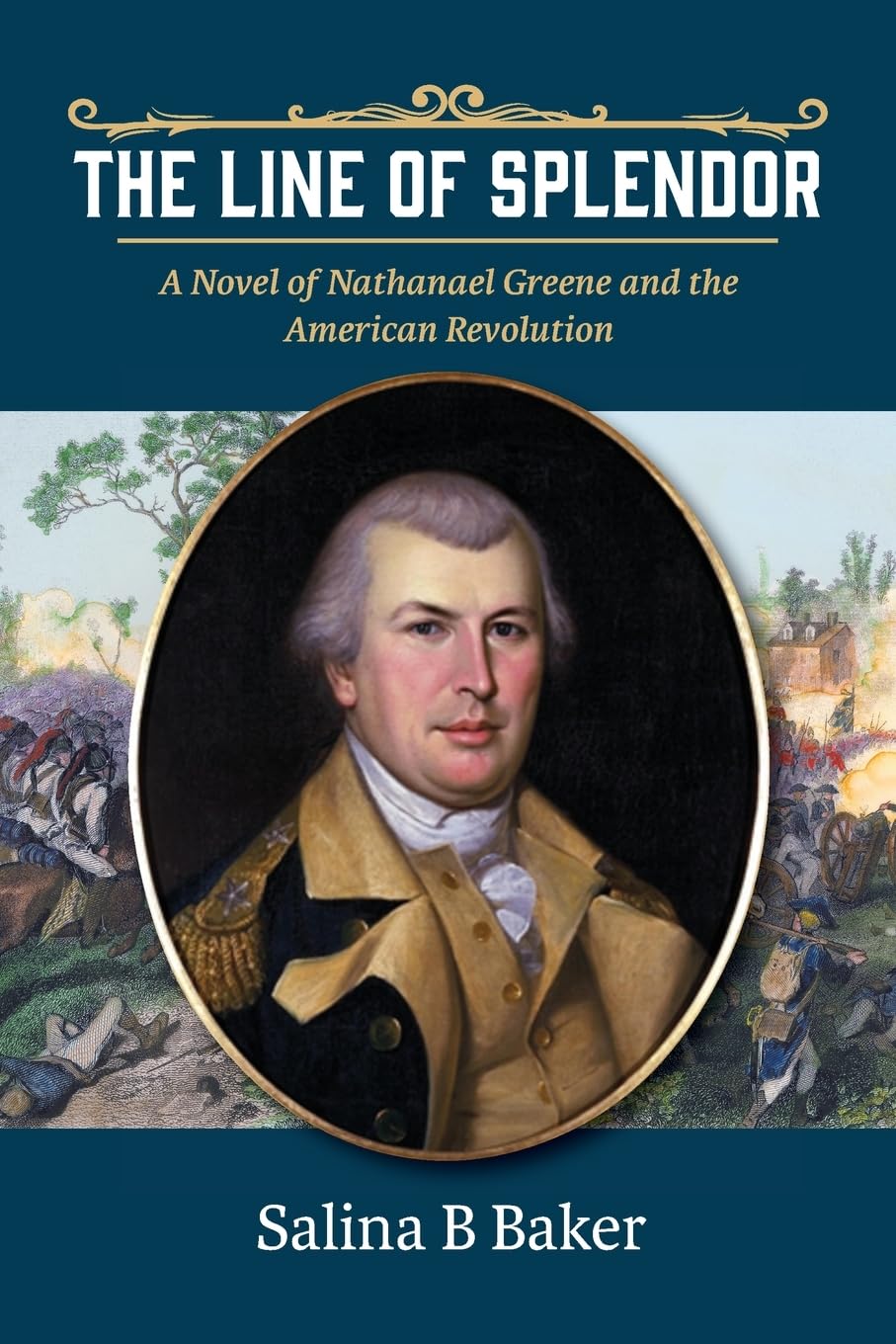
From the hard lessons learned on the battlefields of New York, to his appointment as Quartermaster General during the harsh winter at Valley Forge, his role in convicting the British spy who colluded to obtain the plans to West Point, to the godsend who took command of the ragged remnants of the Southern Continental Army, Nathanael Greene’s complex perseverance and brilliant strategies broke military doctrines.
Join ERW LIVE this Sunday at 7pm as we welcome author Salina Baker to discuss her historic novel about Nathanael Greene. We will discuss the life of Greene, his wartime experiences, why he has been forgotten by many and why she found his life story so interesting. Grab a drink and join in on the conversation!







 Emerging Revolutionary War Era