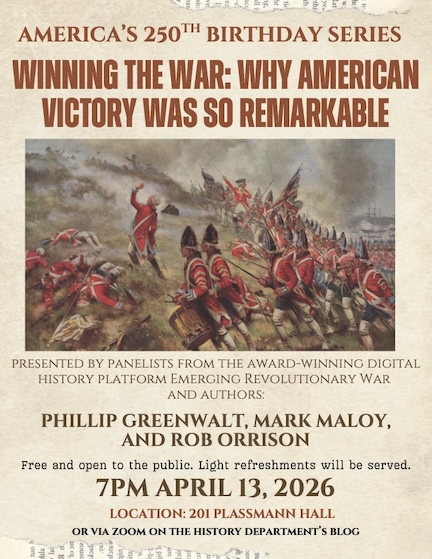
Join Emerging Revolutionary War LIVE on Monday evening, April 13 for a discussion about “Winning the War.”
Why was American victory in the Revolution so remarkable? It seems inevitable to us now, but at the time and on the battlefields, victory seemed anything but assured. How did America overcome the odds, particularly after several decisive defeats? Historians from Emerging Revolutionary War (ERW) will examine key military moments that kept the dream of independence alive.
We’ve been helping St. Bonaventure University commemorate the 250th Anniversary of the American Revolution this semester with a series of Monday-evening programs. On April 13 at 7:00 p.m. ERW historians will Zoom in for a panel discussion as part of the series. You can watch at https://sbu.zoom.us/j/98224552407 or on the ERW Facebook page.
Panelist include:
Phill Greenwalt, author of The Winter that Won the War: The Winter Encampment at Valley Forge, co-author of A Single Blow: The Battles of Lexington and Concord, and co-author of the forthcoming A Hard-Bought Victory: The Battle of Bunker Hill
Mark Maloy, author of Victory or Death: The Battles of Trenton and Princeton, To the Last Extremity: The Battles for Charleston, and a forthcoming book on the battles for New York City
Rob Orrison, co-author of All That Can Be Expected: The Battle of Camden and A Single Blow: The Battles of Lexington and Concord
Greenwalt and Maloy are both historians with the National Park Service, and Orrison serves as ERW’s chief historian.
ECW’s Chris Mackowski, who teaches at St. Bonaventure, will moderate the discussion. For people on campus or in the community around St. Bonaventure, the program will be available—with refreshments!—in 201 Plassmann Hall.
The program will be simulcast on the ERW Facebook page and on the blog of St. Bonaventure University’s History Department.
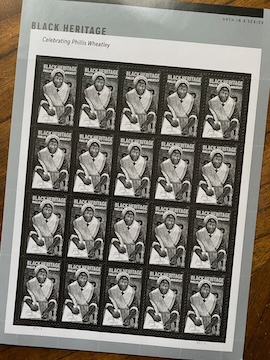
The United States Postal Service has issued a new postage stamp honoring Phillis Wheatley, a Revolution-era poet who was the first author of African descent in the American Colonies to publish a book.
Unveiled at the Old South Meeting House in Boston on Thursday, Jan. 29, 2026, the Wheatley stamps was the 49th stamp in the Black Heritage series.
For more on Wheatley, I reached out the Boston Tea Party Ships and Museum. Cathryn Philippe is a living historian at the museum who portrays Wheatley—who, as it turned out, had an interesting connection to the Boston Tea Party. Cathryn was kind enough to spend some time chatting with me about Wheatley’s story:
(I first met Cathryn several years ago, while doing a virtual field trip in Boston for the American Battlefield Trust. I had the chance to visit the Boston Tea Party Ships and Museum and see Cathryn’s portrayal for myself. Take a look here.)
For more on the Phillis Wheatley stamp, we quote part of the Postal Service’s press release:
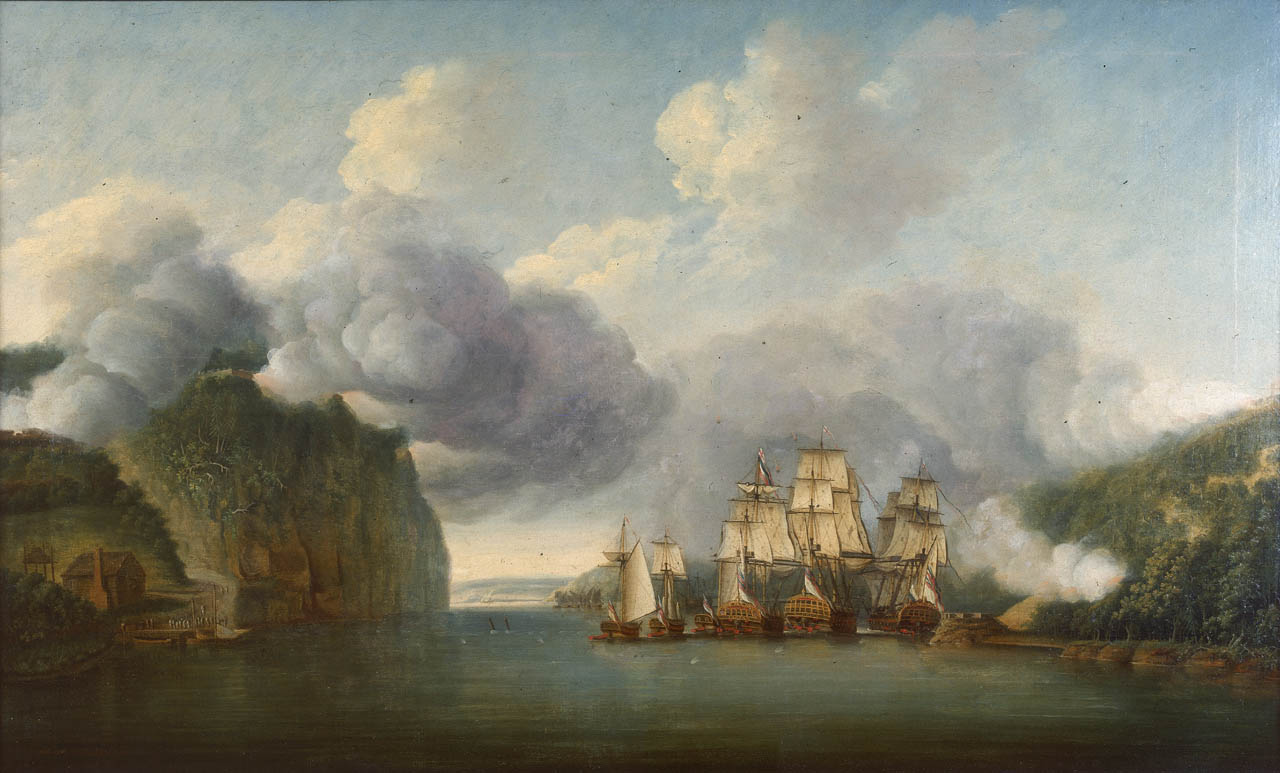
Thomas Mitchell, Forcing a Passage on the Hudson. From left to right, Phoenix, Roebuck, and Tartar run forts on the Hudson River later in the war. The smaller vessel on the far left is a tender. Maria or the Lord Howe may have looked like that.
In the spring of 1776, the Sussex County Delaware Committee of Safety sent the schooner Farmer under the command of Nehemiah Field to St. Eustatius for gunpowder, always in short supply in the rebelling colonies. By then, the little Dutch island in the Caribbean was a well known haven for smugglers to sell and buy embargoed goods. Indeed, leaders of the rebellion in America had been cruising Caribbean waters for months, always looking to acquire armaments from neutral colonies from under the nose of the Royal Navy, which lacked a sufficient number of ships to stop the practice. Inevitably, the American smugglers found willing partners, some simply looking to earn a quick profit on high-value goods, others recognizing that islands throughout the area relied on the Americans for bulk foodstuffs. If the Americans could not trade, some Caribbean colonies might go hungry.
Field successfully acquired a cargo and evaded British patrols between the Caribbean and his destination in the Delaware Bay, but his greatest test would come as he sought to enter the bay and unload his cargo in the lee of Cape Henlopen, near the town of Lewes. The British fifth-rate Roebuck (44) under Captain Andrew Snape Hamond patrolled the lower bay with various attached small boats. His chief task was to prevent smuggling, particularly of the kind Field and Farmer represented. Delaware Bay is a large body of water shaped a bit like a rounded arrowhead. It narrows at the top where the Delaware River enters and has a wider bottom, closer to the Atlantic Ocean. But, that wide part starts to curve back on itself, and the mouth of the bay, between Cape Henlopen and Cape May, New Jersey is roughly 17 miles wide with shallows that constrain its navigability for deep-draft ships. Those shallows limited Roebuck’s mobility and increased the demands on its smaller supporting ships and boats. So, Captain Hamond relied heavily on his tender, Maria, and boats to intercept smugglers.
At daybreak on Sunday, April 7, on a clear day, Hamond spied a schooner coming into the bay and already close to the Henlopen light house. Roebuck set a course to the south in pursuit and dispatched the Maria and two armed boats to venture into the shallower waters. Hamond was accustomed to chasing ships, but he didn’t know how lucky he was to stumble across the Farmer, originally sent to obtain gunpowder from the Caribbean. When his prey seemingly ran aground, Hamond must have been delighted.
Ashore, guards at the lighthouse sent word to the village of Lewes that a schooner had arrived and was being chased into the bay. Men were needed to help unload it. Captain Charles Pope, of the Delaware Continental Battalion, quickly assembled his men and the local militia. He needed boats to cross a creek, which the townspeople soon produced. As Pope moved the town militia toward the beaches, the lighthouse guard descended on the Farmer, seven or eight miles south of the cape. They quickly began unloading cargo: coarse linens. If Pope was surprised or disappointed, he didn’t mention it.
As the militia arrived, they could see Roebuck’s tender bearing down on the schooner and hear the retort as it loosed a broadside of swivels and muskets at the Farmer and men unloading her. The Farmer’screw responded by running right up on shore. The guard returned the tender’s fire with muskets, which Pope’s men quickly augmented as they arrived on the scene. A gunfight ensued as the militia and crew aboard the tender exchanged shots without doing much damage. At one point, militiamen even began picking up many of the tender’s musket balls as they rolled on the ground, spent of all energy. But the distance was too great for small arms and eventually the militia laid off firing in order to expedite unloading. According to Pope, the tender, still standing offshore, dispatched a boat back to the Roebuck, presumably for assistance.
By the time the frigate rounded the cape, Pope and his men had managed to load two swivels on the Farmer and engage the Maria, which had moved closer and anchored. As he reported, the exchange of fire between Pope’s men and the tender lasted a solid two hours. The militia kept up a close fire on the tender to keep her from raising her anchor, probably because they thought they were getting the better of the fight. Pope thought he saw men fall, although Hamond didn’t note any casualties in his log. Eventually, the Mariasuccessfully hoisted her anchor out of the sand and mud, but then a swivel on the Farmer shot away her halyards and the sail came down, forcing the tender to drop anchor again. For her part, Roebuck remained in deeper water, visible, but largely out of the fight. Eventually, she sent over a boat to tow off the Maria. The boat drew militia fire and Pope thought they inflicted wounds on her crew too, but the boat and Maria eventually drew off, concluding the shoreline skirmish. There were no American casualties and Hamond did not report any from the affair.
Early in the afternoon, Hamond spied another schooner approaching the bay and hauled off to chase her. He fired one shot at her before identifying her as the Lord Howe, another of his tenders, just arriving from Virginia. Just another day for the Royal Navy on the American coast.
Join us on our Facebook page at 7 pm on Sunday, May 3, for a pre-recorded interview with Dr. Gordon Blaine Steffey, the Vice President of Research & Collections at Stratford Hall, and Director of Research and the Jessie Ball duPont Memorial Library. Dr. Steffey will discuss his research on the Lee family and their role in the cause of independence during the American Revolutionary Era.
The Revelry will be posted to Facebook and our You Tube Channel at 7pm.
Emerging Revolutionary War welcomes back guest historian Ben Powers
If the Medal of Honor had existed during the American Revolution, which American soldiers might have received it? This is the kind of counterfactual question some of my history professors might eschew, but exactly the kind of thing I’ll debate endlessly with my pals over a burger after a day roaming a battlefield. As today is Medal of Honor Day, it’s appropriate that I share why I believe that, had the Medal of Honor existed at the time of the Revolution, there is no finer candidate for the honor than Delaware’s Robert Kirkwood.
Introduction
I recently found myself on a Zoom call with two colleagues, discussing various aspects of the American Revolution, and the conversation turned to a trip one of them planned to take to Delaware to do some research. I immediately responded with “The Blue Hens!”, thinking of the First Delaware Regiment, and followed up by asking if he had heard of Kirkwood. My friend said he had not, thus launching me into a rundown of Captain Kirkwood’s impressive combat record. I concluded with my assessment that Kirkwood was the Continental Army’s answer to World War Two Medal of Honor recipient Audie Murphy.
The Kirkwood/Murphy comparison is the kind of shorthand line that comes up in casual conversations about the War for Independence, a hyperbolic way of saying that a man was an excellent combat leader. But even after our call ended, the comparison stayed with me. Kirkwood had been in the fight from nearly the beginning, starting with the battles around New York City in 1776, and he had fought through to Eutaw Springs, SC, in 1781. Murphy likewise had seen hard campaigning from North Africa to Germany. Murphy had earned nine battle stars on his campaign ribbon. Had a similar honor been available to Kirkwood, he would have received six campaign stars, as the US Army classifies Revolutionary War campaigns, and he deserved at least three more. The more I thought about it, the more convinced I became that Kirkwood deserved a Medal of Honor.
The Medal of Honor
The Medal of Honor is the United States’ highest award for valor, reserved for acts of conspicuous gallantry in armed conflict performed at the risk of life above and beyond the call of duty. In other words, if a recipient had not performed the act, their conduct would not have been considered dereliction of duty. The decoration has been awarded fewer than 3,600 times since its inception in 1861, during the American Civil War. Conservatively, 41 million people have served in the United States military since the American Revolution, making Medal of Honor recipients 0.01% of all American veterans. To say the Medal of Honor is awarded sparingly is an understatement. Approval for the award of the medal requires extensive corroboration from witnesses and multiple levels of review to meet a standard of proof “beyond a reasonable doubt.” Audie Murphy received his Medal of Honor for single-handedly holding off an enemy infantry company in an action near Holtzwihr, France, in 1945. Did Kirkwood meet a similar standard of bravery during the American Revolution?
Historiography
The most distinctive element of Kirkwood’s service is the fact that he was in it for the duration. Name a major engagement, and there is a good chance he was there. Long Island and White Plains in 1776? He’s there. The Philadelphia Campaign in ’77? Check. Likewise with Monmouth in ’78. When the Delaware Continentals moved to the southern theater in 1780, Kirkwood marched with them. From Camden to Eutaw Springs, he is in every major fight in South Carolina from 1780 to 1781. For all that service, Kirkwood was not a self-promoter. He participated in decisive fighting under Daniel Morgan at Cowpens on January 17, 1781, fighting with the Continentals against Banestre Tarleton. His journal entry recording the day’s events simply reads, “Defeated Tarleton”. Descriptions of Kirkwood’s combat exploits are sparse. So, how to go about determining his eligibility for the nation’s highest valor award?
EDITOR’S NOTE: Emerging Revolutionary War has been pleased to co-sponsor a series of Monday-evening programs to commemorate the America 250th at St. Bonaventure University, where contributor Chris Mackowski teaches. In March, the line-up of programs featured a student research panel. We are pleased to present today the work of one of the “emerging scholars” from that panel, Kayla Krupski.
Kayla is a junior history major from Hamburg, NY, with a minor in classics. Her talk was titled “Maintaining the Chaos: The Complexities of Domestic Life for Loyalist and Patriot Women Amidst the American Revolution, 1752–1789.” We invited Kayla to share a synopsis of her research here.
The American Revolution is most often remembered through the voices of those who primarily wrote its history—men. Because women were not marching miles to face a redcoat with a musket, their courageousness was often overshadowed by active battle. However, women of the 18th century faced constant battles and fear within their domestic lives. Regardless of their allegiance, women embodied a quiet strength in maintaining their households.
Anna Rawle, a young loyalist woman living in Philadelphia, wrote in 1781, “It was the most alarming scene I ever remember.”[1] This quote comes shortly after the American victory at the Battle of Yorktown, when a Patriot mob harassed her home. These uneasy, fearful words that came from a young Loyalist woman reflected how her home, family, and life was threatened because of the Patriot victory.
The resilience and challenges of female roles during the Revolution showed how certain hardships did not solely lean toward one political side. Whether one was a Loyalist or a Patriot, it did not deem that one group of people were harassed more for their beliefs than others. Understanding this allows the unbiased mind to look past the political allegiances and recognize that, through their self-determination, women were not going to let the chaos of the war keep them from continuing to live their domestic lives.
By looking at three women of different ages and political and religious backgrounds, we can connect how the American Revolution affected all women who shared the common emotion of fear. Sally Wister, Anna Rawle, and Abigail Adams had a swift transition from calmness to chaos in their daily lives.
Emerging Revolutionary War welcomes guest historianBjorn Bruckshaw, a bio follows the post.
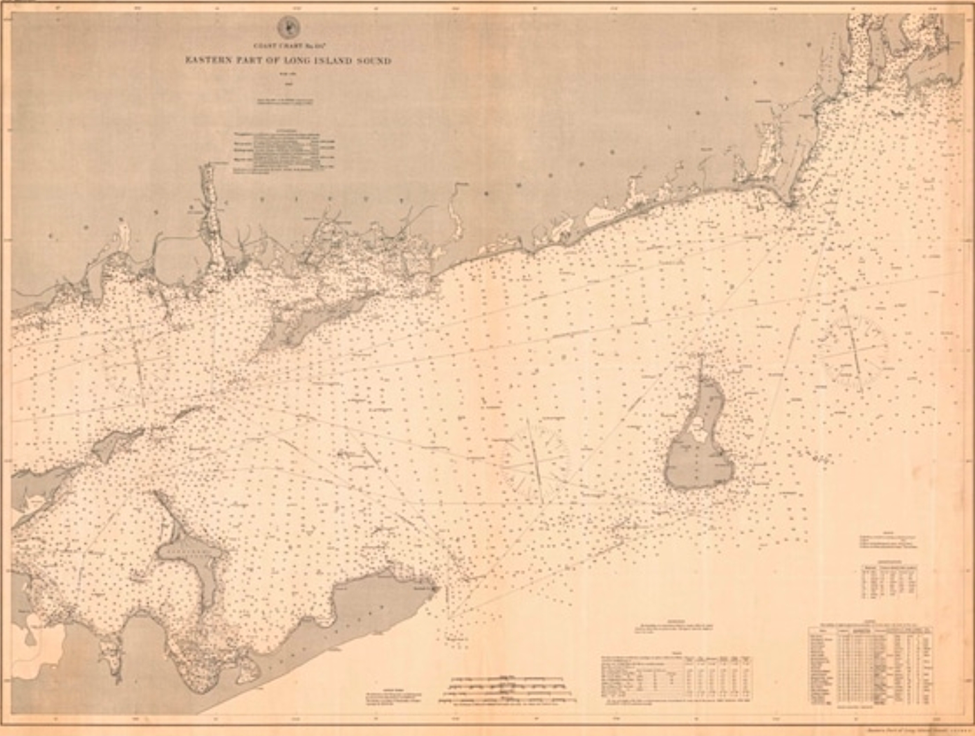
British nautical chart of the eastern portion of Long Island Sound showing the location of Block Island and the surrounding waters where the Continental Navy squadron encountered HMS Glasgow on April 6, 1776. Courtesy of the Library of Congress, Geography and Map Division. Public domain.
In the early morning hours of April 6, 1776, a lone British warship slipped through the moonlit waters southeast of Block Island. The twenty-gun frigate HMS Glasgow was carrying dispatches from Newport, Rhode Island, to the British fleet assembling off Charleston, South Carolina. Suddenly the ship’s lookout sighted sails on the horizon—then more sails behind them. Within minutes Captain Tyringham Howe realized the alarming truth: his single ship had encountered nearly the entire fleet of the newly created Continental Navy.¹
What followed should have been a decisive American victory. Commodore Esek Hopkins commanded a squadron of seven armed vessels, including the flagship Alfred, the brigs Cabot and Andrew Doria, and several additional ships. Against them stood only one British frigate. Yet by dawn the British ship had fought its way free and escaped. The encounter became one of the earliest—and most embarrassing—naval engagements of the American Revolution.²
The clash southeast of Block Island revealed the weaknesses of the young American navy: inexperienced crews, poor coordination between ships, and ineffective gunnery. Despite overwhelming numerical superiority, the Continental squadron failed to capture a single enemy warship. As one frustrated American officer later remarked, “A more imprudent, ill-conducted affair never happened.”³
The British vessel at the center of the encounter was HMS Glasgow, a sixth-rate twenty-gun frigate of the Royal Navy. In early April 1776 the ship had been tasked with delivering dispatches from Newport to the British fleet gathering off Charleston for an upcoming campaign against the southern colonies. That expedition would ultimately culminate in the failed British assault during the Battle of Sullivan’s Island in June 1776.⁴
Meanwhile the American rebellion had begun extending onto the seas. The Second Continental Congress had authorized the creation of a navy in late 1775 to challenge British control of American waters. By February 1776 the first ships of the fleet were ready for service, and Congress appointed Hopkins as commander-in-chief of the new force.⁵
Hopkins’s squadron consisted largely of converted merchant vessels hastily adapted for war. The fleet included the flagship Alfred, along with Columbus, Cabot, Andrew Doria, Providence, Wasp, and Fly. Among the officers serving aboard the fleet was a young lieutenant named John Paul Jones, who served aboard the Alfred and would later gain fame as one of the most celebrated naval commanders of the Revolution.⁶
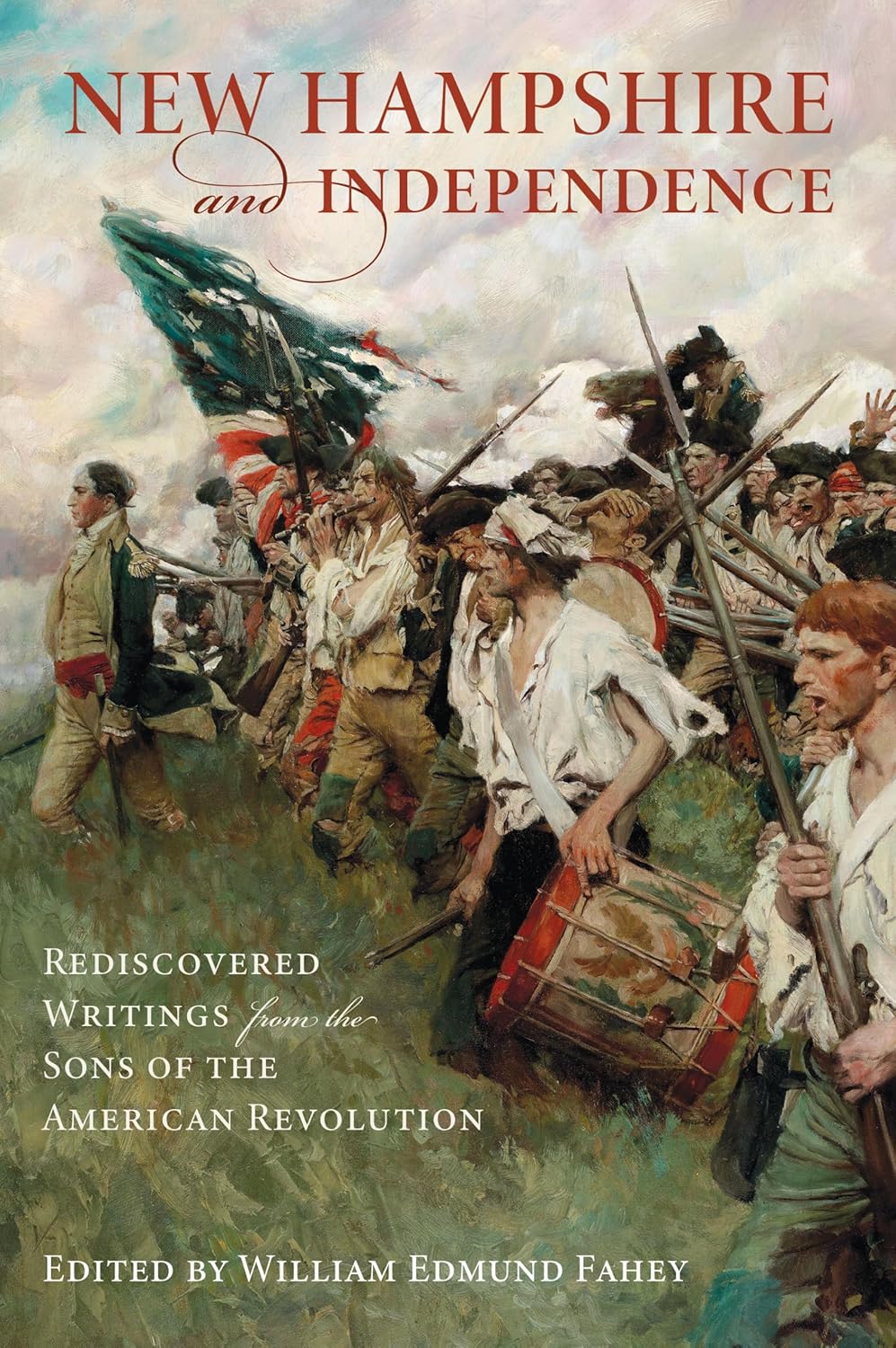
If one peruses the shelves of their favorite bookstore, histories line the shelves with words in their title “new look,” or “fresh perspective,” or “revisited,” or “rediscovered.” Usually, I am skeptical about what that history entails and whether that perspective will be based on a factual foundation or the author’s interpretation. That last word, “rediscovered,” graces the subtitle of William Edmund Fahey’s edited volume for The History Press. Fahey, who holds a doctorate degree and is a Fellow and President of Thomas More College in Merrimack, New Hampshire. In 2024, he was appointed the historian of the New Hampshire Society of the Sons of the American Revolution.
With that background, one can be assured that his “rediscovered” history will be based on impeccable research and accounts that have, unintentionally, been overlooked through the passage of time. That is the case in “New Hampshire and Independence, Rediscovered Writings from the Sons of the American Revolution.” As “questions or even needs that have arisen in recent years. The 250th anniversary of sovereignty is upon Americans” (pg. 29). This is the volume to understand and, if I may, borrow a word, rediscover the role of this small but important colony and its contributions to American victory in the American Revolutionary War.
“The structure of this book is rather straightforward…” (Pg. 30). Part one “sets the mood…the multi-generational effort to reflect, remember, and value the past” (Pgs. 30-31). “The heart of the book is found in the six addresses…” that comprises the entire second part of the publication (Pg. 31). Fahey wraps up this edited volume with the last section, part three, offering “readers key resources to become involved in the Sons of the American Revolution” (Pg. 31). Part four provides key legislative and primary source material for referencing and sparking research into the period. Now, let’s examine key points from each section to show Fahey’s mastery of the material and editorial prowess.
This Sunday, April 5th join us for a pre-recorded Rev War Revelry as we welcome back our good friend Dr. John Maass. Maass will discuss his latest book, The Battles of Spencer’s Ordinary and Green Spring, 1781 (Westholme Publishing) that covers the battles between Lafayette and Cornwallis, months before the Siege of Yorktown.
Dr. Maass will discuss his research to write this foremost account on the battles that have been mostly overlooked. We will also talk about how these battles fit into the overall 1781 Virginia Campaign and some misconceptions of the actions. There is little written about Spencer’s Ordinary and Green Spring, so this work will be an important add to anyone’s library.
The Revelry will be posted to Facebook and our You Tube Channel at 7pm.
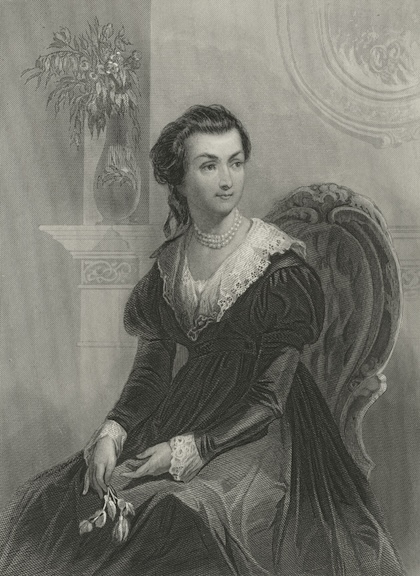
Abigail Adams was only 32 years old when she encouraged her h (NY Public Library)
“Remember the ladies.” Of all the words Abigail Adams wrote to her husband John over a correspondence than spanned 1,160 letters and nearly 40 years, those three stand as the most famous. They come from a letter written on March 31, 1776—250 years ago today.
At the time, events in the colonies were moving at a quickening pace. Common Sense in January 1776 had not only leveraged a major public shift toward American independence, it also sparked debate about what might come after. Sentiment in the Continental Congress lagged public opinion, despite John’s best efforts to spur that sentiment along, but conversation still bubbled among the delegates about that possible future.
It was in this context that Abigail, as astute a politician as any Congressional delegate, wrote to her husband. If independence loomed, and America had the chance to jump-start a new system of its own, then why not take advantage of the winds of change and establish independence not only from Great Britian but from the old social order altogether.
[I]n the new Code of Laws which I suppose it will be necessary for you to make I desire you would Remember the Ladies, and be more generous and favourable to them than your ancestors. Do not put such unlimited power into the hands of the Husbands. Remember all Men would be tyrants if they could. If perticuliar care and attention is not paid to the Laidies we are determined to foment a Rebelion, and will not hold ourselves bound by any Laws in which we have no voice, or Representation.
That your Sex are Naturally Tyrannical is a Truth so thoroughly established as to admit of no dispute, but such of you as wish to be happy willingly give up the harsh title of Master for the more tender and endearing one of Friend. Why then, not put it out of the power of the vicious and the Lawless to use us with cruelty and indignity with impunity. Men of Sense in all Ages abhor those customs which treat us only as the vassals of your Sex. Regard us then as Beings placed by providence under your protection and in immitation of the Supreem Being, make use of that power only for our happiness.[1]


 Emerging Revolutionary War Era