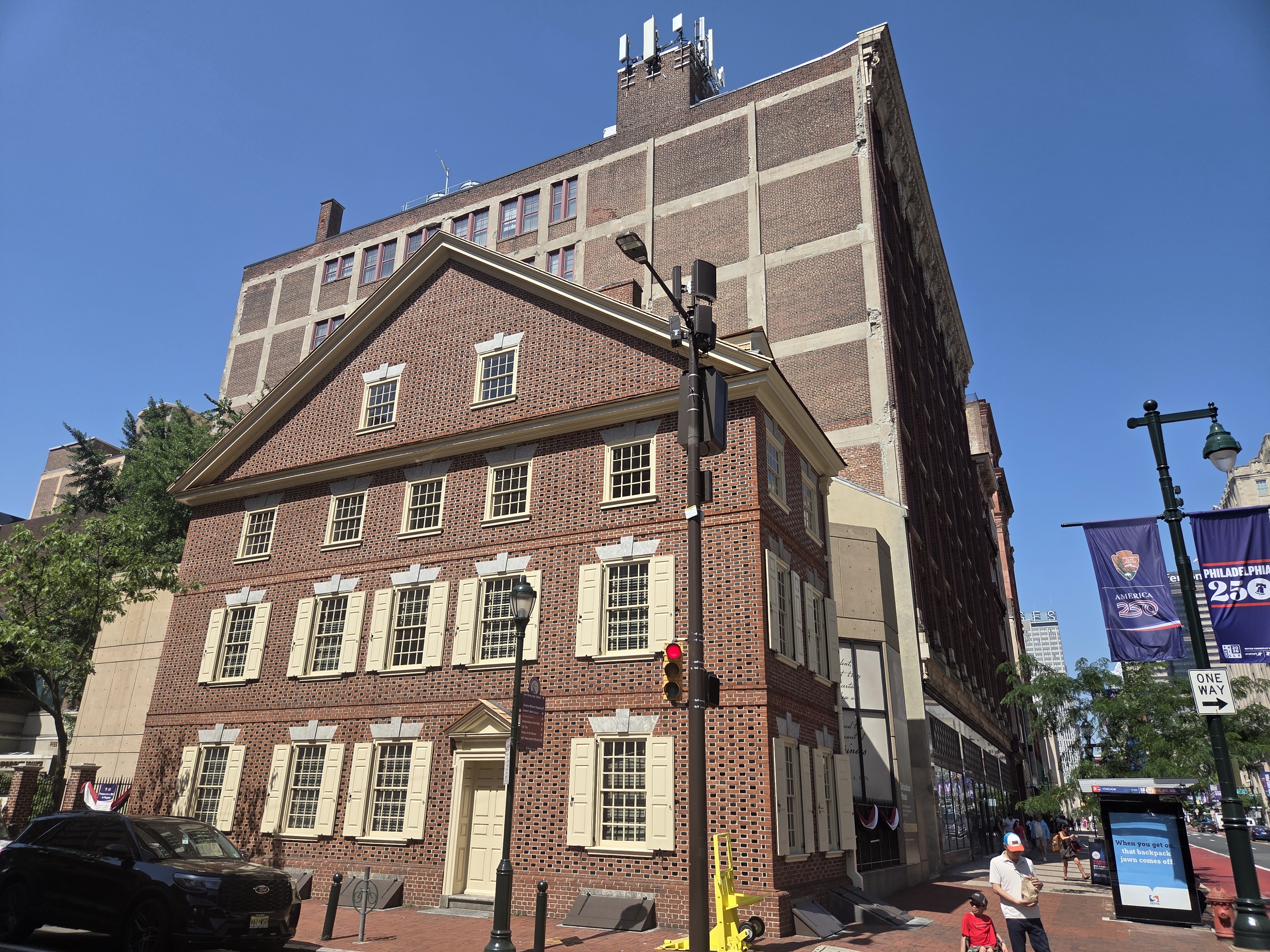
July 4, 1776 was not an unusual day when it began for Thomas Jefferson. It started off as any normal Thursday. Jefferson documented that he woke up around at dawn on the second floor of the Jacob Graff House at the corner of Market and 7th Streets. He spent the morning shopping in nearby Philadelphia stores. He documented the temperature that day at an ironic high of 76 degrees (much cooler than the expected 100+ degree heat on July 4, 2026). As he perused the stores on Philadelphia that morning, he purchased seven thermometers as well as women’s gloves. Jefferson also noted donating one shilling six pence to charity.
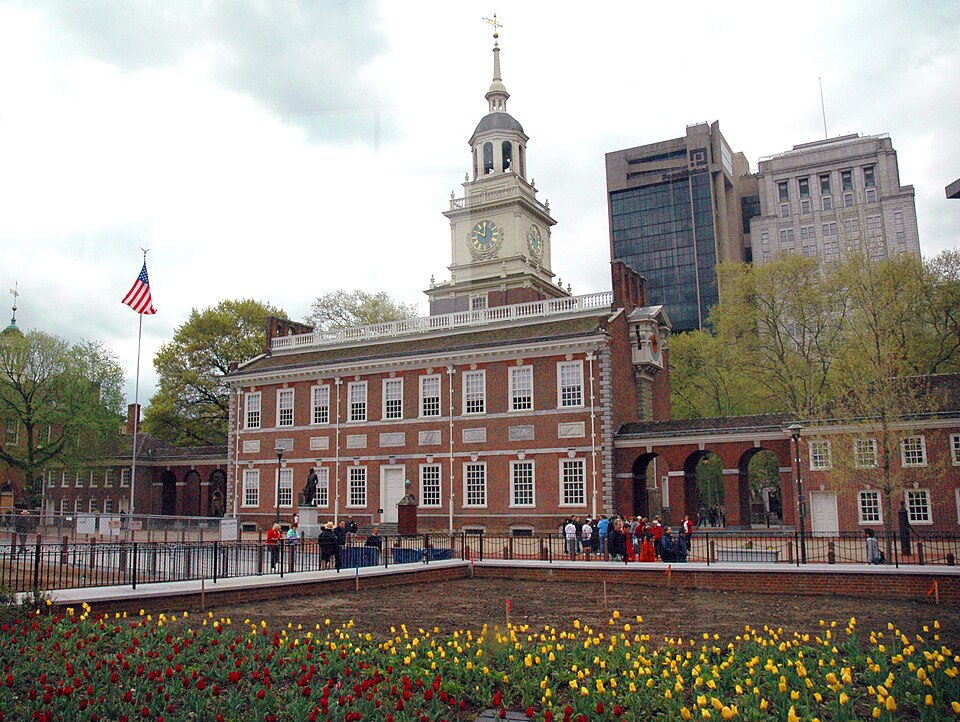
Jefferson was on hand as the Second Continental Congress convened at 9:00am in the Assembly Room of the Pennsylvania State House. The day before, Jefferson sat through discussion on editing his draft of the Declaration of Independence. He would also spend this morning listening to others editing down his document by one-third. Jefferson took great offense to the edits and preserved his original draft for posterity.
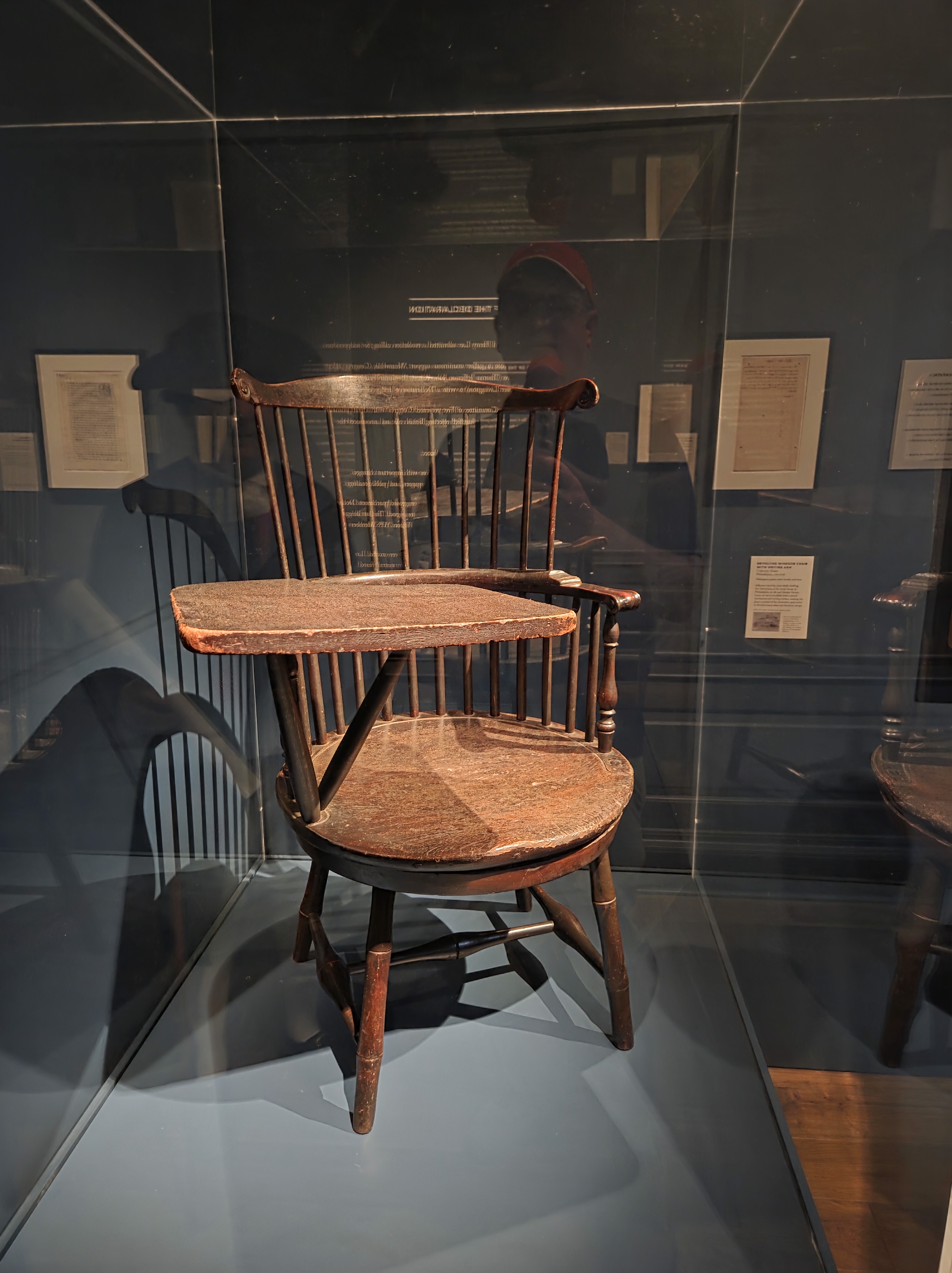
Jefferson used this chair in the Graff House to write the declaration. Today the chair is on display at the American Philosophical Society
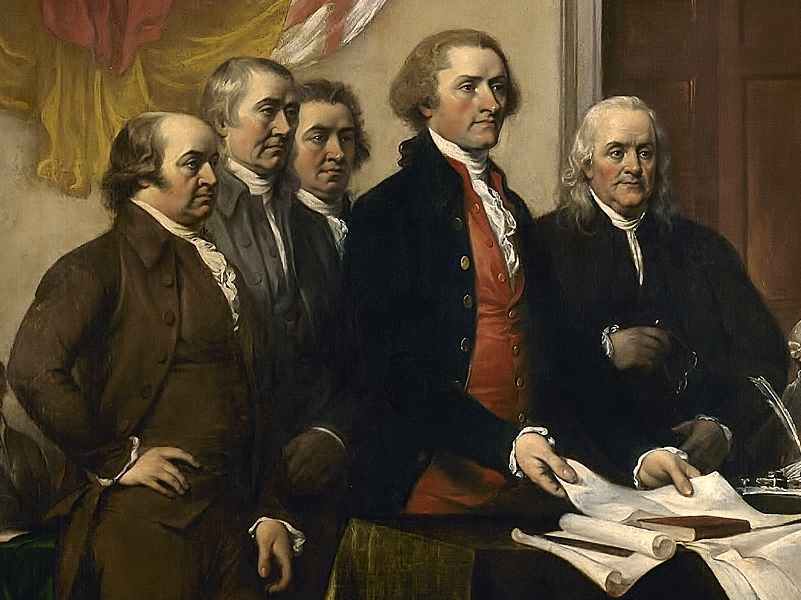
After some time spent finishing the edits to Jefferson’s Declaration, the Congress approved the document later that morning. Congress then ordered local printer John Dunlap to print 200 copies of the Declaration now known as the “Dunlap Broadsides.” Dunlap worked quickly to set his printer’s type and began printing the copies the night of July 4th. For Jefferson and the other members of Congress, the rest of the day was spent on various items around defense, relations with native tribes and other committee work. No noted celebration of the occasion of passing the Declaration. Congress also directed John Adams, Benjamin Franklin and Thomas Jefferson to design a new “Great Seal” for the new nation. [2]
It was not until later in life did men such as Adams and Jefferson give the day its prominence in American ethos. Though Adams called on Americans to celebrate July 2, today we celebrate the day that the Declaration was adopted. Both days are surely worth their own celebrations.
[1] – Jefferson the Virginian by Dumas Malone, pg. 229.
[2] – Letters of Delegate of the First and Second Continental Congresses,1774-1789. edited by Edmund C. Burnett
This Sunday at 7pm on our Facebook page, join ERW historians and guests as we discuss the road to independence on this 250th anniversary of the Declaration of Independence. We will unwind some of the myths and misconceptions of the summer 1776 events in Philadelphia. Why do we celebrate July 4th and not July 2nd? Who really wrote the Declaration and what do we know about the debates around independence. This is a great way to get ready for your July 4th celebrations!
This Rev War Revelry is pre-recorded and will be posted to our Facebook page and You Tube Channel at 7pm on Sunday, June 28th.
The American Revolution lasted eight years, 1775-1783. Why then do we celebrate 1776 and not the end of the war? Continental Congress presented the Declaration of Independence to the world on July 4, 1776. That’s the big deal.
There was something different about this revolution against British authority. The colonies were better organized. The people, policymakers, and military worked in harmony, though imperfect, toward freeing themselves from the bonds of the British Empire. Lexington and Concord had loudly proclaimed the shots heard round the world in April 1775.
By the second year, the colonial armies already had two significant military achievements in the winter and early spring. The militia turned back the invading southern British army at the battle of Moore’s Creek Bridge, North Carolina, in February. This victory contained the Redcoats in the southern theater to South Carolina. Up north, the British army withdrew from Boston in March, giving the colonists a physical and moral achievement. The leaders of the Glorious Cause, however, knew violence and blood wouldn’t be enough to win the war as failed Scottish and Irish uprisings had demonstrated all too well.
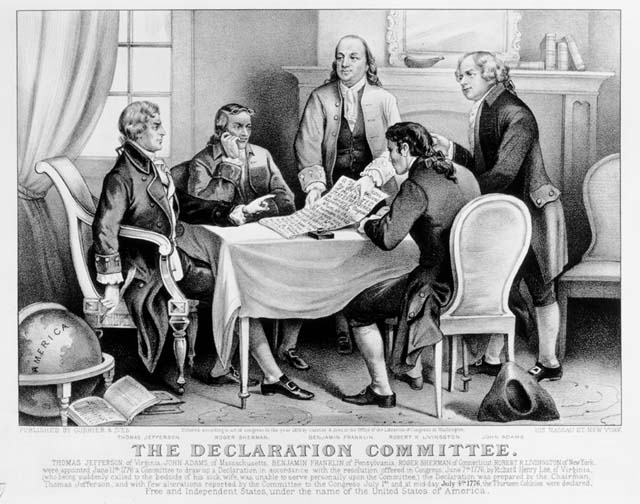
It was now up to the Continental Congress to fire a political shot. Congress tasked a committee of five to draft a declaration in June 1776. The members included Thomas Jefferson, John Adams, Benjamin Franklin, Roger Sherman, and Robert R. Livingston. Jefferson was the principal author. By July 1776, a final version was signed and submitted. It was only two paragraphs, but its words were, and still are, heard round the world.
The Declaration of Independence succinctly describes two of the five “Ws” of the war. Why we were fighting, or the main political goal, was first to be put forth. The colonists demanded a political divorce from British rule. As the committee wrote, at times “…it becomes necessary for one people to dissolve the political bands which have connected them with another …” Instead, the colonies wanted to form their own government based on a constitutional republic. It would be equal in standing to all other sovereign nations. That was the Why.
Then our founding fathers pulled the trigger and laid out the What, the reasons or “unalienable rights” we were fighting for against the crown. “We hold these truths to be self-evident, that all men are created equal, that they are endowed by their creator with certain unalienable rights, that among these are life, liberty, and the pursuit of happiness.” The King and Parliament hadn’t given these rights to any of their colonies or even their own citizens.
In fact, quite the reverse, British rule had subjugated the American colonies in “a long train of abuses and usurpations.” Redcoats threw colonists in jail without due process. Colonists were hung without a trial or after an unfair trial. Parliament levied taxes on colonial goods at a whim. We were subjects. We were here to serve the crown. Facing such despotism, the colonies had every right to abolish political ties with the British Empire and pursue life, liberty, and happiness.
It’s these three rights that we will soon be celebrating by commemorating the 250th Anniversary of the document that declared those rights, the Declaration of Independence.
As July 4th approaches, many of us turn our thoughts to the Declaration of Independence and the early years of the Revolution. I do too, but I also recall another July 4th, the one in 1754 when a Virginia militia officer named George Washington surrendered the crudely built Fort Necessity to the French. The battle touched off the French and Indian War.
General George Washington looks back at us from marble statues or stiff paintings with a grim-faced and determined look. Known for his dignity, resolve, and sound leadership, he seems cold and reserved. Yet he was also quite sentimental. In the midst of a grueling campaign, with a massive British invasion force set to descend on him at New York City in July, 1776, Washington paused to pen these words: “I did not let the Anniversary of the 3rd or 9th of this Inst pas[s] of[f] without a grateful remembrance of the escape we had at the Meadows and on the Banks of the Monogahela. [T]he same Providence that protected us upon those occasions will, I hope, continue his Mercies, and make us happy instruments in restoring Peace & liberty to this once favour’d, but now distressed Country”.
Washington was writing to General Adam Stephens, his subordinate in the French and Indian War twenty years earlier, who now commanded a division in the Continental Army. These lines give us a unique insight into the mind of the Revolution’s commanding general.
The French and Indian War years were Washington’s formative years as a military officer. He learned the art of war on the Pennsylvania, Virginia, and Maryland frontier: tackling supply and logistical challenges, dealing with recruitment and discipline, and working patiently-though not always successfully- with elected officials.
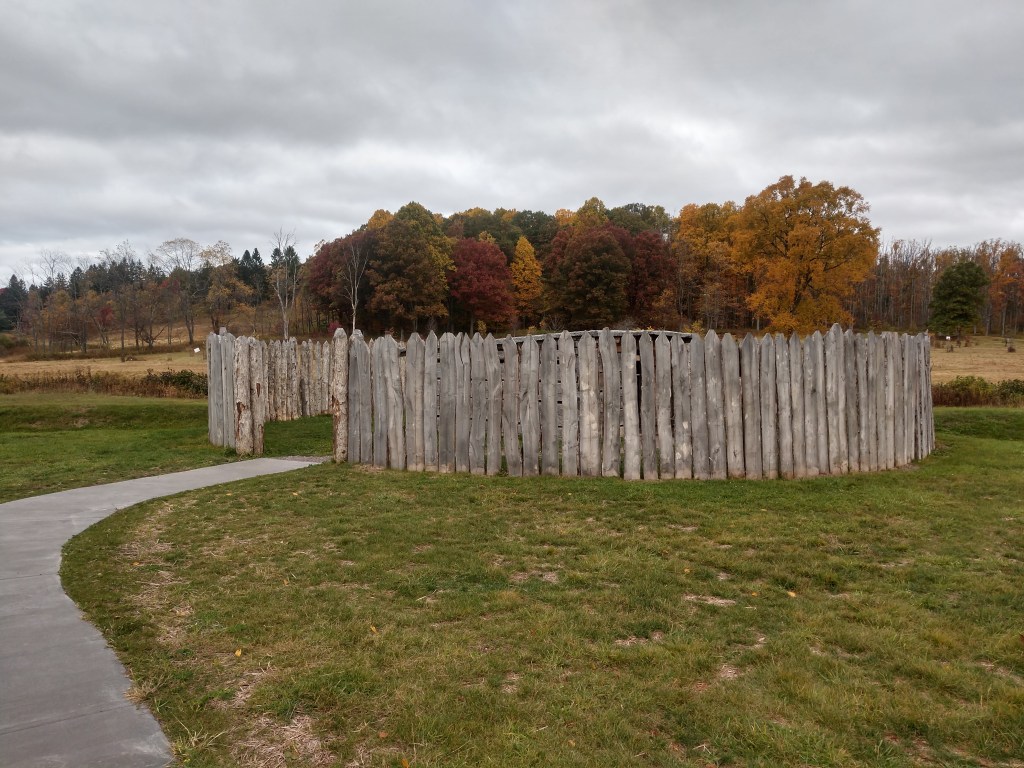
Fort Necessity. Author photo.
He lost his first major battle (Fort Necessity) to the French, fighting with the British. He won his last major battle (Yorktown) against the British, with the help of the French. The irony is deeper, for the surrender at Fort Necessity (the only time Washington ever surrendered), was July 4, 1754. Twenty years later, when celebrating American independence, he no doubt reflected on the juxtaposition.
The two battles Washington reflected upon, Fort Necessity (the Meadows) and Braddock’s Defeat (the Monongahela) were both defeats- disasters, really. Yet the experiences were powerful for the young Virginian; Braddock’s Campaign especially.
British troops and colonial forces were attempting to remove the French from western Pennsylvania and the Ohio country. The first few campaigns ended in failure, but Washington was able to participate in the final victorious effort in 1758.
Washington saw good and poor leadership, good and poor discipline, and good and poor coordination. When making decisions on conducting the war and running the army twenty years later, his decisions were informed by his earlier experiences.
He wrote of these experiences again later, and their impact on him was clearly profound. Washington also kept the sash and pistols that Braddock had given him before he died. These treasures reside in the collection at Mount Vernon today.
So strong were the memories of his youth in the woods of the frontier, that he even purchased the very land on which the battle of Fort Necessity was fought (How many Generals in American history can claim that?). In 1784 he visited the area, bought lands, and tried to find Braddock’s Grave. Washington wrote that he was “desirous of erecting a monument over it.” Unable to find the grave, Washington satisfied himself with viewing places where he learned the art of war three decades earlier.
A swivel gun at Fort Necessity. Author photo.
Washington himself was one of the new nation’s first battlefield tourists. He enjoyed visiting battlefields and retracing the movements of the armies. During his Presidency, he visited many Revolutionary battle sites, including some where he commanded. One has to wonder what ran through his mind as he re-examined the ground as a seasoned veteran and commander, without the urgency and chaos of battle unfolding around him.
Most of us have had close calls: an accident, medical emergency, or in military service. These events are life- changing. Reading Washington’s reflections allows us to better know the person, and understand his complex personality.
Being sentimental as he was, we might also wonder, what might Washington have thought of those battle sites today. Many are preserved as historic sites, though a good many have been lost to development. Hopefully he would applaud our current efforts at preservation, scholarship, and interpretation.
Whether you are about to enjoy a firework display, finishing up a family barbecue, or enjoying this holiday in some other form, the historians here at Emerging Revolutionary War wish all our readers and fellow historians a “Happy Independence Day.”
For those protecting our country on this day, around the world, a big “thank you” to go along with this July 4th, to you as well.
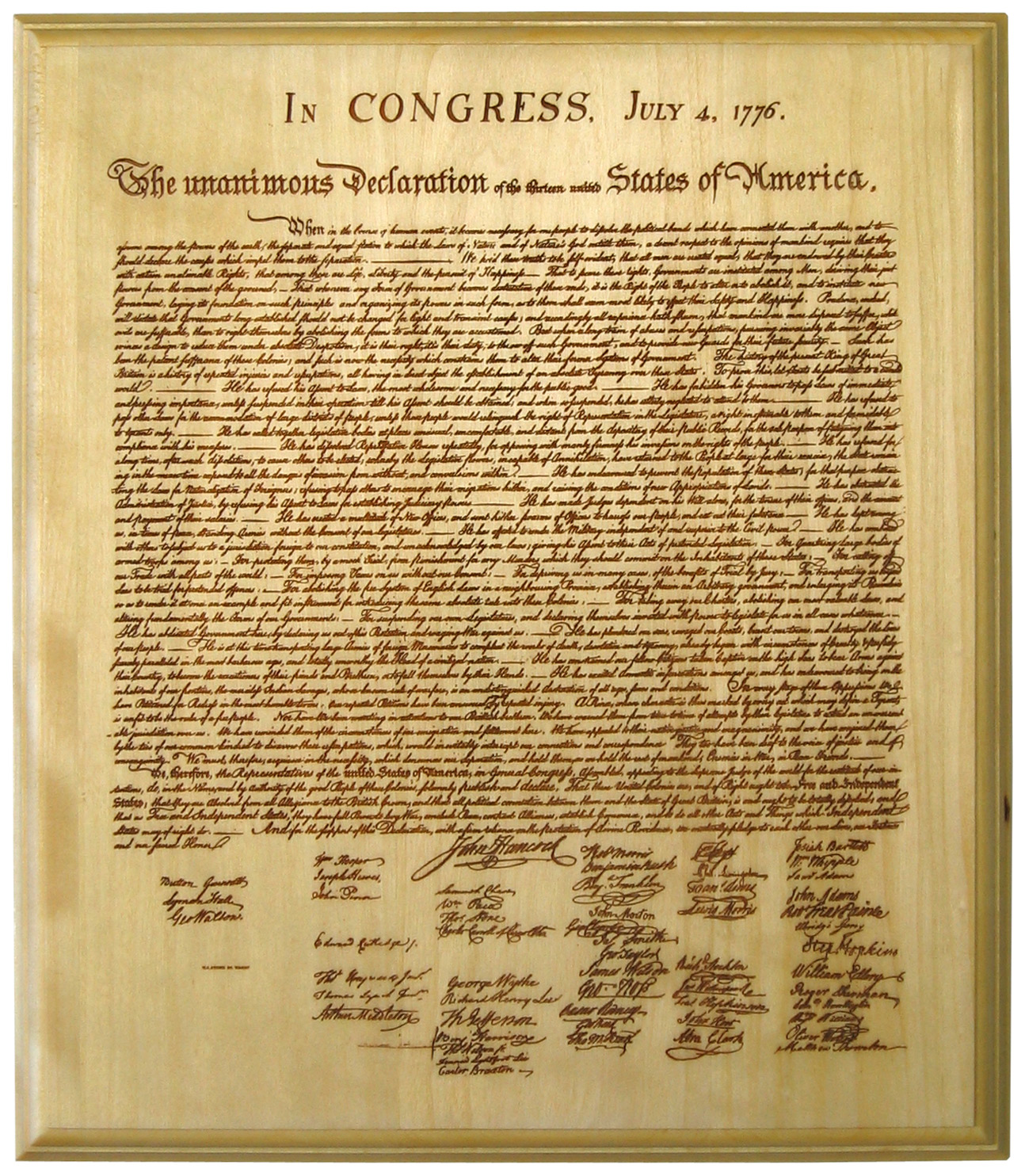
But, let’s not forget the true meaning of this day. When, in 1776, in Philadelphia, Mr. John Hancock, as president of the Second Continental Congress, affixed his signature to the document below, which declared to the world the break from Great Britain.
Declaration of Independence
From the words of Richard Henry Lee, “Resolved, That These United Colonies are, and of right ought to be, free and independent states,” to the quill of Thomas Jefferson, “When in the course of human events it becomes necessary for one people to dissolve the political bands which have connected them,” let us truly remember the history behind this day and the build-up to that fateful decision in Philadelphia.



 Emerging Revolutionary War Era