250 Years Ago…Right Now-ish

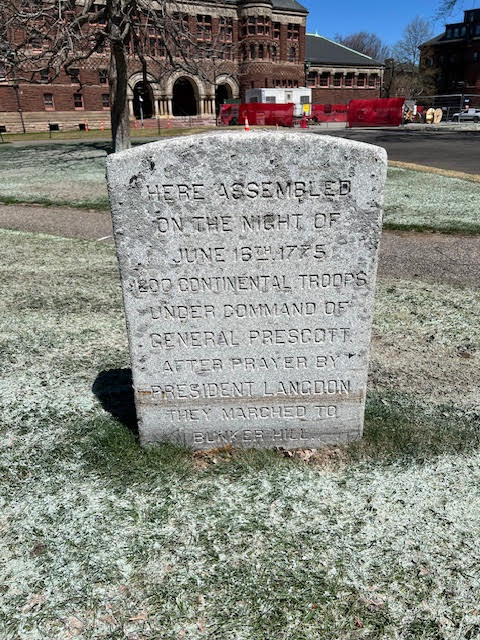
Shortly after 11 p.m. on the night of June 16, Colonel (although the monument calls him general) William Prescott led approximately 1,200 Massachusetts soldiers toward the Charlestown Peninsula from Cambridge Common. These men would spend the night fortifying Breed’s Hill before spending the majority of the next day defending the earthen redoubt from successive British attacks. Although forced to evacuate due to low ammunition and the British breaching the redoubt, the defeat had a positive impact on the morale of the “Grand Army” as the New England militia soon-to-be-Continental Army.

Francis Channing Barlow: Chief Marshal of Concord’s Centennial

Emerging Revolutionary War welcomes guest historian Andrea Quinn.

In April 1875, Concord, Massachusetts, commemorated the centennial of the American Revolution’s beginning with a celebration that merged historical remembrance with contemporary national healing. At the heart of this tribute stood Major General Francis Channing Barlow, chosen as Chief Marshal for the event. His presence and leadership embodied the spirit of both Concord’s revolutionary origins and the sacrifices of the recent Civil War. Though his life included many achievements—from battlefield valor to public service—it was in this role as Chief Marshal that Barlow served as a living link between generations of American struggle and aspiration.

Photo Credit: Library of Congress 1864 Photo General Francis Channing Barlow

Barlow’s appointment was no mere formality. A Civil War general known for integrity, courage, and commitment to reform, Barlow had deep ties to Concord. As a youth, he was shaped by the town’s intellectual and moral environment, attending lectures by Ralph Waldo Emerson and immersing himself in the ideals of Transcendentalism. This upbringing instilled in him a strong sense of civic duty, justice, and personal responsibility—qualities that defined his wartime leadership and post-war public service.

The Concord Centennial was intended as more than a local remembrance—it was a national event. The town’s planning committee sought a figure who could represent both the revolutionary past and the post-Civil War Union. Barlow, whose own life had traced the arc of American idealism—from Brook Farm to the battlefields of Gettysburg and Spotsylvania—was their clear choice.

Continue reading “Francis Channing Barlow: Chief Marshal of Concord’s Centennial”

Washington’s First Headquarters

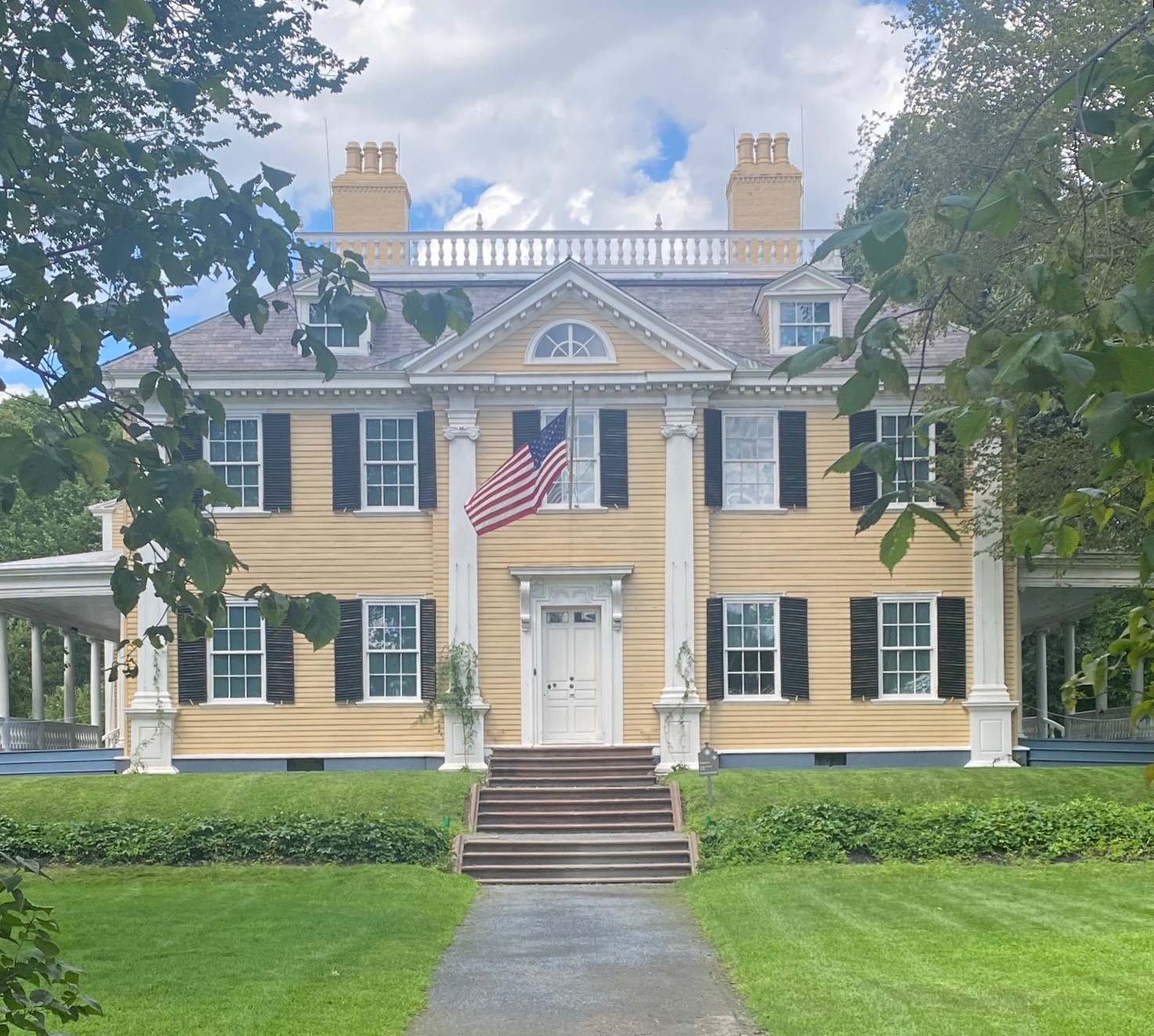
On June 15, 1775, George Washington was appointed by the Second Continental Congress as commander-in-chief of the Continental Army. Approximately a month later he rode into Cambridge, Massachusetts, to the house below, to assume command over that army. After he met the officers at Jonathan Hastings House near Harvard College campus, learning about operations and the siege. He was then directed toward an opulent residence standing about a mile away. Named the Vassall-Craigie-Longfellow residence, this place would become the focal point of the effort against the British in Boston. Washington moved in. He spent the next nine months in residence, overseeing the Siege of Boston and the British evacuation.

From this house, Washington began putting his footprints on the army and met some of the officers that became instrumental in securing American independence. This included the Rhode Islander Nathanael Greene and Massachusetts native and bookseller Henry Knox among others. Martha Washington, in December 1775, traveled over 440 miles from Mount Vernon to Cambridge to winter with her husband in this house. The making of Washington, the general, started here.

The power of place.

Today, the house preserved by the National Park Service today can be toured, click here for information.

Rev War Revelry: The Long 1774 in Massachusetts with Historian and Author J.L.Bell

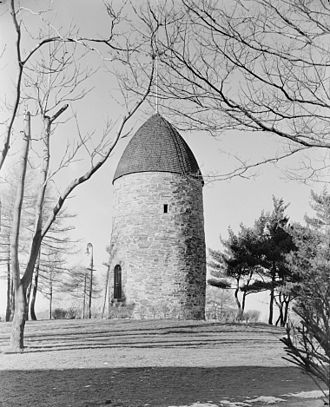
The Charlestown, now Somerville, Powder Magazine was the focus of the September 1, 1774 Powder Alarm. The historic structure still stands today.

Join ERW this Sunday at 7pm as we welcome back historian and author J.L Bell. We will discuss the events in Boston and Massachusetts in 1774 after the passing of the now popularly called “Intolerable Acts” in response to the Boston Tea Party. A time of political, social and economic upheaval for everyone in the colony, the events that transpired had big impacts across all the colonies and set the stage for April 19, 1775. J.L. Bell is a renowned historian who operates a very comprehensive blog focused on Boston 1775 (https://boston1775.blogspot.com/ )

Grab a drink and sit back and learn about the events that rapidly progressed during 1774 towards warfare and bloodshed. J.L. Bell will provide a great insight into how things quickly deteriorated in Massachusetts and how that impacted all the colonies as a whole. Unlike previous revelries, this revelry will run live on our You Tube channel at: https://www.youtube.com/@emergingrevolutionarywar8217 . Due to new rules and regulations with Facebook, we can no longer stream our revelries live on Facebook. We hope that will change in the future. We will post the You Tube video to our Facebook page after the live broadcast. We hope to see you this Sunday, June 9, 2024 at 7pm on our You Tube Channel!

The Great Butter Rebellion

Yes, this was a protest in Massachusetts in 1766.

No, “butter” is not a typo in the title.

Yes, this may be the first college student protest recorded in what became the United States of America.

No, this was not just about butter or butter substitutes.

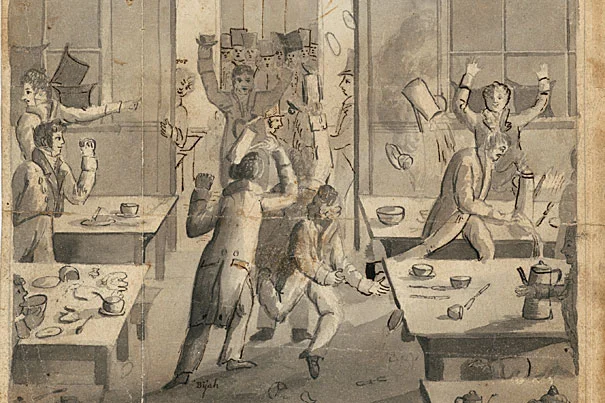
At Harvard College, in 1766, three students, all seniors at the institution, Asa Dunbar, Daniel Johnson, and Thomas Hodgson had had enough of the lack of fresh food being served to the student body. Dunbar, who may be best known as the grandfather of Henry David Thoreau, led the protest, stating that the butter served by the college was “stinketh” and he incited the student body to reject this rancid fare by jumping onto his chair and yelling

“Behold our butter stinketh! Give us therefore butter that stinketh not!”

Dunbar faced disciplinary action, being punished for insubordination and instigating a potential riot. After he received his punishment, the student body enacted another protest, by walking out of the hall, cheering loudly in Harvard Yard, and continuing into Cambridge to dine instead. To give some credit to the college, the adminstration acknowledged the butter ws rancid. With restrictions due to economic difficulties the availability of fresh food was limited however.

As Massachusetts moved closer to open rebellion in their remonstrances against British Parliament and the British crown their example was mirrored by the student body of Harvard. After a month of impassed including “insulting proceedings” the royal governor of Massachusetts, Sir Francis Bernard personally addressed the student body in the chapel on campus and the protests and insubordination of the student body concluded.

A depiction of a student protest
courtesy of The Harvard Gazette

Concluding, with a Butter Rebellion, a Tea Party, what food or drink would the colonists focus on next? For me, I think I will sip my Samuel Adams brew. Leave the butter and tea to the Massachusettans.

(Yes, I know that Samuel Adams beer was not around at the time of the American Revolution but I thought it was fitting. And beer and history go together anyways right?)

Sources:

Butter rebellion

Harvard’s long-ago student risings

Spread The Word: Butter Has An Epic Backstory

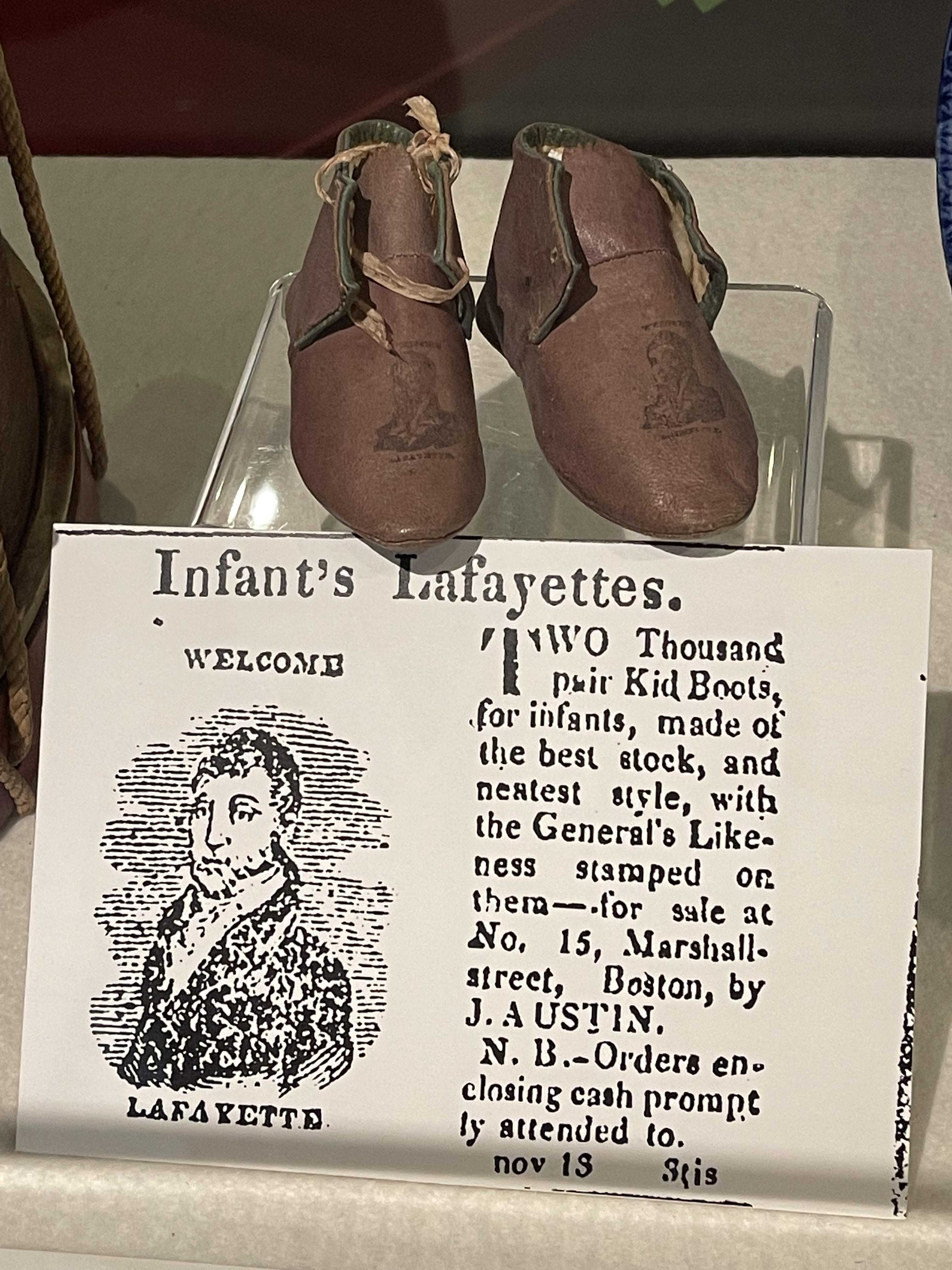
Air Lafayettes?

Emerging Revolutionary War thanks historian Christian Di Spigna for the picture.

With the release of the motion picture, Air, about the recruitment to Nike of Michael Jordan in the 1980s, Emerging Revolutionary War wanted to bring our readers attention to an older model of a shoe. That predates Nike by a century and a half. But, who knows, could come into vogue again right?

The Marquis de Lafayette returned to the United States in August 1824 to September 1825 and toured all 24 states at the time. Feted as a living link to the American Revolution and the independence movement, he was dined, celebrated, and asked to speak at many, many events. Commemorative items were created in his image and likeness, including, apparently a pair of shoes.

These shoes can be viewed today at Old Sturbridge Village in Massachusetts. A link to their website and to plan a visit can be found here.

Review: American Rebels, How the Hancock, Adams, and Quincy Families Fanned the Flames of Revolution

Two of the above three last names are very familiar to even casual observers of American history. John Hancock, whose signature is readily apparent at the bottom of the Declaration of Independence, where it was joined by John Adams and Samuel Adams. Yet, that last name in the title, Quincy, may not be as obvious as should be at first glance.

What is remarkable about these last names? Besides, the simple fact that members with those three surnames played a major role in the road to revolution and surprisingly on both sides of the chasm of loyalties? All could trace their roots to a small town in Massachusetts; Braintree.

“The covenant of liberty that they shared would be sharpened by ambition and envy, polished through friendships and love, and fought for in a revolution fomented by these children of Braintree” (pg. 8).

In that town, from its first inhabiting European settlers, the spirit of questioning accepted decrees took root, matured, and blossomed. And until now, the intertwining vines of those family trees had not been put under the microscope of historic observation until the publication this year of American Rebels, How the Hancock, Adams,and Quincy Families Fanned the Flames of Revolution. Penned by Nina Sankovitch an Illinois native, author of several nonfiction works, and resident of New England, she effortlessly weaves the stories of these families into part biography, part family history, and part United States history. All parts equally important and very well written.

“Even as the fortunes of these children of Braintree diverged, their futures would bring them together again. A shared promise connected them, fostered by the history, the land, and the people of Braintree…” (pg. 8)

One of the highlights in the book is the emergence of the Quincy family into a popular history such as this. One of the unsung heroes of the road to revolution was Josiah Quincy Jr.

“As Reverend Hancock preached, the “solemn covenant….of their Liberty” was not obtained through faith alone but could only be realized through hard work performed by a community together. And this sacred covenant would be protected against any and all usurpers who attempted to take their liberty away.” (pg. 15).

Furthermore, Sankovitch brings to the forefront the role of women in the various families and their impact on the time. The best known is Abigail Adams who is the confidant and intellectual equal of her husband, John. Another is the aunt of John Hancock, Lydia, who constantly watches out for John’s place in society. She is the driving force that will bring to fruition the connection between the Quincy and Hancock families. Or Abigail Quincy, who had married Josiah Quincy, Jr., would never remarry but dedicated the rest of her days to raising their son and preserving his memory and contributions to the cause of America. The anguish of losing her beloved is quite evident:

“I have been told that time would wear out the greatest sorrow, but mine I find is still increasing. When it will have reached its summit, I know not.” (pg. 348).

Highlighted by the quote above, the author brings these historic personas and people to life, capturing the heartache, familial turmoil, ambition, and connections. Just as these families bred revolutionaries, there were sons that stayed loyal to the British crown, including a brother and brother-in-law of Josiah Quincy.

From weaving the families together, to connecting the threads of the evolution of political thought, and showing the personal strains of what the road to revolution looked like, Sankovitch has compiled an easily readable, insightful look into the 18th century world.

Enjoy!

*Book Information*

Publisher: St. Martin’s Press (March 2020)

Pages: 416

History after a Pandemic

The odds are good that you haven’t been able to visit some of your favorite Revolutionary War sites during the Covid-19 pandemic. Many of these locations rely on foot traffic for their annual income and may be struggling to stay afloat amidst various state lockdowns and a smaller number of visitors.  (We left out many national, state, and local parks, which sometimes have access to government funds.  But, they often have partnerships with non-profit foundations that provide vital support for their activities.)  So, we decided to start a list of museums and parks that you can help out now and visit as circumstances allow.  No doubt it will grow.  The list does not constitute a solicitation or endorsement, but many of our historians visited some of these museums in the past and found them really helpful to our own work.  (You may need to copy and paste some links.)  If you search our “weekender” posts, there are even more sites to support and visit when you can.

Continue reading “History after a Pandemic”

Review: John Adams Under Fire: The Founding Father’s Fight for Justice in the Boston Massacre Murder Trial by Dan Abrams and David Fisher

John Adams Under FireMost people with an interest in the American Revolutionary War have heard of the Boston Massacre, in which Captain Thomas Preston of the 29th Regiment of Foot, commanding a contingent of British soldiers, fired into a crowd, or a mob depending on one’s point of view, harassing/threatening a guard outside the Customs House.  Both sides in the growing dispute between Britain and its colonies rapidly turned the event, which occurred 250 years ago, to their political ends.  Several books have been written about the massacre and tried to sort fact from propaganda, at least in the context of revolutionary Boston.  In their latest book, John Adams Under Fire: The Founding Father’s Fight for Justice in the Boston Massacre Murder Trial, Dan Abrams and David Fisher tackle the trials of Captain Preston and his soldiers that followed. Continue reading “Review: John Adams Under Fire: The Founding Father’s Fight for Justice in the Boston Massacre Murder Trial by Dan Abrams and David Fisher”

“The First Blood Spilt to Freedom”: Dangerfield Newby, the Boston Massacre, and Crispus Attucks 250 Years Later

Emerging Revolutionary War welcomes back guest historian Kevin Pawlak

Every quest for liberty has its first martyr. Two-hundred and fifty years ago this evening, the cause of American liberty gained its first five when British soldiers fired on a crowd of Bostonians in an event immortalized as the Boston Massacre.

Boston Massacre depiction

The first to fall at the end of the British muskets was Crispus Attucks, a mariner of mixed African and Native American heritage. Bostonians paraded Attucks’ remains alongside the four other victims to a common grave but Attucks’ popularity did not grow until the next century when abolitionists used him as a symbol of patriotism. Abolitionists emphasized and stretched Attucks’ role. To supporters of abolition, Attucks was a household name.

Continue reading ““The First Blood Spilt to Freedom”: Dangerfield Newby, the Boston Massacre, and Crispus Attucks 250 Years Later”