

Part I – Connecticut Line
Emerging Revolutionary War welcomes back guest historian and park ranger Eric Olsen. Ranger Olsen works for the National Park Service at Morristown National Historical Park. Click here to learn more about the park.
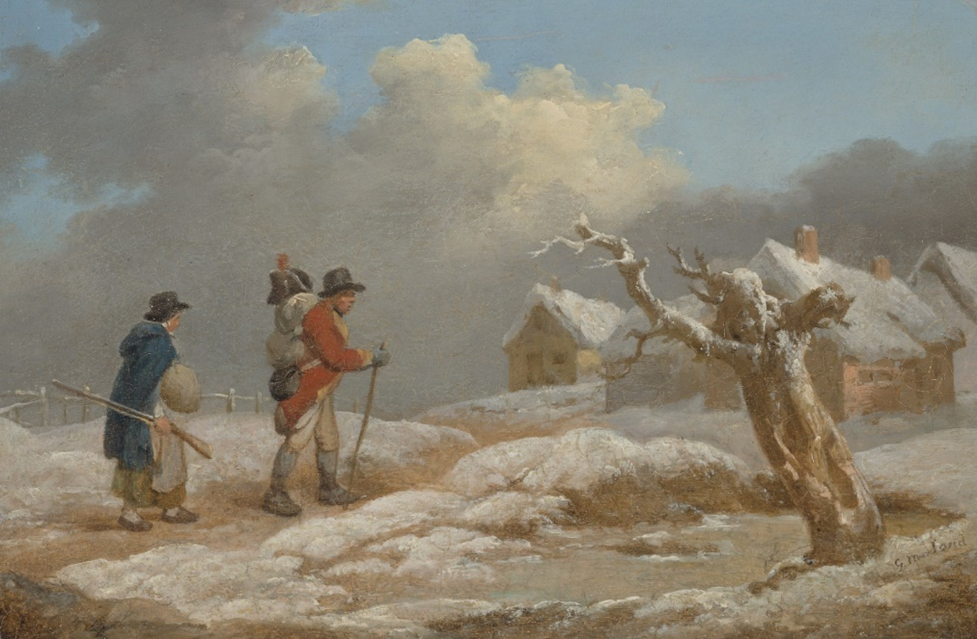
What do poor health, a dead mother, a need to shop for new clothes, a pregnant wife, army business, a wife’s mental illness, family financial problems, and a desire to see family and old friends all have in common?
They are all reasons officers gave for asking for furloughs during the winter encampment of 1779-1780.
While the regulations and the various orders issued give us a general idea of the problems related to furloughs, we can get a different viewpoint by looking closer at the different Divisions, Brigades, and individuals who made up the army. The individual soldiers’ correspondence can also give us a more personal take on the furlough story. This paper will be far from comprehensive. It will just cover the furloughs that turn up in the surviving documentation. To make it easier to follow I have grouped the numbers and correspondence regarding furloughs by divisions and brigades.
Major General Arthur St. Clair
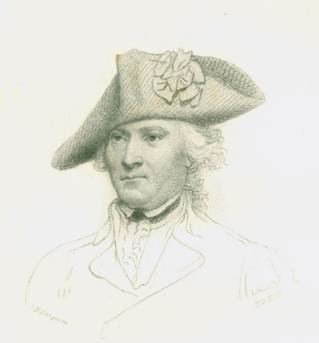
The Pennsylvania Line was commanded by Major General Arthur St. Clair. He made his quarters at the home of Henry Wick during the Morristown encampment of 1779-1780.
In the past I used to speculate that St. Clair took a furlough in late December. This was because of a letter that General Washington wrote to St. Clair on December 21, 1779, which had the line, You will therefore, if agreeable use the present time for the purpose of your request.” But the Editors of the Washington papers stated that they could not come up with purpose of St. Clair’s request, so I began to have my doubts.
However, there isn’t any surviving St. Clair correspondence again until January 27, 1780, when General Washington ordered St. Clair to take command of the outposts at Elizabethtown. This might suggest he was away from the army. At the time St. Clair’s family was living in Pottsgrove, Pennsylvania, northwest of Philadelphia, about 70 miles away from Morristown. There is a good possibility that St. Clair could have gone to Pottsgrove and returned to Morristown in the 36 days between December 21 and January 27th.
St. Clair remained on outpost duty until the end of February, when he was sent to Perth Amboy as part of a committee to negotiate a prisoner exchange with the British. St. Clair was back in Jockey Hollow by April 3, 1780. But St. Clair wrote from the Wick House on April 15th, “I am this day setting out on a visit to my family.” St. Clair seems to have taken furloughs throughout the war to deal with his wife’s health, some people speculate she was suffered some form of mental illness. St. Clair spent the next two months with his family in Pennsylvania. He returned to camp on June 8, 1780, when Lt. Col. J. Harmar wrote, “Major General St. Clair arrived to day and took command of the Pennsylvania Division to the great satisfaction of the officers.”
First Pennsylvania Brigade
The First Pennsylvania Brigade was commanded by Brigadier General William Irvine. The brigade included the 1st, 2nd, 7th and 10th regiments. In December the First Pennsylvania Brigade had 1,097 men present and fit for duty. The monthly number of furloughs from the brigade’s rank and file were.
1st PA Rank & File on Furlough
Nov. 1779 – 7
Dec. 1780 – 3
Jan. 1780 – 121
Feb. 1780 – 123
Mar. 1780 – 116
Apr. 1780 – 6
May 1780 – 15
Jun. 1780 – 1
Brigadier General William Irvine
General Irvine, the commander of the First Pennsylvania Brigade, [left] missed his family in Carlilse, Pennsylvania. He wrote to his wife on December 22, 1779, …As the time draws near that you had reason to expect me home I am unhappy on your Account least you should be uneasy. But surely you should know better by this time – as you well know I cannot make my own time – I cannot I fear leave this in less than fifteen days from this time – which will make it near the 20th of January before I reach home – But in some measure to make up for this disappointment I am in hopes to obtain leave of Absence till the first of April – I need not tell you my love – that I will go as soon, & stay as long as in my power – I never longed so much to see you & my dear little ones in my life – P.S. I have not yet determined what road I shall take but if there is snow on the ground I will go in a sleigh by Reading as that is near a days ride nearer than by Philadelphia.”
General Irvine may have hoped to be on his way home by January 6th but on January 24th Irvine was still in camp. General Washington explained the problem to New York Brigadier General James Clinton who had asked for an extension of his furlough. Washington wrote on January 24th, “I should have been glad had the situation of the Army, in respect to General Officers, admitted of my granting your request for a longer continuance of your furlough: But I am really obliged to dispense with many necessary Camp duties and to send Officers of inferior Ranks upon commands which ought in propriety to fall to General Officers. We have at this time but two Brigadiers of the line in Camp, and one of them, General Irvine has pressing calls to see his family and waits the return of you or General Huntington. You will see by the above that I am under the necessity of desiring you to join your Brigade as soon as you possibly can.”
Irvine was still in camp in early February. He wrote to President [Governor] Joseph Reed on Pennsylvania on February 6, 1780, “I have obtained leave to visit my family at Carlisle – shall set out tomorrow.” The same day, General Washington, as always concerned about too many generals on furlough, wrote to Irvine, I hope your absence will not exceed the first of April—could you return sooner with convenience, it would be more agreeable.” Washington noted that Irvine was still on furlough a month later when he wrote to the President of Congress, “General Irvine at present, is at home on Furlough…” He was back in Morristown by April 18th when he was mentioned in the general orders as being appointed “Officer of the Day.”
Lt. Col. Walter Stewart, 2nd Pennsylvania Regiment
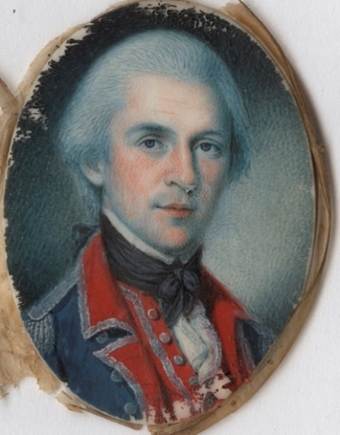

Walter Stewart, the commander of the Second Pennsylvania Regiment,[above] was another officer hoping for a furlough. He wrote to J.M. Nesbitt on February 1st, “It would make me happy could I but be for a short time in Phila. Amongst my friends, that pleasure I fear will be kept from me until the month of March, but then I hope to be able to see you & beg you will conclude on returning to camp with me.”
But apparently Stewart was still in camp on March 30, 1780, when he and fifteen other “field Officers of the Pennsylvania Line” in Jockey Hollow wrote a petition to “the President and Council of the state.” Joseph Reed, the President of Pennsylvania, wrote to Washington about the petition on April 18th, so there is a chance that Col. Stewart did get his trip to Philadelphia to deliver the petition. But once again the records fail to tell us anymore.
Second Pennsylvania Brigade
The Second Pennsylvania Brigade was commanded by Brigadier General Anthony Wayne. The brigade included the 3rd, 5th, 6th, and 9th regiments. In December the First Pennsylvania Brigade had 947 men present and fit for duty. The monthly number of furloughs from the brigade’s rank and file were.
2nd PA Rank & File on Furlough
Nov. 1779 – 8
Dec. 1780 – 11
Jan. 1780 – 77
Feb. 1780 – 95
Mar. 1780 – 84
Apr. 1780 – 30
May 1780 – 13
Jun. 1780 – 10
Brigadier General Anthony Wayne
General Wayne [left] was away from his brigade during the summer of 1779. He was on detached duty serving as the commander of the Corps of Light Infantry. That summer Wayne led the American raid on the British outpost at Stony Point. The Light Infantry was on outpost duty in early December 1779 and then disbanded on January 2, 1780. On January 7, 1780, while quartered in Hanover, N.J. General Wayne wrote to Washington, “I was honored with your favor of the 28th Ultimo, & on the 2nd Instant the Light Corps was Dessolved & took up the Line of march to join their Respective Regiments… I now request leave of absence from this Army, until your Excellency may have Occation for my Services in the field—& whenever the Light Infantry is called out, that I may again be honored with the Command of it.”
Wayne was away from camp for most of the winter. He wrote to Washington from Philadelphia on May 11, 1780, “shou’d my attendance in Camp be of the least use—I shall hold myself in readiness at the shortest notice.” A week later Washington replied, “I shall be very happy to see you at Camp again—and hope you will without hesitation, resume your command in the Pensylvania line. I know on a former occasion you had some difficulties on this head—but when you consider the point—you will see the propriety of the measure.”
The “difficulties” Washington referred to were Wayne’s position in the Pennsylvania Line. He resented the fact that he was a brigadier general rather than a major general, but politics kept him stuck in his current position. His command of the Corps of Light Infantry had given him some independence but the command of that Corps would go to Major General Lafayette in the summer of 1780. Additionally, Wayne and his superior Major General St. Clair did not get along well both personally and professionally. Which might explain why Wayne was gone for the entire winter.
Wayne swallowed his pride and politely replied to Washington on May 25, 1780, “I was favored with yours of the 18th last evening & will in consequence render myself in camp the latter end of next week when I shall esteem myself honored by any commands you may please to favor me with.”
General Wayne returned to the army around Springfield, New Jersey on June 11, 1780, according to the diary of artillery lieutenant Elias Parker who wrote, “Sunday 11th Generals Arnold and Wayne arrive in Camp from Philadelphia…”
Colonel Francis Johnston
Colonel Francis Johnston, of the 5th Pennsylvania Regiment was appointed the acting commander of the entire Second Pennsylvania Brigade while its commander Brigadier General Anthony Wayne was on detached duty commanding the Light Infantry Brigade in the summer of 1779. Lt. Col. Francis Mentges took over command of the 5th Pennsylvania Regiment while Col. Johnston commanded the brigade. But on November 11, 1779, Lieutenant Colonel Josiah Harmar wrote, “Col. Johnston set off this day on furlough for Phila. The command of the 2nd PA Brigade devolves to me in his absence.”
 Emerging Revolutionary War Era
Pingback: Morristown’s Individual Furlough Stories – Division of Stark’s Brigade & New York Brigade – Emerging Revolutionary War Era