Have you ever heard of the popular saying, “No good deed goes unpunished?”
I wonder if there is a reverse to that, especially when it comes to stumbling into history?
Earlier in June, my uncle needed to go out of town and wanted someone to watch his house and two cats. He resides outside of Wilmington, Delaware. Thinking mid-June would be a good time to catch some of the historical sites in Philadelphia on the brink of the 250th in July, and with World Cup soccer games being played in the same city, even better.
I planned to go into the “City of Brotherly Love” one day, but thought the other day I would just drive around Wilmington and New Castle and see what I could discover. A day with no set plans. And that is when I stumbled into “Separation Day” in New Castle.
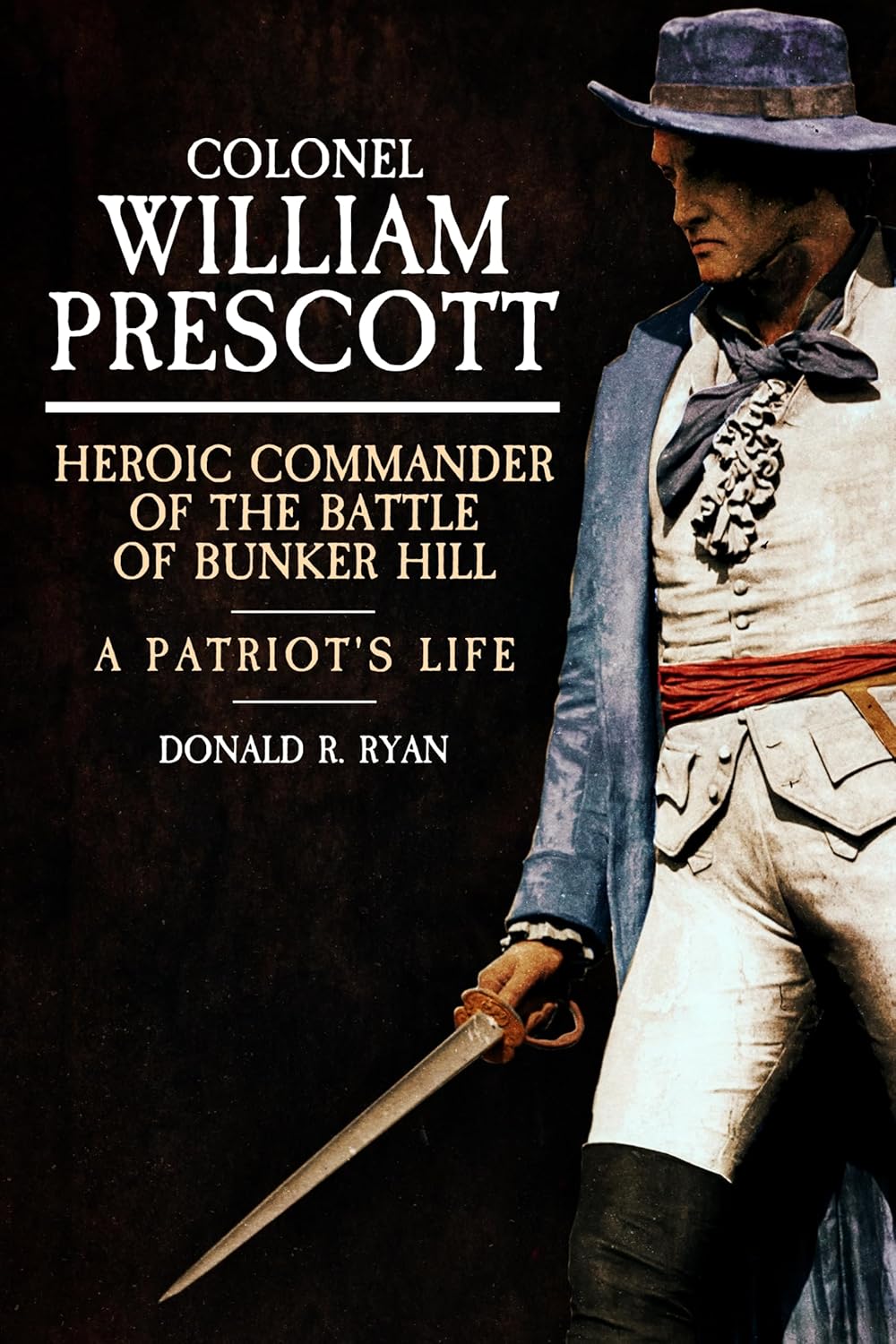
Depicted in various paintings, still standing watch over Breed’s Hill, his name is synonymous with the heroic American defense of the earthen redoubt that graced the aforementioned hill. Although forced to evacuate the work when overwhelmed by the third British advance and out of ammunition, Prescott had shown his value as a competent battlefield leader. Especially of the militia.
Yet, as America approached the 250th anniversary of the country, there had not been a single dedicated biography that covered his entire life. Prescott is mentioned in plenty of great historical works on the battle, the region, and the lives of other patriots who fought that day. But the Massachusetts native deserved more. Entered Donald R. Ryan.
Ryan, a volunteer historian and guide for Boston National Historical Park, took on the task of researching, locating, and even contacting living descendants of Prescott. You can now hold in your hands and read his excellent work on this great military figure, best known for his role in one of the most iconic battles of the American Revolution.
Before you do get your copy and settle in to read, tune in on Sunday evening, as Ryan will appear on our popular “Rev War Revelry” to discuss his book. Emerging Revolutionary War will go live at 7 p.m. EDT. and stream to our Facebook page.
Cannot make the live program on Sunday evening? Don’t fret, the program will be posted to our podcast and YouTube channels in the days after. Either way, hope you tune in to learn about Col. Prescot!
When you think of Maryland in the American Revolutionary War, what are the first connections that come to mind? Taking a stab at it, probably the Maryland 400 during the Battle of Brooklyn in 1776? Or possibly the 1st Maryland at the Battle of Guilford Court House in 1781? If you are a national park junkie, potentially Thomas Stone National Historic Site, home of one of Maryland’s four Signers of the Declaration of Independence, may come to mind. If you are not familiar with that NPS unit, click here.
To fill in those gaps, Emerging Revolutionary War welcomes historian Drew Palmer. He is the creator of Revolutionary Maryland, which is an online public history blog that is “dedicated to uncovering and sharing all things related to the state’s experience during this transformative period.”
Palmer is a Revolutionary War historian, a U.S. high school history teacher, and the creator of Revolutionary Maryland. Palmer has worked as a public historian at numerous historic sites over the years, including Appomattox Courthouse, Fort Ticonderoga, Adams National Historical Park, and Fort McHenry National Monument and Shrine. Palmer’s research primarily focuses on the Revolutionary War in Maryland and the South. Most recently, he published his research on Fort Whetstone and the Maryland Matrosses during the Revolutionary War. He also worked with Fort McHenry to direct a short documentary on Fort McHenry’s 250 years of history. Palmer earned his B.A. in history from DeSales University in 2023 and his M.A. in applied history from Shippensburg University in 2024. He currently lives outside of Baltimore and is working on multiple research topics involving the Revolutionary War.
Emerging Revolutionary War is proud to welcome a great emerging historian of the Revolutionary War Era to the “Revelry.” We hope you can join us, live, on Sunday, April 19, at 7 p.m. EDT on our Facebook page.
Emerging Revolutionary War welcomes back guest historian and park ranger Eric Olsen. Ranger Olsen works for the National Park Service at Morristown National Historical Park. Click here to learn more about the park.
What do poor health, a dead mother, a need to shop for new clothes, a pregnant wife, army business, a wife’s mental illness, family financial problems, and a desire to see family and old friends all have in common?
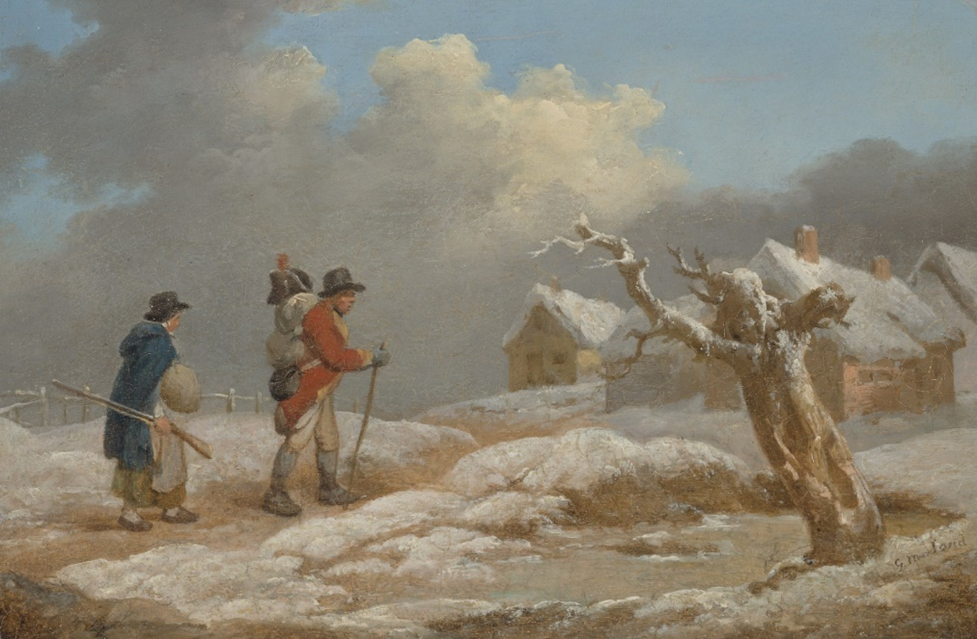
They are all reasons officers gave for asking for furloughs during the winter encampment of 1779-1780.
While the regulations and the various orders issued give us a general idea of the problems related to furloughs, we can get a different viewpoint by looking closer at the different Divisions, Brigades, and individuals who made up the army. The individual soldiers’ correspondence can also give us a more personal take on the furlough story. This paper will be far from comprehensive. It will just cover the furloughs that turn up in the surviving documentation. To make it easier to follow I have grouped the numbers and correspondence regarding furloughs by divisions and brigades.
Situated one block from where independence was declared, the structure was home to two presidents as the building served as the third residence of United States presidents. Built in 1767 by Mary Masters, the home was familiar with tenants of great importance. During the American Revolutionary War, British general Sir William Howe during the British occupation of the city. Months later Benedict Arnold, then a general in the Continental Army, moved in as he served as the military governor of Philadelphia.
After the war and a disastrous house fire, Robert Morris, the great financier, purchased the property and rehabilitated the structure. When the United States capital moved to Philadelphia, Morris offered the residence to President George Washington, and the Morris family moved next door to another property. Washington insisted that Morris receive rent for the use of one of his dwellings.
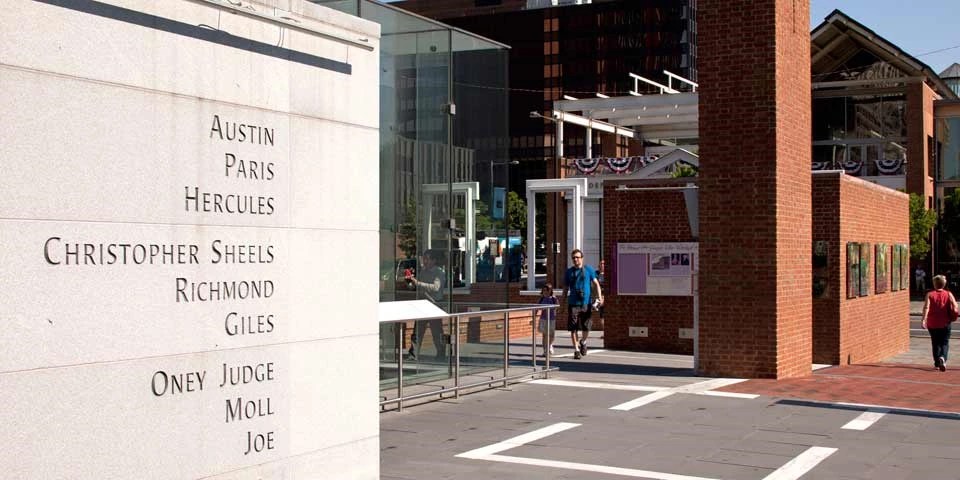
Months later, in November 1790, more people arrived to inhabit the house. Though unlike those previously mentioned, these souls did not come willingly. Washington brought eight enslaved African Americans from Mount Vernon to serve the needs of the first family, their guests, and maintain the house. One of the enslaved, Ona Judge, took the opportunity of being in a northern state to abscond from the Washingtons, never to be caught and returned. To avoid the Pennsylvania law, the Gradual Abolition of Slavery Act of 1780, which read that any enslaved person residing within the state boundaries for six months or longer owned by a non-resident would gain their freedom. Washington rotated the enslaved back to Mount Vernon in Virginia.
Besides Ona, who left the President’s House in May 1796 to gain her freedom and made her way to Portsmouth, New Hampshire. She did correspond with George and promised to return to the Washingtons’ under the condition that she would be freed upon their deaths. Belonging to Martha Washington, though, George did not have the legal right to agree to that promise. Judge created a life in New Hampshire, marrying and having three children before she passed away on February 25, 1848.
After Washington’s two-terms as president expired, John Adams, the second president of the United States, moved into the residence. On November 1, 1800, near the end of his four years, Adams relocated to the yet-unfinished White House in the new capital of the United States at Washington, D.C.
A century and a half later, the house’s remaining walls were accidentally demolished. Through the advocacy of historians and African American remembrance groups, the site was commemorated, with some of the foundation displayed under plexiglass covering. Information panels discussed those enslaved who served the house. A ghost structure showed the outline of the original structure, and the entire area was administered by the National Park Service.
The site became the center of attention again in January 2026 with the removal of those panels discussing the African American and enslaved experiences in the house that served presidents and hosted dignitaries. Their stories, though, remain as part of the fabric of the complete history of the United States. Very much including the role slavery and the enslaved played in the early American republic.
President’s House, with list of the enslaved to the left (courtesy of the NPS)
As this blog post publishes, the plight of the panels, the history of African-Americans in general, and the enslaved at the President’s House remain a topic of conversation and controversy. Continue to check the National Park Service website (click here) or other history-focused webpages for updates. Emerging Revolutionary War encourages dialogue and discussion on this topic.
Emerging Revolutionary War welcomes back guest historian and park ranger Eric Olsen. Ranger Olsen works for the National Park Service at Morristown National Historical Park. Click here to learn more about the park.
What do poor health, a dead mother, a need to shop for new clothes, a pregnant wife, army business, a wife’s mental illness, family financial problems, and a desire to see family and old friends all have in common?
They are all reasons officers gave for asking for furloughs during the winter encampment of 1779-1780.
While the regulations and the various orders issued give us a general idea of the problems related to furloughs, we can get a different viewpoint by looking closer at the different Divisions, Brigades, and individuals who made up the army. The individual soldiers’ correspondence can also give us a more personal take on the furlough story. This paper will be far from comprehensive. It will just cover the furloughs that turn up in the surviving documentation. To make it easier to follow I have grouped the numbers and correspondence regarding furloughs by divisions and brigades.
Emerging Revolutionary War welcomes back guest historian and park ranger Eric Olsen. Ranger Olsen works for the National Park Service at Morristown National Historical Park. Click here to learn more about the park.
What do poor health, a dead mother, a need to shop for new clothes, a pregnant wife, army business, a wife’s mental illness, family financial problems, and a desire to see family and old friends all have in common?
They are all reasons officers gave for asking for furloughs during the winter encampment of 1779-1780.
While the regulations and the various orders issued give us a general idea of the problems related to furloughs, we can get a different viewpoint by looking closer at the different Divisions, Brigades, and individuals who made up the army. The individual soldiers’ correspondence can also give us a more personal take on the furlough story. This paper will be far from comprehensive. It will just cover the furloughs that turn up in the surviving documentation. To make it easier to follow I have grouped the numbers and correspondence regarding furloughs by divisions and brigades.
Emerging Revolutionary War welcomes back guest historian and park ranger Eric Olsen. Ranger Olsen works for the National Park Service at Morristown National Historical Park. Click here to learn more about the park.
What do poor health, a dead mother, a need to shop for new clothes, a pregnant wife, army business, a wife’s mental illness, family financial problems, and a desire to see family and old friends all have in common?
They are all reasons officers gave for asking for furloughs during the winter encampment of 1779-1780.
While the regulations and the various orders issued give us a general idea of the problems related to furloughs, we can get a different viewpoint by looking closer at the different Divisions, Brigades, and individuals who made up the army. The individual soldiers’ correspondence can also give us a more personal take on the furlough story. This paper will be far from comprehensive. It will just cover the furloughs that turn up in the surviving documentation. To make it easier to follow I have grouped the numbers and correspondence regarding furloughs by divisions and brigades.
Emerging Revolutionary War welcomes back guest historian and park ranger Eric Olsen. Ranger Olsen works for the National Park Service at Morristown National Historical Park. Click here to learn more about the park.
What do poor health, a dead mother, a need to shop for new clothes, a pregnant wife, army business, a wife’s mental illness, family financial problems, and a desire to see family and old friends all have in common?
They are all reasons officers gave for asking for furloughs during the winter encampment of 1779-1780.
While the regulations and the various orders issued give us a general idea of the problems related to furloughs, we can get a different viewpoint by looking closer at the different Divisions, Brigades, and individuals who made up the army. The individual soldiers’ correspondence can also give us a more personal take on the furlough story. This paper will be far from comprehensive. It will just cover the furloughs that turn up in the surviving documentation. To make it easier to follow I have grouped the numbers and correspondence regarding furloughs by divisions and brigades.
Emerging Revolutionary War welcomes back guest historian and park ranger Eric Olsen. Ranger Olsen works for the National Park Service at Morristown National Historical Park. Click here to learn more about the park.
What do poor health, a dead mother, a need to shop for new clothes, a pregnant wife, army business, a wife’s mental illness, family financial problems, and a desire to see family and old friends all have in common?
They are all reasons officers gave for asking for furloughs during the winter encampment of 1779-1780.
While the regulations and the various orders issued give us a general idea of the problems related to furloughs, we can get a different viewpoint by looking closer at the different Divisions, Brigades, and individuals who made up the army. The individual soldiers’ correspondence can also give us a more personal take on the furlough story. This paper will be far from comprehensive. It will just cover the furloughs that turn up in the surviving documentation. To make it easier to follow I have grouped the numbers and correspondence regarding furloughs by divisions and brigades.


 Emerging Revolutionary War Era